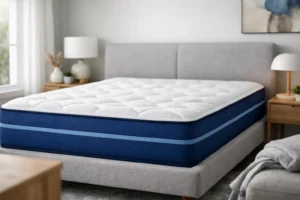
A mattress can feel soft and still leave your lower back working all night. That is why mattress support zones explained for alignment matters: the goal is not one uniform feel from head to toe. It is targeted support that allows heavier areas to stay lifted while pressure-sensitive areas can settle in comfortably.
For people waking with back stiffness, sore hips, numb shoulders, or the feeling that sleep never quite restored them, zoning can make a meaningful difference. The right design helps your spine maintain its natural, neutral position while reducing the pressure that causes tossing and turning.
What mattress support zones actually do
A zoned mattress uses different levels of firmness or resistance across its surface. Most often, the center third of the mattress is firmer to support the hips, pelvis, and lower back. The shoulder area is usually more flexible, allowing it to contour without forcing the upper spine out of line.
This matters because your body weight is not evenly distributed. Your hips and torso place more load on a mattress than your head, calves, or feet. On a flat, uniform sleep surface, the pelvis may sink too deeply while the waist loses support. That can create a hammock-like posture, placing extra strain on muscles and joints.
A well-engineered zoned system responds differently. It cushions where pressure builds and pushes back where your body needs stability. You should feel supported, not held rigidly in place.
Mattress support zones explained for alignment by sleep position
The best zone layout depends partly on how you sleep. There is no single construction that feels perfect for every body shape and position, but the principle stays the same: keep the head, shoulders, ribs, hips, and legs in a natural line.
Side sleepers need shoulder relief and hip stability
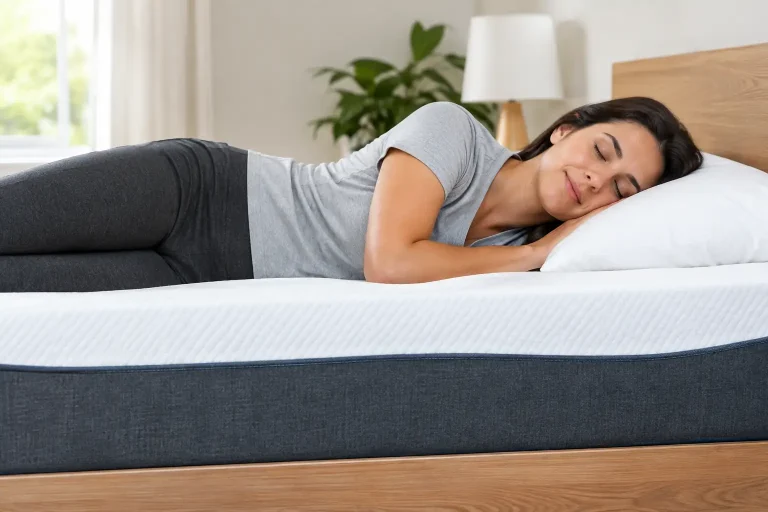
Side sleeping creates the deepest pressure at the shoulder and hip. If the shoulder zone is too firm, your shoulder cannot settle enough, which can tilt your neck upward and lead to arm numbness or morning soreness. If the hip area is too soft, the pelvis can dip below the rest of the body.
A zoned hybrid mattress can solve both problems by allowing controlled contouring at the shoulders while reinforcing the lumbar and hip region. This balance is especially helpful for people with broad shoulders, recurring hip discomfort, or a history of lower-back stiffness.
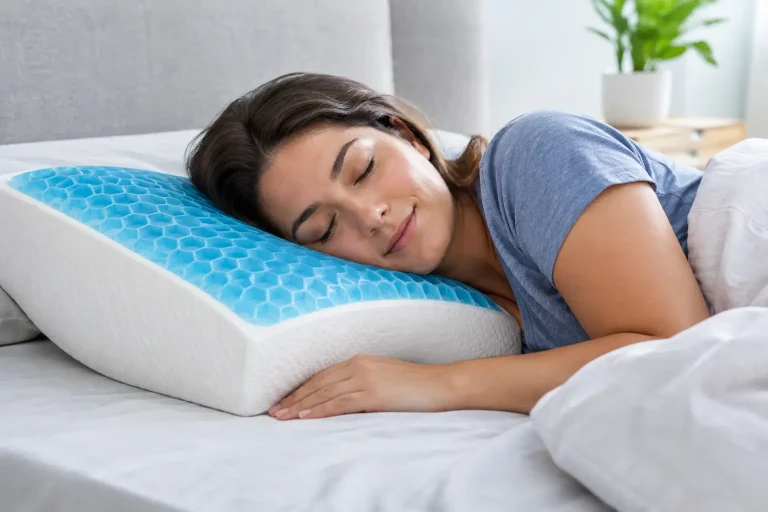
Your pillow matters here, too. Even excellent mattress zoning cannot fully correct alignment if your pillow is too flat or too high. The goal is a level line from your neck through the middle of your back.
Back sleepers benefit from lumbar support
Back sleepers often need more support beneath the small of the back and pelvis. A mattress that is overly plush can let the hips sink, flattening the natural curve of the lumbar spine. A surface that is too firm, on the other hand, may leave a gap under the lower back and create pressure through the tailbone.
Targeted center support helps keep the pelvis from dropping while comfort layers fill in smaller gaps around the waist. The result should feel stable but pressure-relieving, with your lower back supported rather than forced flat.
Stomach sleepers need a flatter, firmer feel
Stomach sleeping is the most demanding position for alignment because it can pull the lower back into an exaggerated curve. A stronger central zone can reduce hip sink and help limit that strain. Many stomach sleepers also do better with a thinner pillow, since lifting the head too high can stress the neck.
If you are a combination sleeper, look for zoning that feels gradual rather than sharply segmented. You should be able to change positions naturally without noticing abrupt firm bands beneath your body.
How many zones are enough?
You will commonly see mattresses described as 3-zone, 5-zone, or 7-zone designs. More zones do not automatically mean better support. What matters is whether the zones are placed intelligently and whether the mattress has enough depth and quality materials to make those changes feel useful.
A 3-zone mattress typically has softer support near the head and legs, with firmer reinforcement through the middle. This is a straightforward, effective design for many sleepers because it directly addresses the area most likely to sink: the hips and lumbar region.
A 5-zone or 7-zone mattress can add more targeted contouring around the shoulders, upper back, knees, and calves. That can be valuable for side sleepers or people who are particularly sensitive to pressure. However, zone placement should match your height and the way you naturally settle into bed. If a shoulder zone sits too high or too low for your body, it may not deliver the intended benefit.
Do not choose based on zone count alone. Consider the mattress dimensions, your height, your main sleep position, and whether your hips are actually landing in the reinforced center section.
Where support zones come from in a hybrid mattress
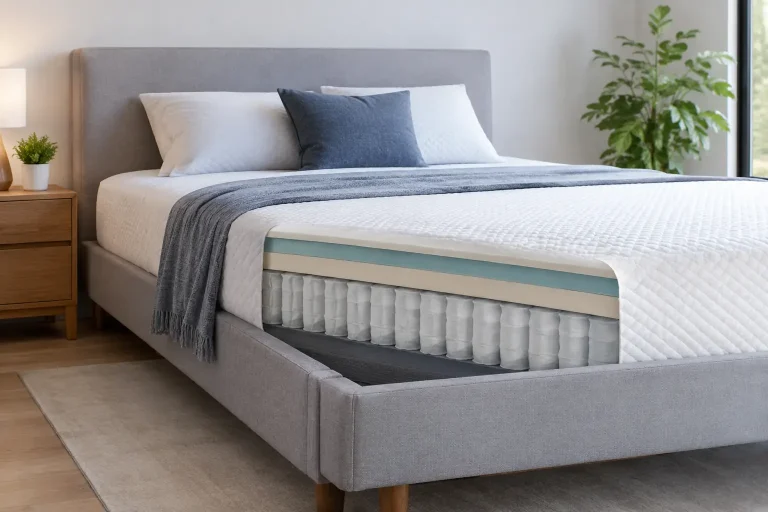
In a quality hybrid mattress, zoning is often created through the coil system. Individually pocketed coils can be arranged with different wire gauges, coil counts, or tension levels across the mattress. Firmer coils under the lumbar region provide lift, while more responsive coils around the shoulders and legs improve contouring.
Pocket springs offer another important advantage: they move independently. When one area compresses, the surrounding coils do not have to collapse with it. That allows more precise support and helps reduce motion transfer from a partner getting in, turning over, or leaving for an early start.
Comfort layers above the coils refine how zoning feels. Latex can add buoyant pressure relief and responsive cushioning, helping you change positions without the stuck feeling some foams create. Cooling gel foam can contour around the body while helping manage heat buildup. Together, the layers should work as one system: comfort at the surface, support underneath, and airflow through the construction.
This is also why a mattress should not be judged only by its top layer. A plush cover may feel inviting for five minutes, but the support core determines whether that comfort remains restorative through the night.
Signs your current mattress is not supporting alignment
Morning discomfort is not always caused by a mattress, but recurring patterns are worth paying attention to. If your body feels better after you have been up and moving for a while, your sleep surface may not be keeping you in a stable position.
Common signs include waking with a tight lower back, shoulder pain that improves during the day, numb hands while side sleeping, or the need to repeatedly change positions to get comfortable. You may also notice that the edge of the bed feels more supportive than the middle, or that you roll toward your partner because the surface has developed a dip.
A mattress can also lose its alignment benefits over time. Materials soften, springs fatigue, and body impressions become more noticeable. Even a mattress that was once comfortable may no longer provide consistent support where you need it most.
How to tell whether zoning is working for you
Your first impression should be balanced comfort, not a dramatic sensation of hard and soft sections. Lie in your usual position for several minutes. On your side, check that your shoulder can settle without sharp pressure and that your waist does not feel unsupported. On your back, notice whether your hips remain level rather than sinking lower than your chest.
If you share a bed, test motion as well. Zoned pocket springs should support each person independently, so one sleeper’s movement is less likely to disturb the other. This is not separate from alignment: broken sleep reduces recovery, even when a mattress feels comfortable at first.
Body weight and build matter. A lighter sleeper may experience a zoned mattress as firmer because they do not compress the comfort layers as deeply. A heavier sleeper may need a stronger coil system and more durable support through the center. Couples with very different needs should prioritize a responsive hybrid construction that combines contouring materials with a stable, reinforced core.
Temperature is another practical consideration. If you sleep hot, deep foam contouring can sometimes feel restrictive or warm. Breathable latex, cooling foam, and airflow around pocketed coils can help you get pressure relief without trapping as much heat.
Azure Mattress designs its hybrid sleep systems around this full equation: pressure relief, spinal support, cooler comfort, and reduced partner disturbance. The strongest mattress is not simply the firmest one. It is the one that keeps your body supported in the position where you can finally let go of the day.
A good night’s sleep should not require you to brace your back, protect a sore shoulder, or wake up to find a more comfortable position. When support is placed where your body actually needs it, alignment becomes less of something you manage and more of something your mattress quietly does for you.