A sharp ache from the lower back into the hip or leg can make bedtime feel less like recovery and more like a test. So, can a mattress worsen sciatica? Yes. A mattress does not usually cause the underlying nerve irritation on its own, but the wrong level of support, pressure relief, or surface stability can aggravate symptoms and leave you stiffer by morning.
Sciatica is a symptom, not a diagnosis. It often happens when the sciatic nerve is irritated or compressed, commonly due to a herniated disc, spinal narrowing, or age-related changes in the lower back. Your sleep surface cannot correct every cause, but it can either help your body rest in a more neutral position or keep loading sensitive areas for hours at a time.
How a Mattress Can Worsen Sciatica
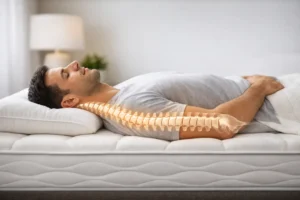
The most common problem is a mattress that has lost its structure. When the hips and pelvis sink into a deep body impression, the lower back may twist or flatten in an unnatural position. That can increase strain around the lumbar spine and make radiating pain, tingling, or numbness feel more noticeable when you wake up.
A mattress can also be too firm for your body. Firmness without pressure relief may push hard against the hip and shoulder, especially for side sleepers. Instead of allowing those joints to settle comfortably, the surface can force the spine out of alignment or lead you to tense and shift all night.
At the other extreme, a mattress that feels plush but lacks support can create a hammock effect. The shoulders may be comfortable while the heavier hips drop too far. This is why “soft” is not the same as pressure-relieving, and “firm” is not automatically supportive. The goal is a stable sleep surface that cushions high-pressure areas while holding the spine in a neutral, relaxed line.
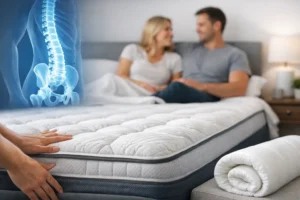
Motion can matter, too. If you sleep with a partner and their movements repeatedly wake you, your body may stay tense rather than progressing through restorative sleep. Poor sleep does not necessarily worsen the source of sciatica, but it can lower pain tolerance and make the next day feel harder.
Signs Your Bed May Be Part of the Problem
Morning symptoms offer useful clues. If your pain is consistently worse after sleep but eases once you move around, your mattress, pillow setup, or sleeping position may be contributing. New dips, sagging edges, noisy springs, or a surface that feels uneven are also clear reasons to look more closely at your bed.
Pay attention to where your body lands. If your hips sink lower than your shoulders, or you feel pressure building at one hip while side sleeping, the mattress may not be distributing weight effectively. Frequent tossing, waking hot, and needing to sleep in a very specific spot to feel comfortable can point to a surface that is no longer performing evenly.
That said, pain that is new, severe, or steadily worsening deserves medical attention. Seek urgent care for weakness in the leg, loss of bladder or bowel control, numbness around the groin, fever, or pain following a major injury. A mattress is one piece of your recovery environment, not a substitute for a clinician’s assessment.
What Mattress Support Helps With Sciatica?
For many people with sciatica, a medium-firm hybrid mattress is a practical starting point. It tends to provide enough structure to prevent excessive hip sink while still offering cushioning at the shoulders, hips, and lower back. But body weight, sleep position, and personal sensitivity to pressure all matter.
Look for targeted pressure relief
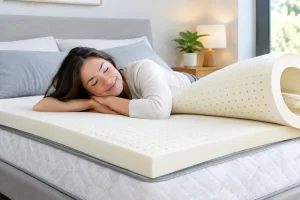
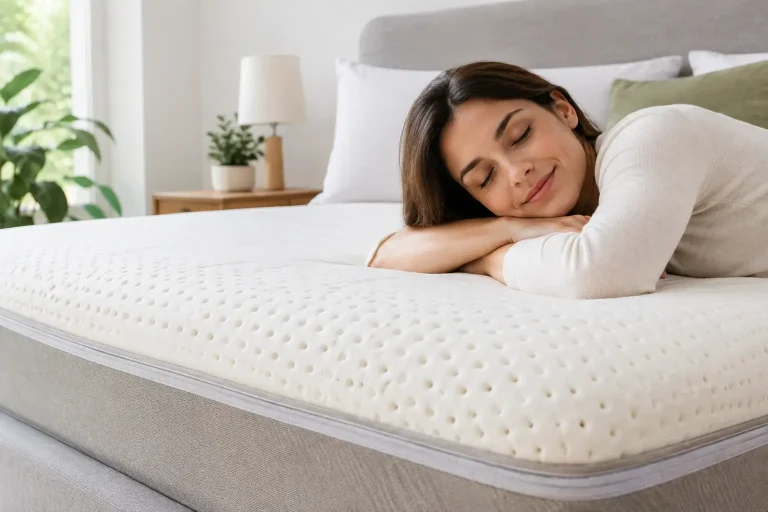
Latex and quality comfort foams can contour around the hips without allowing the body to collapse into the bed. This reduces concentrated pressure, which is especially valuable for side sleepers whose hip bears a large share of their body weight overnight.
Responsive materials are often preferable to slow, overly enveloping surfaces for people who struggle to change positions due to pain. A mattress should let you move without feeling stuck. Latex, in particular, has a buoyant feel that can make repositioning easier while still cushioning joints.
Prioritize stable spinal alignment
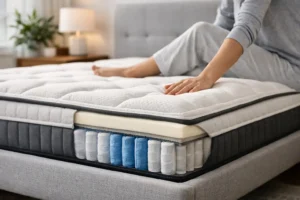
Individually pocketed coils are useful because they respond to weight more precisely than a traditional connected spring system. The heavier parts of the body receive support without lifting the lighter areas excessively. A well-designed coil base also helps maintain edge support, so the entire sleep surface remains usable rather than sagging toward the sides.
For couples, pocketed springs can reduce motion transfer. Less disturbance from a partner means fewer overnight awakenings and a better chance of the deep, uninterrupted sleep your body needs to recover from daily stress and muscle tension.
Do not ignore temperature
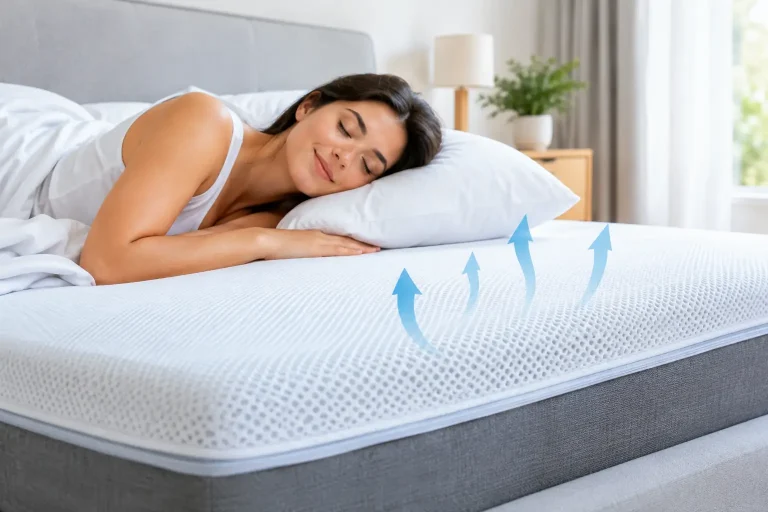
Overheating can lead to restless sleep and repeated position changes. Cooling gel foams, breathable latex, and airflow through a pocketed coil system help prevent heat from building around the body. Cool sleep is not merely a luxury when pain is involved. It supports longer, more settled periods of rest.
Match the Mattress to Your Sleep Position
Side sleepers usually need the most pressure relief at the hip and shoulder. A medium to medium-firm surface with a cushioning top layer often works well, provided the hips do not sink below the rest of the body. Placing a pillow between the knees can also reduce pelvic rotation and ease tension through the lower back.
Back sleepers often benefit from a medium-firm feel that supports the natural curve of the lower spine without creating a gap under the waist. A small pillow under the knees may take pressure off the lumbar area by reducing the pull through the hip flexors.
Stomach sleeping can be difficult for people with sciatica because it may rotate the neck and encourage the lower back to arch. If it is the only position that feels manageable, use a thin pillow under the pelvis and choose a mattress with enough support to prevent the midsection from sinking. Gradually transitioning to side or back sleeping may be more comfortable for some people, but forcing a new position can disrupt sleep further.
When a Topper May Help – and When It Will Not
A mattress topper can be a smart short-term adjustment when a bed is supportive but feels too hard at the hips and shoulders. A responsive latex topper or a pressure-relieving foam topper may add comfort without sacrificing the stable foundation underneath.
A topper will not repair a mattress with deep sagging, broken support layers, or a permanent valley in the middle. Adding soft material on top of a failing bed often allows the hips to sink even farther. If the base mattress is visibly worn or you can feel its support system giving way, replacement is usually the more effective decision.
A Practical Way to Test Your Current Setup
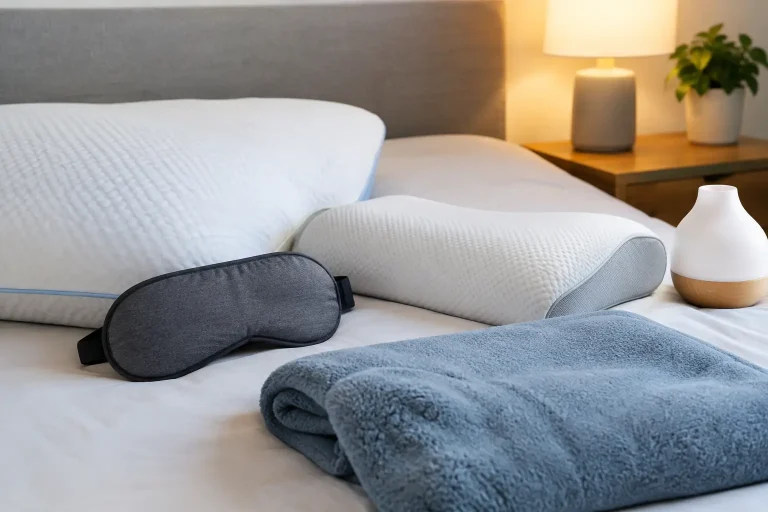
Before replacing your mattress, make a few controlled changes for one to two weeks. Try a pillow between or beneath the knees, check whether your pillow keeps your neck level, and rotate the mattress if the manufacturer allows it. Track how you feel upon waking, not just how comfortable the bed feels when you first lie down.
If you are shopping for a replacement, lie in your usual sleep position long enough to notice where pressure develops. Your shoulders and hips should feel cushioned, while your waist and pelvis should feel supported rather than suspended or swallowed. For online mattress shoppers, a meaningful trial period and clear return policy reduce the risk of guessing wrong.
A hybrid construction that combines breathable comfort layers with individually pocketed coils can offer a balanced solution for many sleepers managing back and joint discomfort. Azure Mattress designs this kind of sleep system around the three performance details that matter most here: pressure relief, spinal support, and cooler, lower-disturbance sleep.
The right mattress should not promise to cure sciatica. It should give your body a more supportive place to rest while you address the underlying cause with appropriate care. If you wake up feeling less compressed, move more easily in the morning, and sleep with fewer interruptions, that is meaningful progress worth protecting.