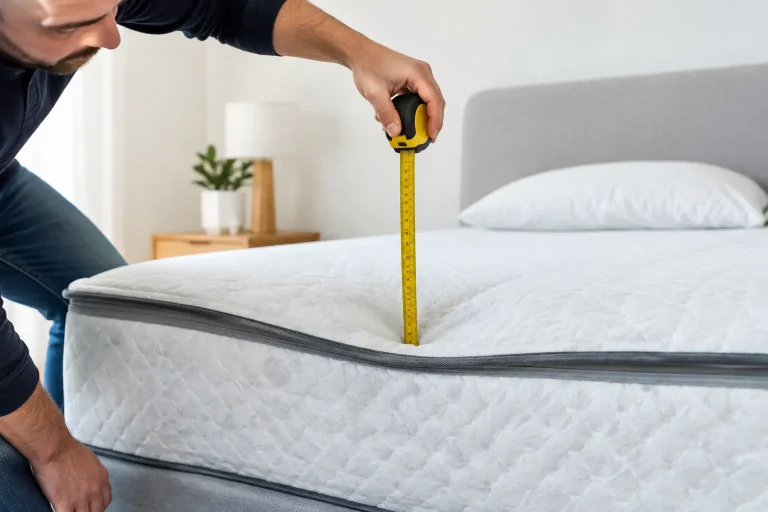
If you sleep on your back and wake up with tightness across your lower spine, numb shoulders, or that stiff feeling that takes a few minutes to shake off, your mattress is likely the problem. A spinal alignment mattress for back sleepers should keep your head, shoulders, hips, and lower back in a neutral line – not let your hips sink too low or push your lumbar area into strain.
That sounds simple, but it is where many mattresses fall apart. Back sleepers need a narrow balance between cushioning and lift. Too soft, and the pelvis drops out of line. Too firm, and the lower back is left unsupported while pressure builds under the shoulder blades and tailbone. Real support is not about hardness alone. It is about how well the mattress distributes weight, fills in natural curves, and stays stable through the night.
What back sleepers actually need from a mattress
Back sleeping is often recommended for spinal support, but only when the mattress does its job. In this position, your body weight is concentrated across the upper back, hips, and heels. The lumbar curve also creates a small gap that the mattress needs to support without overcorrecting.
A good spinal alignment mattress for back sleepers should do three things at once. It should gently contour around the body, hold the midsection up so the spine does not bow, and keep the surface steady enough that you are not constantly making small adjustments. That combination is why hybrid construction tends to work so well for this sleep style.
Foam alone can feel comfortable at first, but some all-foam beds let the hips sink deeper over time, especially for adults with more weight concentrated in the torso. Traditional spring mattresses can have the opposite problem. They feel firm, but support is often broad and uneven rather than targeted, which can leave the lower back floating. A well-built hybrid closes that gap by combining pressure relief layers with a structured coil system underneath.
Why spinal alignment matters more than “firmness”
A lot of shoppers start by saying they need a firm mattress for back pain. Sometimes that is true. Sometimes it is exactly what makes the pain worse.
Firmness is only one part of the equation. Alignment is the real goal. If a mattress is very firm but does not contour enough under the hips and shoulders, it can create pressure points and leave the lumbar area unsupported. If it is too plush, the body settles into a curve that strains the lower back. The right feel is usually medium-firm to firm, but the better question is whether the mattress supports neutral posture from head to hip.
This is also where body type changes the answer. A lighter back sleeper may do well on a slightly plusher surface because they do not compress the comfort layers as deeply. A heavier sleeper usually needs stronger support from the core of the mattress, especially through pocketed coils that resist sagging under the hips.
The materials that make a difference
Not every support layer performs the same way, even when two mattresses sound similar on paper. For back sleepers, the best results usually come from a layered design where each component has a clear job.
Pocketed coils for targeted lift
Individually pocketed coils are one of the most important features in a mattress built for alignment. They respond more precisely than old connected spring systems, which means they can support heavier areas like the hips without forcing the whole surface to move as one unit. That targeted response helps keep the spine level instead of creating a hammock effect.
Pocketed coils also reduce motion transfer, which matters more than people expect. If your partner shifts or gets out of bed, a stable sleep surface helps you stay in deeper sleep instead of making constant posture corrections all night.
Latex and responsive comfort layers
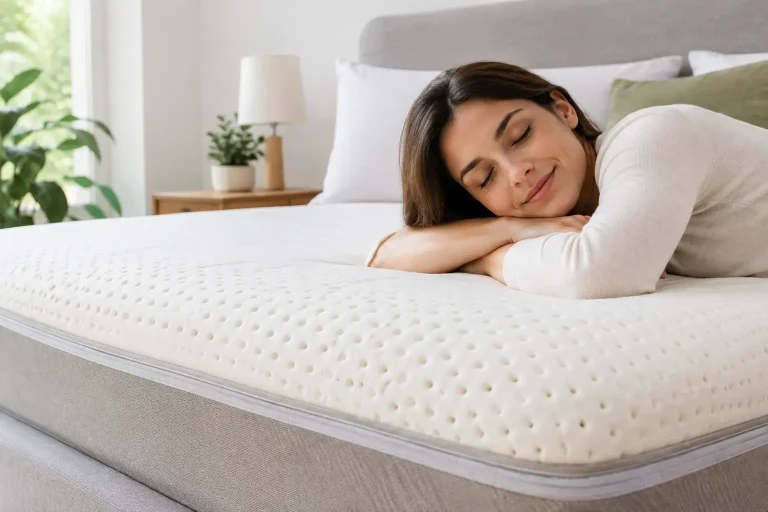
Latex is especially useful for back sleepers because it relieves pressure without the slow sink of memory foam. It has a buoyant feel, which helps keep the body lifted and aligned while still cushioning the joints. That matters if you wake up sore through the shoulders, hips, or lower back but do not want to feel stuck in the bed.
Cooling gel foams can also work well when they are used as part of a support system rather than as the entire structure. They soften the initial contact with the mattress and can reduce pressure buildup, but they need a stable support core underneath to prevent sagging.
Breathable construction for uninterrupted recovery
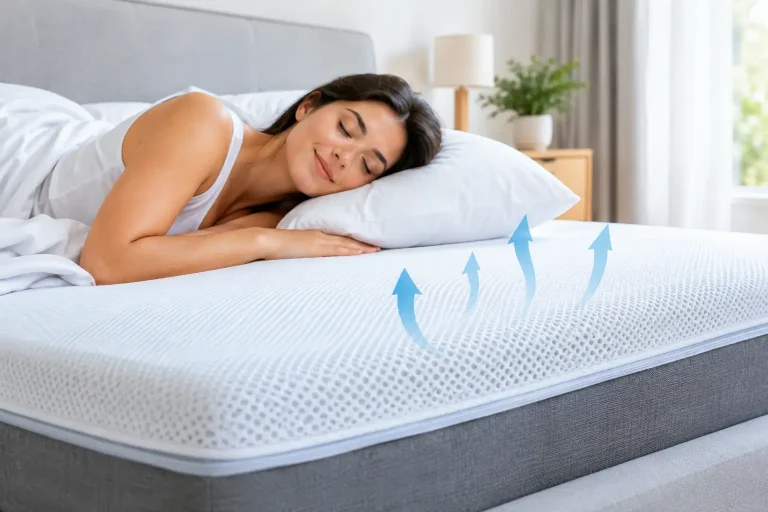
Back pain and overheating are a frustrating combination. When you sleep hot, you toss, turn, and break alignment more often. A mattress with airflow channels, breathable comfort layers, and a coil system that allows heat to dissipate can make a real difference in sleep quality. Cooler sleep is not a luxury feature. For many people, it is part of getting consistent, uninterrupted recovery.
Signs your current mattress is throwing off your spine
You do not always need visible sagging to know a mattress is underperforming. The body often tells you first.
If you wake up with lower back stiffness that eases once you start moving, your mattress may not be supporting your lumbar curve properly. If your hips feel heavy or your shoulders feel compressed, the surface may be distributing weight poorly. If you sleep better in a hotel or feel relief after spending a few minutes on the floor, that is another clue your bed is no longer keeping you aligned.
For couples, there is another common sign – one person moves, and the other wakes up sore or unsettled. Constant micro-disturbances keep muscles from fully relaxing, which can increase tension through the back and neck by morning.
How to choose the right spinal alignment mattress for back sleepers
Start with support, not softness. Look for a mattress that clearly explains how it supports the lumbar area and hips, not just how plush the top feels. A structured coil system with responsive comfort layers is usually the safest choice if alignment is your top priority.
Next, consider pressure relief. Back sleepers still need cushioning under the shoulders and pelvis. The mattress should contour enough to reduce pressure without allowing deep sinkage. This is where latex and quality foam layers often outperform lower-density comfort materials.
Then think about sleep temperature and movement. If you share the bed or tend to overheat, those are not side issues. They directly affect how still and restorative your sleep feels. A mattress that isolates motion and releases heat supports alignment indirectly by helping you stay settled in one healthy position longer.
Finally, pay attention to build quality and trust signals. Certifications like Oeko-Tex and CertiPUR-US matter because they speak to material standards, while a solid warranty and home trial help reduce the risk of buying online. If a brand talks clearly about coil count, layer design, cooling features, and support goals, that is usually a better sign than vague comfort claims.
When a medium-firm hybrid is the smart middle ground
For most adult back sleepers, a medium-firm hybrid is the safest starting point because it delivers both contouring and control. It has enough cushioning to prevent pressure buildup, enough support to keep the hips from dropping, and enough responsiveness to make position changes easy.
That does not mean every medium-firm mattress will feel the same. Layer thickness, coil design, latex response, and foam density all affect performance. But if you are moving up from a basic spring mattress or a worn foam bed, a hybrid built around spinal support is often the most noticeable upgrade.
This is also why a full sleep system matters. The right pillow height can keep the neck aligned with the rest of the spine, and a topper can fine-tune comfort if the support core is already good. Azure Mattress approaches sleep this way – not as a single surface, but as a support system designed around pain relief, cooler rest, and less disturbance.
A mattress should do more than feel comfortable for five minutes in a showroom or look good on a product page. For back sleepers, the standard is higher. You want a surface that helps your spine stay neutral, your joints stay cushioned, and your sleep stay uninterrupted. When that balance is right, you feel it the next morning before your feet even hit the floor.