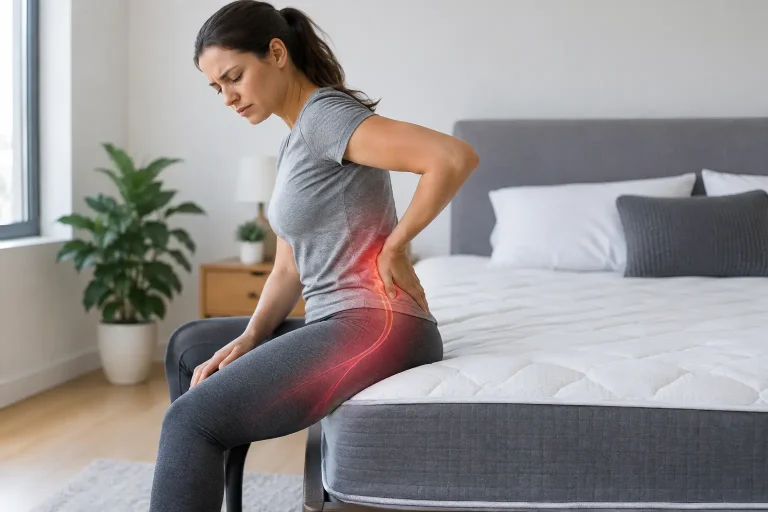
If you’ve ever woken up with a stiff lower back or felt your partner roll over like a small earthquake, you already know the real problem isn’t “mattress shopping.” It’s sleep disruption – and what it does to your body the next day.
Pocketed coils became popular for a reason: they’re one of the few mattress technologies that can tackle spinal support, pressure relief, and motion isolation at the same time. But not every “pocket spring” bed is built the same, and the benefits depend on the coil design, the comfort layers above it, and even your body type and sleep position.
What pocketed coils actually are (and why it matters)
A pocketed coil system is made of individual springs, each wrapped in its own fabric pocket. Because each coil is separated, it can compress more independently than older connected spring systems.
That “independence” sounds like marketing until you feel it. In a traditional open-coil or Bonnell spring mattress, coils are connected, so pressure on one area pulls on the surrounding springs. With pocketed coils, your shoulder can sink in without forcing your hips to drop the same way – which is a big deal for alignment.
The biggest takeaway is simple: pocketed coils are designed to respond locally to your body instead of acting like one big trampoline.
Pocketed coil mattress benefits for spine and joint support
If you’re buying for pain relief, support is the first filter. Not “firmness” as a label, but how consistently the mattress holds your spine in a neutral position.
Pocketed coils help because they can create targeted support. Under heavier zones like hips and midsection, the coils compress more but still push back. Under lighter zones like the waist, they compress less – which can help fill in that gap and reduce the “hammock” effect that often triggers morning back tightness.
For side sleepers, the benefit usually shows up in the shoulders and hips. A well-tuned pocketed coil base lets those pressure points sink just enough, while keeping the torso supported so you don’t twist your spine through the night. For back sleepers, it’s about stable lumbar support without feeling like you’re sleeping on a board.
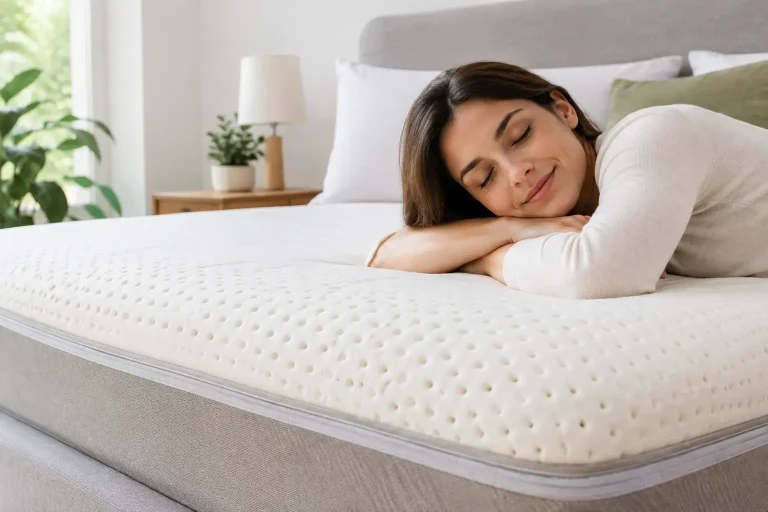
This is also why pocketed coils often pair well with orthopedic-focused comfort systems like latex or high-quality foams: the top layers handle pressure relief, while the coils handle structure.
Motion isolation that actually helps couples
One of the most practical pocketed coil mattress benefits is reduced motion transfer. Because each coil moves more independently, the movement from one side doesn’t have to ripple through the whole mattress.
If you share a bed, this matters more than most people think. Micro-awakenings (those brief wakeups you barely remember) can wreck how rested you feel. A mattress that limits partner disturbance can improve sleep continuity even if you don’t “feel” it happening.
That said, motion isolation is a system, not a single feature. Pocketed coils do a lot of the work, but the comfort layers above them matter too. A hybrid with responsive latex will feel a bit bouncier than one with memory foam, even if both use pocketed coils. Neither is automatically better – it depends on whether you want easier movement or a more “locked-in” feel.
Cooler sleep through airflow and heat release
If you sleep hot, you don’t just want a “cooling cover.” You want a mattress that doesn’t trap heat in the first place.
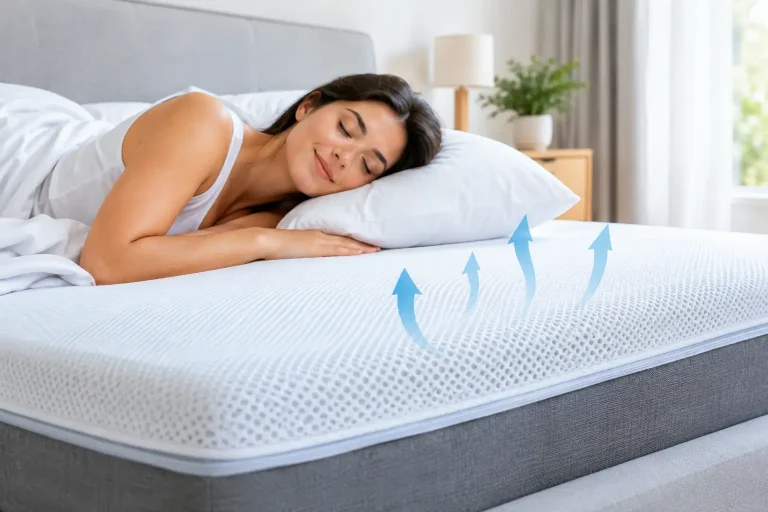
Pocketed coils create space inside the mattress. That open structure promotes airflow compared to dense all-foam beds, which can hold warmth closer to the body. When you combine coils with breathable comfort materials (like latex, gel-infused foams, or phase-change fabrics), you usually get a noticeably fresher sleep environment.
This matters for real life, not lab claims. Heat buildup can cause restlessness, more position changes, and less time in deeper sleep stages. A coil-based hybrid gives your body a better shot at staying comfortable through the night.
One nuance: airflow helps, but it won’t fully cancel out a very heat-trapping comfort layer. If the top of the bed is thick, slow-moving memory foam with limited breathability, you may still feel warm even with coils underneath. The coil unit helps, but your top layers still set the “temperature feel.”
Pressure relief without the stuck feeling
Many people want pressure relief, but they don’t want to feel trapped when they change positions. Pocketed coils support the comfort layers so they can cushion without collapsing.
On a good hybrid, the coils act like a responsive foundation. You get contouring at pressure points, but you can still move easily. That’s especially helpful if you tend to switch from side to back, or if you have mild hip or shoulder sensitivity and need the mattress to adapt quickly.
If you’ve tried a plush all-foam mattress and felt sore anyway, it may have been because it allowed too much sink in the wrong places. Pocketed coils can help keep your body “lifted” enough to protect alignment while still feeling comfortable.
Edge support for real usable space
A common frustration with softer mattresses is edge collapse – that feeling that you’re sliding off when you sit to put on shoes or sleep near the perimeter.
Pocketed coil systems often deliver stronger edge stability than foam cores, especially when the design includes reinforced perimeter coils or a firmer coil gauge along the sides. For couples, this can translate into more usable sleep surface, which matters if one of you tends to drift outward at night.
It’s also a durability issue. Weak edges break down faster because they take repeated loading from sitting and getting in and out of bed. Better edge construction keeps the mattress feeling “new” longer.
Durability and long-term shape retention
Pocketed coils tend to hold structure well over time. High-quality steel coils are resilient, and because the load is distributed across many individual springs, the mattress can resist developing deep body impressions.
The catch is quality. Coil count alone doesn’t guarantee durability. Coil gauge (thickness of the wire), the type of steel, how the coils are tempered, and the design of the comfort layers above the coils all affect how long the mattress keeps its intended feel.
A hybrid with durable materials on top (like natural latex or high-density foams) usually maintains comfort longer than one that relies on very low-density foams that compress quickly. If you’re buying for pain relief, this matters because support that fades over time often brings the aches back.
How pocketed coils compare to other mattress types
If you’re weighing options, here’s the practical difference.
Traditional innerspring mattresses can feel supportive at first, but because the coils are linked, they tend to transfer motion and create pressure points. They also often use thinner comfort layers, which can feel harsh for side sleepers.
All-foam mattresses can be excellent for pressure relief and motion isolation, but some people experience heat retention, slower response, or a lack of “pushback” support under the hips and midsection.
A pocketed-coil hybrid aims to blend the strengths: the contouring and quietness of foam or latex with the stability and airflow of a spring system.
When pocketed coils might not be the best fit
“It depends” is the honest part of mattress shopping.
If you want the deepest, most muted motion isolation possible, a thick all-foam design can still win, especially for extremely light sleepers. If you want an ultra-plush, sinking feel, some hybrids will feel too responsive or “springy” unless the comfort layers are designed to be very plush.
On the other end, if you’re a heavier sleeper or you carry most of your weight in your midsection, you’ll want a pocketed coil unit built for stronger support. Softer coil designs can allow too much hip sink, which can aggravate lower-back discomfort. Pocketed coils are not automatically “orthopedic” – the engineering choices decide that.
And if you’re shopping strictly on price, be careful. Some low-cost pocketed coil mattresses use thin foams on top that feel nice in a showroom but compress quickly, leaving you with less pressure relief and uneven comfort.
What to look for to get the real pocketed coil mattress benefits
To make pocketed coils work for your body, focus on the whole build.
Start with your sleep position and pain points. Side sleepers typically need more pressure relief at the shoulder and hip, while back and stomach sleepers need firmer, more stable support under the pelvis. Then look at the comfort layers: latex is responsive and breathable, cooling gel foams can help with temperature, and memory foam can add deeper contouring if you like that feel.
Next, ask how the coil system is designed. Zoned coils (firmer in the center, softer at shoulders/legs) can support alignment, especially if you have lower-back sensitivity. Reinforced edges can matter if you sit on the bed often or want full-width usability.
Finally, pay attention to credibility signals like material certifications and a meaningful warranty. These don’t replace comfort testing, but they help you avoid the lowest-quality foams and questionable manufacturing.
If you want a hybrid build that leans into pain relief, cooling, and partner-friendly motion isolation, that’s the design philosophy behind Azure Mattress at https://azuremattress.com.my/ – a performance-first approach where pocketed coils aren’t a buzzword, they’re part of a support system.
A mattress can’t fix everything, but the right structure can stop your sleep surface from causing the same problems night after night. When your bed supports your spine, stays cooler, and doesn’t punish you for sharing it, the day starts differently – not perfect, just easier.