If you wake up with a tight lower back, sore shoulders, or the feeling that your mattress is working against you, the latex vs innerspring mattress question is more than a materials debate. It is really about how your bed handles pressure, alignment, heat, and movement over hundreds of nights – not just how it feels for five minutes in a showroom.
For most adults, especially couples and anyone dealing with stiffness or back discomfort, the better choice depends on what kind of support system your body needs. Latex and innerspring mattresses can both work, but they solve sleep problems in very different ways.
Latex vs innerspring mattress: the real difference
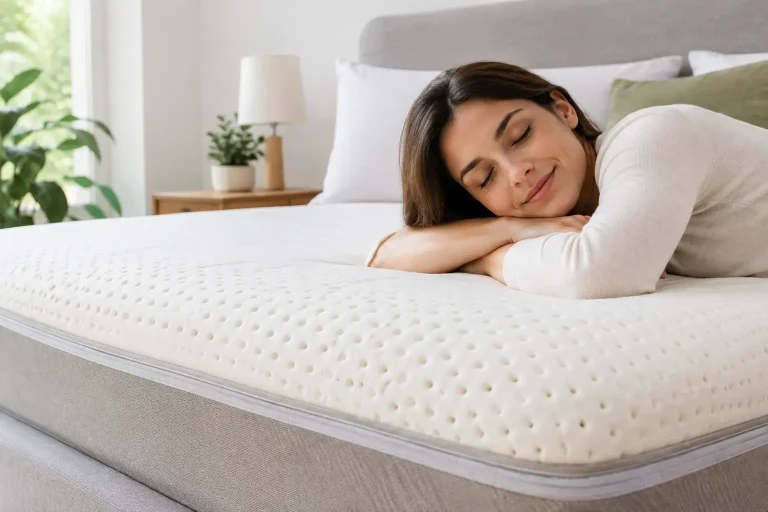
A latex mattress uses foam made from natural latex, synthetic latex, or a blend. Its feel is buoyant and responsive, with more contouring than a basic spring bed but less sink than memory foam. It is often chosen for pressure relief, durability, and naturally better airflow than dense conventional foams.
A traditional innerspring mattress relies mainly on a coil unit with thinner comfort layers on top. That design gives it a familiar springy feel and often a lower price point, but performance varies widely depending on coil quality, edge support, and what sits above the springs.
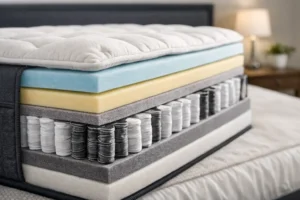
This is where many shoppers get tripped up. Not every mattress with springs performs like an old-style innerspring. Individually pocketed coil systems, especially when paired with latex or advanced comfort layers, behave very differently from connected coils in traditional mattresses. That distinction matters if you care about spinal support and partner disturbance.
Support and spinal alignment
Support is where the conversation gets serious. A mattress should keep your spine in a more neutral position while still allowing enough give at the shoulders and hips. If it is too stiff, pressure builds. If it is too soft or unstable, the midsection can dip and throw your alignment off.
Latex is strong in this area because it compresses with some precision and then pushes back quickly. That means it can cushion pressure points without letting your body collapse too deeply into the bed. Many sleepers describe it as supportive without feeling hard.
Traditional innerspring mattresses can provide decent support at first, but a lot depends on the coil construction and the comfort materials above it. Lower-end spring mattresses often feel fine in the center of the bed for a while, then start to lose consistency. That can show up as sagging, uneven support, or pressure around the hips and shoulders.
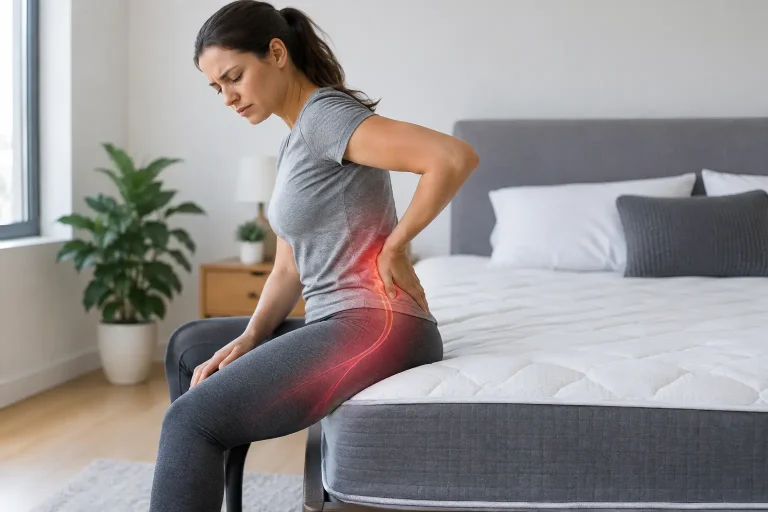
For people with back pain, this is usually the turning point. A basic innerspring may feel firm, but firmness alone does not equal orthopedic support. What matters is whether the mattress keeps the spine aligned through the night. Latex often does this better than a standard innerspring because it distributes weight more evenly and resists deep body impressions.
That said, a well-built hybrid with latex and individually pocketed coils can outperform both categories on their own. It gives you the adaptive relief of latex with the structural lift of a modern coil system.
Pressure relief and joint comfort
If you sleep on your side or deal with shoulder, hip, or joint sensitivity, pressure relief should be high on your list.
Latex generally wins here over a classic innerspring. It has a more forgiving surface response and does a better job of spreading body weight. You still feel supported, but the mattress does not create the same concentrated pushback that many traditional spring beds do.
An innerspring mattress with thin padding can feel especially harsh for lighter sleepers and side sleepers. The coils underneath may be supportive, but without enough comfort engineering on top, pressure points build up fast. That can lead to tossing, turning, and numbness in the arms or shoulders.
This is one reason shoppers move away from old-fashioned spring mattresses after years of interrupted sleep. They are not always too firm in a helpful way. Sometimes they are simply too shallow in comfort.
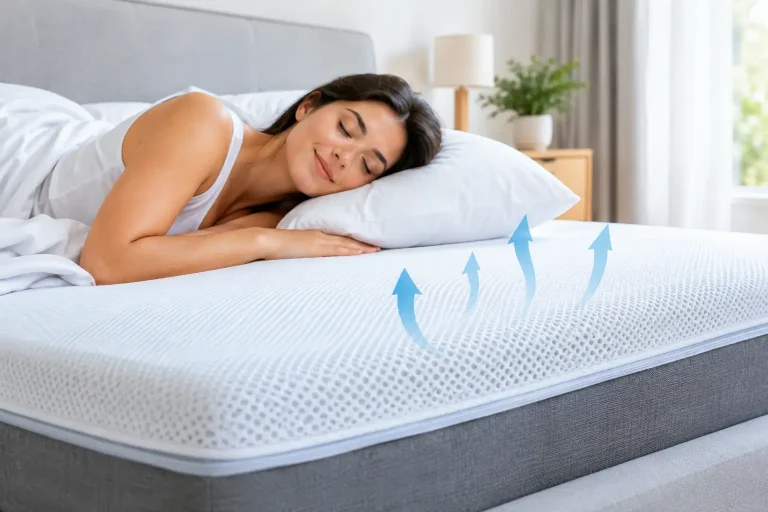
Cooling and airflow
Hot sleepers often assume springs are always cooler. Sometimes that is true, but not automatically.
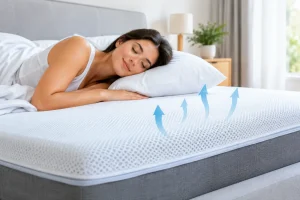
A traditional innerspring has open space around the coil system, which helps airflow. If you are comparing a basic spring mattress to a dense all-foam bed, the innerspring may sleep cooler. But latex also performs well with temperature regulation because it is more breathable than many synthetic foams and does not trap heat in the same way memory foam often can.
So in the latex vs innerspring mattress debate, cooling is closer than most people expect. A lot depends on the full build, including cover fabric, quilting, ventilation, and whether the bed uses heat-retaining foams.
For sleepers dealing with overheating, the strongest setup is often not a simple innerspring or a solid latex slab. It is a thoughtfully engineered hybrid that combines breathable latex, cooling layers, and a pocketed coil core that keeps air moving through the mattress.
Motion isolation for couples
If your partner changes position, gets up early, or moves a lot at night, motion transfer becomes a daily problem.
This is where traditional innerspring mattresses usually struggle. In many classic spring designs, movement travels across the bed because the coils are connected or the comfort layers are too thin to absorb motion well. One person turns, the other person feels it.
Latex performs better than standard innerspring in most cases because it dampens some motion while still staying responsive. You get bounce, but not as much whole-bed ripple.
Still, pure latex is not always the absolute best at motion isolation. Advanced hybrids with individually pocketed coils and layered comfort materials can reduce partner disturbance even more effectively. That matters for couples who want support and responsiveness without sacrificing uninterrupted sleep.
Durability and long-term value
Mattress value is not just about sticker price. It is about how the bed performs after two, five, or eight years.
Latex has a strong reputation for durability. Quality latex tends to hold its shape well and resist premature sagging better than many lower-cost comfort foams. That makes it appealing if you want a mattress that keeps delivering the same support instead of softening too quickly.
Traditional innerspring mattresses vary more. Some hold up reasonably well, but many lower-priced models lose comfort before they lose structure. The springs may still be there, yet the top layers break down, body impressions form, and sleep quality drops.
This is why the cheapest innerspring is not always the most affordable option long term. Replacing a mattress sooner because support has faded is expensive, even if the upfront cost looked attractive.
Who should choose latex
A latex mattress makes sense if you want a more responsive feel, stronger pressure relief than a basic spring bed, and dependable support for back and joint comfort. It is especially appealing for combination sleepers who change positions and do not want the slow sink of memory foam.
It also suits shoppers who care about durability and more breathable, higher-quality materials. If your main complaints are stiffness, pressure points, or waking up feeling less recovered than you should, latex deserves serious attention.
Who should choose innerspring
An innerspring mattress can still be a reasonable choice if you prefer a familiar springy feel, want a lower entry price, or simply like sleeping more on top of the bed than in it.
But there is a catch. If you are considering innerspring because it seems straightforward, make sure you are not comparing a basic old-style spring mattress against a more advanced comfort design. Many shoppers say they want innerspring when what they really need is the lift of coils paired with better pressure relief and motion control.
The option that often makes the most sense
For a lot of adults, the best answer is not choosing one side of the latex vs innerspring mattress comparison in isolation. It is choosing a hybrid that uses the strengths of both.
That means latex for cushioning and pressure relief, plus individually pocketed springs for targeted support, airflow, and less motion transfer. It is a more performance-driven design, especially if your priorities are spinal alignment, cooler sleep, and waking up with fewer aches.
This is also why hybrid construction has become the upgrade path for people replacing worn-out spring mattresses. It solves the most common problems that older designs leave behind without creating the stuck feeling some all-foam beds can have.
If you are shopping with pain relief in mind, do not focus only on whether a mattress feels firm or soft in the first minute. Pay attention to how the materials work together, how movement is absorbed, how pressure is dispersed, and whether the support system stays consistent across the full surface. That is where better sleep starts to become measurable.
A good mattress should not just feel comfortable when you lie down. It should help your body recover while you are there. If that is the goal, choose the design that supports your spine, protects your joints, and gives you fewer reasons to wake up before morning.