A pillow can feel soft and still leave you waking with a stiff neck. That is why an Azure pillow review of neck support should look beyond first impressions. The real question is whether the pillow helps keep your head, neck, and upper spine in a neutral, relaxed position through the night – without forcing your shoulders to collapse or your chin to tilt upward.
For adults managing morning tension, desk-related neck stiffness, shoulder pressure, or restless sleep, the right pillow is not a minor accessory. It is part of the support system that determines how well your body recovers. A supportive pillow works with your mattress to reduce strain, distribute pressure, and make a comfortable sleeping position easier to maintain.
Azure Pillow Review: Neck Support Starts With Alignment
Neck support is not about choosing the firmest pillow available. It is about filling the space between your head and mattress at the correct height. When that space is supported properly, the cervical spine – the upper portion of your spine – can remain closer to its natural curve. When it is not, the muscles around the neck and shoulders often work overnight to compensate.
A pillow that is too low can allow the head to drop backward or sideways. A pillow that is too high can push the head forward, creating tension at the base of the neck. Both problems can leave you feeling as though you slept for hours but never truly recovered.
An Azure pillow is best evaluated through this practical lens: does it provide enough structured comfort to cushion the head while resisting the deep collapse that can pull the neck out of position? For sleepers who have outgrown thin, flattened, or overly plush pillows, that balance is often where a meaningful upgrade begins.
Why pillow support affects more than your neck
The neck does not work in isolation. Poor pillow height can affect the shoulders, upper back, jaw, and even the quality of your breathing. Side sleepers may feel more pressure through the lower shoulder when their pillow lacks enough loft. Back sleepers may develop tension when a pillow props the head too far forward. Stomach sleepers can place rotation stress on the neck simply because the position requires the head to turn.
This is why the best neck-support pillow is rarely the one that feels universally perfect in a quick test. It is the one that matches your preferred sleep position, body frame, mattress firmness, and personal sensitivity to pressure.
What a Supportive Pillow Should Deliver
A high-performance sleep setup should make support feel natural, not rigid. The goal is peaceful, rejuvenating rest, not the sensation of sleeping on a hard surface. In a neck-support pillow, several qualities matter most.
First is stable loft. The pillow should hold sufficient height while your head rests on it instead of flattening immediately under weight. Stable loft is especially valuable for side sleepers, whose shoulders create a larger gap between the head and mattress.
Second is responsive pressure relief. Your head and neck need cushioning, but the material should respond in a controlled way. If a pillow sinks too deeply around the head, it may feel cozy at first while allowing alignment to drift over time. If it feels excessively firm, it can create pressure around the ear, jaw, and side of the face.
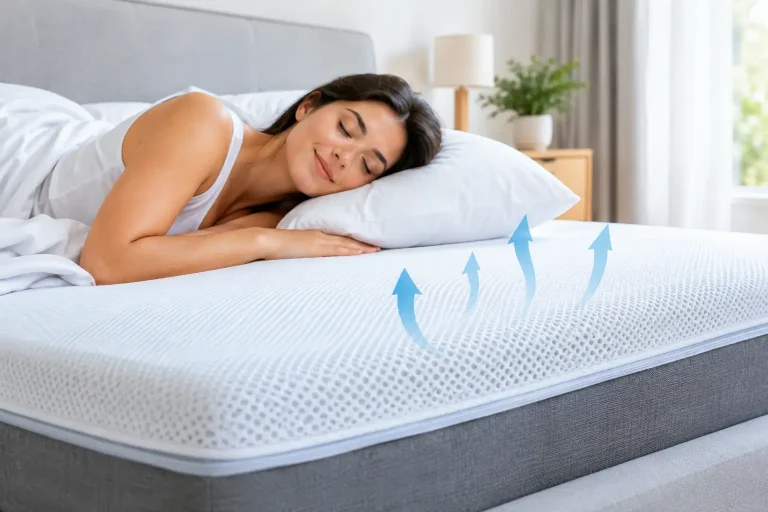
Third is temperature comfort. Heat can interrupt sleep long before you consciously notice it. A pillow that retains excessive warmth may lead to tossing, turning, and repeated position changes. For hot sleepers, breathable materials and a cooler sleep surface can be just as relevant to neck comfort as loft or firmness.
Finally, look for durability. A pillow that begins supportive but loses shape quickly may not provide consistent relief. Your neck needs the same dependable support on night 100 as it did on night one.
Is It a Good Fit for Your Sleep Position?
The answer depends on how you sleep most often, not how you think you sleep. Most people shift positions overnight, but there is usually a position where they spend the longest stretch of time. Start there.
Side sleepers
Side sleeping often calls for more height because the pillow must bridge the distance between the ear and the mattress. A supportive Azure pillow can be a strong choice for side sleepers if its loft keeps the head level with the spine rather than allowing it to angle down toward the mattress.
Pay attention to your shoulder width and mattress feel. Broad-shouldered sleepers and those on softer mattresses often need more support because the shoulder sinks farther into the sleep surface. If you wake with one-sided neck tightness or numbness in the shoulder area, your current pillow may be too thin, too soft, or both.
Back sleepers
Back sleepers typically need a medium loft that supports the curve of the neck without lifting the head excessively. The ideal feel is gently cradled, with the chin remaining neutral rather than tipped toward the chest.
For this position, a pillow should provide a stable base under the neck while allowing the back of the head to settle comfortably. If you regularly wake with tightness across the upper shoulders, a high pillow may be part of the problem. A more balanced support profile can help the neck relax rather than brace itself all night.
Stomach sleepers
Stomach sleeping is the most difficult position for neck alignment because it requires turning the head to one side. A very tall or firm pillow can increase that rotation and create more strain. If you are committed to stomach sleeping, a thinner, softer pillow may feel more comfortable – although shifting toward a side or back position may offer better long-term support for many people.
The right choice here depends on comfort and tolerance. If you wake without pain and sleep soundly, there is no need to force a change overnight. But recurring neck stiffness is a clear reason to reassess both pillow height and sleep position.
The Mattress-Pillow Connection Matters
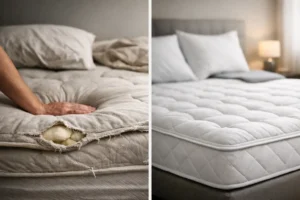
A pillow cannot fully compensate for a mattress that allows the body to sink unevenly. If your hips or shoulders drop too deeply, your spine changes position, and the pillow must work harder to keep the neck level. This is one reason people sometimes buy a new pillow and feel only partial improvement.
A supportive mattress and pillow should function as one system. The mattress should cushion pressure points and support the larger curves of the body, while the pillow supports the smaller but highly sensitive curve of the neck. Azure Mattress approaches sleep with this full-system mindset: comfort, spine and joint support, and temperature regulation are most effective when they work together.
For example, a side sleeper on a pressure-relieving mattress may need a different pillow height than that same sleeper on a firm, traditional spring mattress. Take a few nights to assess the combination before deciding that a pillow is too high or too low.
What to Notice During the First Week
Do not judge neck support only by how the pillow feels when you first lie down. Pay attention to how your body feels in the morning and how often you reposition overnight. A brief adjustment period can be normal when moving from a worn-out pillow to one with more consistent structure.
Look for signs that the fit is working: less morning stiffness, fewer attempts to bunch or fold the pillow, reduced shoulder pressure, and an easier time settling into sleep. These are practical indicators that your body is no longer searching for support.
There are also signs the pillow may not be the right match. Persistent neck pain, headaches on waking, a forward-tilted chin, or a shoulder that feels compressed can indicate that the loft or firmness is wrong for your body and sleep position. More support is not always better. Correct support is better.
Who May Benefit Most From Better Neck Support?
A neck-support pillow is particularly worth considering for people who wake stiff despite getting enough hours of sleep, work long days at a desk, sleep primarily on their side, or replace their mattress but keep an old flattened pillow. Couples can benefit as well, especially when one partner needs a cooler or more supportive sleep surface without changing the other person’s side of the bed.
It may be less suitable for someone who strongly prefers an extremely thin, feather-soft pillow or spends most of the night sleeping on their stomach. In those cases, comfort preference and neck position need to be weighed carefully. The most premium materials cannot solve a mismatch in height.
A supportive pillow should not promise to treat an injury or replace medical care. If neck pain is severe, persistent, accompanied by numbness, weakness, or radiating pain, speak with a qualified healthcare professional. But for the everyday strain caused by poor sleep posture, improving pillow support is a sensible place to start.
Tonight, notice whether your pillow helps your head rest in line with your body or simply gives it somewhere soft to land. That small distinction can shape how rested, mobile, and comfortable you feel when morning arrives.