A mattress can feel wonderfully soft for five minutes in a showroom, then leave your lower back tight by morning. That is why learning how to choose hybrid mattress firmness is less about chasing a “cloud-like” feel and more about finding the right balance of pressure relief, spinal support, cooling, and stability for your body.
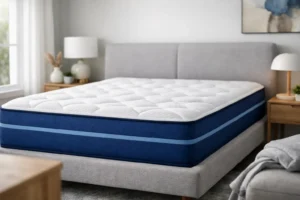
Hybrid mattresses are designed to make that balance easier. They pair responsive pocketed coils with comfort layers such as latex, cooling gel foam, or pressure-relieving foam. But materials alone do not determine whether a mattress is right for you. Firmness determines how deeply you settle in, how your hips and shoulders are supported, and whether you wake up refreshed instead of restless.
Start With What Firmness Really Means
Mattress firmness describes how a bed feels when you lie on it. Most brands use a 1-to-10 scale, with 1 being extremely soft and 10 being extremely firm. For most adults, the practical range is between 4 and 8.
A medium-soft mattress usually falls around 4 to 5. It has more cushioning and allows the body to sink in further. Medium to medium-firm options sit around 5 to 7, offering a more balanced combination of contouring and support. Firm mattresses, generally 7 to 8, keep the body more elevated and feel noticeably more stable.
Firmness and support are related, but they are not the same thing. A firm surface can still lack support if its layers do not keep your spine in a neutral position. Likewise, a medium-feel hybrid can provide excellent support when its pocket springs, transition layers, and comfort materials are engineered to distribute weight correctly.
This distinction matters when you are shopping for pain relief. The goal is not to choose the hardest mattress possible. The goal is to choose a mattress that prevents your heaviest areas, especially your hips and lower back, from dropping out of alignment.
How to Choose Hybrid Mattress Firmness by Sleep Position
Your usual sleep position is the clearest starting point because each position puts pressure on different parts of the body.
Side sleepers usually need more pressure relief
Side sleeping concentrates pressure at the shoulders and hips. If the surface is too firm, those joints can feel compressed, causing tingling arms, shoulder soreness, or frequent tossing and turning. Most side sleepers feel best on a medium-soft to medium hybrid, roughly a 4 to 6 on the firmness scale.
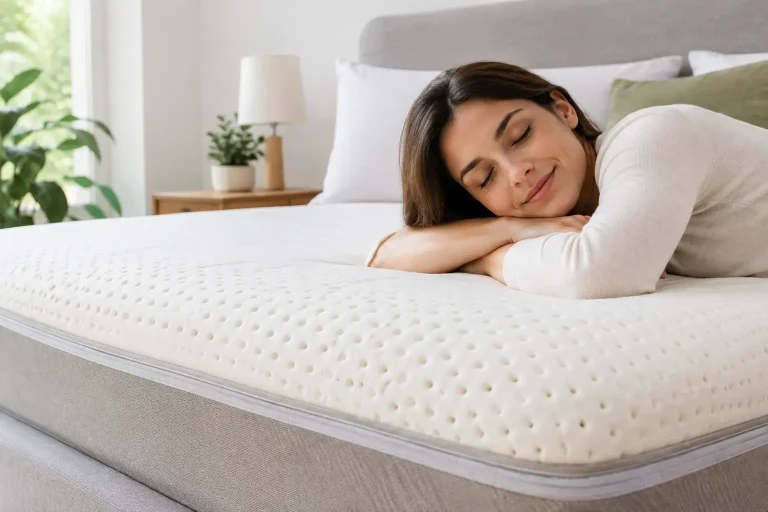
Look for cushioning comfort layers that allow your shoulder to settle in without losing support beneath the waist. Latex and high-quality pressure-relieving foam can help contour around curves, while individually pocketed springs keep the midsection from sinking too deeply.
If you are a side sleeper with recurring lower-back pain, do not assume softer is always better. A mattress that lets your hips sink farther than your shoulders can strain the lumbar area. Medium is often the safer choice for side sleepers who need both joint comfort and dependable alignment.
Back sleepers need balanced lumbar support
Back sleepers generally need a medium to medium-firm hybrid, often around 5 to 7. This range supports the natural curve of the lower spine while offering enough surface comfort for the shoulder blades, hips, and heels.
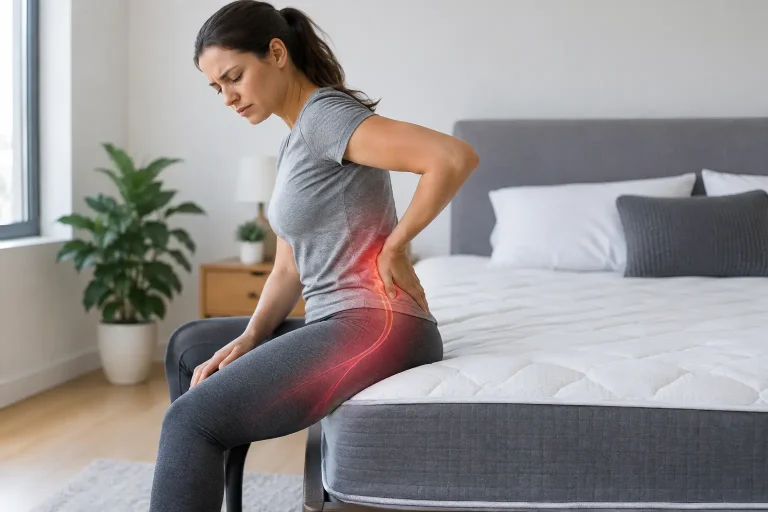
A mattress that is too soft can allow the pelvis to drop, increasing tension through the lower back. One that is too firm may leave a gap beneath the lumbar region, making the back feel unsupported. A well-built hybrid helps solve this with responsive coil support and comfort layers that adapt without excessive sink.
For many people with morning stiffness, a medium-firm hybrid is the most reliable starting point. It delivers a stable sleep surface without the rigid feel of a traditional hard spring mattress.
Stomach sleepers usually need a firmer surface
Stomach sleepers need to be especially careful with softness. When the hips sink too far, the lower back can arch unnaturally for hours. That position often leads to lower-back discomfort and a stiff feeling when you get out of bed.
A medium-firm to firm hybrid, typically 6 to 8, is usually more appropriate. The surface should feel supportive enough to keep the hips level with the shoulders, while still providing a thin layer of comfort at the chest and knees. Responsive pocket springs are valuable here because they reinforce the body without creating the flat, unyielding feel of an old-fashioned firm mattress.
Combination sleepers need responsive support
If you shift between your side, back, and stomach throughout the night, focus on medium to medium-firm firmness. A range of 5 to 7 is often the most adaptable. It gives side sleeping positions enough contouring while remaining stable enough for back and stomach positions.
Responsiveness matters just as much as the firmness number. Latex and individually wrapped coils make it easier to change positions without feeling trapped in the mattress. That can mean fewer sleep disruptions, especially if you tend to move when trying to get comfortable.
Let Body Weight Guide Your Choice
Two people can lie on the same mattress and experience entirely different firmness levels. Body weight changes how deeply you engage the comfort layers and coil system.
Lighter sleepers, often under 130 pounds, may experience a mattress as firmer because they do not sink as deeply into its top layers. They often prefer medium-soft to medium feels, especially if they sleep on their side.
Average-weight sleepers, roughly 130 to 230 pounds, usually find their best balance in the medium to medium-firm range. This is where many hybrid mattresses are designed to perform, combining pressure relief with stable support.
Heavier sleepers, generally above 230 pounds, often benefit from medium-firm to firm support. They need a construction that resists excessive sink and keeps the spine level. A hybrid with a structured pocket coil system and durable comfort materials is especially useful because it offers deeper support than foam alone.
These ranges are guidelines, not rules. A lighter stomach sleeper may still need a firmer feel, while a heavier side sleeper may need more cushioning at the shoulders. Sleep position and pain points should always be considered alongside body weight.
Use Your Pain Pattern as Useful Evidence
Your body is often more honest than a firmness label. Notice where discomfort appears when you wake up.
Shoulder pain, numb arms, or hip tenderness can indicate that a mattress is too firm or lacks pressure relief. Lower-back pain may mean the mattress is too soft, although an overly firm bed that fails to support the lumbar curve can also contribute. If your whole body feels sore, the issue may be worn-out materials, poor pressure distribution, or inadequate motion isolation rather than firmness alone.
A hybrid mattress should help keep the spine in a relatively straight line when viewed from the side. For side sleepers, that means the neck, shoulders, rib cage, hips, and knees should remain level rather than dipping at the waist. For back and stomach sleepers, the hips should not sag below the rest of the body.
If you share a bed, consider how firmness affects both people. Couples with different needs often do well with a medium-firm hybrid because it provides a stable middle ground. Strong motion isolation from individually pocketed coils can also reduce disturbance when one partner changes position or gets out of bed.
Do Not Ignore Temperature and Materials
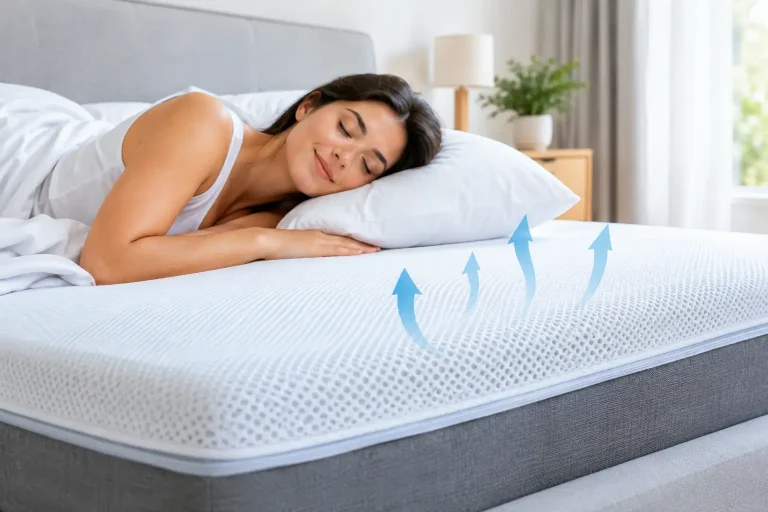
Firmness changes how much of your body contacts the mattress. Softer beds allow more sink and can feel warmer because more of the body is surrounded by foam. Firmer mattresses keep you more on the surface, which may feel cooler, but that alone does not guarantee temperature regulation.
For hot sleepers, look at the full construction. Breathable latex, cooling gel comfort layers, airflow channels, and pocketed springs all help heat move away from the body. A medium or medium-firm hybrid with these features can provide cooling without forcing you into an overly firm sleep surface.
Material quality also affects whether firmness lasts. Low-density foams can soften quickly, changing the support you felt when the mattress was new. Durable foam layers, resilient latex, and a structured coil system are designed to maintain their performance for longer, which matters when you are investing in better sleep and long-term joint comfort.
Test the Feel Beyond the First Impression
When comparing firmness, lie in your normal sleep position long enough to notice where your body settles. A quick sit on the edge tells you very little about overnight comfort.
Pay attention to three questions: Do your shoulders and hips feel cushioned? Does your lower back feel supported? Can you move easily without feeling stuck? If you can answer yes to all three, you are likely close to the right firmness.
Online mattress shopping can still be a confident decision when the brand clearly explains its materials, firmness level, trial policy, and warranty. A home trial is useful because your muscles and sleep habits need time to adjust to a new support system. Give your body a few weeks unless the mattress is causing clear discomfort or pain.
The Best Firmness Is the One That Keeps You Aligned
A hybrid mattress should not force you to choose between a plush feel and proper support. The right firmness lets pressure points relax while the coil system holds your body in a healthy position throughout the night.
For most sleepers, medium to medium-firm is the strongest place to begin. Move softer if you are a lighter side sleeper who needs deeper pressure relief. Move firmer if you sleep on your stomach, carry more body weight, or wake with signs that your hips are sinking too far. The best choice is the one that helps you wake up with less stiffness, fewer interruptions, and the quiet confidence that your mattress is working while you rest.