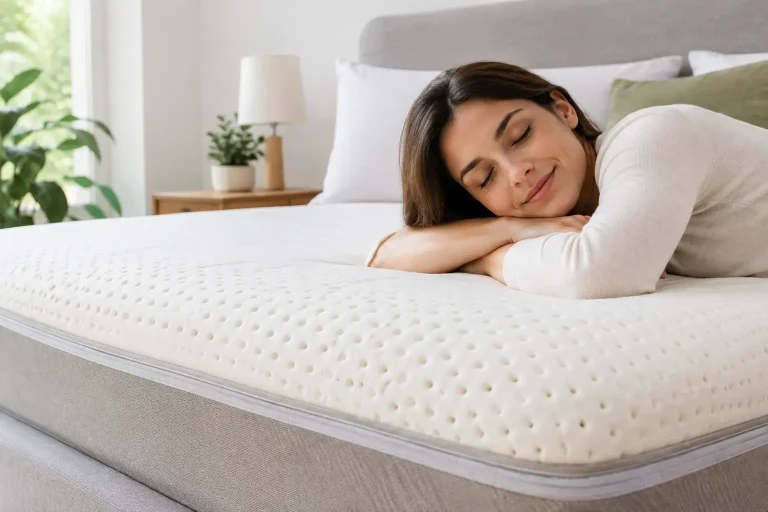
The mattress edge is where a rushed morning, a tired body, and a real mattress test meet. To test mattress edge support, you do not need special equipment or a showroom salesperson. You need to sit, lie down, and notice whether the surface keeps you supported instead of letting you slide, sink, or brace yourself to stand.
For people with back stiffness, joint discomfort, or limited bedroom space, edge support is not a minor detail. It affects how much of the mattress you can comfortably use, how stable it feels when getting in and out of bed, and whether two sleepers have room to rest without drifting toward the center. A well-designed hybrid mattress should feel supportive from the middle to the perimeter, not just in the area that looks good when it is newly unboxed.
Why mattress edge support matters
Edge support describes how well a mattress resists excessive compression around its perimeter. Every mattress compresses to some degree. The goal is not a completely rigid edge that feels hard against your hips or shoulders. The goal is controlled support: enough give for comfort, with enough structure to keep your body stable.
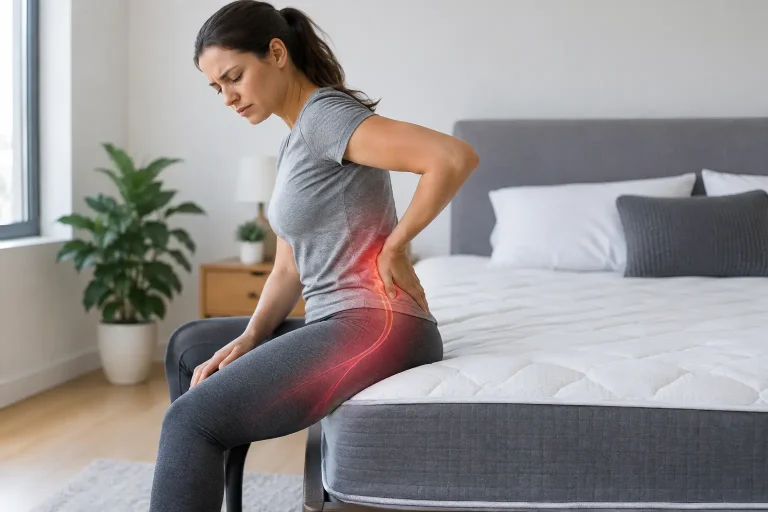
This matters most when you sit on the side of the bed to put on socks, get up during the night, or lower yourself down carefully because your knees or lower back are sore. If the edge collapses, your hips may drop below your knees and create an awkward angle that makes standing harder. The same issue can make a bed feel smaller for couples, especially when one partner naturally sleeps close to the side.
A supportive perimeter also helps maintain a more secure feel for people who move carefully due to joint pain, balance concerns, or recovery from an injury. It is one part of a sleep surface designed for easier movement, better alignment, and less strain at the start and end of the day.
How to test mattress edge support in five minutes
The best test combines sitting, lying down, and moving naturally. Avoid judging the edge based on one quick press with your hand. Your hand cannot recreate the concentrated pressure and shifting weight of your body.
Start with the sit test
Sit on the edge as you normally would. Keep your feet on the floor and allow your full weight to settle for 30 to 60 seconds. Notice where your hips land. A supportive edge should compress moderately while keeping you level and stable.
If you feel as though you are sliding forward, rolling off, or sinking so deeply that the mattress frame becomes noticeable, the edge may be too weak for your needs. The difference is especially clear on taller beds, where a collapsing side can make getting up feel less controlled.
Next, place both hands beside your hips and stand up. You should be able to rise without feeling like you need to push yourself out of a deep dip. This is a practical check for anyone who wakes with stiffness or has trouble moving after a long day at a desk.
Try the lie-near-the-edge test
Lie on your side or back about three to six inches from the perimeter, in a position you would actually use for sleep. Stay there for at least a minute. Your body should feel supported, not like it is slowly migrating toward the edge.
Pay close attention to your shoulders, hips, and lower back. A mattress can have a firm edge but still feel uncomfortable if its comfort layers create sharp pressure points. The right result is secure support with enough pressure relief to let your muscles relax.
For couples, repeat this test with both sleepers in bed. A useful edge gives each person more functional sleeping space without creating a hard ridge around the mattress. That extra usable surface can be meaningful on a queen bed, particularly when a child or pet occasionally joins the bed.
Check the transition from center to edge
Move gradually from the center of the mattress toward the side. You are looking for a consistent change, not a sudden drop-off. A quality mattress should not feel plush and supportive in the middle, then abruptly unstable at the perimeter.
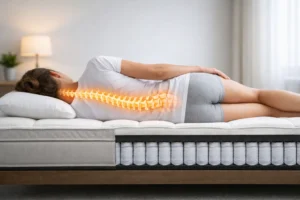
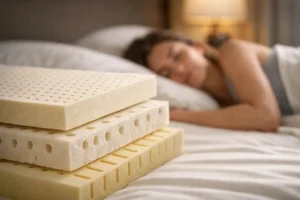
This transition test also reveals whether the comfort layers and support system are working together. On a hybrid mattress, individually pocketed springs can provide targeted support while upper foam or latex layers cushion pressure points. If the construction is well balanced, the edge should feel integrated into the sleep surface rather than added as an afterthought.
Test it when you change positions
Roll from your back to your side near the edge, then push yourself up to a seated position. This movement shows more than a still test because real sleep involves turning, reaching, and getting up in low light.
You should feel secure enough to move freely. If the perimeter compresses sharply every time you shift, it may create a less confident sleep experience, even if the mattress feels comfortable in the center.
What good edge support should feel like
Good edge support feels stable, not stiff. You should be able to sit without a dramatic sink, lie near the side without feeling unbalanced, and use the full width of the mattress with confidence.
There is no single ideal firmness for every sleeper. A side sleeper with sensitive shoulders may prefer a more cushioning top layer, while a back sleeper with lower-back pain may want a firmer, more lifted feel. In both cases, the edge should maintain structure beneath the comfort layers.
A reinforced coil perimeter can help create this balance. Pocketed coils respond independently, which supports movement control across the mattress, while stronger perimeter coils or a thoughtfully engineered edge system can resist excessive collapse. This is particularly useful for couples who need both motion isolation and stable support when sitting or sleeping near the sides.
Signs the edge support is not enough
A soft edge is not automatically a deal-breaker. Some all-foam mattresses are intentionally designed with a gentler perimeter, and that may suit a lighter sleeper who rarely sits on the bed or sleeps near the center. But weak edges become a daily frustration when they interfere with movement, comfort, or usable space.
Watch for repeated signs: you avoid sitting on the side because it feels unstable; you wake near the edge feeling like you might roll off; getting up aggravates your knees or back; or your mattress seems noticeably narrower once two people are lying down. These are functional problems, not cosmetic preferences.
Also consider the foundation. A mattress placed on uneven slats, a weak box spring, or an unsupported frame can feel less stable around the perimeter. Before blaming the mattress, confirm that the base is level, properly sized, and capable of supporting the mattress evenly.
Edge support and mattress materials
Construction changes the result. Traditional innerspring mattresses may feel firm around the sides but can transfer more motion and provide less individualized contouring. All-foam designs can offer excellent pressure relief, though some have more compression at the perimeter.
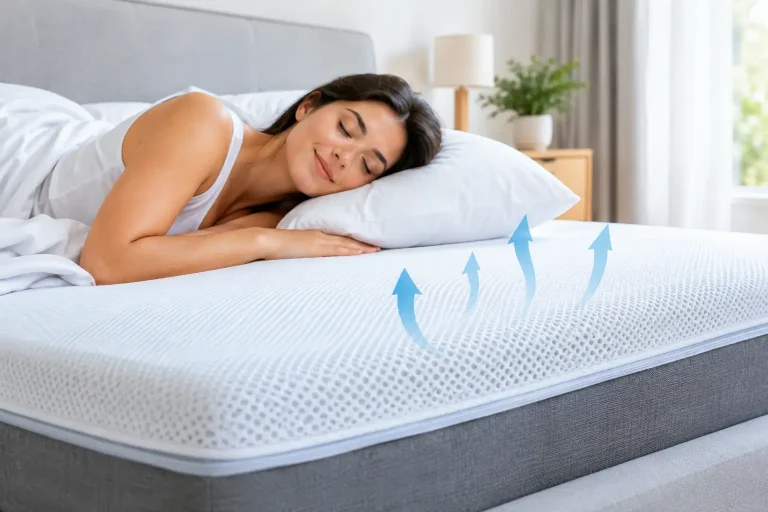
Hybrid mattresses are often a strong option for sleepers who want a more complete balance. Latex can add responsive cushioning and help prevent the stuck-in-the-bed sensation. Cooling gel foams can contour around pressure points while helping manage heat. Individually pocketed springs can support spinal alignment, reduce partner disturbance, and create a more stable base across the mattress.
Still, materials alone do not guarantee performance. Thickness, coil design, foam density, layer placement, and edge reinforcement all affect the final feel. That is why the at-home test matters more than a label that simply says “firm edge support.”
When edge support should be a priority
Put edge support near the top of your checklist if you share a bed, have a smaller mattress size, sit on the bed regularly, or deal with pain and stiffness that make standing more difficult. It is also worth prioritizing if you sleep hot and move toward the edge for more personal space, or if you prefer the secure feel of a mattress that supports you during every position change.
At Azure Mattress, the aim is not just softness or firmness in isolation. It is a sleep surface that combines pressure relief, spinal support, temperature regulation, and controlled movement for deeper, more restorative rest.
When you test an edge, trust the moments that happen every day: sitting down after work, turning over at 3 a.m., and getting up before your body is fully awake. The right mattress should make those small movements feel easier, steadier, and more comfortable.