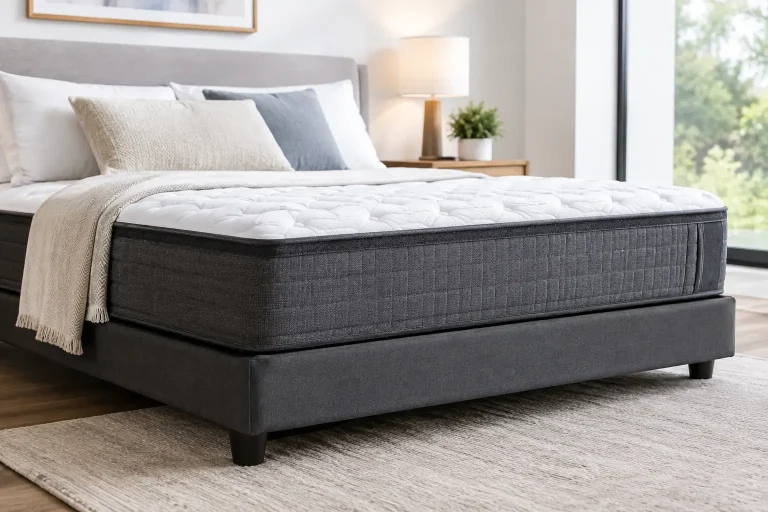
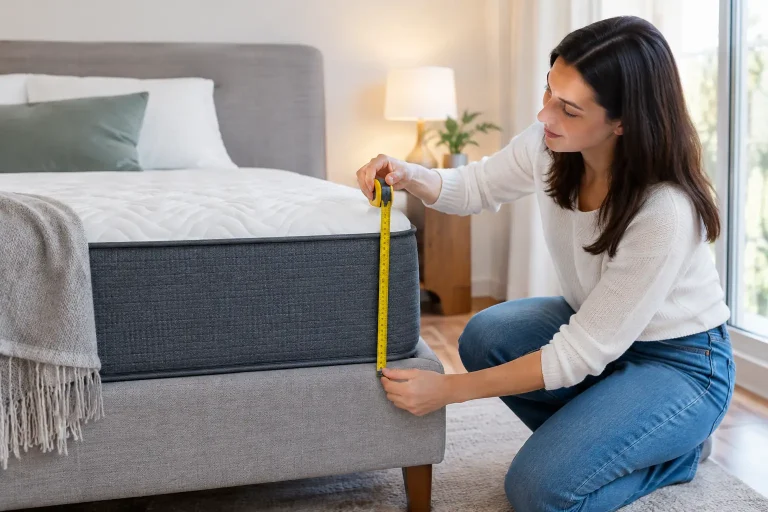
Buying a mattress used to mean clearing a Saturday, driving to a showroom, and lying awkwardly on five beds while a salesperson waited for your reaction. Now the bigger question is simpler and more practical: mattress in a box vs store – which one actually gives you better sleep, better support, and less buying regret?
For most people, the answer is not about where the mattress is sold. It is about how well the mattress is engineered for your body, your sleep temperature, and the way you share a bed. The channel matters, but the construction matters more.
Mattress in a box vs store: what really changes?
A mattress in a box is compressed, rolled, and shipped to your door. A store mattress is usually delivered full-size after you test it in person at a showroom. That difference sounds major, but it does not automatically tell you which bed will feel better after six months.
The real differences show up in convenience, testing experience, pricing, and how much information you get before you buy. Online brands often give you more detailed specs because they need to explain their materials clearly. Store shopping gives you immediate first impressions, but those impressions can be misleading if you only lie down for a few minutes.
A mattress can feel soft and impressive in a showroom and still fail where it counts – spinal alignment, pressure relief, motion isolation, and temperature control across a full night.
The biggest advantage of buying in store
The strongest case for a store mattress is obvious: you can try it before you buy it. If you are nervous about firmness, that can feel reassuring. You can compare a few models side by side, ask questions in real time, and leave feeling like you made a hands-on decision.
That matters most for shoppers who have never moved beyond a basic spring mattress and are not yet familiar with newer materials like latex, cooling gel foam, or individually pocketed coils. Touching the surface can help them translate product descriptions into something more real.
But there is a limit to what a showroom test can tell you. Ten minutes on a mattress does not recreate your actual sleep posture, your room temperature, or what happens when your partner rolls over at 2 a.m. Pressure buildup, lower back tension, and overheating often show up after hours, not minutes.
Why mattress in a box has become the smarter option for many buyers
The biggest online advantage is not just convenience. It is decision quality.
When you shop online, especially from a brand built around performance outcomes, you tend to get clearer information about what is inside the mattress and why it is there. That matters if you are shopping to solve a problem, not just replace an old bed.
If you deal with back pain, for example, you need more than a vague promise of comfort. You need to know whether the mattress has a support core that helps keep the spine aligned, whether the comfort layers relieve pressure without letting the hips sink too far, and whether the surface traps heat. A well-designed hybrid mattress sold online often explains this in straightforward terms: latex for responsive pressure relief, cooling foams for heat control, and pocket springs for support and reduced motion transfer.
There is also the practical side. A boxed mattress arrives at your door, usually with free shipping, and you can set it up without coordinating a showroom visit first. For busy professionals, couples, and family households, that convenience is not a luxury. It is part of the value.
Price is not just about the sticker
Many shoppers assume store mattresses must be better because they cost more. Often, they cost more because there are more overhead layers between the factory and your bedroom.
Showrooms, sales commissions, retail markups, and floor model programs all add cost. That does not mean every store mattress is overpriced, but it does mean the price is not a clean signal of quality.
Direct-to-consumer brands tend to compete harder on material value. You may get a more advanced build – such as a hybrid with premium foams, latex, and zoned or structured coils – at a lower price than a similar-feeling mattress in a retail store. Add promotional pricing, free delivery, installment options, and home trial periods, and the value gap can become significant.
If you are comparing mattress in a box vs store, do not just compare retail prices. Compare the actual construction, trial policy, return costs, and warranty coverage.
Support and pain relief separate the good from the forgettable
This is where the buying channel matters less than the mattress design.
If you wake up with stiffness, lower back pain, shoulder pressure, or numb hips, your mattress needs to do two jobs at once. It must cushion pressure points and maintain alignment. Too soft, and your body sinks out of position. Too firm, and your joints absorb too much force.
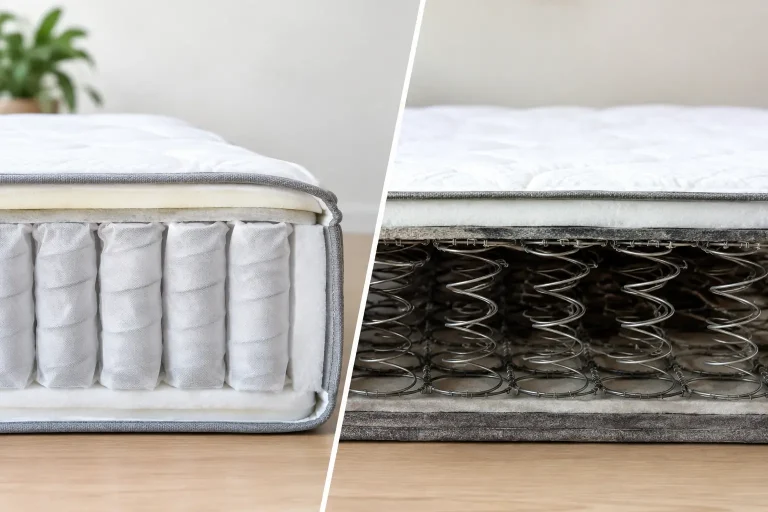
A strong hybrid design often performs well here because it combines contouring layers with a more stable spring base. Latex and high-quality foams can reduce pressure. Individually pocketed coils can support the body more precisely and reduce the hammock effect that causes many sleepers to wake up sore.
This is one reason many online-first mattress brands have gained traction. They are not selling a generic comfort story. They are selling a more engineered sleep system built around practical outcomes.
Cooling performance is easier to talk about than to deliver
A mattress that sleeps hot can ruin every other feature. It does not matter how plush the top feels if you are kicking the blanket off by midnight.
Store testing is weak here because a cool showroom tells you almost nothing about overnight heat retention. What matters is the internal design – breathable layers, airflow channels, less heat-trapping foam, and spring systems that allow air to move through the mattress.
If you are naturally warm at night or live in a hotter climate, this should be a major part of your buying decision. Look for specific cooling materials and explanations, not broad claims. Brands that focus on temperature regulation usually explain how their foam, latex, and coil layers work together to dissipate heat instead of holding it near the body.
Couples should think beyond comfort
For couples, one of the most overlooked parts of this decision is motion isolation. A mattress can feel nice in a showroom and still turn into a problem if every movement transfers across the bed.
This is another area where construction tells you more than quick testing. Individually pocketed springs usually outperform connected coil systems because movement stays more localized. That means less disturbance when one person shifts position, gets up early, or comes to bed later.
If one partner is a restless sleeper and the other wakes easily, this feature deserves more weight than the shopping channel itself. A mattress in a box with a strong pocket coil support system may easily outperform a store-bought mattress that relies on older spring designs.
The trial period changes the risk
This may be the most important difference of all.
A showroom gives you a short test before purchase. A boxed mattress often gives you a much longer test after purchase. That is usually more valuable.
Your body needs time to adjust to a new sleep surface, especially if your old mattress has been sagging for years. What feels strange on night one can feel supportive by week three. A proper home trial lets you judge the mattress under real conditions: your pillow, your room, your sleep habits, your partner, your pain points.
That is a better environment for decision-making than a retail floor. It lowers the pressure to make a fast choice and shifts the focus toward actual sleep results.
So which one should you choose?
If you strongly prefer lying on a mattress before spending any money, a store can still make sense. It may also help if you are narrowing down firmness levels for the first time.
But if your goal is better support, cooler sleep, less partner disturbance, stronger value, and lower purchase friction, a mattress in a box often comes out ahead – especially when it is built as a premium hybrid rather than a basic foam slab.
That is the key distinction. Not every boxed mattress is high performance, and not every store mattress is outdated. The smarter question is whether the mattress is designed to solve the problems you actually have.
For shoppers focused on pain relief, spinal alignment, temperature regulation, and motion control, brands like Azure Mattress appeal because they make those performance outcomes central to the product, not secondary to the sales pitch.
A mattress is not a décor purchase. It is recovery equipment you use every night. Buy the one that gives you the clearest proof of support, the most realistic trial, and the fewest compromises when the lights go out.