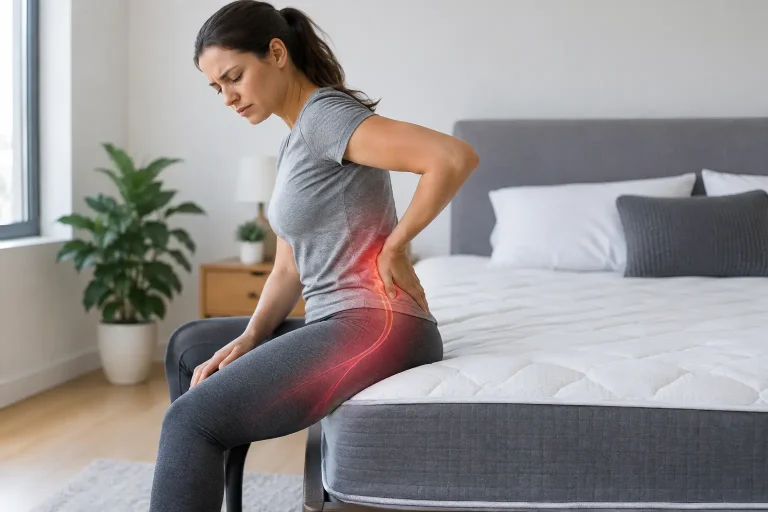
If you wake up with a tight lower back, a stiff neck, or that “I slept but I’m not recovered” feeling, your mattress is usually doing one of two things wrong: it’s letting your spine drift out of alignment, or it’s trapping pressure in the places that matter most (shoulders, hips, and knees). Add a partner who tosses and turns, and sleep can start to feel like a nightly negotiation.
That’s where hybrid mattresses earned their reputation. They’re built to solve multiple problems at once – support, comfort, temperature, and motion control – without forcing you to pick just one.
What is a hybrid mattress?
A hybrid mattress combines two primary systems in one bed: a supportive coil base (usually individually pocketed springs) and comfort layers on top (foam, latex, or a mix). The goal is straightforward: you get the stable, spinal-supportive “lift” of a spring mattress with the pressure relief and contouring of modern foams or latex.
The word “hybrid” matters because it’s not just a spring mattress with a thin pad, and it’s not an all-foam bed trying to mimic support. A true hybrid is engineered so the top layers and the coil system work together – distributing weight, absorbing movement, and managing heat – while maintaining a consistent, orthopedic-style support feel.
How a hybrid mattress is built (and why it feels different)
Most hybrids follow the same architecture, but the details inside each layer determine whether you feel cradled or held, cool or sweaty, stable or wobbly.
The coil system: the alignment engine
The base layer in a hybrid is typically a pocketed coil system. Each spring is wrapped individually so it can compress without dragging the whole mattress down with it. That’s the core advantage over old-school connected springs.
When your hips sink too far, your lower back compensates. When your shoulder can’t sink enough, your upper back rounds forward. Pocketed coils help prevent both by creating targeted pushback under heavier areas while still allowing lighter areas to settle.
A well-designed coil unit also improves edge support, which matters more than people expect. Strong edges make it easier to get in and out of bed, and they prevent that rolling-off feeling that can subtly tense your body all night.
Comfort layers: pressure relief without the “stuck” feeling
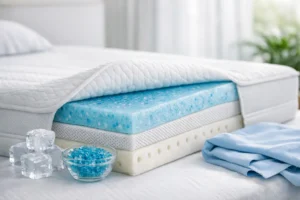
On top of the coils, hybrids use comfort materials like memory foam, responsive polyfoam, latex, or gel-infused foams. These layers reduce pressure points by spreading your weight over a larger surface area.
Memory foam tends to contour more slowly and can feel more “hugging.” Latex is usually more responsive and buoyant – it cushions, but it also pushes back quickly. Cooling gel foams aim to reduce heat buildup at the surface, especially for people who run warm or live in hotter climates.
What changes the experience is the balance. Too much soft foam on top can let you sink past the support you need. Too little comfort material can feel firm in the wrong way – like you’re sleeping on the mattress instead of in it.
Transition layers: the quiet problem-solver
Between the plush top and the coils, many hybrids include a transition layer. This layer prevents you from feeling the coils directly and helps your body move smoothly from soft comfort into supportive resistance.
If you’ve ever tried a bed that felt great for 30 seconds and then oddly “bottomed out,” the transition layer was probably too thin or too weak for your body type.
Why hybrids are popular for back pain, joint stiffness, and couples
Hybrids aren’t a magic fix, but they’re often the most practical choice when you want multiple performance outcomes at once.
Better spinal alignment for more body types
All-foam mattresses can be excellent, but they can also soften over time and allow deeper sink in the hips, especially for back sleepers or heavier sleepers. Traditional springs can support well, but they can create pressure points and transfer motion.
Hybrids try to land in the middle: coils provide the structure that keeps your spine from “hammocking,” while the comfort layers reduce the sharp pressure that can aggravate shoulders, hips, and knees.
Motion isolation that actually helps couples
Couples often assume foam is the only route to fewer sleep disruptions. The reality is that pocketed coils can isolate movement extremely well when paired with the right foams.
Instead of the entire bed reacting when your partner changes position, the compression stays localized. That’s the difference between waking up at 2:00 a.m. because someone sat on the edge and sleeping right through it.
Cooler sleep, by design
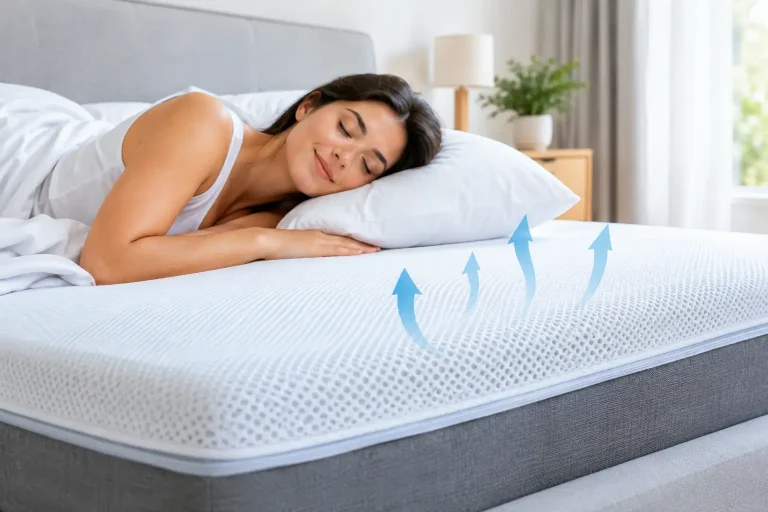
Heat is one of the most common reasons people abandon all-foam beds. Hybrids have a built-in advantage: air moves through the coil system more freely than through a solid foam core.
That airflow, combined with cooling foams or breathable latex, can reduce that “warm pocket” sensation that builds around your torso and hips. If you wake up sweating or constantly flip your pillow to find the cool side, cooling performance isn’t a luxury – it’s what keeps you asleep.
Hybrid mattress vs memory foam vs innerspring
This isn’t about which type is “best.” It’s about matching the construction to the problem you’re trying to solve.
Memory foam is typically best for deep pressure relief and motion isolation, especially for side sleepers who want a close contour. The trade-off is temperature risk and, for some people, a slower response that makes movement feel harder.
Innerspring mattresses are often bouncy and breathable, and they can feel supportive at first. But many traditional designs transfer motion and don’t offer the pressure relief needed for joint discomfort or side sleeping.
Hybrid mattresses are designed to deliver a more complete balance: support plus pressure relief plus airflow plus movement control. The trade-off is they’re usually more complex (more layers, more materials), so quality varies widely between brands.
Who should consider a hybrid mattress?
A hybrid is a strong match if you’re buying for outcomes, not just softness.
If you’re a back sleeper who wants your hips supported without sleeping on a board, hybrids are often a safer bet than very soft all-foam beds.
If you’re a side sleeper with shoulder or hip pressure, look for a hybrid with enough comfort depth on top (not just a thin quilt layer) so your joints can settle while your spine stays level.
If you sleep hot, hybrids are frequently more forgiving because the coil system improves ventilation. Cooling foams help, but the underlying airflow matters more than most marketing admits.
If you share your bed, pocketed coils plus the right comfort layers can reduce partner disturbance without turning the whole mattress into quicksand.
What to look for when shopping for a hybrid mattress
“Hybrid” on the label doesn’t guarantee performance. The construction details determine whether the bed actually delivers pain relief, cooler sleep, and motion isolation.
Pocketed coils, not connected springs
Look for individually wrapped coils. They’re the foundation for targeted support and reduced motion transfer. Connected spring units can feel lively, but they’re more likely to ripple movement across the surface.
A support story that matches your body
If you’re buying for back pain, pay attention to how the mattress handles the hips and lumbar area. A supportive coil system plus a well-tuned transition layer is what keeps your spine neutral.
If you’re lighter or primarily a side sleeper, you’ll usually need more pressure relief on top. If you’re heavier or mostly a back or stomach sleeper, you’ll likely need a firmer support feel so you don’t sink too far.
Cooling claims you can feel at 3:00 a.m.
Cooling covers and gel infusions can help, but the bigger win is breathability through the mattress. Coils create space for air movement. Latex tends to sleep cooler than dense memory foam. If overheating is one of your main sleep disruptions, prioritize materials and construction that manage heat, not just surface “cool touch” effects.
Certifications that reduce guesswork
If you’re sensitive to odors or concerned about what’s in the foams, look for reputable material certifications like CertiPUR-US for foams and Oeko-Tex for textiles. These don’t make a mattress perfect, but they do raise the baseline for safety and quality control.
Policies that make trying it realistic
A mattress can feel great for five minutes and wrong after five nights. Shipping, returns, and warranty coverage are part of the product, especially when you’re buying online.
Where Azure fits in
If your main goal is pain relief plus cooler, undisturbed sleep, this is exactly the lane we build for at Azure Mattress: hybrid designs that pair pressure-relieving comfort layers (like latex and cooling gel foams) with structured pocketed coils to support spinal alignment and reduce motion transfer.
The trade-offs to be honest about
Hybrids can be heavier than all-foam mattresses, which matters if you rotate your bed often or have tight stairs. They can also cost more than basic innersprings because you’re paying for multiple performance layers.
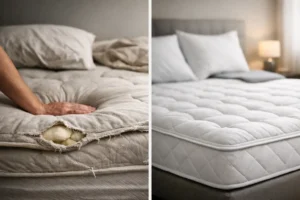
And not every hybrid is automatically “orthopedic.” A hybrid with very soft foams and weak transition support can still let your hips drop. A hybrid with a thin comfort layer can still create pressure points. The label is only the starting point.
Sleep is one of the few upgrades that touches every part of your day – energy, mood, recovery, and the way your body feels when you stand up. When you’re choosing a mattress, keep coming back to one question: will this design help my body relax into alignment, stay cool enough to remain asleep, and stay steady when the person next to me moves? If the answer is yes, you’re not just buying a hybrid mattress – you’re buying back quieter nights and better mornings.