You feel it the moment your partner rolls over at 2 a.m. – the bounce, the pull, the brief wake-up that steals deep sleep. For many shared beds, that is the real test. A pocket coil mattress for couples is built to solve exactly that problem, while also giving each sleeper the support, pressure relief, and airflow they need to wake up with less stiffness and fewer interruptions.
Not every mattress with springs will do the job. Traditional connected coils tend to transfer movement across the bed, which is why one person’s restless night becomes two people’s problem. Pocket coils are different because each coil is wrapped individually, allowing it to respond more precisely to weight and movement. That difference matters when two bodies with different sleep habits, body weights, and comfort preferences are sharing one surface every night.
Why a pocket coil mattress for couples works better
The biggest advantage is motion isolation. When coils move independently instead of as one linked unit, energy stays more localized. If one partner changes position, gets out of bed early, or tends to toss and turn, the other sleeper is less likely to feel a wave of movement travel across the mattress.
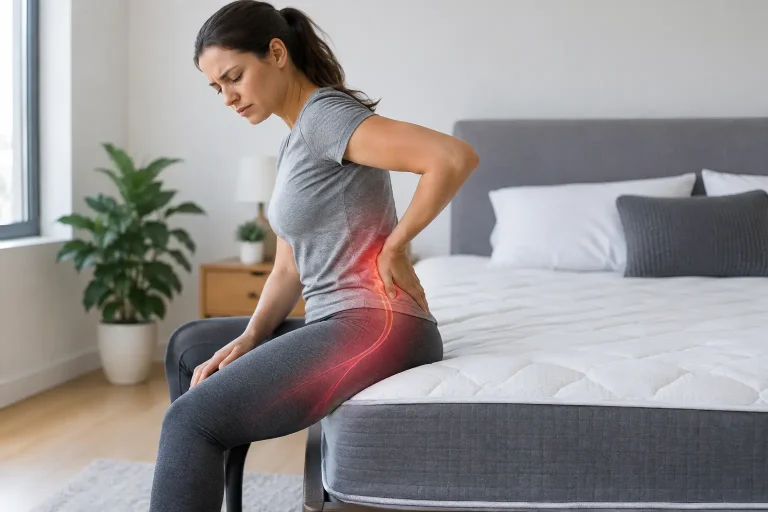
That same independent response also helps with support. Couples rarely have identical needs. One person may sleep on their side and need more pressure relief at the shoulders and hips. The other may sleep on their back and need stronger lumbar support to avoid waking up with an aching lower back. Pocket coils are better at adapting to those differences because they compress where needed rather than forcing both sleepers into the same flat response.
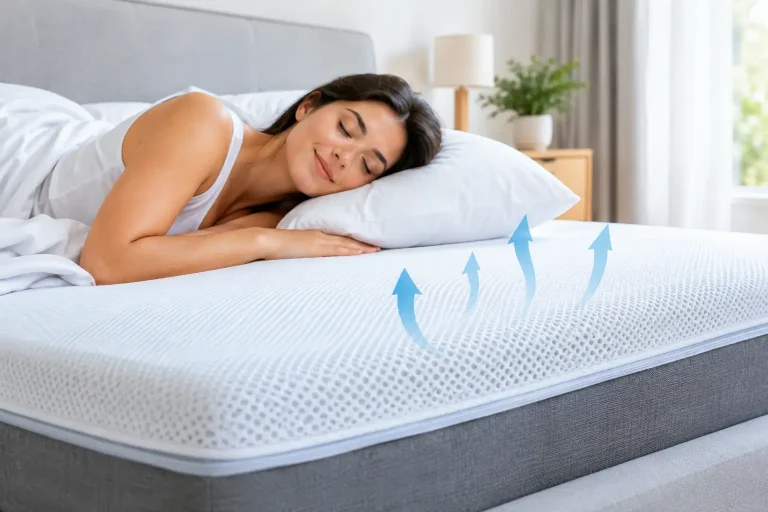
There is also a temperature benefit. All-foam mattresses can trap heat, especially when two people are sharing body warmth in the same bed. A hybrid design with pocket coils creates space for airflow through the core of the mattress. If overheating is one of the reasons sleep feels broken, this construction can make a noticeable difference.
The features that matter most in a shared bed
A good pocket coil system is only part of the equation. For couples, the mattress performs best when the upper comfort layers and overall construction support the same goals: less disturbance, better alignment, and cooler sleep.
Motion control starts with the full build
Pocket coils reduce movement transfer, but the comfort layers above them matter too. Latex and high-quality pressure-relieving foams help absorb surface motion before it spreads. This is why many well-designed hybrid mattresses perform better for couples than older innerspring models with a plush pillow top. The right combination gives you responsive support without the trampoline effect.
If one partner is a very light sleeper, this balance is especially important. A mattress that is too springy may still feel active on the surface, even with individual coils underneath. On the other hand, a mattress that is too soft can make movement feel heavier and less stable. The strongest setup usually lands in the middle – enough cushioning for comfort, enough structure for controlled support.
Spinal alignment should not be negotiable
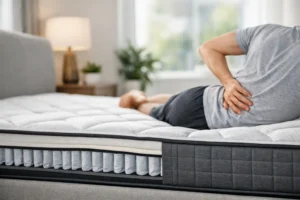
Couples often focus on motion isolation first, but support is just as important over time. If the mattress lets the hips sink too deeply or fails to support the lower back, both sleepers can wake up with tightness, soreness, or numb pressure points. That is not just a comfort issue. It affects recovery, sleep quality, and how rested you feel the next day.
A well-designed pocket coil mattress should keep the spine in a more neutral position while still relieving pressure. Zoned or structured coil systems can help by reinforcing heavier parts of the body while allowing lighter areas to settle comfortably. For couples with back pain, joint discomfort, or different body types, this kind of precision matters more than broad claims about softness.
Cooling matters more when two people share the bed
Heat builds faster in a shared bed. That means a mattress that feels acceptable for one sleeper can feel warm for two. Pocket coils help by improving airflow, but cooling foams, breathable covers, and latex layers can push performance further.
This is one of those areas where trade-offs matter. Very plush, body-hugging foam can feel cozy at first, but it may retain more heat. A more responsive hybrid with breathable materials usually sleeps cooler and feels easier to move on, which many couples prefer. If either partner already sleeps hot, do not treat cooling as a bonus feature. It is part of whether the mattress will keep working for both of you.
How firmness plays out for couples
The best firmness for couples is rarely the softest option and rarely the firmest. In most cases, medium to medium-firm works best because it gives enough cushioning for side sleeping without sacrificing support for back and combination sleepers.
That said, body weight changes how firmness feels. A lighter sleeper may experience a medium mattress as firmer, while a heavier sleeper may find the same mattress softer. This is why couples with a significant weight difference should look closely at support layers, coil count, and the overall balance of pressure relief and pushback.
If one partner has chronic back pain, a slightly firmer hybrid often performs better than an ultra-soft one. If one partner has pronounced shoulder or hip pressure, the comfort layers need enough give to prevent compression points. The answer is not always choosing a compromise that pleases neither person. It is choosing a mattress with enough adaptive support to serve both.
Size can make or break the experience
Even the best mattress design can only do so much if there is not enough space. For couples, a queen is the practical minimum, while a king is often the better choice if one or both sleepers move frequently.
More surface area reduces interaction. It gives each person room to change position without crowding the other and improves the effect of motion isolation simply because movement starts farther away. If sleep disturbance has been a consistent problem, upgrading size may be just as valuable as upgrading construction.
What to watch out for before you buy
Not every product labeled hybrid or pocket coil is engineered to the same standard. Some use low coil counts, weaker edge support, or comfort layers that break down too quickly. Couples put more consistent pressure on a mattress than a solo sleeper does, so durability matters.
Pay attention to the materials above the coils, not just the coil system itself. High-quality latex, cooling gel foams, and certified low-emission materials are not just marketing details. They influence how the mattress feels, how long it holds its shape, and whether it continues delivering support after the first few months.
Edge support is worth checking too. Couples often use the full width of the bed, especially on a queen. Stronger perimeter support makes the mattress feel more stable and prevents that roll-off sensation near the sides.
A generous trial period, free returns, and a meaningful warranty also matter because comfort is personal. On paper, a mattress can sound ideal. In real use, what counts is how both partners sleep on it over several weeks. Brands that reduce that risk show confidence in the construction.
Is a pocket coil mattress for couples always the best choice?
For most couples, yes, especially if the priorities are less motion transfer, cooler sleep, and better support than a basic spring mattress can provide. But there are a few cases where it depends.
If both partners strongly prefer a deep, slow-moving foam feel, a softer all-foam option may feel more familiar. If one partner is extremely sensitive to any surface responsiveness, they may need a hybrid with thicker comfort layers to soften that feel. And if budget is the main driver, some entry-level pocket coil models may not offer enough material quality to outperform a better-made foam mattress.
That is why construction matters more than labels. A thoughtfully built hybrid with individually pocketed coils, pressure-relieving comfort layers, and cooling materials tends to give couples the broadest range of benefits with the fewest compromises. That is also why brands like Azure Mattress focus on engineered hybrid systems rather than one-note comfort claims.
When two people share a bed, the goal is not simply to find a mattress that feels nice in a showroom or looks good on a spec sheet. The goal is to create a sleep surface that protects rest, supports recovery, and helps both people wake up feeling more like themselves. If your nights are being shaped by movement, heat, or morning aches, a pocket coil mattress is not just an upgrade. It is a practical fix that can make the whole bedroom feel calmer.