If you wake up with a tight lower back, sore shoulders, or that overheated, restless feeling, the latex vs gel foam question is not just about preference. It directly affects how your mattress handles pressure relief, spinal support, body heat, and partner movement through the night.
Both materials can feel comfortable in the showroom. The difference shows up after a full night of sleep, and even more after months of use. One sleeper may need deeper contouring around the hips and shoulders. Another may need a more responsive surface that keeps the spine lifted and makes turning easier. That is why the right choice depends less on hype and more on how each material performs under real sleep conditions.
Latex vs gel foam: what is the real difference?
Latex and gel foam are often grouped together because both are used in comfort layers, but they behave very differently. Latex is naturally springy, responsive, and supportive. It compresses under pressure, but it also pushes back quickly, which helps prevent that “stuck” feeling many sleepers dislike.
Gel foam is typically a memory foam or polyfoam infused with cooling gel. Its main purpose is to cushion pressure points while managing heat better than traditional foam. It usually allows more body contouring than latex, which can feel especially good for side sleepers or anyone with sharp pressure around the shoulders and hips.
The simplest way to think about it is this: latex tends to feel buoyant and lifted, while gel foam tends to feel closer, softer, and more enveloping. Neither is automatically better. The better material is the one that solves your sleep problem without creating a new one.
Support and spinal alignment
For adults shopping to reduce back pain or morning stiffness, support matters more than softness alone. A mattress can feel plush in the first 10 minutes and still leave the lower back unsupported by morning.
Latex performs well here because of its elasticity. It responds quickly to your body weight and helps keep heavier areas, especially the hips, from sinking too far. That makes it a strong option for back sleepers, combination sleepers, and people who want pressure relief without losing alignment.
Gel foam can also support the spine well, but it depends heavily on density and what sits underneath it. A quality gel foam comfort layer over a stable support core can provide excellent contouring while keeping the body properly positioned. The issue comes when the foam is too soft or too thick for the sleeper’s body type. In that case, the hips may dip too deeply, which can aggravate lower back tension.
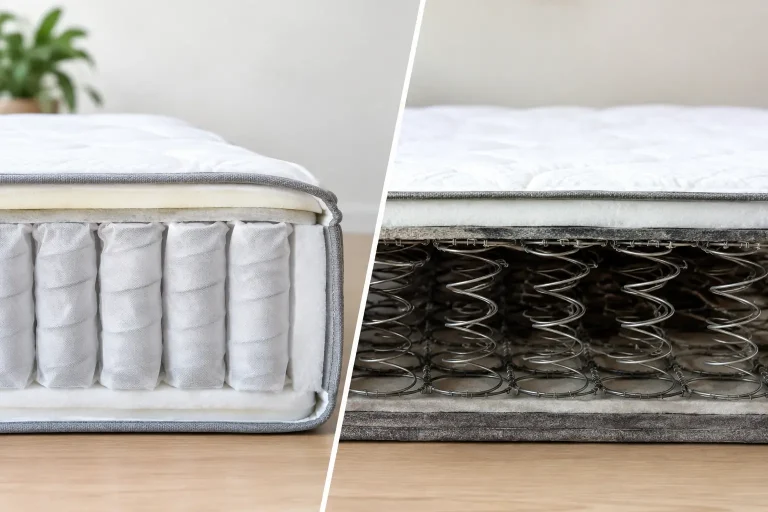
This is why hybrid construction matters. When latex or gel foam is paired with a structured support system like pocketed coils, the comfort layer handles pressure relief while the support core manages alignment. That balance is often where real sleep recovery happens.
Pressure relief and joint comfort
If your main complaint is pressure buildup rather than lack of support, gel foam often has the early advantage. It molds more closely to the body and spreads weight across a broader surface area. For people with shoulder pain, hip sensitivity, or joint discomfort, that can reduce the hard pushback that causes tossing and turning.
Latex relieves pressure too, but in a different way. Instead of hugging the body deeply, it cushions while maintaining a more elevated feel. Many sleepers describe it as supportive comfort rather than sink-in comfort. That can be ideal if you want relief at the joints but do not want the mattress to feel slow or overly plush.
Body weight also changes the experience. Lighter sleepers may find latex pressure-relieving enough on its own. Heavier sleepers, or strict side sleepers, may prefer the closer contour of gel foam, especially around the shoulders. The best choice depends on whether your pain comes from pressure concentration or misalignment. Sometimes those are not the same issue.
Cooling performance and heat control
Heat is where many mattress buyers become skeptical, and fairly so. Plenty of beds claim to sleep cool without addressing why mattresses trap heat in the first place.
Latex generally has an advantage in temperature regulation because it is more breathable and less dense-feeling than memory-style foams. It does not cradle the body as deeply, so there is usually more airflow around the sleeper. If you sleep hot, sweat at night, or live in a warm climate, latex can feel noticeably fresher.
Gel foam is designed to improve on traditional foam by dispersing heat more effectively. It can help, especially in the first part of the night, but the cooling result depends on the overall mattress design. Gel infusion alone does not guarantee a cool sleep surface. Breathable covers, airflow channels, and coil support systems all play a role.
In practical terms, latex is often the safer pick for consistently cooler sleep. Gel foam can still work well for hot sleepers, but it performs best when combined with materials that actively improve airflow rather than relying on gel beads or cooling language alone.
Motion isolation and partner disturbance
If your sleep gets interrupted every time your partner turns, gets up, or shifts position, the surface feel of the comfort layer matters a lot.
Gel foam is usually stronger at absorbing movement. It softens motion before it travels across the bed, which helps couples sleep with fewer disturbances. That is one reason foam-based comfort layers remain popular in shared mattresses.
Latex is responsive, which makes movement easier, but that same responsiveness can allow more surface motion than gel foam. It is not always disruptive, especially in a well-built hybrid with individually pocketed coils, but latex on its own usually does not isolate motion as completely as foam.
So if zero-disturbance sleep is your top priority, gel foam may have the edge. If you want a balance of movement control and easier repositioning, latex can still be an excellent fit, particularly when paired with a motion-reducing support core.
Durability and long-term feel
Comfort on night one matters. Comfort after three years matters more.
Latex is widely regarded as one of the more durable mattress materials. It tends to retain its resilience well and is less prone to the deep body impressions that can develop in lower-quality foams. For buyers thinking long term, that durability is a serious advantage.
Gel foam durability varies more. Higher-density foams can perform very well, but lower-quality versions may soften faster, especially under heavier body weights or frequent use. That does not make gel foam a poor choice. It means build quality matters more, and shoppers should pay attention to the overall mattress engineering rather than the word gel alone.
For a mattress expected to deliver consistent support over time, material quality and layer design are just as important as the comfort category.
Who should choose latex vs gel foam?
Latex usually makes more sense if you want a buoyant feel, stronger responsiveness, easier movement, dependable support, and better natural airflow. It is especially appealing for back sleepers, combination sleepers, and anyone who dislikes the slow-sinking feel of traditional memory foam.
Gel foam is often the better match if you want deeper contouring, stronger pressure relief at the shoulders and hips, and better motion absorption for sleeping with a partner. It can be a smart option for side sleepers and for anyone whose main goal is reducing pressure-related discomfort.
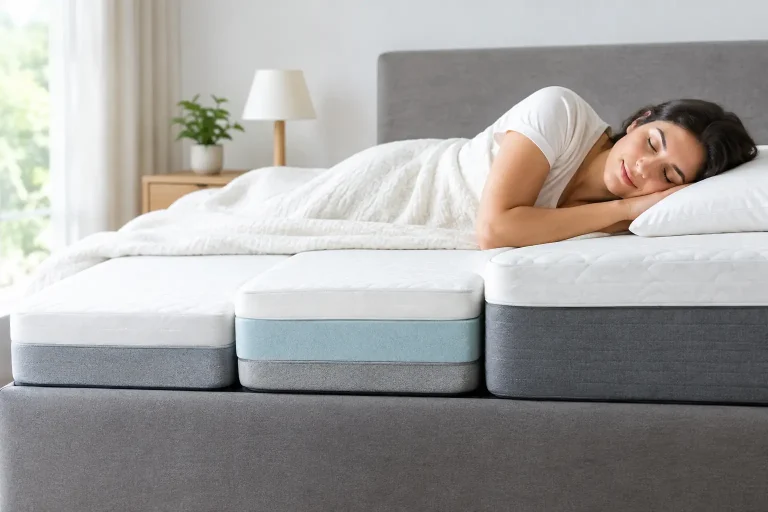
There is also a middle ground, and for many people it is the smartest one. A mattress that combines cooling gel foam, latex, and a pocket spring support system can deliver more balanced performance than either comfort material alone. That kind of design addresses the three issues most shoppers care about at once – support for the spine, relief for pressure points, and less heat retention through the night.
That is why hybrid mattresses continue to gain traction with people who are done guessing and want measurable sleep benefits. Azure Mattress, for example, builds around this exact idea: match comfort materials to real sleep outcomes instead of forcing shoppers to choose softness over support.
What matters more than the material name
The latex vs gel foam debate can be useful, but material labels only tell part of the story. Thickness, firmness, density, coil design, and cover breathability all change how a mattress performs. Two gel foam mattresses can feel completely different. The same is true for latex.
If you are shopping with back pain, heat issues, or motion disturbance in mind, focus on the outcome first. Ask whether the mattress keeps the spine level, relieves pressure without excessive sink, reduces movement from the other side of the bed, and stays comfortable after several hours, not several minutes.
The right mattress should help your body recover, not simply feel soft on contact. If latex gives you the lift and coolness you need, that is the better choice. If gel foam gives you the contouring and motion control your sleep has been missing, that is the smarter one. The best decision is the one that helps you wake up with less pain, less disruption, and a lot more confidence in the bed beneath you.