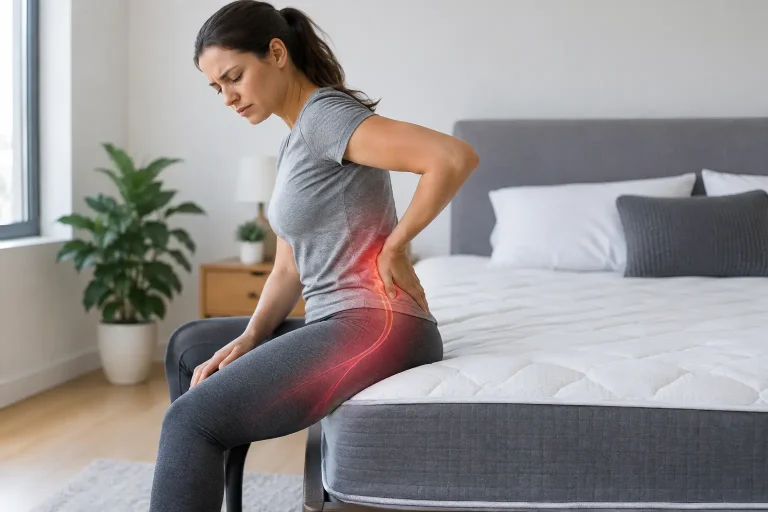
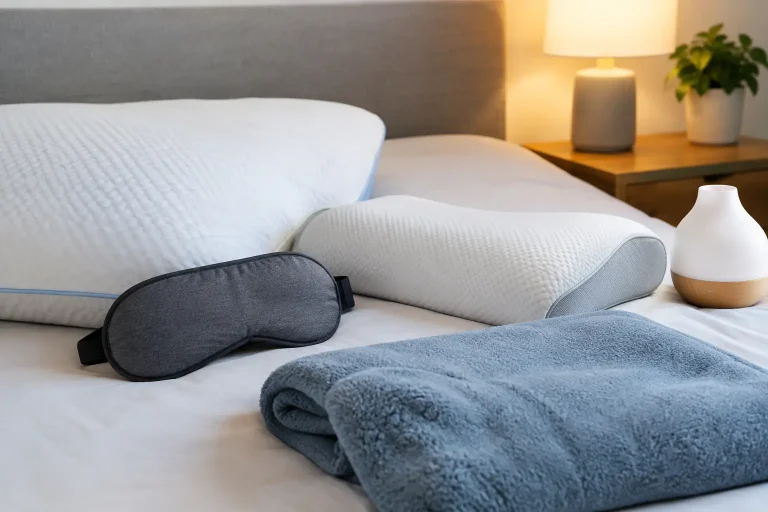
That sharp ache at 2 a.m. is not just frustrating – it is a sign your body is not getting the support it needs. Lower back pain can turn sleep into a cycle of tossing, waking, stiffening up, and starting the next day already behind. The good news is that better sleep usually does not come down to one trick. It comes down to alignment, pressure relief, and a setup that keeps your spine supported for hours, not just the first few minutes after you lie down.
If you are trying to figure out how to sleep with lower back pain, start with this idea: your sleep position matters, but your mattress, pillow support, and nighttime habits matter just as much. The goal is simple – keep your spine in a more neutral position so the muscles around your lower back are not working all night to compensate.
How to sleep with lower back pain without making it worse
The most common mistake is choosing whatever position feels tolerable for a few minutes instead of what keeps your back supported through the night. With lower back pain, short-term comfort and overnight support are not always the same thing.
For many adults, side sleeping is the safest starting point. It can reduce direct pressure on the spine and make it easier to keep the pelvis and lower back from twisting. But side sleeping only helps if the body is properly supported. When the top leg drops forward or the waist collapses into the mattress, the lower back can still get strained.
Back sleeping can also work well, especially for people whose pain gets worse with rotation or hip pressure. It allows your weight to distribute more evenly, but if your mattress is too firm in the wrong way or your lower back arches too much, that position can create tension instead of relief.
Stomach sleeping is usually the hardest on the lower back. It tends to exaggerate the curve of the spine and forces the neck to stay turned for long periods. Some people swear it is the only way they can fall asleep, but it often comes with a trade-off: more stiffness in the morning.
Best sleeping positions for lower back pain
Side sleeping with a pillow between the knees
This is often the most effective option because it helps level the hips and reduces twisting through the lower spine. The pillow does not need to be thick or elaborate. It just needs to keep the top knee from pulling the pelvis forward.
If you are still waking up sore, check whether your mattress lets your shoulder and hip sink slightly while still supporting your waist. Too much sink can throw off alignment. Too little pressure relief can make you tense up through the night.
Back sleeping with support under the knees
Placing a pillow under your knees can flatten some of the pull on the lower back and reduce strain on the lumbar area. This works because it slightly tilts the pelvis and helps your spine rest in a more neutral position.
This setup tends to work best on a mattress that supports the heavier parts of the body without feeling rigid. If the surface pushes up too hard at the lower back or lets the hips dip too far, you can still wake up sore.
Reclined sleeping for flare-ups
For some people, especially during a pain flare-up, sleeping in a slightly reclined position can feel noticeably better. That might mean an adjustable base or temporarily using a wedge pillow. This can reduce compression and take pressure off irritated structures in the lower back.
It is not necessary for everyone, and it is not always a permanent solution. But if lying flat is clearly aggravating your pain, a gentle incline can help you get through the night with less disruption.
The mattress factor most people underestimate
If your mattress is sagging, uneven, or too soft through the hips, your lower back is doing extra work for six to eight hours every night. That is why sleep position alone cannot solve everything.
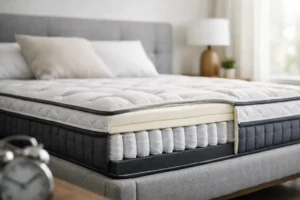
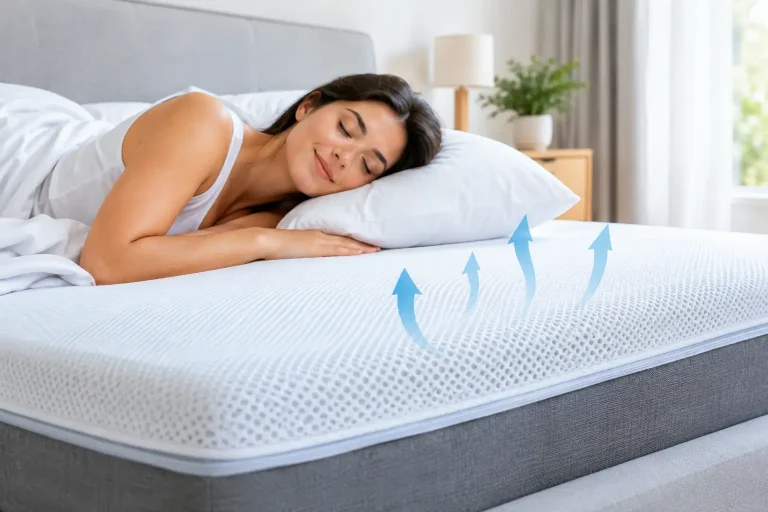
A mattress for lower back pain should do three things well: cushion pressure points, support spinal alignment, and maintain that support without trapping heat or transferring movement. This is where hybrid construction tends to stand out. A quality hybrid combines responsive comfort layers with a structured coil system, so you get contouring without the collapsing feel that often aggravates back pain.
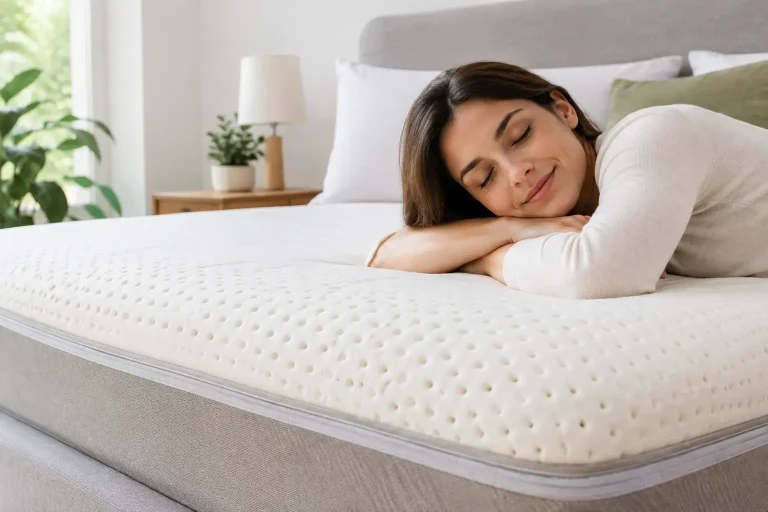
Latex and cooling gel foams can help relieve pressure while keeping the surface more stable than traditional soft foams. Pocketed springs matter too. They support the body more precisely and reduce the kind of broad sagging that pulls the spine out of line. For couples, they also cut down on partner movement, which matters more than many people realize when you are already sleeping lightly because of pain.
At Azure Mattress, this is exactly why hybrid design is built around spine support, joint relief, and temperature regulation rather than just plushness. If you sleep hot or wake easily when your partner moves, those factors can make back pain feel worse simply because your sleep gets fragmented.
How pillows help your lower back, even though they are under your head
People often focus on the mattress and forget that pillow height affects the entire chain of alignment. If your head is pushed too far forward or tilted too high, the rest of your spine can follow. That tension can travel down into the shoulders and lower back.
Side sleepers usually need a pillow with enough loft to fill the space between the head and the mattress. Back sleepers usually need something lower and more supportive so the neck stays neutral. The right pillow will not fix lower back pain by itself, but the wrong one can absolutely keep it going.
You can also use pillows strategically under the knees, between the knees, or even under the waist in certain side-sleeping positions if there is a gap that needs gentle support. Small adjustments can have a big effect when they are repeated every night.
What to do before bed when your lower back feels tight
Your body does not switch from daytime tension to deep recovery the second your head hits the pillow. If your hips, hamstrings, or lower back are tight, a few minutes of light movement before bed can make it easier to settle into a comfortable position.
Gentle stretching often helps, especially knee-to-chest movements, hip stretches, or a short walk around the house. The key word is gentle. Aggressive stretching late at night can irritate an already sensitive back.
Heat can also help relax tight muscles before sleep. For some people, a warm shower or heating pad makes it easier to lie down without that guarded, braced feeling. Others feel better with brief cold therapy if inflammation is part of the problem. It depends on what your pain actually feels like – stiff and tight often responds differently than sharp and inflamed.
Pain relief medication may help some people sleep during a flare-up, but that is a personal and medical decision. If your back pain is frequent, severe, or getting worse, it is worth speaking with a healthcare professional rather than trying to push through night after night.
When your sleep setup is part of the problem
Sometimes the issue is not just that you have lower back pain. It is that your whole sleep system is working against recovery. An old mattress, flat pillows, overheating, and repeated motion disturbance can all add up.
This is why some people feel better in a hotel for two nights and then worse again at home. Their body is responding to a different support profile, a different sleeping temperature, or simply fewer disruptions.
If you wake up with more pain than you had before bed, that is useful information. Pain that eases as the day goes on often points to overnight positioning or mattress support. Pain that worsens with activity may suggest something different. Either way, your mornings can tell you a lot.
Signs it is time to change your mattress
If your mattress has visible sagging, if you roll into the middle, or if you consistently wake up stiff and sore, it may be past the point of helping. The same goes for mattresses that feel fine at first but allow your hips to sink too deeply after an hour or two.
For lower back pain, firmer is not always better. Supportive is better. A mattress that is too hard can create pressure and force the body out of a natural resting position. A mattress that is too soft can let the spine drift out of alignment. The best choice usually sits in the middle: enough pressure relief to feel comfortable, enough structural support to keep your body level.
If you share a bed, motion isolation matters too. Every shift, turn, or bounce can interrupt muscle relaxation and pull you out of deeper sleep stages where much of your recovery happens.
When lower back pain at night needs medical attention
Not all lower back pain is just a mattress issue. If you have pain that shoots down the leg, numbness, weakness, fever, unexplained weight loss, or problems with bladder or bowel control, do not treat it like ordinary sleep discomfort. Those symptoms need prompt medical evaluation.
Even without red flags, ongoing nighttime pain deserves attention if it lasts for weeks, keeps worsening, or leaves you unable to function well during the day. Better sleep support helps many people, but persistent pain should not be brushed off.
A better night with lower back pain usually starts with less guesswork. Support your spine, reduce pressure, keep your body cooler and steadier, and pay attention to what your mornings are telling you. Small changes can be surprisingly powerful when your sleep system is finally working with your body instead of against it.