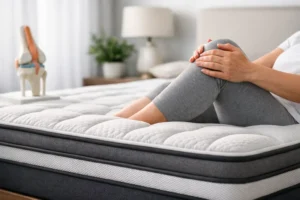
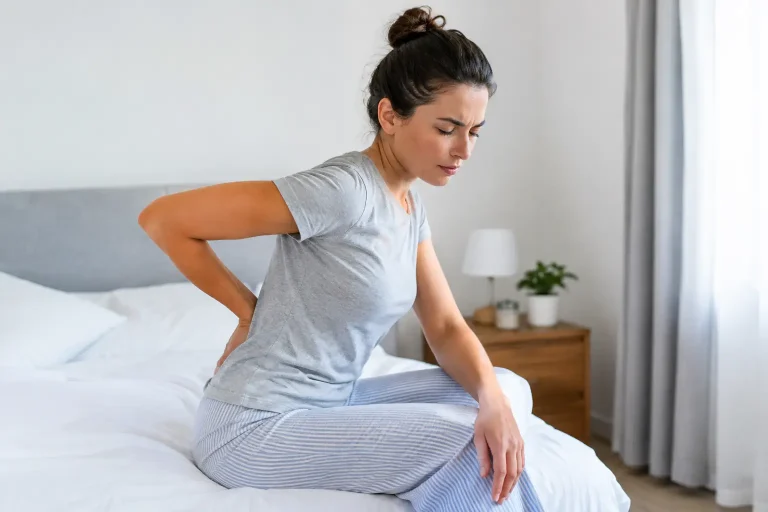
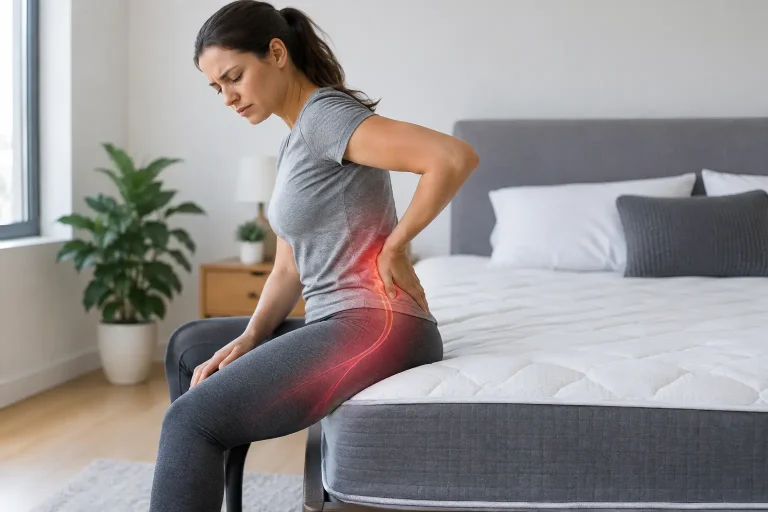
You wake up, swing your legs over the side of the bed, and feel that sharp, familiar ache in one hip. If it eases once you start moving, your body may be telling you something very specific: can a mattress cause hip pain? Absolutely – and it happens more often than people think.
Hip pain during sleep is usually a pressure and alignment problem. The mattress is either pushing too hard against the hip joint, allowing the pelvis to sink too far, or failing to keep the spine level through the night. When that happens for six, seven, or eight hours at a time, even a healthy sleeper can wake up sore. If you already deal with stiffness, side-sleeping pressure, lower back pain, or joint sensitivity, the wrong mattress can make it much worse.
Can a mattress cause hip pain while you sleep?
Yes, but not every painful mattress feels obviously bad at first. Some beds feel plush for the first few minutes, then let your hips dip out of alignment. Others feel firm and supportive overall, yet create too much pressure right at the hip bone. In both cases, the result can be the same: soreness when you wake up, frequent tossing and turning, and a feeling that your body never fully relaxes overnight.
The hip sits at a key load-bearing point. If you sleep on your side, a large share of your weight presses into the shoulder and hip. If you sleep on your back, the pelvis still needs controlled support so the lower spine does not flatten or overarch. A mattress that misses that balance between cushioning and lift can create strain that builds night after night.
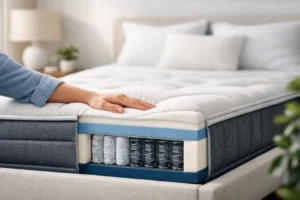
This is why mattress construction matters more than many shoppers realize. Surface softness alone is not the answer. Real pressure relief needs comfort layers that cushion the joint, paired with a support system strong enough to keep the hips from sinking too deeply.
How the wrong mattress leads to hip pain
There are a few common ways a mattress contributes to hip discomfort, and they often overlap.
Too firm means too much pressure
When a mattress is too firm, it does not allow enough contouring around the hips. Instead of distributing weight, it creates a concentrated pressure point. Side sleepers usually notice this first. The outside of the hip can feel tender, numb, or sore by morning because the mattress is resisting the body rather than adapting to it.
This kind of pain often shows up with mattresses that have thin comfort layers, rigid spring systems, or aging surfaces that have hardened over time. You may also notice shoulder pressure, frequent position changes, or waking up with one side of the body feeling more irritated than the other.
Too soft means poor alignment
A mattress can also feel comfortable at first because it is soft, then create hip pain by allowing the pelvis to sink too low. Once the hips drop below the rest of the body, the spine is pulled out of neutral alignment. That can strain the lower back, tighten surrounding muscles, and increase tension around the hip joint itself.
This is especially common in mattresses made with low-density foams or worn-out pillow tops. They compress quickly under the heavier parts of the body and stop providing real support. The sleeper feels cradled, but the body is no longer properly aligned.
Sagging creates uneven support
Visible body impressions are a major warning sign, but not the only one. A mattress can lose support before deep sagging becomes obvious. If one side feels lower, if the center of the bed pulls you inward, or if your hips feel stuck in the mattress, the support core may already be breaking down.
Once that happens, the body has to compensate all night. Muscles stay slightly engaged instead of relaxing. Joints absorb more stress. The result is often that classic pattern of waking up sore and loosening up only after moving around.
Sleep position changes the problem
The answer to can a mattress cause hip pain also depends on how you sleep.
Side sleepers
Side sleepers are most vulnerable to hip pressure. The hip needs enough cushioning to reduce impact, but also enough pushback to stop excessive sinkage. A mattress that is too hard will jam pressure into the joint. A mattress that is too soft will twist the spine and pelvis. For most side sleepers, the best feel is medium to medium-firm with responsive pressure relief rather than deep, unstable softness.
Back sleepers
Back sleepers usually need steadier support under the hips and lower back. If the mattress is too soft through the middle, the pelvis tilts and the lumbar spine loses support. That can create pain that feels like it starts in the hip or spreads through the lower back and glutes.
Stomach sleepers
Stomach sleeping puts the hips in a tricky position because the pelvis tends to sink forward. On a soft mattress, that can exaggerate the arch in the lower back and increase pressure through the hip flexors. Many stomach sleepers do better on a firmer, more supportive surface, though true pressure relief still matters.
Signs your mattress is the likely cause
Not every case of hip pain starts with the mattress, but a few patterns strongly point in that direction.
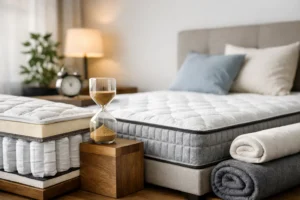
If pain is worst in the morning and improves during the day, your sleep surface is a suspect. If you sleep better in a hotel, on a newer guest bed, or even on the couch for a night, that is another clue. The same goes for visible sagging, rolling toward the middle, or a mattress that is more than seven to ten years old and no longer feels supportive.
Pay attention to whether the pain is tied to one sleep position. If side sleeping hurts but back sleeping feels better, pressure relief may be the issue. If every position feels off and your lower back is involved too, support and alignment are more likely to blame.
What type of mattress is better for hip pain?
The best mattress for hip pain usually combines pressure relief with structured support. That is where many modern hybrids outperform basic all-foam or old-fashioned interconnected spring beds.
A well-designed hybrid can cushion the hips with responsive comfort layers like latex or quality foam, while pocketed coils provide targeted support underneath. That combination matters because hips need both softness and resistance. You want the mattress to absorb pressure, not collapse under it.
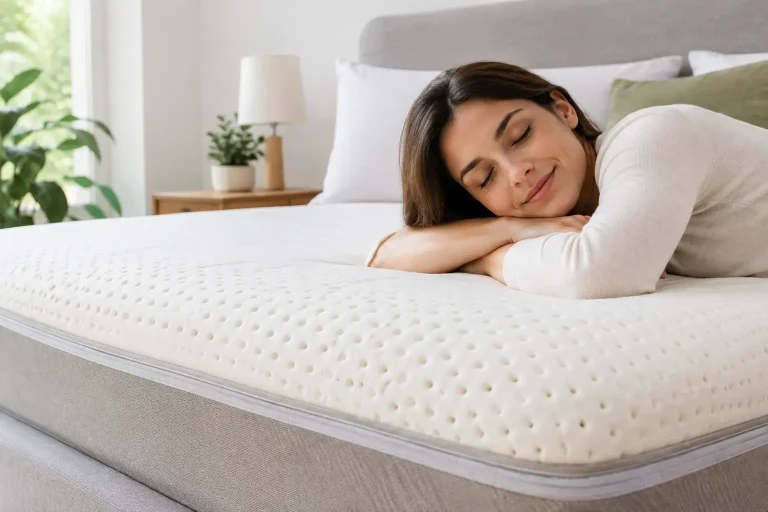
Latex can be especially helpful for people who dislike the stuck feeling of traditional memory foam. It cushions pressure points while maintaining a more buoyant, supportive feel. Pocketed coils also help because they respond more individually to body weight, which can improve spinal alignment and reduce pressure build-up through the hips.
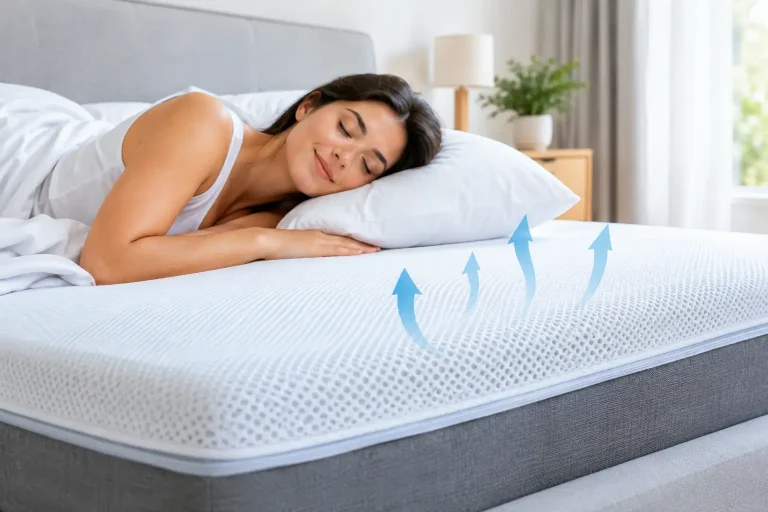
Temperature plays a role too. If you sleep hot, softer foams can feel even softer as they warm up, sometimes changing support through the night. Breathable materials and airflow-friendly construction can help the mattress stay more consistent from bedtime to morning.
When a topper helps and when it doesn’t
A topper can help if your mattress is slightly too firm but still structurally sound. In that case, adding a pressure-relieving layer may reduce direct impact on the hips and make side sleeping more comfortable.
But a topper will not fix a sagging mattress. If the support underneath is failing, more softness on top often makes alignment worse. This is a common mistake. People try to solve hip pain by adding plushness when the real problem is that the hips are already sinking too far.
When it’s not just the mattress
Hip pain can also come from arthritis, bursitis, sciatica, tendon irritation, or lower back dysfunction. If the pain is severe, one-sided, persistent during the day, or getting worse regardless of sleep setup, it is worth speaking with a medical professional.
Still, even when an underlying condition exists, the mattress can either calm it down or aggravate it. A better sleep surface will not treat a medical issue, but it can reduce overnight pressure and support healthier alignment so the body has a better chance to recover.
What to look for if you’re replacing your mattress
If hip pain is part of the reason you are shopping, focus less on marketing labels like ultra plush or extra firm and more on performance. You want pressure relief at the surface, support through the core, and a design that keeps the pelvis and spine from drifting out of position.
Look for a mattress with responsive comfort layers, a support system that does not sag easily, and materials designed to stay cooler and more stable through the night. For couples, motion isolation matters too. If one partner’s movement keeps disturbing sleep, the body loses recovery time and pain can feel more intense by morning.
This is where a thoughtfully built hybrid mattress can make a real difference. Brands such as Azure Mattress focus on the three factors that matter most here: joint comfort, spinal support, and temperature control. Those are not luxury extras. They are the mechanics behind waking up with less stiffness and more ease.
If your hips hurt when you wake up, do not assume it is just age, stress, or a bad sleeping position. Sometimes the simplest explanation is the right one: your mattress is no longer supporting the way your body actually sleeps. The good news is that once you solve the pressure and alignment problem, mornings can feel very different.