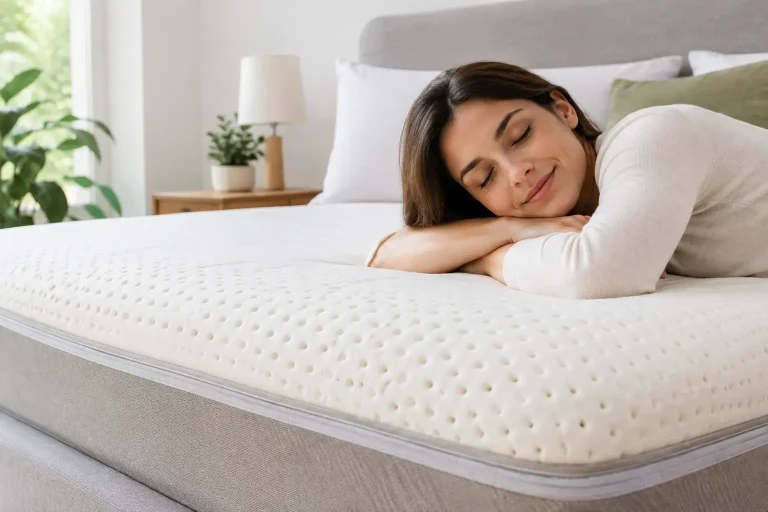
Your shoulder should not feel crushed by 3 a.m., and your lower back should not be working overtime to hold you level. The best mattress for side sleepers does more than feel soft when you first lie down. It cushions the pressure points that carry your weight while keeping your spine in a neutral, supported position through the night.
That balance is why mattress shopping can be frustrating for side sleepers. A bed that is too firm can leave your shoulder, hip, and knee aching. One that is too plush may feel cloud-like at first, then allow your hips to sink too far, creating the very back stiffness you hoped to escape. The answer is not simply choosing “soft.” It is choosing pressure relief with structure underneath it.
What the Best Mattress for Side Sleepers Must Do
Side sleeping places concentrated pressure on a relatively small part of the body. Your shoulder and hip need room to sink gently into the mattress, while your waist, lumbar area, and legs need steady support. When that relationship is wrong, your spine can curve downward or upward instead of staying comfortably aligned.
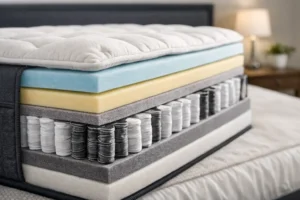
A well-designed hybrid mattress is often a strong fit because it combines contouring comfort layers with a responsive spring foundation. Latex and quality foam can cradle the shoulder and hip. Individually pocketed coils can support the body more precisely than a basic interconnected spring system, responding where weight is applied rather than forcing the whole surface to move as one.
For many side sleepers, a medium to medium-soft feel is the practical starting point. But body weight changes the equation. A lighter sleeper may need a slightly softer surface to experience enough pressure relief. A heavier sleeper may feel better on medium-firm, with thicker comfort layers and stronger coil support to prevent excessive sinkage.
Pressure Relief Is Not the Same as Softness
Softness is an initial sensation. Pressure relief is a performance outcome. A mattress can have a plush top layer yet still create pressure if that layer is thin, dense in the wrong way, or backed by an inflexible support system.
Look for materials that distribute weight gradually instead of creating a hard stop beneath the shoulder. Natural latex has a buoyant, responsive feel that eases pressure without the deep, stuck-in-the-bed sensation some people experience with traditional memory foam. Cooling gel foams can add close contouring and help reduce the heat buildup commonly associated with dense foam layers.
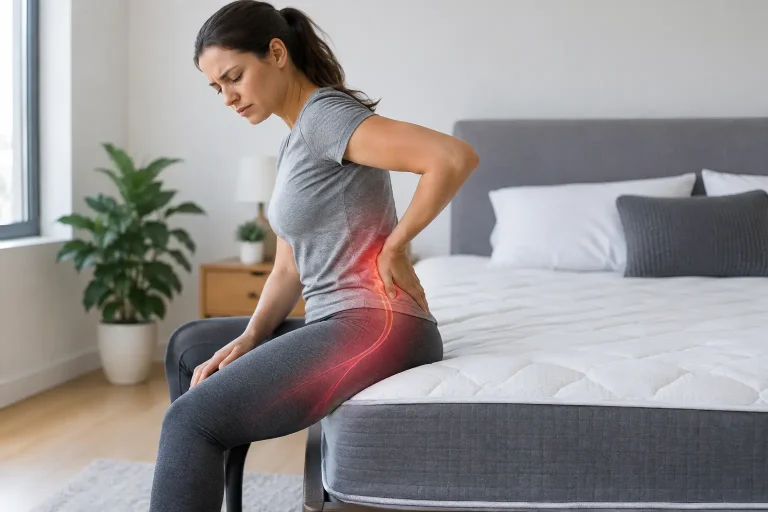
The goal is simple: your shoulder and hip should settle in enough to relax, but not so far that your torso twists or your pelvis drops. If you wake with a numb arm, sore outer hip, or a sharp ache between the shoulder blade and neck, your comfort layer may be too firm or too thin. If you wake with low-back tightness, you may be sinking past the point of healthy alignment.
Your pillow is part of the alignment system
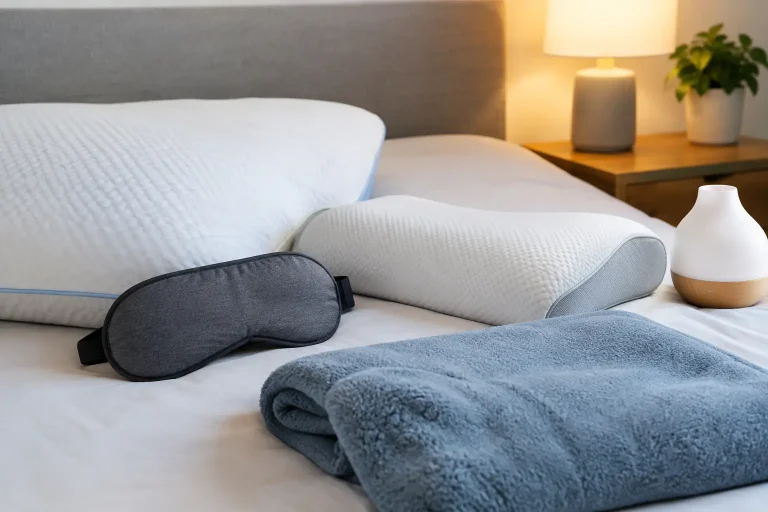
Even an excellent mattress cannot fully compensate for a pillow that is too flat or too high. Side sleepers need a pillow that fills the space between the head and shoulder so the neck remains level with the rest of the spine. Broad-shouldered sleepers often need more loft, while petite sleepers may need less.
A pillow between the knees can also reduce strain at the hips and lower back. It prevents the top leg from pulling the pelvis forward, which is especially helpful for people who wake up feeling twisted through the lumbar area.
Support Should Adapt, Not Push Back
A mattress needs to resist your weight in the right places. This is where individually pocketed springs make a meaningful difference. Each coil works more independently, allowing the mattress to contour around the curves of a side sleeper while maintaining lift beneath the waist and hips.
This targeted support matters for people who have recurring back pain, morning stiffness, or joint discomfort. A flat, unresponsive surface may hold the body up, but it does not necessarily support the body well. The best result comes from a mattress that follows your shape while helping the spine stay neutral.
A hybrid construction also tends to make movement easier. That may not sound essential until you have slept on a mattress that lets you sink too deeply. Responsive latex and a structured coil base make it easier to change position without fighting the surface, an advantage for sleepers with sore joints or anyone who shifts during the night.
Cooling Matters More When You Sleep on Your Side
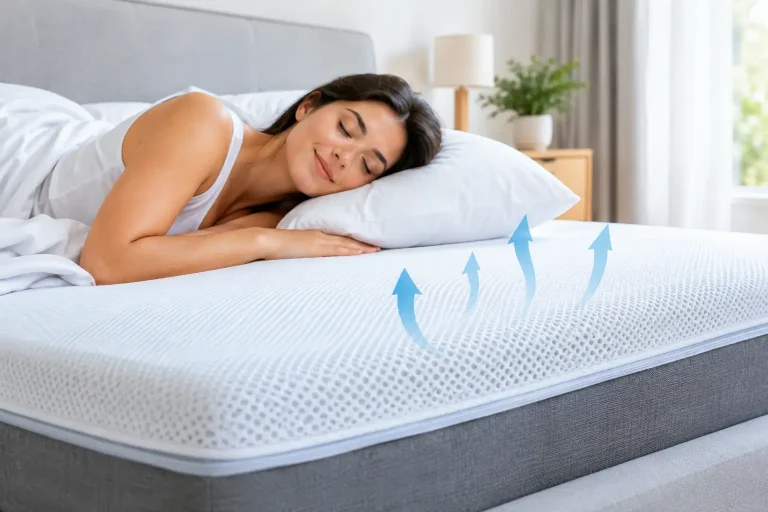
Side sleepers spend more of their body in direct contact with the mattress. That contact can trap heat around the shoulder, torso, and hips, particularly when the comfort layer is made from slow-moving foam. If you regularly wake warm or sweaty, do not treat temperature control as a luxury feature. It is part of how comfortably you stay asleep.
A cooling hybrid mattress addresses heat through several layers of design: breathable cover fabrics, gel-infused foams, naturally ventilated latex, and airflow through the coil system. Springs create open space inside the mattress, helping heat move away from the body instead of accumulating in a dense foam core.
No mattress can make a warm bedroom feel cold. However, a breathable construction can reduce the heat retention that causes many sleepers to throw off the covers, change positions repeatedly, or wake before their alarm. For hot side sleepers, this can be the difference between a mattress that feels comfortable for ten minutes and one that supports restful sleep all night.
Couples Need Pressure Relief Without Partner Disturbance
If you share a bed, your ideal mattress must solve two sleep problems at once. You may need cushioning at the shoulder and hip, while your partner may have a different body type, preferred position, or sleep schedule. The wrong mattress turns every toss, turn, or late-night bathroom trip into a disruption.
Pocketed coils are valuable here because they reduce the transfer of movement across the surface. Foam and latex comfort layers can further absorb vibration, helping one sleeper move without creating a wave on the other side of the bed. This is especially useful for couples when one person is a light sleeper or keeps different hours.
Edge support deserves attention as well. Couples use more of the mattress surface, and weak edges can make a queen or king bed feel smaller than it is. A stable perimeter supports sitting, getting in and out of bed, and sleeping closer to the edge without the sensation of rolling off.
How to Choose the Right Feel for Your Body
There is no single firmness level that works for every side sleeper. Your build, pain points, and sleep habits should guide the decision.
If you are lightweight and mostly sleep on your side, prioritize a more forgiving top surface. If you are average weight, medium or medium-soft is often the sweet spot, provided the mattress has reliable support beneath the comfort layers. If you are heavier, look for a medium-firm hybrid with substantial pressure-relieving layers and a durable pocketed coil system. You need the shoulder and hip cushioning of a side-sleeper mattress, but also enough structure to prevent the hips from dipping too deeply.
People who alternate between side and back sleeping usually do best with a balanced medium feel. Stomach sleepers generally need a firmer surface, so a couple with one side sleeper and one stomach sleeper may need a medium-firm hybrid that uses adaptable comfort materials rather than an overly plush mattress.
Pay attention to construction, not just a firmness label. “Medium” can feel entirely different from one mattress to another depending on foam density, latex responsiveness, coil design, and the thickness of each layer.
Materials and Certifications Worth Checking
A mattress is a long-term sleep surface, so materials matter beyond the showroom feel. Look for recognized certifications such as CertiPUR-US for foam standards and OEKO-TEX certification for tested textiles. These details provide useful reassurance about the materials closest to your body each night.
Durability matters, too. A mattress that initially relieves pressure but develops body impressions quickly will no longer provide reliable alignment. High-quality latex, resilient comfort foams, and a structured pocketed coil system are designed to maintain performance longer than low-cost, basic spring constructions.
Azure Mattress builds its hybrid designs around this complete sleep system: contouring layers for joint comfort, pocketed support for alignment and motion control, and cooling materials that help heat dissipate. The point is not to chase the softest possible feel. It is to create a surface that helps you wake with less stiffness and more energy for the day ahead.
Give Your Body Time to Adjust
A new mattress can feel different from your old one even when it is clearly more supportive. If you have been sleeping on a worn, sagging mattress, your body may need time to adapt to improved alignment. Give yourself a reasonable adjustment period, especially if you have changed firmness levels or moved from an all-foam bed to a responsive hybrid.
During that time, notice how you feel in the morning rather than judging the mattress only by its first-night feel. Less shoulder tenderness, fewer numb arms, reduced lower-back stiffness, and fewer overnight wake-ups are meaningful signals that your sleep surface is working with your body.
The right mattress should let your shoulder settle, keep your hips supported, and make it easier to stay asleep instead of searching for relief. Choose the construction that delivers those results for your body, then give yourself the quiet, supported nights that real recovery requires.