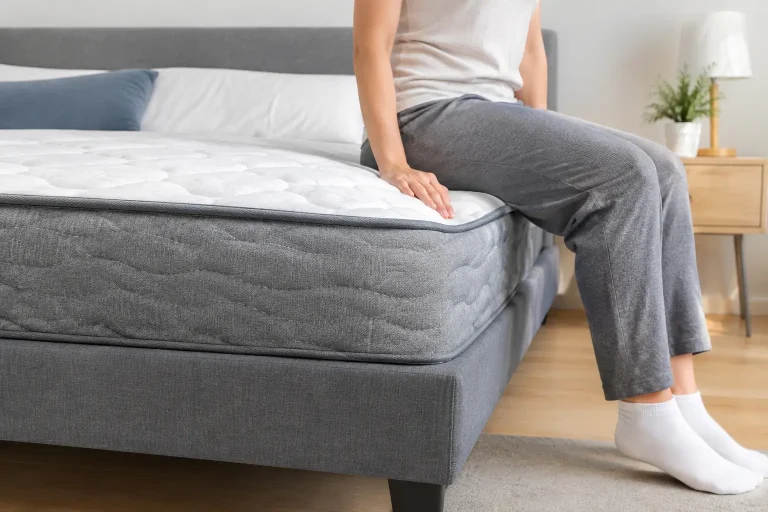
You can tell a lot about a mattress by what happens after the first five minutes. A bed might feel plush in a showroom or on a product page, then leave your lower back tight, your shoulders numb, or your sleep broken every time your partner turns over. That is why hybrid mattress layers explained for shoppers matters so much. The real difference is not just softness or price – it is how each layer works with the next to support your spine, relieve pressure, control heat, and reduce motion transfer through the night.
A hybrid mattress combines cushioning comfort layers with a spring support core. That sounds simple, but the order, thickness, and quality of those layers change the entire sleep experience. For shoppers who want fewer aches, better alignment, and a cooler bed, understanding the layer stack helps you buy based on performance instead of marketing language.
Hybrid mattress layers explained for shoppers
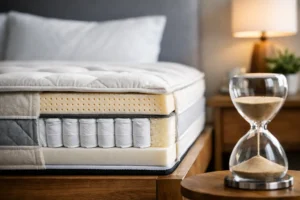
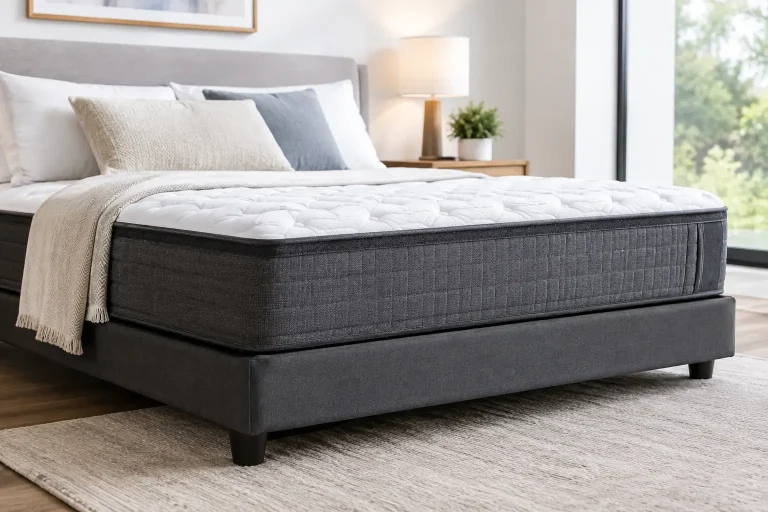
Most hybrids are built from top to bottom in a sequence: cover, comfort layer, transition layer, coil support core, and base layer. Some models add extra materials such as latex, cooling gel foam, or reinforced edges. Each part has a job. If one layer is too soft, too thin, or poorly matched to the others, the mattress can feel unstable or trap heat even if the specs look impressive.
The top cover is the first thing your body notices, but it should not do all the work. A breathable cover can help heat escape and create a smoother surface feel. Quilted covers often add immediate softness, while stretch-knit covers let the comfort layers underneath respond more directly. If you sleep hot, this top fabric matters more than many people realize, because it is your first barrier between body heat and the deeper airflow system.
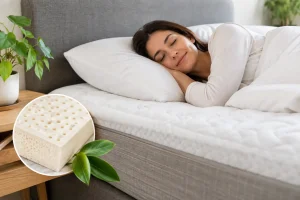
Under the cover sits the comfort layer. This is where pressure relief begins. In a hybrid, that layer may be memory foam, responsive foam, latex, or a combination. Memory foam contours closely and can help reduce pressure at the shoulders and hips, but lower-quality versions may sleep warmer or feel slow to respond when you change positions. Latex feels more buoyant and easier to move on. It usually offers pressure relief without the stuck feeling that some shoppers dislike.
For people with back pain or joint stiffness, comfort does not mean sinking deeply. It means enough cushioning to reduce pressure while keeping the spine from falling out of alignment. A comfort layer that is too plush can feel great at first, then allow the hips to dip too low. That is when morning soreness shows up.
What each layer actually does
The transition layer sits between the plush top and the firmer support core. This layer is often overlooked, but it is one of the reasons a good hybrid feels controlled instead of uneven. Its job is to prevent the body from crashing through the comfort materials and hitting the coils too abruptly. It also helps spread weight more evenly across the mattress.
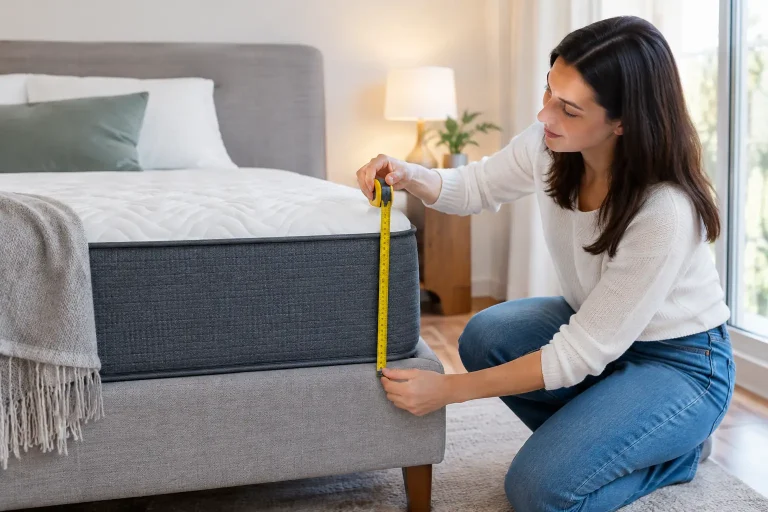
For side sleepers, a well-designed transition layer can make the difference between pressure relief and shoulder pain. For back and stomach sleepers, it can help preserve a more neutral posture. This is one of those areas where mattress engineering matters more than raw thickness. A 14-inch mattress is not automatically better than a 10-inch one if the internal layering is poorly balanced.
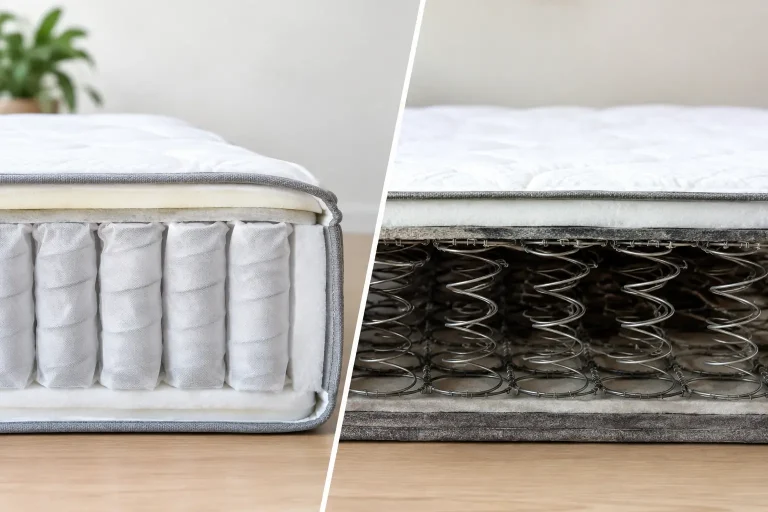
Then comes the coil system, which is the backbone of a hybrid mattress. Individually pocketed coils are usually the best sign that a hybrid is built for modern sleep performance rather than old-fashioned bounce. Because the springs move more independently, they can respond to different parts of the body without pulling the whole surface in one direction.
That matters for three common reasons. First, pocketed coils support spinal alignment more precisely than a connected spring unit. Second, they reduce motion transfer, which helps couples sleep with less disturbance. Third, they improve airflow through the mattress, making the bed sleep cooler than many all-foam designs.
Not all coil systems are equal. Coil count, gauge, zoning, and edge reinforcement all affect performance. A zoned coil system, for example, may provide firmer support under the hips and lower back while allowing slightly more give under the shoulders. That can be especially helpful for shoppers trying to reduce back strain without making the whole mattress feel hard.
The base layer under the coils helps stabilize the entire structure. You will not feel it directly, but it supports durability and keeps the mattress from shifting or sagging prematurely. In a well-built hybrid, every layer has a purpose. Nothing should be there just to make the profile look taller.
How to read materials without getting misled
Shoppers often see terms like cooling gel foam, natural latex, orthopedic support, or zero motion transfer and assume they all mean the same thing from one brand to another. They do not. The better approach is to ask what material is used, where it is placed, and what problem it is solving.
Cooling gel foam is designed to absorb and disperse heat better than standard foam, but results depend on how thick the layer is and whether the mattress also has breathable construction below it. A cooling label on the top layer will not do much if the rest of the mattress traps heat.
Latex is valued for responsiveness, pressure relief, and airflow. It also tends to be more durable than many synthetic foams. For shoppers who want a mattress that feels supportive but not rigid, latex can be a strong comfort layer because it cushions pressure points while helping the body stay lifted.
Certifications matter here because they help separate better materials from vague claims. When foams are CertiPUR-US certified or textiles meet Oeko-Tex standards, shoppers get an extra level of reassurance about material quality and testing. That does not guarantee you will love the feel, but it does support the mattress credibility story with something more concrete than adjectives.
Which layer setup is best for your sleep style?
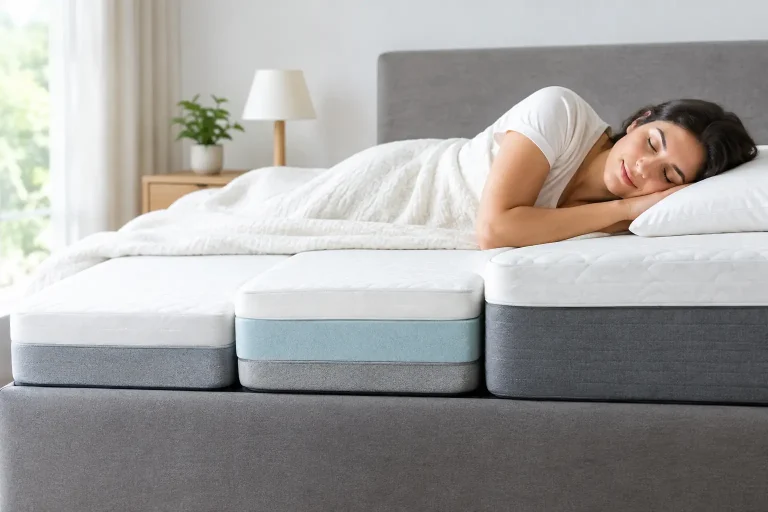
This is where it depends becomes the honest answer. The right hybrid construction for a 130-pound side sleeper is not always right for a 220-pound back sleeper. Layer performance has to match body type, sleep position, and pain points.
Side sleepers usually do best with enough cushioning in the upper layers to relieve pressure at the shoulders and hips, paired with coils that keep the waist and lower back supported. Too firm, and pressure builds. Too soft, and alignment suffers.
Back sleepers often benefit from a medium to medium-firm hybrid with a stable transition layer and strong center support. The goal is gentle contouring with clear lumbar support, not a deep cradle. If you wake up with tightness in your lower back, the problem may be that your hips are sinking farther than your upper body.
Stomach sleepers generally need firmer support through the comfort and transition layers so the pelvis does not dip too low. This is one of the most demanding positions for spinal alignment, which is why many overly plush hybrids feel comfortable for a few minutes but not for a full night.
Couples should pay close attention to the relationship between foam layers and pocketed coils. A hybrid with responsive upper layers and individually wrapped springs can limit partner disturbance while still making movement easy. That balance is valuable if one person tosses and turns or gets up earlier than the other.
Hot sleepers should look beyond a single cooling feature. The best temperature regulation usually comes from several layers working together: a breathable cover, open-cell or gel-infused comfort materials, latex or responsive foam that does not hug too tightly, and a coil core that lets air circulate.
Red flags when comparing hybrids
A mattress can sound advanced while hiding weak construction. If a product description is heavy on mood words and light on layer details, be careful. Shoppers should be able to see what is inside the mattress and why each layer is there.
Be cautious with very thick pillow tops that add softness without enough support underneath. They can create impressive first impressions but may compress quickly. Also watch for hybrids that use a spring unit but very little meaningful comfort material above it. Those can feel pressure-heavy, especially for lighter or side-sleeping bodies.
Price matters, but value matters more. A better hybrid is not simply the one with the most layers. It is the one with a purposeful design that addresses real sleep problems like back pain, overheating, and motion transfer. That is the difference between buying a mattress and buying a sleep solution.
For shoppers comparing online options, brands like Azure Mattress have helped make this easier by framing hybrid construction around measurable outcomes – comfort, spine and joint support, and overheating control – rather than just mattress buzzwords. That is the right direction, because shoppers do not sleep on specs alone. They sleep on how those specs perform night after night.
When you look at a hybrid mattress, think less about whether it sounds luxurious and more about whether the layers are doing clear jobs for your body. A mattress should not leave you guessing by morning. If the construction makes sense on paper, matches your sleep style, and addresses the problems you actually want to fix, you are far more likely to end up with deeper rest and less pain instead of another expensive compromise.