That “new mattress smell” is not a feature. For a lot of sleepers, it is the first sign their bed may be off-gassing chemicals they would rather not breathe for eight hours a night. If you are shopping for pain relief and cooler sleep, you are already thinking like a performance buyer. The next logical question is: what is actually in these foams and fabrics, and what proof backs up the claims?
That is where Oeko-Tex comes in. People see the label and assume it means “organic” or “non-toxic.” The real story is more specific, and knowing that difference helps you buy with confidence.
Oeko-Tex certified mattress meaning in plain English
The oeko tex certified mattress meaning is straightforward: materials used in the mattress have been tested for a long list of harmful substances and must stay under strict limits to qualify.
Oeko-Tex is not a single test for an entire finished mattress in every case. It is a certification system applied to textile and foam components, like the cover fabric, fiber fills, foams, and sometimes thread or adhesives, depending on what the brand submits for testing. When those components meet the standard, the product can legitimately call out Oeko-Tex certification for the tested items.
What matters for you as a sleeper is the intent: it is a safety screening designed to reduce chemical exposure risk from the materials closest to your skin and airways.
What Oeko-Tex actually tests for
Oeko-Tex certifications (most commonly STANDARD 100) focus on harmful substances that can show up in textiles and foams. Instead of trusting a marketing paragraph, the certification relies on lab testing and limit values.
Testing can include substances like formaldehyde, certain heavy metals, pesticides, chlorinated phenols, and a wide set of regulated dyes and solvents. It also screens for groups of chemicals that have restrictions due to irritation, sensitization, or longer-term health concerns.
A practical way to think about it: Oeko-Tex is designed for real-life contact. If a material touches your skin, sits close to your face, or is pressed and warmed for years, it should not be quietly leaching problematic chemistry.
For families, this matters even more. Kids spend more time in bed than adults, and they are often more sensitive to irritants. If you have allergies, asthma, migraines triggered by odors, or simply do not want mystery chemicals in your sleep environment, this certification is relevant.
What Oeko-Tex does not mean (the fine print that saves you money)
This is where shoppers get tripped up. Oeko-Tex is valuable, but it is not a blanket promise that every part of a mattress is “clean” in every possible way.
First, Oeko-Tex is not the same as “organic.” Organic certifications deal with how raw materials are grown and processed. Oeko-Tex is about harmful substance limits in the finished component.
Second, it is not a performance certification. Oeko-Tex does not tell you whether a mattress will keep your spine aligned, reduce pressure on hips and shoulders, sleep cool, or isolate motion. It is about chemical safety thresholds, not comfort engineering.
Third, it does not automatically mean “zero VOCs” or “no smell.” A mattress can meet Oeko-Tex limits and still have a mild odor when new, especially if it is vacuum-packed for shipping. What you are looking for is whether that smell fades quickly and whether the brand is transparent about materials.
Finally, it depends on scope. A company can certify the cover fabric but not the foam layers, or certify certain foam components but not the full assembly. That is not inherently bad, but you should understand what was certified.
Which mattress parts can be Oeko-Tex certified?
Most buyers picture a single stamp applied to the whole bed. In reality, mattresses are systems. A hybrid mattress may include a knit cover, quilting fibers, multiple foam layers, and an individually pocketed coil unit.
Oeko-Tex certification is commonly applied to the components most likely to be in close contact or to have chemical residues from manufacturing, such as the cover textile, latex, polyurethane foams, memory foams, or fiber fills.
Coils are metal and typically not the main focus of textile chemical testing, but the encasement fabrics and pocket materials around the springs can be relevant.
If a brand claims Oeko-Tex certification, you should be able to ask: which layers are certified? A confident, quality-obsessed manufacturer will answer without dodging.
Why this matters for sleep outcomes like pain relief and overheating
Chemical safety and comfort engineering are different, but they intersect in one important place: your body’s ability to stay in deeper sleep.
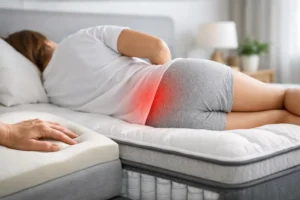
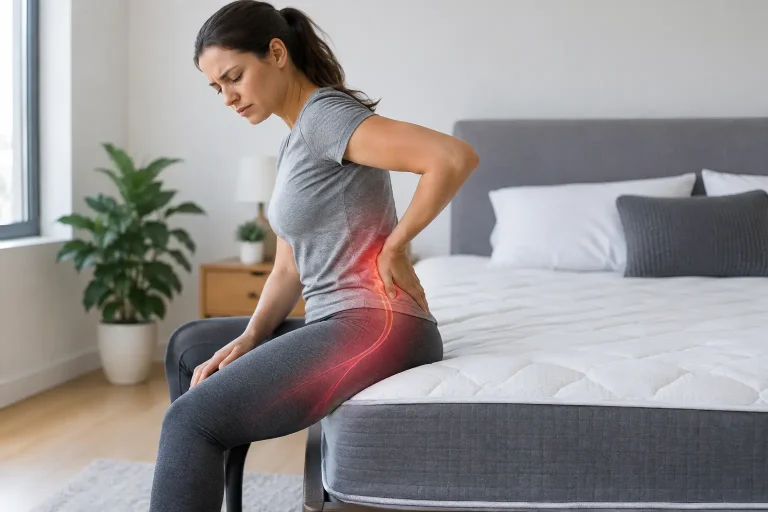
If you are waking up with back pain, stiffness, or headaches, you already know sleep is not just about “soft vs firm.” Sleep quality is a chain reaction. Overheating causes micro-wakeups. Odors and irritants can make breathing feel “tight” or restless. Partner movement breaks continuity. Once your sleep architecture gets interrupted, your muscles and joints do not fully recover.
An Oeko-Tex screened sleep surface does not automatically fix back pain. But it can remove one common variable that disrupts sleep: exposure to certain irritants and chemical residues in fabrics and foams.
For hot sleepers, it is also helpful because cooling features often involve foams, gels, and fabrics. Certifications help keep those material choices honest and safer.
Oeko-Tex vs CertiPUR-US: how to read them together
You will often see Oeko-Tex and CertiPUR-US mentioned on the same product page, and that is not redundant.
CertiPUR-US focuses on polyurethane foam used in bedding and furniture. It addresses content and emissions standards for things like certain flame retardants, heavy metals, and low VOC emissions.
Oeko-Tex, depending on the certification and component, can apply to a wider textile-and-foam ecosystem and uses its own substance limits and testing criteria.
If you are buying a hybrid mattress with foam comfort layers, seeing both can be a strong signal that the brand is taking material safety seriously across multiple parts of the build. It is still smart to confirm what exactly is certified, but in general, these labels complement each other.
How to verify an Oeko-Tex claim without becoming a chemist
You do not need to memorize chemical names to shop well. You need two things: scope and proof.
Start by looking for the specific certification name, such as STANDARD 100 by Oeko-Tex. A legitimate brand can also provide a certificate number or documentation upon request.
Then ask the most important question: which components are covered by the certification? If the answer is vague, treat the claim as marketing until it is clarified.
Pay attention to how the brand talks about the build. When a company is transparent about layer materials, thicknesses, and how each layer supports spine alignment, pressure relief, and airflow, it is usually more reliable about certifications too. Vague copy often travels with vague proof.
Trade-offs: when Oeko-Tex matters most, and when it might not
If you are extremely sensitive to odors or have allergy-like reactions to certain materials, Oeko-Tex can be a high-priority filter. It can help you avoid a trial-and-error cycle that wastes time and return shipping.
If your main issue is mechanical, such as lower back pain from sagging support, certification alone will not solve it. You may need a more structured coil system, firmer lumbar support, or a different comfort layer that holds alignment.
Budget is a real trade-off. Certifications cost money, and brands that test responsibly may not be the cheapest. The smarter way to frame it is cost per night. A mattress you keep for years, that helps you sleep deeper with fewer disruptions, is usually the better value than a bargain bed you replace early.
What to look for beyond the label
A safer material story is only one part of a mattress that performs. For real-world results, match certifications with construction that targets your specific sleep problems.
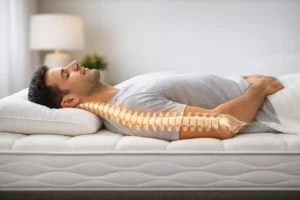
If you want less back pain, look for a hybrid design that balances pressure relief on top with stable support underneath, so your spine stays neutral instead of hammocking.
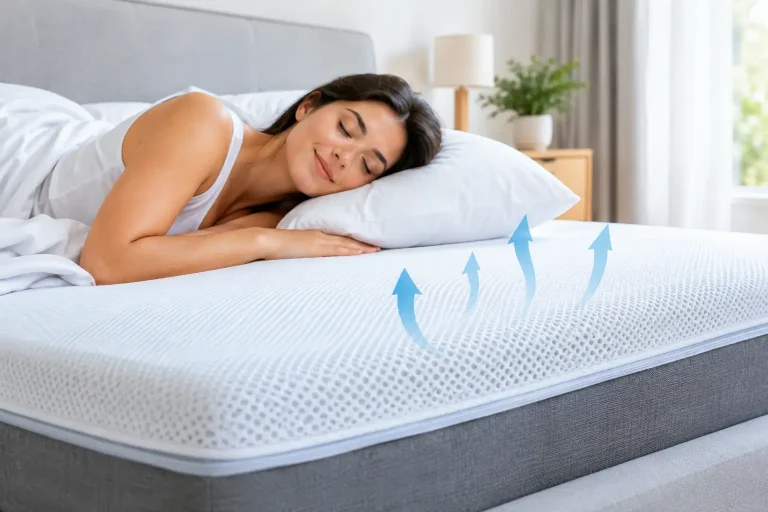
If you sleep hot, prioritize airflow through the core, breathable comfort layers, and cover fabrics that do not trap heat. Cooling gel foams can help, but the coil unit and overall ventilation often make the bigger difference.
If you share your bed, individually pocketed springs and well-designed transition layers matter for motion isolation. “Zero disturbance” is not magic, but good engineering can get very close.
This is the logic behind performance-first hybrid systems like those you will see from brands such as Azure Mattress: build for alignment, comfort, and temperature control, then back the materials with recognized certifications.
The bottom line: what an Oeko-Tex label should do for you
An Oeko-Tex certification should reduce uncertainty. It is a trust signal that the materials you sleep on have been screened for harmful substances and held to strict limits.
Use it as a filter, not a finish line. Pair it with clear construction details, realistic comfort claims, and policies that reduce your risk, like a solid warranty and a return window.
The best mattress decision feels calm, not complicated. When the materials are certified, the support is engineered, and the cooling story is real, you stop thinking about the bed – and start waking up with the kind of quiet recovery your body has been asking for.