If you have ever felt that “new mattress smell” and wondered what, exactly, you are breathing in, you are already asking the right question. For people shopping for better sleep because of back pain, overheating, or restless nights with a partner, materials matter as much as firmness. That is where CertiPUR-US comes up – and where the label is often misunderstood.
CertiPUR-US certified mattress meaning (in plain terms)
The certipur us certified mattress meaning is simple: the foam used in the mattress (not the entire mattress as a finished product) has been tested to meet specific chemical emissions and content standards.
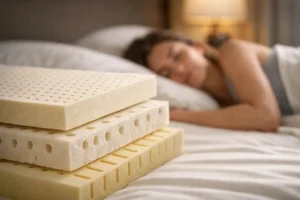
CertiPUR-US is a certification program focused on flexible polyurethane foam. That includes many common comfort layers such as memory foam, polyfoam, and certain “cooling gel foam” varieties. If a mattress uses those foams, a CertiPUR-US claim is basically the manufacturer saying, “This foam meets the program’s criteria for low emissions and restricted substances.”
For a shopper, that translates to more confidence that the foam portion of the mattress is made without certain harmful chemicals and that it is less likely to off-gas at high levels.
What CertiPUR-US actually tests for
CertiPUR-US is not a comfort rating and it is not a durability guarantee. It is a materials safety and emissions standard for foam.
The program’s testing focuses on two buckets: what is in the foam (restricted substances) and what comes out of the foam (VOC emissions). When a foam is CertiPUR-US certified, it is made without certain substances such as ozone depleters, PBDE flame retardants, mercury, lead, and other heavy metals, and certain phthalates. It also sets a limit for VOC emissions (volatile organic compounds) to help reduce indoor air pollution.
If you are buying a mattress for a bedroom that already runs warm or for a household with kids, pets, or anyone sensitive to smells, that low-emissions piece is usually the practical win. Less off-gassing does not mean “no smell ever,” but it often means the smell is milder and dissipates faster with normal ventilation.
What CertiPUR-US does not mean (and why that matters)
This is where shopping gets clearer – and where you avoid being oversold.
First, CertiPUR-US does not certify the entire mattress. It does not evaluate the cover fabric, the adhesives, the coil system, the latex layer, or any fire barrier used. A mattress can truthfully say “CertiPUR-US certified foam” and still have other components that you might want to ask about.
Second, it does not mean “organic” or “natural.” Polyurethane foam is a synthetic material. A CertiPUR-US certification is about limiting certain chemicals and emissions, not about the foam being plant-based or free of all additives.
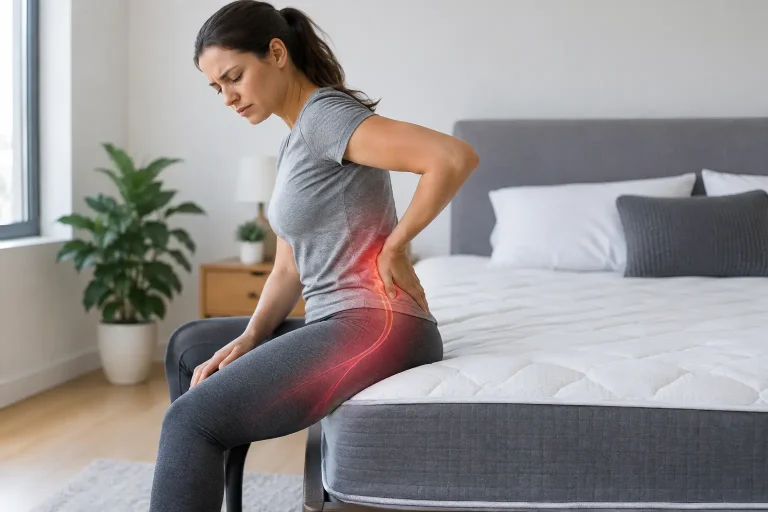
Third, it does not tell you whether the mattress will feel good for your back. If you are buying to reduce lower-back tightness or morning stiffness, your outcome is still driven by the design: spine alignment, pressure relief, and how well the mattress holds your posture through the night.
Finally, it does not replace other certifications. If you see additional material callouts like Oeko-Tex, those typically apply to textiles and certain finished materials rather than just foam. Each label has a different scope.
How this connects to pain relief, cooler sleep, and motion isolation
Most people do not care about certifications as a badge. They care because they want a mattress that solves a problem without creating a new one.
If you are trying to reduce back pain, the foam layers are often responsible for pressure relief and contouring. A cleaner, low-emission foam helps you get those comfort benefits without intense off-gassing in the first few nights.
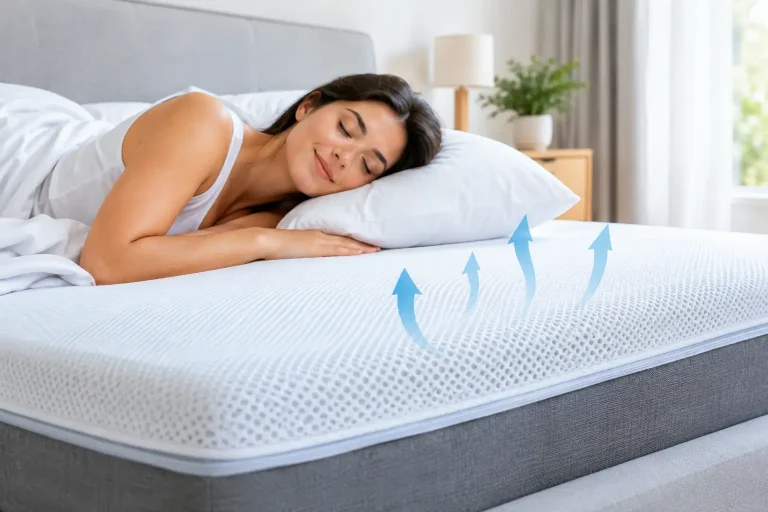
If you sleep hot, foam can be a double-edged sword. It can cushion joints beautifully, but dense foams can also trap heat. CertiPUR-US does not certify “coolness.” What it can do is keep the conversation focused: once you trust the foam meets baseline emissions standards, you can judge temperature performance based on construction features like airflow channels, open-cell foam, gel infusions, breathable covers, and coil systems that move air.
If you share a bed and wake up when your partner turns, the foam layers and the spring design work together to absorb motion. Again, CertiPUR-US does not promise “zero disturbance,” but it covers the safety side of the foam that often acts as the motion buffer.
How to verify a CertiPUR-US claim without becoming a detective
You do not need a lab report to shop intelligently, but you do want more than a vague marketing line.
Start by checking whether the brand specifies which layer is CertiPUR-US certified. Some mattresses use multiple foams; others use foam only as a thin comfort layer over coils. The more foam in the mattress, the more relevant the certification becomes.
Next, look for clarity in wording. “Made with CertiPUR-US certified foam” is more precise than “CertiPUR mattress,” which can sound like the whole bed is certified.
If you are comparing two mattresses and one gives detailed material descriptions (foam type, thickness, density feel, and layer purpose) while the other just repeats certifications, the detailed one usually has less to hide. Certifications are most useful when paired with transparent engineering.
It depends: when CertiPUR-US matters most
CertiPUR-US is not equally important for every shopper.
It matters more if you are especially sensitive to odors, if you are furnishing a small room with limited ventilation, or if you are buying for a child’s room where you want tighter control over indoor air quality.
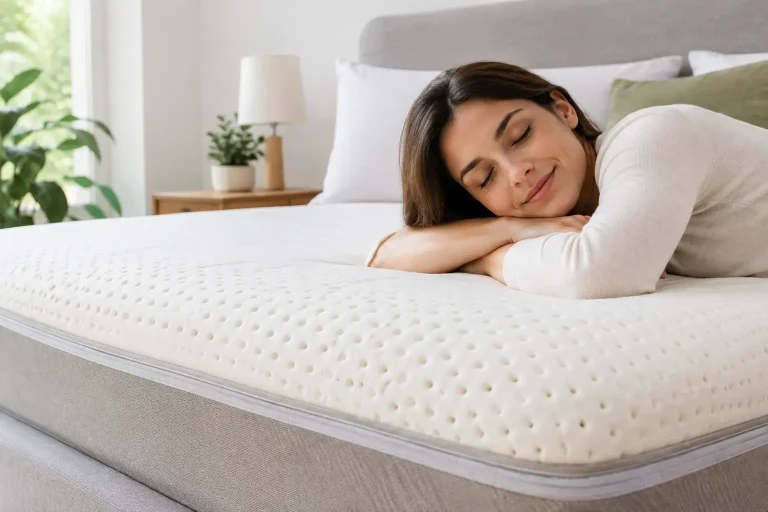
It matters less if the mattress uses very little polyurethane foam – for example, a build that leans heavily on coils plus latex. Latex has its own story and is not what CertiPUR-US was designed to certify.
It also matters less if you are the type of sleeper who will let a new mattress air out for several days in a spare room before sleeping on it. Off-gassing is usually strongest early, and time plus airflow solves a lot.
The hidden trade-off: “cleaner foam” is not the same as “better mattress”
A common trap is assuming that a safer foam automatically equals a better bed. Comfort and support are mechanical problems as much as materials problems.
For spinal alignment, what you actually need is a surface that lets shoulders and hips sink enough to relieve pressure while keeping the midsection supported so your lower back does not bow. That is why many pain-relief focused mattresses use a hybrid structure: foams for contouring on top, and a pocketed coil system underneath to hold alignment.
For motion isolation, the mattress needs to absorb energy without turning the whole bed into a trampoline. Foams help, but coil design and edge stability matter too.
For temperature, the question is not “Does it have cooling gel?” The better question is: “Does the design move heat away consistently for my body type and room temperature?” A gel foam layer can feel cooler at first touch but still sleep warm if airflow is restricted.
CertiPUR-US helps you trust the foam baseline. It does not solve the engineering.
A smarter way to use certifications when you shop
If you want a mattress that feels like a clear upgrade from basic spring beds, use a simple hierarchy.
First, use certifications like CertiPUR-US to screen for material responsibility in the foam layers. Second, evaluate whether the construction matches your outcomes: pressure relief for joints, support for alignment, and airflow for heat.
That is also why it is worth paying attention to brands that talk about the sleep system as a whole – comfort layers, coil structure, cover, and policies that reduce risk. For example, a hybrid brand like Azure Mattress positions material callouts such as CertiPUR-US as one proof point inside a broader performance story centered on spine support, cooling control, and motion isolation.
Questions to ask before you buy (so you do not get stuck with the wrong “certified” bed)
Ask how much foam is in the mattress and what type it is. A thin layer of certified foam over coils is different from a thick all-foam build. If you are dealing with back pain, also ask how the mattress is designed to maintain neutral alignment for your sleep position – side, back, or combination.
Ask about the return policy and warranty length. Certifications can reduce concern about materials, but they cannot guarantee you will love the feel. A generous trial and a solid warranty lower the pressure of getting it perfect on day one.
If you sleep hot, ask what the brand has done structurally to move heat: coil airflow, breathable cover materials, and whether the foams are designed to be more open and less heat-trapping.
And if motion is the issue, ask whether the coil system is individually pocketed and how the comfort layers are tuned to absorb movement.
The bottom line on “CertiPUR-US certified” labels
A CertiPUR-US claim is worth caring about because it addresses a real concern: what is in the foam, and what the foam releases into your bedroom air. For many shoppers, it is a practical filter that helps narrow the field to mattresses that take material safety seriously.
Just keep it in its lane. Treat CertiPUR-US as a baseline for foam quality and emissions, then make your actual buying decision based on the things your body will feel every night: alignment, pressure relief, temperature control, and how calm the bed stays when someone else moves.
The most reassuring purchase is the one where the certifications back up the materials, and the design backs up your mornings – fewer aches, fewer wake-ups, and sleep that actually feels restorative.