A partner getting out of bed at 5:30 a.m. should not feel like an alarm for both of you. Yet on an aging or poorly designed mattress, a turn, a knee shift, or the simple act of sitting up can send movement across the whole bed. Learning how to reduce partner disturbance starts with identifying whether the disruption is coming from motion transfer, pressure discomfort, overheating, noise, or different sleep schedules.
For couples, peaceful sleep is not only about finding a mattress that feels soft or firm in a showroom. It is about creating a sleep surface that lets each person move, recover, and change position without waking the other. The right combination of mattress construction, support, and bedroom habits can make a noticeable difference.
Why partner disturbance happens
Partner disturbance is often described as motion transfer, but it is broader than that. Motion transfer occurs when one sleeper’s movements travel through the mattress and are felt on the other side. Traditional interconnected innerspring mattresses are especially prone to this because the springs react as one large unit. When one side compresses, the movement can ripple outward.
A mattress that is too soft can create a different problem. One partner may sink deeply while the other rolls toward the middle, producing an unstable, uneven feeling. A mattress that is too firm may cause pressure points at the shoulders, hips, or lower back. That discomfort leads to more tossing and turning, which means more opportunities to wake a light-sleeping partner.
Temperature also matters. If one person sleeps hot, they may repeatedly move around to find a cooler position, throw off covers, or wake during the night. Add a creaky frame, a slipping mattress, different bedtimes, or a restless pet, and small disruptions can become a nightly pattern.
How to reduce partner disturbance with the right mattress
The mattress is the foundation. No sleep routine can fully compensate for a bed that transfers every movement from one person to the other. For most couples, a hybrid mattress with individually pocketed coils and pressure-relieving comfort layers offers the strongest balance of motion isolation, support, and airflow.
Choose individually pocketed coils, not connected springs
Pocketed coils work independently. Each spring is wrapped in its own fabric pocket, allowing it to respond to pressure in one specific area instead of pulling the entire mattress into motion. When your partner turns over or gets out of bed, the coils beneath them compress and recover with less effect on your side.
This construction also supports better spinal alignment. Your shoulders and hips can sink in where needed, while the lower back receives more stable support. That matters because less discomfort generally means less repositioning through the night.
Do not assume every spring mattress has good motion isolation. The key distinction is whether the springs are individually pocketed or linked together. A connected coil system may feel bouncy at first, but it is more likely to broadcast movement across the bed.
Look for comfort layers that absorb movement
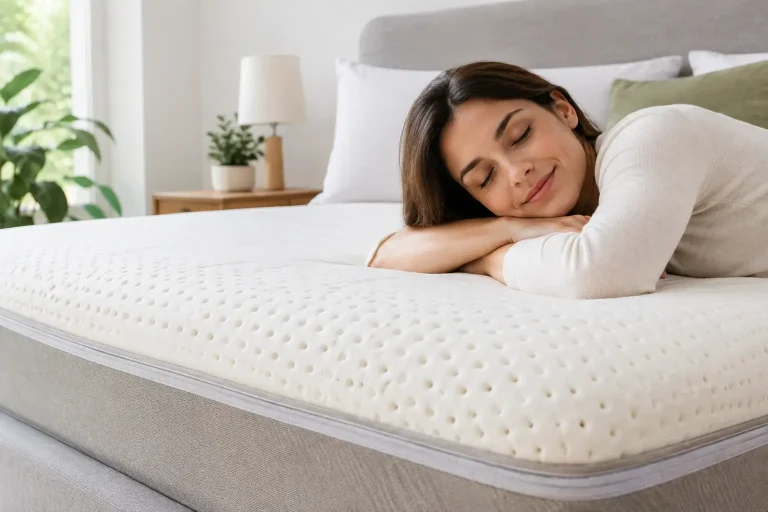
The layers above the coils help dampen motion before it reaches the other sleeper. Latex, cooling gel foam, and high-quality pressure-relieving foams can absorb localized movement while cushioning joints. They also reduce the sharp, jarring response some people feel on a basic spring mattress.
Material choice is personal. Latex usually feels more responsive and buoyant, which can make changing positions easier without the stuck-in-bed sensation associated with very soft foam. Foam often provides a more cradled feel and strong motion absorption. A well-designed hybrid brings these strengths together: responsive support below, pressure relief and motion control above.
The trade-off is that extremely plush mattresses can sometimes make movement harder for combination sleepers. If you regularly switch from your side to your back, choose comfort layers that relieve pressure without allowing your hips to sink too far.
Match firmness to both sleepers, not one
A mattress should not force one person to sacrifice support for the other’s comfort. Couples with a major difference in body weight, preferred sleep position, or pain concerns may need a medium-firm feel with adaptive layers rather than an extreme soft or firm design.
Medium-firm is often a practical starting point because it can support back and stomach sleepers while providing enough contouring for side sleepers. But it depends on your body and sleep habits. A lightweight side sleeper may need more pressure relief at the shoulder, while a larger back sleeper may need stronger lumbar support to prevent sagging.
If your current mattress is structurally sound but only slightly too firm, a supportive topper may help soften surface pressure. It will not fix worn-out coils, deep body impressions, or severe motion transfer. In those cases, replacing the mattress is the more effective long-term solution.
Stabilize the bed beneath the mattress
Even an excellent mattress cannot perform properly on an unstable base. A loose frame, weak center support, or widely spaced slats can amplify movement and create squeaks that wake both sleepers. Check the frame regularly, tighten visible hardware, and make sure the center beam and support legs are firmly in contact with the floor.
For a larger mattress, center support is especially important. A queen, king, or California king should have enough support across the middle to prevent sagging and reduce the sensation that the whole bed moves when one person shifts.
If the mattress slides on the frame, use a non-slip mattress pad designed for that purpose. Sliding can create noise and make every movement feel bigger than it is. Keep the foundation level, dry, and free from damaged slats.
Lower the reasons either of you tosses and turns
Motion isolation protects the other sleeper when movement happens. Better sleep conditions can reduce how often that movement happens in the first place.
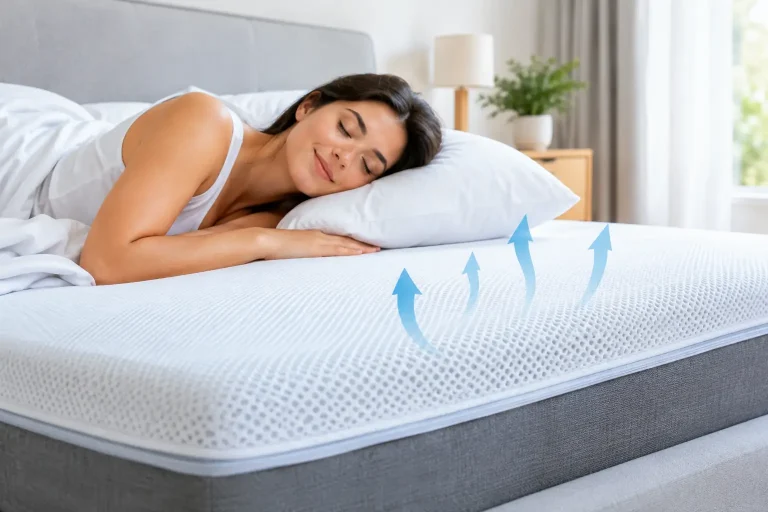
Start with temperature. A room that is too warm can interrupt deep sleep and cause frequent repositioning. Breathable bedding, moisture-wicking pajamas, and a mattress with airflow through its coil system can help heat escape rather than build up around the body. If one partner sleeps much warmer, separate lightweight blankets are often more practical than fighting over one heavy comforter.
Next, address pain and pressure. Persistent lower-back stiffness, numb arms, sore shoulders, or hip discomfort can signal that the mattress is not supporting your body evenly. Side sleepers may need more contouring at the shoulder and hip, while back sleepers often benefit from balanced lumbar support. The goal is not a mattress that feels dramatic for five minutes. It is one that keeps your spine in a more neutral position for hours.
Pillows matter, too. A pillow that is too high can strain the neck. One that is too flat can let the head drop out of alignment. When the head, neck, and spine are better supported, there is less need to keep searching for a comfortable position.
Make different schedules less disruptive
Not every disturbance is caused by the mattress. When partners go to sleep or wake at different times, a few small choices can protect the person who is still asleep.
Prepare clothing, work items, and toiletries outside the bedroom so early risers are not opening drawers or switching on bright lights. Use a dim bedside light pointed away from the bed, and keep phones on silent rather than relying on repeated alarms. If an alarm is necessary, place it on the waking partner’s side and choose a gradual sound or vibration setting when possible.
Keep nighttime exits simple. A clear path from the bed to the door prevents bumped furniture and unnecessary noise. If one person frequently gets up to use the bathroom, soft lighting and quiet door hardware can have more impact than expected.
When a bigger bed is the real answer
A king mattress gives each person more personal space than a queen, which can reduce incidental contact and make movement feel less immediate. For couples who share the bed with a child or pet, upgrading the bed size may be as valuable as upgrading the mattress itself.
Still, a larger mattress is not automatically the answer. A king with poor motion isolation can transfer movement across the surface, while a well-built queen with pocketed coils and quality comfort layers may feel remarkably calm. Consider room size, budget, and whether both sleepers have enough space to change position naturally.
For couples who want comfort engineering without compromising on pressure relief or cooler sleep, Azure Mattress uses individually pocketed springs with carefully layered comfort materials to help localize movement and support more restorative rest.
Know when your current mattress is working against you
A mattress can look acceptable while its support has already declined. Watch for sagging, permanent body impressions, noisy springs, edge collapse, or a growing need to sleep in a specific spot to avoid discomfort. If you wake more easily when your partner moves than you did a few years ago, worn materials may be part of the problem.
A quality mattress should help you feel supported independently, not pulled into your partner’s side or bounced awake when they roll over. Motion control, pressure relief, and stable spinal support work together. When one is missing, sleep becomes lighter and more fragmented.
The most useful test is simple: after a full week, are you both waking with fewer interruptions and less stiffness? Build your sleep setup around that answer. A quieter, steadier bed gives each partner room to rest deeply, even when the other person moves.