A mattress is one of the heaviest, most awkward things you will ever buy online. That is exactly why shipping can be the loudest part of its carbon footprint – a bulky box on a truck, multiple handoffs, and sometimes a return trip if the fit is wrong. So when you see “carbon neutral delivery mattress” in a product description, it is worth slowing down and asking a simple question: what, specifically, is being neutralized?
If you care about back pain relief, cooler sleep, and not waking up every time your partner turns over, you are already making a practical, outcome-driven decision. Carbon-neutral delivery can fit that same mindset – as long as it is measurable and not just a feel-good badge.
What “carbon neutral delivery mattress” usually means
Most brands use “carbon neutral delivery mattress” to describe the shipping portion of the purchase, not the entire lifecycle of the mattress. In plain terms, it typically means the brand calculated emissions from transportation and then purchased carbon offsets to balance those emissions to net zero.
That can be a meaningful step, especially for a product that has to move from a factory to a fulfillment hub to your doorstep. But it is also easy to misunderstand. Carbon-neutral delivery is not the same as:
- A carbon-neutral mattress (materials, manufacturing energy, packaging, shipping, and end-of-life all net to zero)
- A “zero emissions” shipment (a truck route with no emissions at all)
- A guarantee that the mattress is made from fully natural or organic materials
A serious carbon neutral delivery claim focuses on the delivery leg and backs it up with a defined method.
Why mattress delivery emissions are a bigger deal than you think
A pillow is light. A mattress is a logistics project.
Compressed “bed-in-a-box” shipping helps because it reduces volume, meaning more units can fit per truckload. Still, the product is heavy, and last-mile delivery is often the least efficient part. A driver may cover many miles between stops, and residential delivery cannot optimize like commercial freight.
Returns also matter. A free-return policy reduces your purchase risk, but it can increase shipping emissions if a return means another long trip and reprocessing. Brands that handle this responsibly try to reduce returns by setting clearer expectations on feel, firmness, and support. That is a sustainability choice that also happens to be a customer experience choice.
How carbon-neutral delivery is calculated (and where it gets fuzzy)
Carbon accounting is not magic, but it does involve assumptions.
Most calculations estimate emissions using shipment data such as weight, distance, shipping method, and carrier averages. Then the brand buys offsets equivalent to that estimate. If the calculation is overly generic, the “neutral” label becomes less meaningful.
Where it depends:
If you live far from a distribution center, your delivery footprint can be higher than average. If the brand uses a single national estimate for all shipments, some customers will be under-accounted and others over-accounted.
Packaging also plays a role. A well-designed compression system can reduce the number of trucks needed, but thicker cardboard and extra plastic wrap increase material emissions. A thoughtful brand balances durability (your mattress needs to arrive intact and hygienic) with minimizing unnecessary material.
Offsets: what they do well, and what they cannot do
Offsets are the most common tool behind carbon-neutral delivery. They fund projects that reduce or remove greenhouse gases elsewhere, such as reforestation, methane capture, or renewable energy.
Offsets can be legitimate. They can also be weak. The difference usually comes down to quality and verification.
A useful way to think about offsets: they are a bridge, not a finish line. They compensate for emissions that still happened. They do not replace the need to reduce emissions at the source.
Trade-off worth knowing: a brand can offset shipping and still use inefficient logistics, excessive packaging, or high-return practices. Carbon neutral delivery is better than doing nothing, but it should not be the only sustainability lever.
What to verify before you trust a carbon-neutral delivery claim
If you are the kind of shopper who wants real spine support data and real material certifications, apply that same standard here. A credible carbon neutral delivery mattress claim should answer three questions clearly.
1) What exactly is covered?
Is it the entire shipping journey, including last-mile delivery? Does it include returns? Does it include packaging? Many claims cover outbound shipping only. That may still be valuable, but it should be stated.
2) How are emissions calculated?
Look for language that indicates shipment-based calculations, not a flat marketing estimate. The more specific the input data, the more accurate the claim tends to be.
3) What offsets are used, and are they verified?
You do not need a graduate degree in environmental policy. You just need basic transparency: the type of projects funded and whether they are third-party verified.
If a brand cannot explain any of this, you are not being given a performance claim. You are being given a vibe.
The sleeper’s angle: why delivery emissions connect to comfort outcomes
Sustainability can feel separate from mattress performance, but in practice they overlap.
A well-engineered hybrid mattress is designed to last. Durability is not only a comfort and support issue – it is also an environmental one. Replacing a mattress every 5 to 7 years because the foam collapsed or the springs sagged is a higher-impact path than investing once in a construction that holds alignment over time.
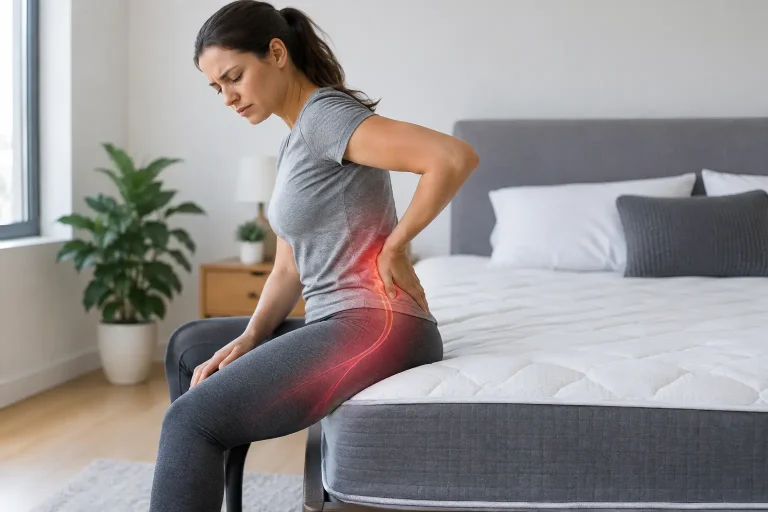
If you are shopping for pain relief and spinal alignment, focus on the parts of construction that tend to keep their shape: a stable support core, a coil system that distributes load, and comfort layers that resist premature impressions. When a mattress stays supportive, you buy fewer mattresses over your lifetime. That is a carbon decision even when you are shopping for back pain.
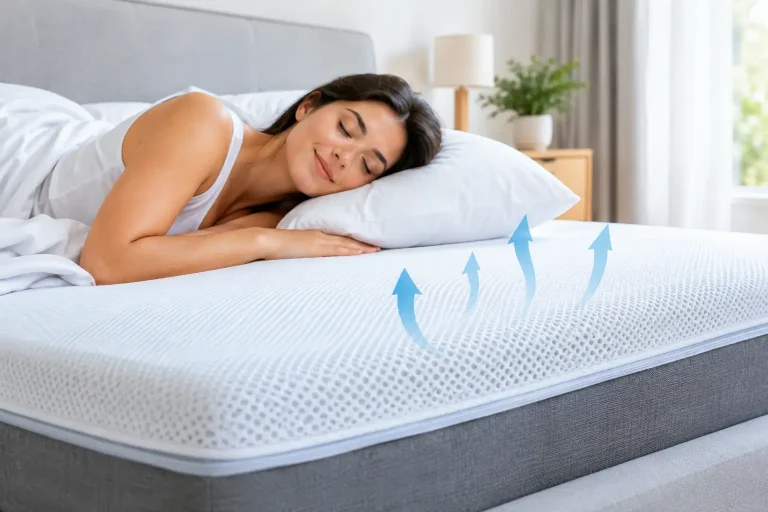
Cooling also plays a role. Overheating leads to restless sleep, and restless sleepers are often the people who abandon a mattress early because it “never felt right.” Breathable materials and airflow-friendly designs can reduce that frustration. The result is not just better sleep quality – it is fewer replacement cycles.
Carbon-neutral delivery is good. Lower-impact delivery is better.
The strongest brands do both: they offset what they cannot eliminate yet and actively reduce emissions through logistics choices.
Lower-impact delivery can look like tighter packaging design to reduce dimensional weight, regional warehousing to reduce shipping distance, and smarter carrier routing. It can also look like simple, practical product education that prevents returns. If a couple buys the wrong firmness because the brand’s description was vague, that return shipment is more than a hassle – it is extra emissions.
If you want to make your purchase count, choose the brand that reduces first and offsets second.
Don’t ignore the other half of the footprint: materials and manufacturing
A carbon neutral delivery mattress claim can be true and still represent a small slice of the full picture.
Foams, latex, steel coils, adhesives, and textiles all carry embedded emissions from extraction and manufacturing. Certifications like CertiPUR-US and Oeko-Tex can signal lower chemical risk and material safety, which matters for indoor air quality and peace of mind. They are not carbon certifications, but they are part of a broader “do it right” standard.
If you are eco-conscious and performance-driven, aim for the overlap: materials with credible safety standards, a construction built for long-term support, and delivery practices that are transparent about carbon.
A practical way to shop without getting lost in labels
If you want the benefits of carbon-neutral delivery without falling for empty claims, keep your decision process simple.
Start by choosing the right mattress for your body and sleep style, because the most sustainable mattress is the one you do not replace early. Then evaluate the delivery claim.
If you are a back or side sleeper dealing with stiffness, look for a hybrid design that combines pressure relief with a stable support system, so your spine stays aligned instead of dipping at the hips and shoulders. If you sleep as a couple, prioritize motion isolation so you are not trading sustainability for sleeplessness. If you run hot, look for airflow and cooling-focused layers so you stay asleep longer and wake up less.
Once the performance fit is right, ask for clarity on carbon-neutral delivery: coverage, calculation, and verified offsets.
If you are looking for a brand that pairs hybrid performance outcomes with carbon-neutral delivery as part of a broader sleep system approach, Azure Mattress is built around support, cooling, and motion isolation – the same fundamentals that help a mattress last longer and reduce replacement churn.
The honest truth about “neutral”: it is a commitment, not a finish line
Carbon neutrality is not a magic eraser. It is a promise to take responsibility for a measurable footprint, usually through a mix of reductions and offsets. That is worthwhile, especially in mattress delivery where the logistics are unavoidable.
But you should still shop like a skeptic who wants to sleep better. Ask for specifics. Choose durability and support so your mattress earns its place for years. Then let carbon-neutral delivery be what it should be: a smart, accountable step that supports your health goals without ignoring the planet you sleep on.