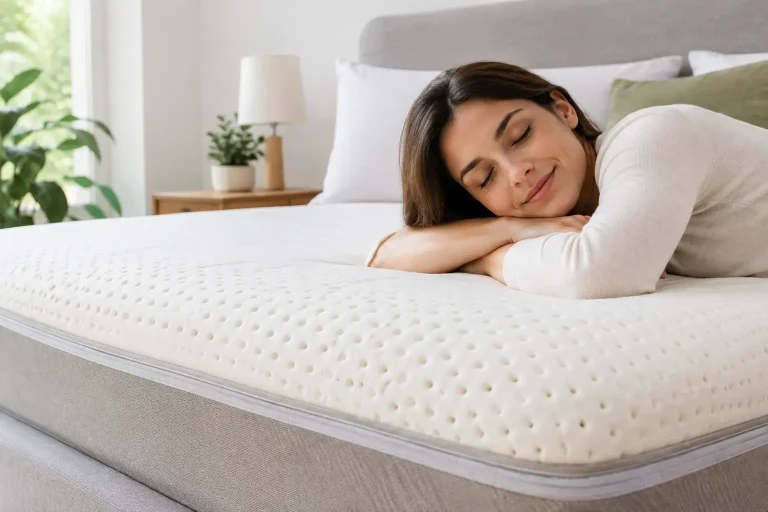
If your shoulder starts aching before the alarm goes off, your mattress may be part of the problem. The right mattress for shoulder pain side sleeping should let your shoulder sink just enough to reduce pressure while still keeping your spine level. That balance matters more than most people realize, because side sleeping is healthy for many adults, but only when the surface underneath the body is doing its job.
Why shoulder pain gets worse on the wrong mattress
Side sleepers place most of their body weight on two main contact points – the shoulder and the hip. When a mattress is too firm, the shoulder cannot sink in properly, so the joint takes the load. That creates pressure, numbness, stiffness, and the familiar need to keep switching sides all night.
A mattress that is too soft creates a different problem. The shoulder may sink, but so does the torso, which can twist the spine out of alignment. Instead of waking with isolated shoulder pain, you may get neck tightness, upper back soreness, or tension along the lower back as well.
This is why shoulder relief is never just about softness. It is about pressure relief and support working together. For side sleepers, those two things have to happen at the same time.
What to look for in a mattress for shoulder pain side sleeping
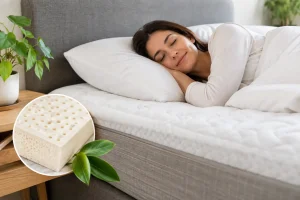
A good fit usually starts with comfort layers that cushion the shoulder without letting the body collapse. Materials like latex and high-quality pressure-relieving foam tend to perform well here because they compress where needed and recover quickly. That means the shoulder gets relief, but the mattress still feels supportive rather than flat or swallowed.
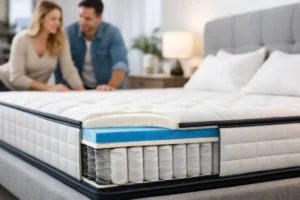
Under those comfort layers, the support core matters just as much. Individually pocketed coils are often a strong choice because they respond to pressure more precisely than older connected spring systems. Instead of pushing back uniformly across the whole mattress, they allow heavier areas and sharper pressure points to settle in more naturally. For side sleepers with shoulder pain, that usually feels less aggressive and more balanced.
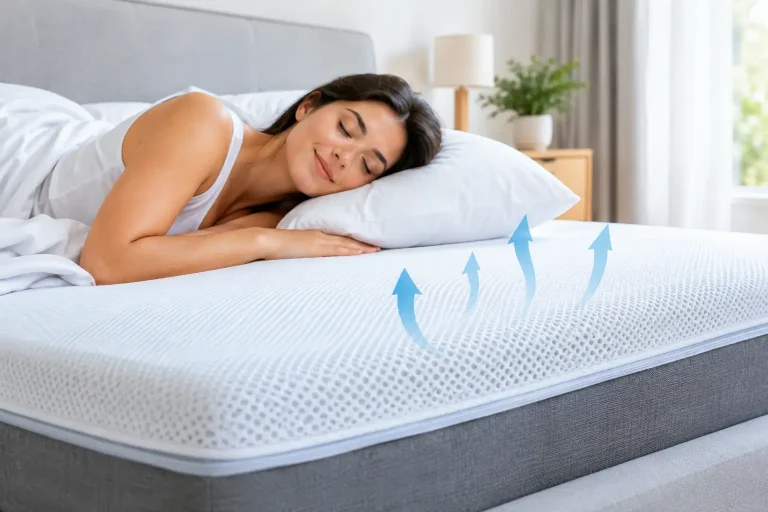
Temperature control also deserves more attention than it gets. Heat buildup can make the body restless, and restless sleep often means more tossing onto an already irritated shoulder. Breathable latex, cooling gel foams, and airflow through a coil system can all help create a cooler sleep surface, which supports longer periods of uninterrupted rest.
Firmness: the part that depends on your body
There is no single firmness level that works for every side sleeper. Body weight, shoulder width, and pain sensitivity all change what feels right.
If you are lighter in weight, a mattress that feels medium to someone else may feel too firm to you. You may need more surface cushioning to get enough shoulder contouring. If you are heavier, an overly plush mattress can let the torso sink too far, so a medium-firm hybrid often gives better alignment.
Most side sleepers with shoulder pain do best somewhere in the medium to medium-firm range, especially when the mattress has a pressure-relieving top and a more stable support system underneath. The feel should be cushioned at the surface and controlled below it. You should not feel jammed at the shoulder, but you also should not feel like your body is folding into a hammock.
Signs your mattress is too firm
If you wake up with a sharp shoulder ache, tingling in the arm, or the urge to reposition constantly, your mattress may not be allowing enough give. This is common with basic spring mattresses that have minimal comfort layers and broad, uneven pushback.
Signs your mattress is too soft
If your shoulder feels better but your neck or lower back hurts, the comfort layers may be too deep or too unstable. Pain relief at one joint should not come at the expense of spinal alignment.
Why hybrid construction often works best
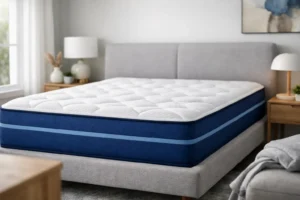
For many adults, a hybrid mattress is the most practical answer to shoulder pain from side sleeping because it combines contouring and structure in one build. You get pressure relief from comfort materials near the top, and then more dependable support from a coil base underneath.
That combination solves a problem that all-foam and traditional innerspring mattresses often struggle with. Basic all-foam designs can feel comfortable at first but may trap heat or lose support over time. Traditional spring mattresses can feel bouncy and firm through the shoulder, with very little precision where the body needs it most.
A well-built hybrid is designed to reduce those compromises. Latex can add responsive pressure relief. Cooling gel foams can help dissipate heat. Pocket springs can support the spine while reducing transfer from a partner moving beside you. If your sleep is already being disrupted by shoulder discomfort, less motion disturbance can make a real difference.
The shoulder-neck-spine connection
Shoulder pain during sleep rarely stays isolated. If the mattress does not support the body correctly, the shoulder drops or compresses, the neck shifts to compensate, and the spine loses its neutral line. That chain reaction is why people often blame their pillow alone when the mattress is the deeper issue.
The mattress should hold the ribcage, waist, hips, and legs in a position that keeps the upper body from twisting. Once that foundation is in place, the pillow can do its job more effectively by filling the space between the head and shoulder. If the mattress is wrong, even a good pillow has to overcompensate.
This is also why couples should not choose a mattress based only on one person’s comfort preference. If one partner wants an extra-firm surface and the other is a side sleeper with shoulder pain, the mismatch can become a nightly problem. A hybrid with stronger support underneath and more adaptive pressure relief on top is often the better middle ground.
Materials that make a measurable difference
Not all comfort layers perform the same way over time. Low-density foams may feel plush in a showroom or during the first few weeks, then lose shape and create deeper pressure points later. For someone already dealing with shoulder pain, that kind of breakdown is not a small issue.
Look for materials with a clearer performance story. Latex tends to be resilient, breathable, and responsive. Cooling gel memory foam can help reduce heat retention while still cushioning pressure points. CertiPUR-US certified foams and Oeko-Tex certified textiles add another layer of confidence around material quality and safety.
Support systems matter too. A structured pocket coil base can improve weight distribution and reduce the broad pressure buildup that often aggravates shoulders. It also helps the mattress maintain its shape over time, which is essential if you want pain relief that lasts beyond the trial period.
When a topper helps and when it does not
A topper can help if your mattress is slightly too firm but still supportive underneath. Adding a pressure-relieving layer may reduce shoulder compression without changing the whole sleep system. This can be a practical short-term fix.
But if your mattress is sagging, unsupportive, or causing your spine to dip out of line, a topper is not a real solution. It may soften the surface, but it cannot rebuild structural support. In those cases, replacing the mattress is usually the smarter move.
How to choose with fewer regrets
Shopping for a mattress when you are in pain makes every claim sound urgent. The better approach is to filter options through three practical questions. First, will it relieve pressure at the shoulder? Second, will it keep the spine aligned in a side-sleeping position? Third, will it help you stay asleep by reducing heat and motion transfer?
If a mattress only does one of those things well, it may not solve the full problem. Real sleep recovery comes from a system that works together – cushioning, support, cooling, and stability.
That is why many side sleepers move away from basic spring beds and toward engineered hybrids built around joint relief and alignment. Brands like Azure Mattress focus on that exact balance, combining pressure-relieving comfort layers, structured pocket springs, and cooling design to support deeper, less interrupted sleep.
If your shoulder has been negotiating with your mattress every night, take that as useful data. The best mattress should not just feel soft when you lie down for five minutes. It should help your body stay calm, supported, and pain-free long enough to actually rest.