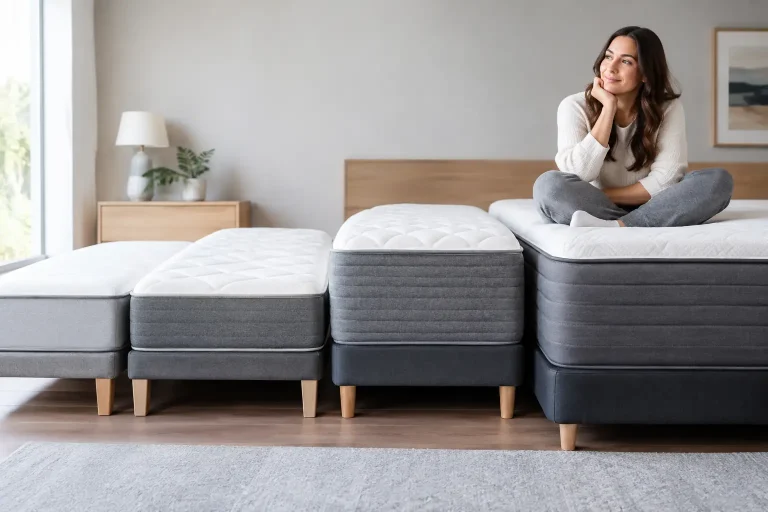
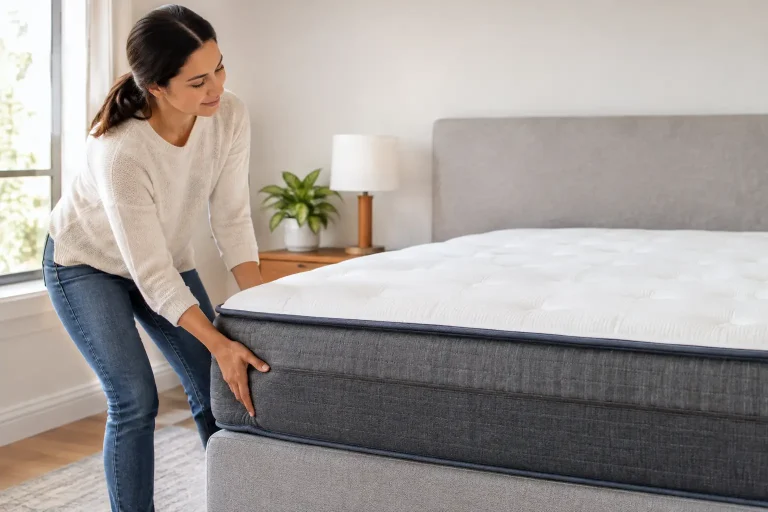
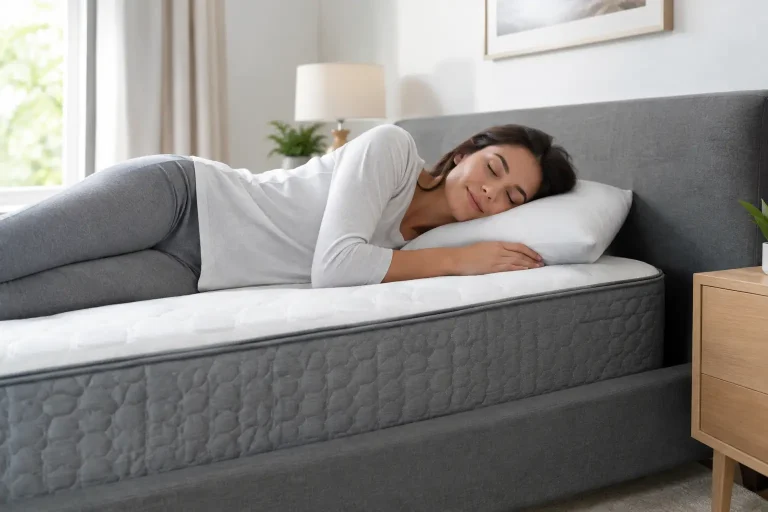
A mattress can feel comfortable in the center yet fail where you need it most: along the perimeter. The best edge support mattresses create a stable, supportive boundary that makes getting in and out of bed easier, gives couples more usable sleep space, and helps the mattress maintain its shape over time.
For anyone waking with lower-back stiffness, sore hips, or the feeling that they are rolling toward the edge, this detail is more than a luxury. Edge support affects how secure your body feels when changing positions, sitting to put on shoes, or sharing a bed with a partner. A well-built hybrid mattress can turn the entire surface into a dependable sleep zone, not just the middle.
Why Edge Support Matters More Than You Think
Edge support refers to how well a mattress resists compression around its sides. On a weak perimeter, sitting or lying near the edge can create a noticeable dip. That can make the bed feel smaller, reduce stability, and place extra strain on the hips and lower back as you move in and out of bed.
For couples, strong edges provide practical space. Two people can sleep closer to opposite sides without feeling as if they need to move toward the center. This is especially valuable on queen-size mattresses, where every inch of usable surface matters.
It also matters for people with joint discomfort or limited mobility. When the edge holds steady, you have a firmer, more reliable surface to push from when standing. That stability can make a real difference during the first stiff moments of the morning or after a long day on your feet.
What Makes the Best Edge Support Mattresses Different
The strongest mattress edges are not created by adding one extra layer of foam. They come from a support system designed to distribute weight from the center through the perimeter. Construction matters because every material responds differently to pressure, heat, and repeated use.
Reinforced Pocketed Coils
Individually pocketed springs are one of the most effective foundations for edge support. Each coil responds independently, helping the mattress contour around your body without allowing movement to travel across the bed. When the outer rows are reinforced, the perimeter stays more stable under sitting and sleeping pressure.
This design delivers another major benefit for couples: reduced motion transfer. If one person changes position or gets up early, the other is less likely to feel the disturbance. Strong edges and motion isolation often work together in a quality hybrid design because both depend on responsive, well-organized support.
Supportive Comfort Layers
A mattress should not feel hard simply because its edges are stable. The goal is balanced comfort: enough cushioning to relieve pressure at the shoulders, hips, and knees, with enough underlying support to keep the spine in a more neutral position.
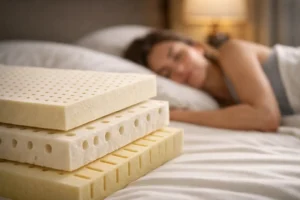
Latex is especially useful in this balance. It has a buoyant feel that supports movement rather than allowing the body to sink too deeply. High-quality foam layers can add contouring comfort, while latex and coils prevent the “stuck” sensation that some all-foam mattresses create near the edge.
A Firm, Integrated Perimeter
Some mattresses use firmer foam around the outside, while others rely on stronger perimeter coils. Both approaches can work. The key is integration. A thick border of firm foam may feel supportive when sitting, but it should not create an abrupt change in feel between the edge and center of the mattress.
Look for a design where the sleep surface remains consistent from side to side. You should feel supported near the edge without feeling as though you are suddenly sitting on a separate, overly rigid frame.
Hybrid vs. Foam for Edge Stability
All-foam mattresses can be comfortable and pressure relieving, but they often compress more noticeably at the perimeter. This does not make every foam mattress a poor choice. Dense, high-quality foam with reinforced sides can offer respectable stability. Still, sleepers who prioritize getting in and out of bed easily, sharing a mattress, or maximizing usable surface area usually benefit from a hybrid.
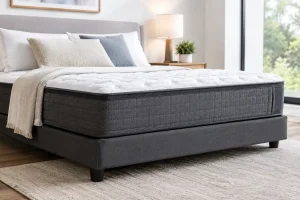
Hybrid mattresses combine comfort layers with a pocketed coil system, giving them a more structured base. The coils help support body weight across a wider area and can improve airflow, which is valuable for people who sleep hot. With the right comfort materials above them, hybrids can deliver pressure relief without sacrificing the steady feel many sleepers want at the edge.
The trade-off is feel. A well-made hybrid generally feels more responsive and easier to move on than a deep, slow-moving foam bed. If you love a pronounced sinking sensation, an all-foam mattress may appeal to you. If you want easier movement, cooler sleep, and a stronger perimeter, a hybrid is often the smarter choice.
How Firm Should an Edge-Support Mattress Be?
Firmness and edge support are related, but they are not the same. A firm mattress can still have weak edges, and a medium-feel hybrid can offer excellent perimeter stability. What matters is whether the support core remains steady when weight is applied near the side.
Most combination sleepers do well with a medium to medium-firm feel. This range can cushion pressure points while offering enough resistance to support spinal alignment. Back and stomach sleepers often prefer the added steadiness of medium-firm construction, particularly if they experience lower-back discomfort. Side sleepers may need more pressure relief at the shoulder and hip, but they should not have to sacrifice edge stability to get it.
Body weight also changes the equation. Heavier sleepers generally place more pressure on the materials and may benefit from thicker comfort layers, stronger coils, and reinforced edges. Lighter sleepers may find an overly firm perimeter uncomfortable if they tend to sleep close to the edge. The best choice is the one that keeps you comfortably supported in your normal sleeping position, not simply the firmest model available.
Signs Your Current Mattress Has Poor Edge Support
Your mattress may be losing edge support if you notice yourself sliding when sitting on the side, avoiding the perimeter because it feels unstable, or waking closer to the center than where you fell asleep. Visible sagging along the sides is another clear warning sign.
You may also notice that getting up feels harder than it should. When the edge collapses under your weight, your body has to work harder to stand. This can be frustrating for anyone, but it is particularly uncomfortable for sleepers managing back pain, knee stiffness, or joint sensitivity.
A mattress that has developed soft, uneven edges may also be nearing the end of its useful life. Rotating it can help promote more even wear when recommended by the manufacturer, but rotation cannot repair weakened materials. Durable construction from the start is the better long-term solution.
What to Look for Before You Buy
When comparing the best edge support mattresses, move beyond broad labels such as “luxury” or “orthopedic.” Ask what is actually supporting the perimeter. Look for individually pocketed springs, reinforced coil rows, high-density foam rails, and comfort layers that work with the support core instead of masking it.
Thickness can matter, too. A deeper mattress often has more room for a layered system that combines pressure relief, airflow, and structural support. However, more height is not automatically better. The quality and placement of the materials matter far more than a single thickness number.
Temperature regulation deserves attention as well. Heat can interrupt restorative sleep, especially when dense foams retain warmth. Breathable latex, cooling gel foam, and airflow through a pocketed spring system can help create a cooler sleep environment without compromising support. For couples, this combination of cooling, motion isolation, and edge stability is often what makes a mattress feel like a complete upgrade.
Azure Mattress approaches this balance through hybrid construction that pairs responsive comfort materials with individually pocketed springs, designed to support spinal alignment, reduce partner disturbance, and encourage cooler sleep. It is the kind of feature-to-benefit design worth prioritizing when you want comfort that performs beyond the center of the bed.
Test the Edge the Right Way
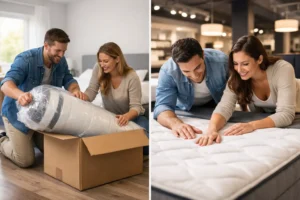
If you are testing a mattress in person, sit near the side as you normally would when getting dressed or preparing for bed. Then lie down close to the edge for several minutes. You should feel supported, not as though you need to tense your body to avoid rolling off.
When shopping online, examine the construction details and trial policy carefully. A mattress may feel different after a few nights than it does during the first hour. Give your body time to adjust, but pay close attention to whether the edge stays steady during your real routine: sitting, turning, getting up, and sharing the bed.
A supportive perimeter will not solve every sleep problem on its own. Your pillow, sleeping position, body weight, and overall mattress firmness all influence comfort. But when the edge is stable, the whole bed becomes more usable, reassuring, and supportive – right where your day begins and ends.