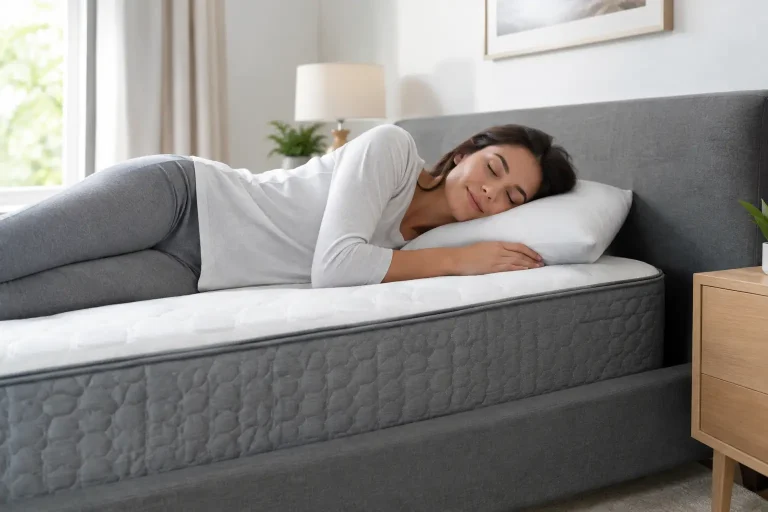
A hybrid mattress can feel remarkably different after months of sleeping in the same spot. Your body naturally places the most pressure around the shoulders, hips, and lower back. If you sleep with a partner, those pressure zones become even more concentrated. Rotation is the simple maintenance habit that helps your mattress continue delivering the contouring comfort, stable spinal support, and pressure relief you invested in.
For most people, the right time to rotate a hybrid mattress is every three to six months. The exact schedule depends on the mattress design, your body weight, whether one side of the bed gets used more heavily, and the manufacturer’s care instructions. Regular rotation will not repair an already worn mattress, but it can help prevent premature impressions and keep its comfort layers performing more evenly.
Why Hybrid Mattresses Benefit From Rotation
A hybrid mattress combines comfort materials such as latex, cooling gel foam, or responsive foam with a pocketed coil support system. Each layer has a specific role. The upper layers cushion high-pressure areas, while individually wrapped coils respond to your body and help maintain a more neutral sleeping posture.
Over time, nightly pressure can cause the comfort layers to settle more in the places you use most. That does not necessarily mean the mattress is defective. Materials naturally adapt with regular use. However, when the same areas receive all the pressure night after night, the surface may begin to feel less balanced, especially around the hip and shoulder zones.
Rotating the mattress moves those concentrated pressure points to a new area. This gives the materials a chance to recover and helps distribute wear across the entire sleep surface. For couples, rotation can be particularly useful when one partner is significantly heavier or spends more time in bed.
A well-maintained hybrid mattress is more likely to keep offering the benefits people expect from its construction: steadier support through the lower back, reduced pressure around sensitive joints, and a more consistently comfortable surface from edge to edge.
How Often to Rotate a Hybrid Mattress
For the first year, rotate your mattress every three months if possible. This early period is when the comfort layers are adapting most actively to your body. A quarterly schedule is especially helpful for heavier sleepers, couples, combination sleepers, and households where children occasionally climb or play on the bed.
After the first year, rotating every six months is often enough for many sleepers. An easy approach is to do it when daylight saving time begins and ends, or at the start of two seasons you will remember.
There are times when a more frequent schedule makes sense. Rotate every three months if you notice that one side feels softer than the other, if you consistently sleep on only one half of the bed, or if you are recovering from an injury and spending extra time in bed. The goal is not to rotate excessively. It is to keep wear even before uneven comfort becomes noticeable.
Always check the care label and mattress documentation first. Some hybrid designs have specific rotation recommendations based on their layer arrangement, cover construction, or zoned support system. The manufacturer’s instructions should take priority over any general schedule.
Rotate, Don’t Flip
This distinction matters. Most modern hybrid mattresses are designed to be used one way up. Their layers are arranged deliberately: plush or pressure-relieving materials at the top, followed by transition layers and a structured pocket coil base below.
Flipping a one-sided hybrid mattress puts the firm support base on top and the comfort layers underneath. It will not improve durability, and it can make the bed feel uncomfortably hard and less supportive at the pressure points. In some cases, it may also affect the mattress warranty.
Rotation means turning the mattress 180 degrees so the head becomes the foot and the foot becomes the head. Keep the same sleep surface facing up. This preserves the intended comfort and support design while spreading out everyday use.
How to Rotate Your Mattress Safely
Hybrid mattresses can be heavy because they combine multiple foam layers with steel coils. Do not try to force the rotation alone if the mattress is large or difficult to handle. Ask another adult to help, especially with queen, king, and California king sizes.
Start by removing bedding, pillows, and any mattress protector. If your bed frame has a headboard, give yourself enough space at the foot of the bed to maneuver. Lift the mattress from the sides rather than dragging it aggressively across the frame, which can strain the cover and make the task harder.
Turn it 90 degrees first, reposition it, then complete the final 90-degree turn. Once it is back in place, make sure it sits evenly on the foundation. A mattress that hangs over the edge of an undersized frame or rests on weak, widely spaced slats may not receive the support it needs.
This is also a good moment to inspect the bed base. Check for loose screws, bowed slats, or a center support leg that is no longer firmly touching the floor. A supportive foundation is part of mattress performance. Even premium comfort materials and pocket springs cannot compensate for a frame that allows the surface to sag.
Signs You May Be Overdue for Rotation
You do not need to wait for visible wear to rotate your mattress. Often, the first clues are felt rather than seen. You may wake with more stiffness than usual, notice that your favorite side has become softer, or find yourself shifting toward the center or edge in search of a more comfortable position.
Look closely at the surface with the bedding removed. Minor settling is normal, particularly in softer foam layers. What deserves attention is a clear, persistent body impression, uneven height from one side to the other, or a change in support that affects sleep quality.
Rotation may help if the wear is still mild and evenly recoverable. It will not solve deep sagging, broken components, or a mattress that has reached the end of its useful life. If you are experiencing persistent discomfort, assess the entire sleep system: mattress, foundation, pillow height, and your usual sleep position all influence how your spine and joints feel in the morning.
Other Habits That Protect Hybrid Mattress Performance
Rotation works best alongside basic mattress care. Use a breathable, well-fitted mattress protector to guard against moisture, spills, and skin oils without trapping unnecessary heat. Wash sheets regularly, and allow the mattress to air out when changing bedding.
Avoid repeatedly sitting on the exact same edge while getting dressed or putting on shoes. Edge support is designed for normal entry and exit, but concentrated daily pressure in one small area can create uneven wear over time. If you move homes, carry the mattress flat whenever possible and avoid bending it sharply around tight corners.
A supportive base is equally important. Most hybrid mattresses perform best on a solid platform, an adjustable base approved for the mattress, or a slatted foundation with closely spaced, sturdy slats. The right foundation helps the pocket springs and comfort layers respond as designed, supporting stable alignment instead of allowing the mattress to flex unevenly.
A Small Habit With a Meaningful Payoff
Rotating a hybrid mattress takes a few minutes twice a year, yet it can help protect the comfort you rely on every night. It is a practical way to care for the pressure-relieving layers that cushion your shoulders and hips, and the coil system that supports healthier alignment and less partner disturbance.
Mark the next rotation date when you change your sheets. Your future self may notice the difference not in a dramatic way, but in the quieter signal that matters most: waking up feeling more rested, less stiff, and ready to move through the day.