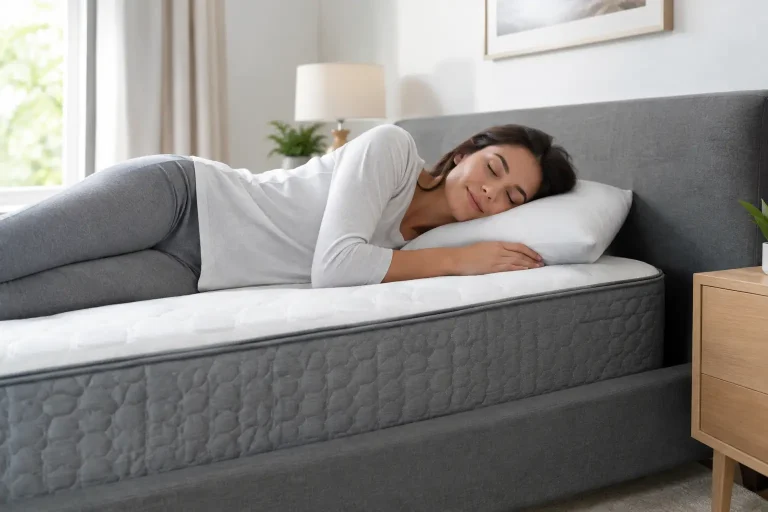
A single turn, early alarm, or trip to the bathroom can feel much bigger when it travels across the bed and wakes you up. Learning how to reduce partner movement starts with understanding that the problem is rarely your partner alone. More often, it is a mattress and bed setup that transfers pressure, bounce, and vibration from one side to the other.
For couples, uninterrupted sleep is not a luxury. It supports better recovery, clearer focus, improved mood, and less morning stiffness. The right sleep surface can help you feel your partner move less, even when their sleep schedule or sleeping style is different from yours.
Why partner movement travels across the bed
Motion transfer happens when energy moves through the mattress. When one person changes position, gets in or out of bed, or shifts their legs, the surface reacts. On a traditional interconnected spring mattress, coils are linked together, so pressure on one side can create movement across a much larger area.
A mattress that is overly soft or worn out can make this worse. Your bodies may roll toward the center, and every adjustment creates a ripple. On the other hand, an overly firm mattress can cause pressure points that make each partner toss and turn more often. The goal is not simply a harder bed. It is a stable, pressure-relieving surface that responds independently to each sleeper.
Weight difference matters too. If one partner is significantly heavier, their movements may create more force on the mattress. A lightweight, bouncy mattress often struggles to absorb that force, especially around the edges and center of the bed.
How to reduce partner movement with the right mattress
The mattress is the biggest factor in reducing sleep disturbance. Look for a design that isolates motion instead of carrying it across the entire surface.
Choose individually pocketed coils
Pocketed coils are wrapped and designed to react independently. When your partner shifts on their side, the coils directly beneath them compress while coils farther away remain more stable. This is very different from a connected coil system, where movement can travel through the entire mattress.
For couples, pocketed springs also provide structured support across the body. They can help keep the spine in a more neutral position while reducing the unstable, rolling sensation that often causes sleep disruptions.
Look for comfort layers that absorb movement
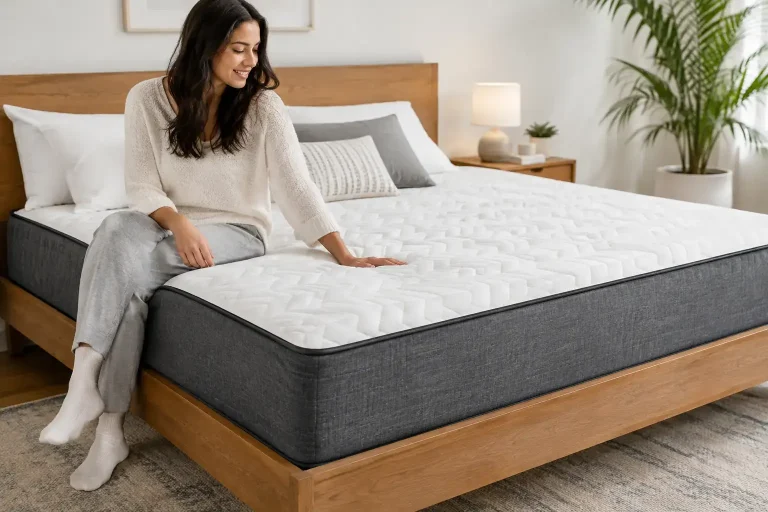
A hybrid mattress combines responsive support from pocketed coils with comfort materials that cushion the body and dampen vibration. Latex can provide buoyant pressure relief without the deep sink that makes repositioning difficult. High-quality foam layers can further absorb smaller movements, such as a partner adjusting their shoulders or knees.
Material balance matters. A surface with too much bounce may feel lively but can be disruptive for light sleepers. A mattress with excessive sink may isolate movement well, yet retain heat or make changing positions harder. For many couples, a well-engineered hybrid offers a practical middle ground: supportive, pressure-relieving, and more stable through the night.
Do not overlook mattress thickness and durability
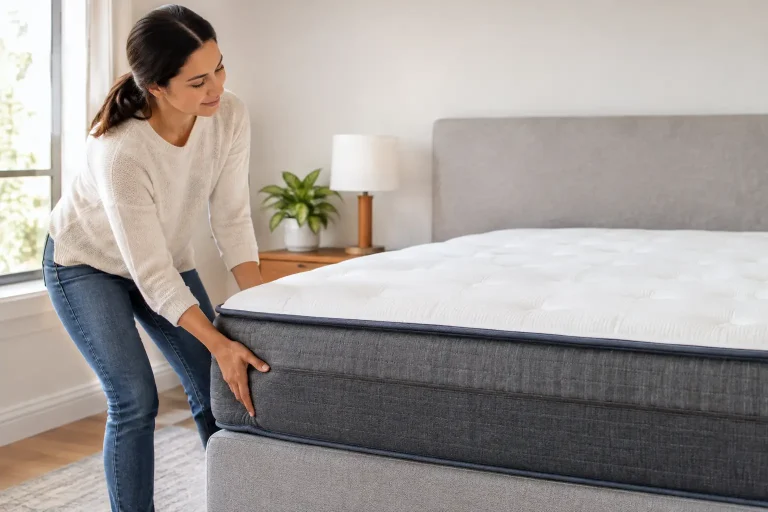
A mattress that has lost its shape will not manage motion effectively. Sagging areas pull both sleepers toward the center and force constant micro-adjustments. If you wake with a dip between you, feel springs pressing upward, or notice your partner’s movements more than you did before, the mattress may no longer be providing consistent support.
A durable mattress should maintain its structure over time, including edge support and even weight distribution. This is especially useful when one person sits on the bed to get ready or gets up earlier than the other.
Find a firmness level that works for both sleepers
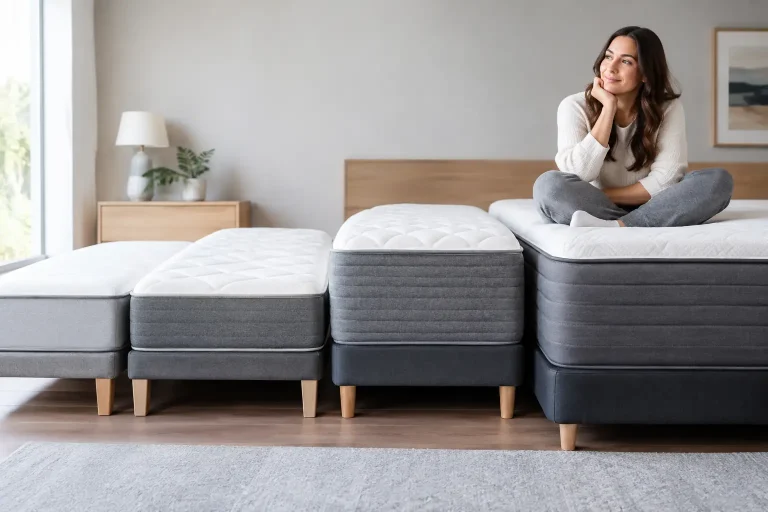
Firmness is personal, but couples should think about stability as well as comfort. A medium-firm feel is often a strong starting point because it provides enough support to prevent excessive sink while allowing pressure relief at the shoulders, hips, and knees.
Side sleepers may need more cushioning around the shoulder and hip. Back sleepers usually benefit from a slightly flatter, more supportive surface that keeps the lower back from dropping. Stomach sleepers generally need the most stable support to avoid arching through the midsection.
If you and your partner have very different preferences, focus first on the heavier sleeper and the person with more noticeable back or joint discomfort. Then use pillows or a carefully selected topper to fine-tune surface comfort. A topper can change the feel at the surface, but it cannot fix a sagging or highly bouncy mattress underneath.
Strengthen the foundation under your mattress
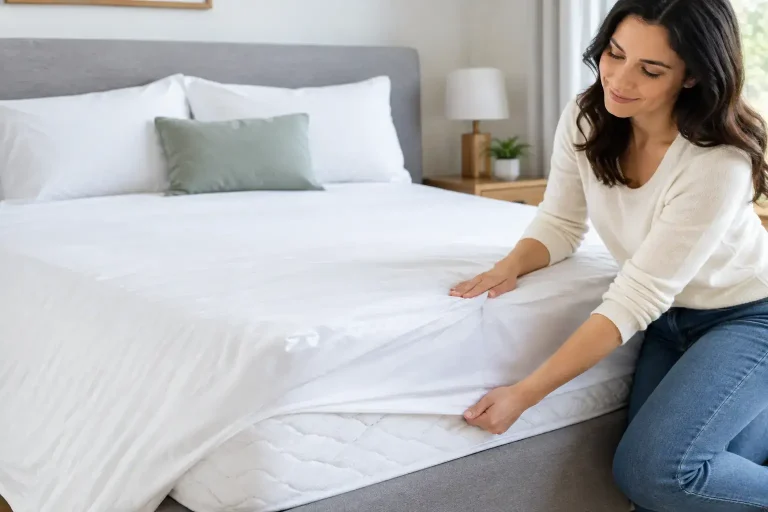
Even an excellent motion-isolating mattress can underperform on an unstable base. A weak frame, loose slats, or an old box spring can amplify movement every time someone turns or stands up.
Check that your bed frame is level, properly tightened, and supported through the center. For queen, king, and California king beds, center support is particularly important. Slats should be evenly spaced and strong enough to hold the combined weight of both sleepers and the mattress without flexing excessively.
If your bed creaks, sways, or feels uneven, address the frame before assuming the mattress is the only issue. Sometimes a simple adjustment to the foundation creates a noticeably calmer sleep surface.
Reduce the reasons your partner tosses and turns
A motion-isolating mattress limits the movement you feel, but improving overall sleep comfort can reduce how often movement happens in the first place.
Temperature is a common cause of restless sleep. People tend to shift positions more when they feel hot, sweaty, or trapped in warmth. Breathable materials, airflow through the mattress, moisture-wicking sheets, and a cooler bedroom can help both partners stay settled longer. If one person sleeps much warmer, consider separate blankets rather than turning the thermostat into a nightly negotiation.
Pain and pressure buildup also lead to frequent repositioning. A pillow that keeps the neck aligned and a mattress that supports the hips and lower back can reduce the urge to shift every few minutes. For side sleepers, placing a pillow between the knees may relieve pressure through the hips and help stabilize the body.
Different schedules can be another challenge. If one partner wakes much earlier, prepare what you need outside the bedroom when possible. Set out clothes, keep a dim bedside light available, and avoid searching through drawers or switching on bright overhead lights. These small changes do not stop mattress movement, but they can prevent one disruption from turning into a fully awake night.
When a larger bed makes the biggest difference
Sometimes the answer is simply more room. A full-size bed gives two adults limited personal space, particularly if one or both sleepers change positions frequently. Moving to a queen can create more separation, while a king gives each person roughly the width of a twin mattress.
More space reduces direct contact, minimizes center crowding, and gives each sleeper room to find a comfortable position. It will not replace motion isolation, but paired with a supportive hybrid mattress, a larger size can make a substantial difference for couples.
For partners with dramatically different sleep needs, a split king may be worth considering. Each person can choose their own mattress feel and, with compatible adjustable bases, their own position. The trade-off is a gap in the middle and the need for specialized bedding, so it is best for couples who prioritize individualized comfort over a completely uniform sleep surface.
A calmer night starts with a more stable surface
You should not have to choose between sharing a bed and getting restorative sleep. The right combination of individually pocketed support, pressure-relieving comfort layers, temperature control, and a solid foundation can help keep one partner’s movement from becoming the other partner’s wake-up call.
If sleep disruption has become routine, treat it as a comfort and support issue worth solving. A more stable sleep surface can give both of you the space to move naturally, recover deeply, and wake up feeling less interrupted by the night.