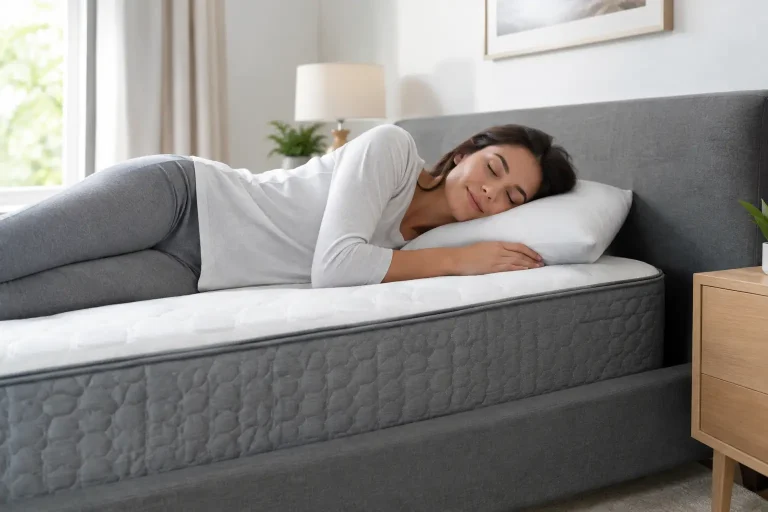
A mattress can feel plush in a showroom and still leave you stiff by Monday morning. The difference is often not softness alone. If you are asking what mattress thickness is best for adults, the practical answer is usually 10 to 14 inches, with 12 inches serving as a reliable sweet spot for many sleepers. But thickness only works when the layers inside are engineered to support your body, manage heat, and absorb movement.
A taller mattress is not automatically better. An adult needs enough depth for pressure-relieving comfort layers and a stable support core to work together without allowing the hips and shoulders to sink too far. That balance is what helps your spine remain in a more natural position through the night.
What mattress thickness is best for adults?
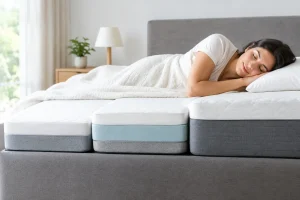
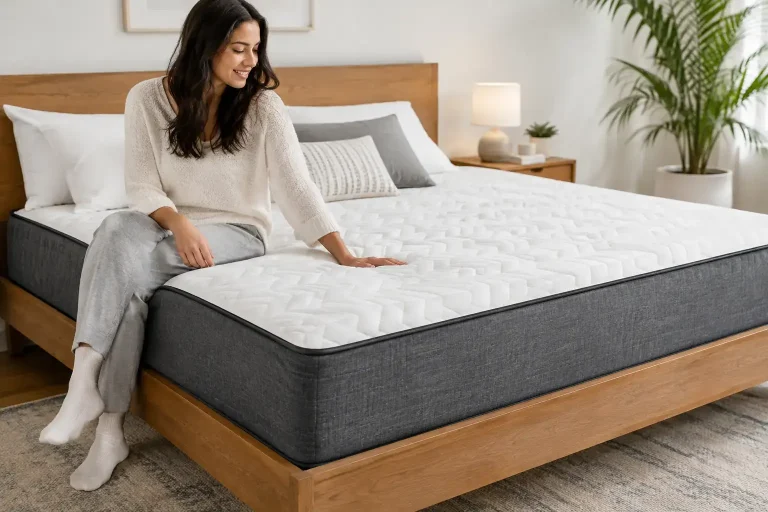
For most adults, a mattress between 10 and 14 inches thick offers the best combination of comfort, support, durability, and ease of use. A 12-inch hybrid is often an especially strong choice because it has room for several purposeful layers: responsive comfort materials near the surface, transition foam to prevent excessive sink, and a pocketed coil base for targeted support.
Your ideal thickness can shift based on body type, sleep position, and whether you share the bed. The goal is not to buy the tallest mattress available. It is to choose a depth that gives your shoulders, hips, lower back, and joints the support they need without creating a trapped, overheated feeling.
Why 10 to 14 inches works for most sleepers
At this range, a mattress can include enough material to cushion pressure points while maintaining a substantial support system below. That matters for adults who wake with lower-back tightness, shoulder soreness, or the sense that they never fully settled into comfortable sleep.
A thinner mattress, especially one under 8 inches, may be suitable for a guest room, a child, or occasional use. For everyday adult sleep, however, it can lack the depth needed to separate the comfort layers from the support base. Over time, that can make pressure buildup and sagging more noticeable.
Mattresses above 14 inches can feel luxurious, particularly for larger sleepers or those who enjoy a high bed profile. Still, extra height does not guarantee better spinal support. It can also make getting in and out of bed more difficult for shorter adults, older adults, or anyone with sensitive knees and hips.
Thickness matters less than what is inside
A 12-inch mattress made with generic layers is not the same as a 12-inch mattress designed around sleep performance. Thickness is the space available for the comfort and support system, but material quality determines how that space performs night after night.
For a hybrid mattress, the most effective construction typically combines pressure-relieving foam or latex with individually pocketed coils. Latex can provide buoyant comfort and help reduce pressure at the shoulders and hips. Cooling gel foam can add contouring comfort while helping heat move away from the body. Pocket springs respond independently, supporting different areas of the body and reducing the movement you feel when a partner changes position.
This is why a well-built 10-inch hybrid may outperform a poorly constructed 14-inch foam bed. Look beyond the profile height and ask what each layer is there to do. A mattress should have a clear job at every level: comfort at the surface, stability through the middle, and durable alignment support at the base.
Choose thickness based on your body and sleep position
Your body does not distribute weight evenly when you lie down. Your sleep position determines where the mattress needs to give and where it needs to hold steady.
Side sleepers often benefit from 12 inches or more
Side sleeping places concentrated pressure on the shoulder and hip. A mattress around 12 to 14 inches can provide sufficient room for a cushioning top layer while preserving firm, supportive layers underneath. This helps prevent the shoulder from feeling compressed while keeping the waist and lower back supported.
The key is controlled contouring. If the top layers are too soft or too thick without a stable transition layer, the hips may sink lower than the shoulders. That can strain the lower back even if the mattress initially feels comfortable.
Back sleepers need balanced support, not excessive plushness
Back sleepers commonly do well with a 10- to 12-inch mattress that has a supportive coil base and moderate cushioning on top. The surface should fill the natural curve around the lower back without allowing the pelvis to drop too deeply.
A thicker mattress can work well for back sleepers, but only if its comfort layers are responsive rather than overly soft. You should feel gently supported, not swallowed by the bed.
Stomach sleepers usually need a firmer, more stable build
For stomach sleepers, thickness should support firmness and stability. A 10- to 12-inch hybrid with a firmer feel is often a practical choice. Too much plush material near the top can let the midsection sink, placing the lumbar spine in an uncomfortable arch.
If you sleep partly on your stomach and partly on your side, prioritize a responsive surface with a strong support core. This offers enough pressure relief for side sleeping without losing the stability needed when you turn onto your front.
Higher body weight can call for more depth and stronger support
Adults with a higher body weight may prefer a 12- to 14-inch mattress because deeper, durable layers can better maintain comfort and alignment. This does not mean every larger sleeper needs the tallest model. It means the mattress needs enough substantial material, especially in its coil system and transition layers, to resist premature compression.
A reinforced pocketed coil base can be particularly valuable here. It supports the body without creating the rigid, pressure-heavy sensation often associated with traditional interconnected springs.
Couples should consider thickness and motion isolation together
A mattress is a shared sleep surface, not just an individual comfort choice. If one partner is a light sleeper, wakes at a different time, or changes position frequently, thickness alone will not solve the problem. The internal design must isolate motion.
A 12-inch hybrid can be an excellent profile for couples because it creates room for comfort foam or latex above individually pocketed springs. Each spring reacts more independently than a connected coil unit, helping reduce the ripple effect when someone gets out of bed or turns over.
For couples with different body types, a medium-firm 12- to 14-inch hybrid is often a sensible middle ground. It provides enough pressure relief for the lighter partner while giving the heavier partner reliable support. If either person has recurring back or joint discomfort, focus on the support layers first and the height second.
Do not overlook mattress height with your bed frame
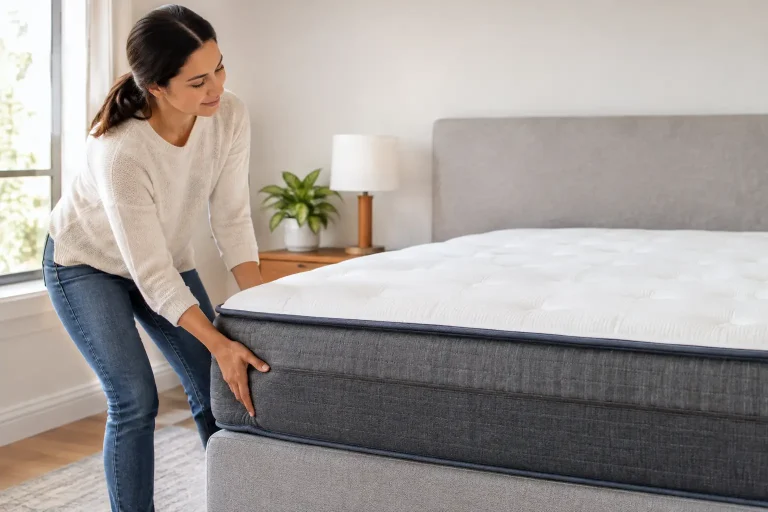
The total height of your sleep setup affects comfort more than many people expect. Add the mattress thickness to your foundation or platform height, then consider whether your feet can touch the floor comfortably when you sit on the edge.
A 14-inch mattress on a tall foundation may look impressive but can become inconvenient for daily use. Conversely, a 10-inch mattress on a low platform may feel too close to the floor for people with knee stiffness or mobility concerns. For many adults, a finished bed height around knee level is easiest to enter and exit.
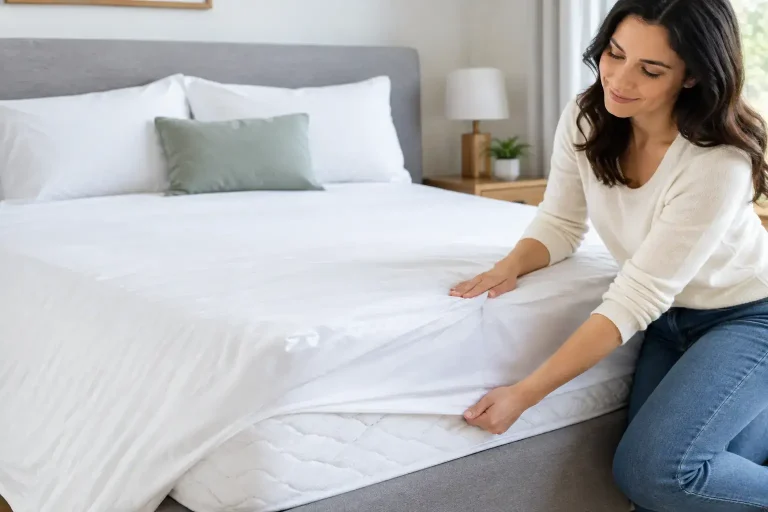
Also check that your sheets have enough pocket depth. Deep mattresses may require deep-pocket fitted sheets, while an overly loose sheet can bunch under the body and disrupt comfort.
Signs your current mattress is too thin or poorly supportive
If you regularly wake with pain, the issue may not be thickness alone, but your mattress could be lacking the depth or structure needed for adult use. Watch for a few practical signs:
- Your hips sink noticeably lower than your shoulders or chest.
- You feel pressure points at your shoulders, hips, or ribs when lying still.
- You can feel springs, a hard base, or the bed frame beneath you.
- You wake when your partner moves, even if the mattress is relatively new.
- The surface has visible dips or no longer returns to shape after you get up.
A mattress topper can add a small amount of surface comfort, but it cannot repair a sagging support core. If the base of the mattress has stopped holding your body in alignment, adding more softness may make the problem worse.
The best thickness is the one that supports deeper recovery
A mattress should do more than feel comfortable for the first few minutes. It should help you settle into a supported position, stay cooler through the night, and wake with less stiffness than you had before bed. For most adults, that starts with a 10- to 14-inch design and often lands at 12 inches when the mattress combines breathable comfort layers with a structured pocketed coil system.
Choose the profile that fits your body, your sleep position, and your bed frame, then pay close attention to the materials doing the real work underneath. The right mattress thickness should not just make the bed look more substantial. It should make restful, undisturbed sleep feel more attainable every night.