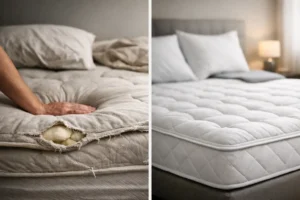
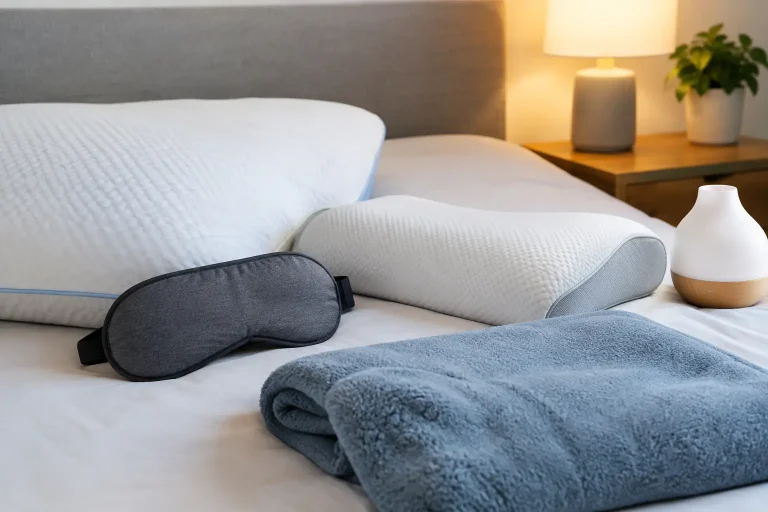
You usually notice it at 3 a.m., not when you first lie down. Your hips dip lower than your shoulders, your lower back starts talking, and the mattress that once felt supportive now feels like it is swallowing you. If you are searching for how to fix sinking mattress feel, the right answer depends on one thing first – is the problem coming from the mattress, the foundation, or normal material softening that has crossed the line into lost support?
A sinking feel is not just a comfort issue. It can change spinal alignment, increase pressure around the hips and shoulders, trap more heat, and make movement harder during the night. For couples, it can also pull both sleepers toward the center, which means more motion transfer and less restorative sleep. The good news is that some causes are fixable. Others are a clear sign that the sleep surface is no longer doing its job.
How to fix sinking mattress feel without guessing
Before buying a topper or flipping the bed frame upside down in frustration, check where the sag is actually coming from. A mattress can feel soft for several different reasons, and the fix only works when it matches the cause.
Start by removing all bedding and looking at the mattress surface flat-on. If there is a visible dip where you sleep, especially deeper around the hips, that points to comfort-layer breakdown or support fatigue. If the top looks mostly even but still feels unstable, inspect the base. Weak slats, bowed center rails, or an old box spring can create the same sinking sensation even when the mattress itself is still usable.
Then press across the bed with both hands. If one zone feels noticeably softer than the rest, the internal layers may be compressing unevenly. In hybrid mattresses, this can happen when foam comfort layers lose resilience before the coil system does. In older all-foam beds, the issue is often broader and more progressive.
Fix the foundation first
A surprising number of sinking complaints start under the mattress, not inside it. If your mattress sits on widely spaced slats, a flexible platform, or a worn box spring, the support system may be letting the heavier parts of your body drop too far.
For slatted bases, look at the spacing. Gaps that are too wide reduce support consistency and can make the mattress bend between slats. You may be able to improve the feel by adding a bunkie board or a solid support panel designed for mattress use. If the frame has a center support leg, make sure it is actually carrying weight and not hovering slightly above the floor.
If you are using a traditional box spring under a modern foam or hybrid mattress, compatibility matters. Many newer mattresses are engineered for firmer, more even support. A box spring with too much give can amplify a sinking feel and shorten the mattress life.
Rotate the mattress if wear is localized
If the dip is concentrated in one sleeping zone and your mattress is designed for rotation, turning it 180 degrees can help rebalance surface wear. This will not restore broken foam or fatigued coils, but it can reduce the immediate sensation of sleeping in the same compressed area every night.
Rotation works best when the mattress is still structurally sound and the softening is moderate rather than severe. It is less effective if there is a deep body impression or if the center and edges are also losing support.
Do not flip the mattress unless the manufacturer specifically says it is double-sided. Most modern mattresses are layered top-to-bottom for a reason. Flipping them can put the support core on top and the comfort layers underneath, which solves nothing.
Add a firm topper – but only in the right situation
A firm topper is one of the most common attempts to fix a sinking feel, and sometimes it helps. Sometimes it just adds another layer over a failing structure.
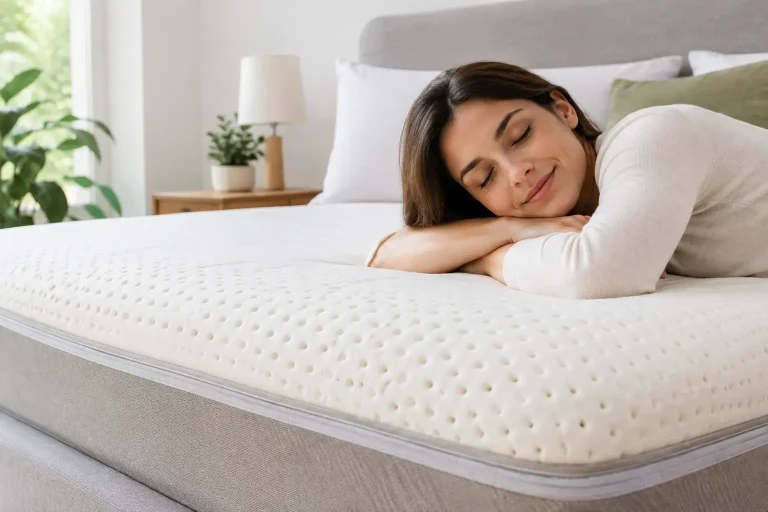
If your mattress is slightly too soft but still level and supportive underneath, a high-quality firm topper can create a flatter, more stable sleep surface. Latex tends to be the stronger option here because it is springier, more resilient, and less likely to let the body sink deeply compared with lower-density memory foam. It can also improve pressure relief without trapping as much heat.
But if the mattress has a true sag, a topper will usually follow the dip. You may feel a small improvement at first, then end up with the same alignment problem under a thicker surface. Think of a topper as a comfort adjustment, not a structural repair.
Check body impressions against comfort and support
Not every visible impression means the mattress has failed. Softer comfort materials naturally settle a bit over time, especially where body weight concentrates most. The real question is whether your spine is staying in a neutral position.
If you wake up with lower back tightness, hip pain, or the feeling that you are climbing out of a hole, support is likely compromised. Side sleepers may notice sharper pressure at the shoulders because the hips are sinking too far and twisting the torso. Back sleepers often feel the problem fastest in the lumbar area. Stomach sleepers usually struggle the most because midsection sink throws the whole spine out of alignment.
This is where the difference between softness and support matters. A mattress can feel plush on top and still keep the body level if the support core is strong enough. Once that deeper support weakens, the bed may feel comfortable for a few minutes and punishing by morning.
Improve support under heavier zones
If the sinking feel is mild and you are not ready to replace the mattress yet, targeted support can buy some time. Reinforcing the base under the torso area, especially on larger bed sizes, can reduce flex and improve alignment.
For example, adding a rigid board over slats and under the full mattress surface can create more even weight distribution. This is not the most elegant fix, but it can be effective when the current platform is part of the problem. It works better for base-related sag than for internal mattress wear.
You can also evaluate whether the mattress is appropriate for your body type. Heavier sleepers often compress comfort layers faster and need a more responsive support system, such as a firmer hybrid design with a structured coil base. If the bed felt marginal from day one, the issue may be fit, not failure.
When heat and sinking show up together
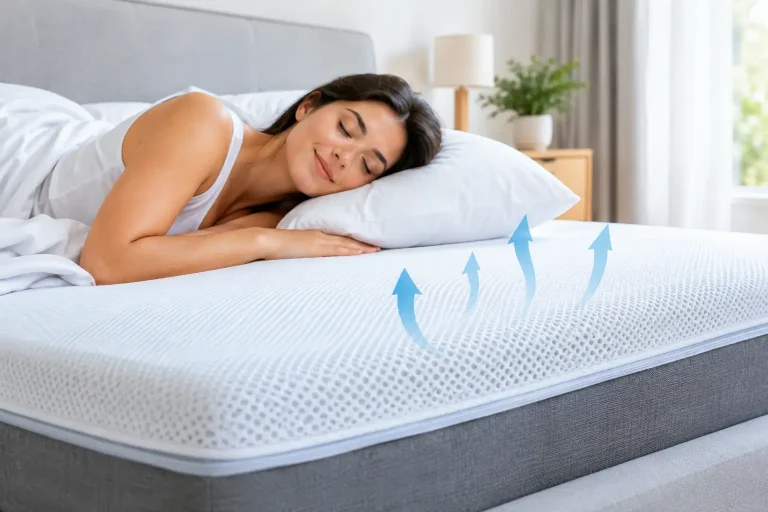
A mattress that feels too soft often also sleeps warmer. That is not your imagination. When your body sinks deeper into foam, there is less airflow around you, more surface contact, and more heat retention through the night.
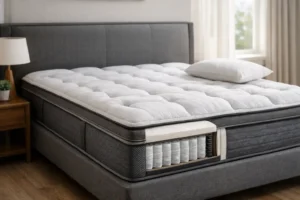
This is one reason many sleepers move away from basic all-foam construction when they start dealing with sagging and discomfort. A well-built hybrid mattress uses pressure-relieving comfort layers on top, but relies on individually pocketed coils underneath to maintain lift, support spinal alignment, and promote airflow. That combination tends to be more stable over time, especially for adults dealing with back pain, stiffness, or shared-bed motion issues.
How to know it is time to replace the mattress
There is a point where fixes stop being cost-effective. If the mattress has a deep sag, recurring pain has become part of your mornings, edge support is collapsing, or the center feels unstable, replacement is usually the smarter move.
The same is true if you have already tried rotating the mattress, reinforcing the base, and adjusting the comfort layer, but sleep quality is still declining. A mattress should help the body recover. Once it starts creating tension instead of relieving it, the short-term workaround becomes an expensive delay.
When shopping for a replacement, focus less on buzzwords and more on construction that directly addresses the problem. Look for a support system that keeps the spine level, comfort materials that relieve pressure without excessive sink, and airflow features that prevent heat buildup. For many sleepers, that means a hybrid mattress with responsive latex or cooling gel foam above a structured pocket spring system. If you share a bed, motion isolation matters too. Good support should not come at the cost of feeling every turn from the other side.
Azure Mattress builds around that exact balance – comfort, spine and joint support, and cooler sleep – because a mattress should do more than feel soft in the showroom. It should stay supportive where your body needs it most.
How to fix sinking mattress feel and prevent it next time
Once you solve the current problem, prevention matters. Use the right foundation, rotate the mattress at the recommended intervals, and pay attention to early signs of body impressions before they become severe. If your sleep needs include back pain relief, reduced partner disturbance, or better temperature control, choose a construction designed for those outcomes from the start rather than hoping a basic mattress will hold up.
The best mattress does not simply feel comfortable when you first lie down. It keeps your body supported after six, seven, and eight hours of real sleep. That is the difference between temporary softness and true recovery.