You usually feel mattress firmness in the morning, not at bedtime. If your shoulders ache when you roll out of bed, your hips feel jammed after a full night’s sleep, or your knees seem stiffer for no clear reason, firmness may be part of the problem. Understanding how mattress firmness affects joints can make the difference between waking up restored and waking up already managing pain.
How mattress firmness affects joints overnight
Your joints do not just need cushioning. They need balanced support that keeps your body aligned while reducing pressure at key contact points. That is where firmness matters.
When a mattress is too firm, it can push back too aggressively against areas like the shoulders, hips, and knees. Instead of allowing those joints to settle slightly into the surface, the mattress creates concentrated pressure. For side sleepers especially, that can mean soreness, numbness, or stiffness by morning.
When a mattress is too soft, the problem changes. Your heavier areas, usually the hips and torso, sink too far down. That can pull the spine out of alignment and place extra stress on the joints around the lower back, pelvis, and even shoulders. The mattress may feel comfortable for a few minutes, but over several hours, poor support can lead to more strain than relief.
The goal is not maximum softness or maximum firmness. The goal is pressure relief plus structural support. That combination helps joints rest in a more neutral position so muscles are not overworking all night to compensate.
Why pressure relief and alignment matter together
People often shop for a mattress based on one sensation: plush or firm. But joints respond to what happens beneath the surface.
A well-designed mattress should cushion pressure points while also keeping the spine level. If it only does one of those jobs, joint discomfort can still build. Too much surface softness without support can let the body sag. Too much support without contouring can create hard-impact zones under sensitive joints.
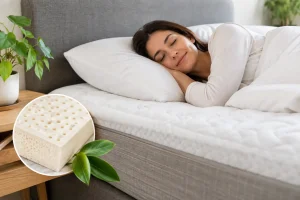
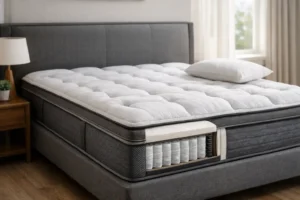
This is why hybrid construction often works well for people focused on pain relief. A responsive comfort layer, such as latex or pressure-relieving foam, can reduce direct stress on the joints. Under that, a structured coil system can help maintain alignment and keep the body from sinking unevenly. It is a more precise balance than the old idea that a hard mattress is automatically better for aches.
The wrong firmness feels different depending on your sleep position
Sleep position changes where force collects through the night, so the same mattress can feel supportive to one person and punishing to another.
Side sleepers
Side sleepers usually need more pressure relief than they expect. The body weight lands heavily on narrower areas, mainly the shoulders and hips. If the mattress is too firm, those joints take the hit. If the mattress has enough contouring, those areas can sink just enough to keep the spine straighter and reduce compression.
For many side sleepers, medium to medium-soft comfort works better than a very firm feel. The support still matters, but the surface should not feel rigid.
Back sleepers
Back sleepers often do best with a medium to medium-firm mattress that supports the natural curve of the spine without letting the hips drop. If the mattress is too soft, the pelvis can sink and increase stress through the lower back and hip joints. If it is too firm, the lower back may not get enough contouring, which can create tension and stiffness.
Stomach sleepers
Stomach sleeping usually calls for a firmer feel because the midsection needs to stay lifted. A too-soft mattress can force the lower back into extension, which may affect the spine and surrounding joints. That said, it still should not feel board-hard. Some give at the surface helps reduce strain in the chest, knees, and shoulders.
Body weight changes how firmness performs
One of the biggest reasons mattress shopping gets confusing is that firmness is not absolute. A mattress labeled medium-firm may feel softer to a heavier sleeper and firmer to a lighter sleeper.
Lighter individuals often experience less sink, so a firm mattress can feel even firmer and create sharper pressure on joints. Heavier individuals usually compress the comfort layers more deeply, so they may need stronger support underneath to prevent sagging and preserve alignment.
That is why firmness should always be matched to body type, not just preference. Joint relief depends on how deeply your body interacts with the mattress, not the label on the product page.
Common signs your mattress firmness is aggravating your joints
Joint discomfort from a mattress is not always dramatic. Sometimes it shows up as small, repeated patterns.
If you wake with shoulder pain that eases after moving around, your mattress may be too firm at the surface. If your hips or lower back feel tight every morning, it may be too soft through the center. If you toss and turn constantly trying to find a position that feels neutral, your body may be compensating for poor pressure distribution.
Another sign is pain that appears mostly after sleep, not after exercise or daily activity. When the mattress is the issue, symptoms often improve gradually during the day and return again the next morning.
Material matters as much as firmness level
Firmness is only part of the equation. The materials creating that firmness can change how your joints respond.
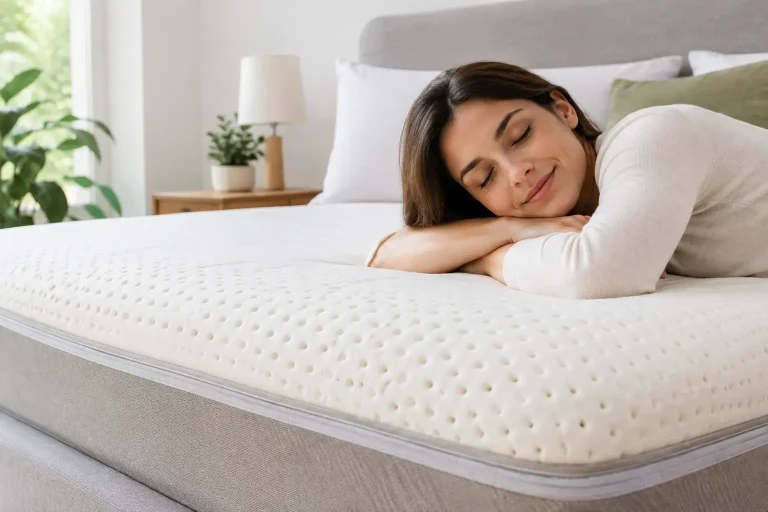
A mattress can be firm and still relieve pressure if it has responsive, contouring layers that distribute weight well. Latex is a good example. It tends to feel buoyant and supportive rather than dead or collapsing. That can help reduce pressure on joints while maintaining easier movement.
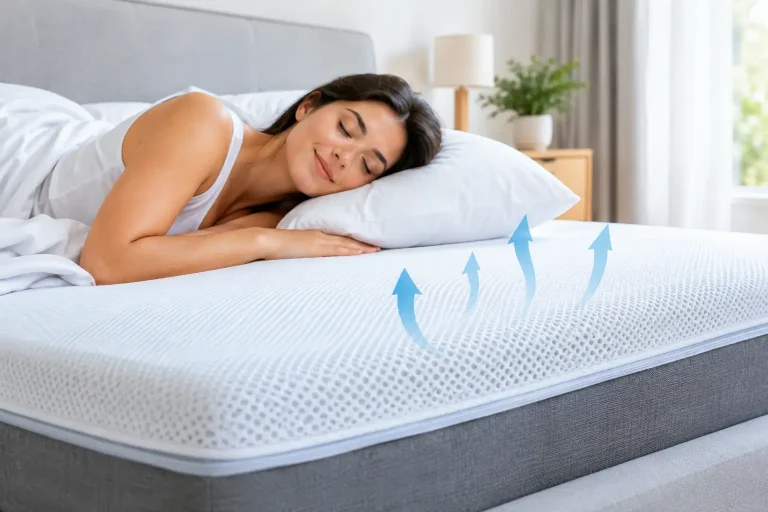
Cooling gel foams can also help with contouring, especially for people who need surface relief around the shoulders and hips. The trade-off is that some foams soften more under heat and weight, so the support core beneath them matters a lot.
Pocketed coils add a different advantage. Because they respond more independently across the mattress, they can support alignment without creating a single stiff, flat plane. For couples, this also helps limit motion transfer, which matters if disrupted sleep is already making pain feel worse.
How mattress firmness affects joints for couples
Couples often have different firmness needs, and that can complicate joint comfort fast. One partner may want a firmer feel for back support, while the other needs more pressure relief at the shoulders and hips.
This is where construction matters more than a simple firmness rating. A mattress with adaptive comfort layers and individually pocketed coils can accommodate different body shapes and sleep styles better than a basic spring mattress that feels uniformly hard or uniformly soft.
If one person is waking from a partner’s movement, that interruption can also worsen pain perception. Fragmented sleep makes the body less efficient at overnight recovery. So the best mattress for joints is not just the one that feels supportive. It is the one that supports consistent, undisturbed sleep as well.
Choosing the right firmness if you have joint pain
If your main goal is joint relief, start by thinking less about softness and more about controlled support. Most adults with mild to moderate joint discomfort do well in the medium to medium-firm range, but that is not a universal rule.
If you are a side sleeper with shoulder or hip pain, lean toward more pressure relief at the top layers. If you are a back or stomach sleeper with lower back and hip stiffness, lean toward stronger support through the center third of the mattress. If you sleep hot, avoid dense constructions that trap heat, because overheating can increase restlessness and make pain more noticeable overnight.
This is where a thoughtfully built hybrid can offer a stronger solution than a one-note mattress feel. Azure Mattress, for example, centers its design around pressure relief, spine and joint support, and temperature regulation rather than chasing a generic plush or firm label. That approach tends to serve people better because joint comfort is never about one feature alone.
Do mattress toppers fix firmness problems?
Sometimes. A topper can help if your mattress is slightly too firm and your joints need more pressure relief. Adding a quality topper may soften the surface enough to reduce stress at the shoulders and hips.
But if your mattress is too soft or lacks support, a topper usually will not solve the deeper issue. It may even make alignment worse. If the support core is failing, the joints will still be dealing with instability underneath the extra cushioning.
That is the trade-off many shoppers miss. Toppers are useful for surface comfort adjustments, not major structural correction.
The best mattress firmness is the one your body stops noticing
A good mattress does not force your joints to adapt all night. It allows your body to settle, stay aligned, and recover without constant micro-adjustments. That is what reduces morning stiffness over time.
If your current mattress leaves you sore, do not assume you simply need something firmer. The real fix may be better pressure relief, stronger support, or a more responsive hybrid design that keeps your joints cushioned and your spine properly positioned. When firmness is right, sleep feels quieter, movement feels easier, and mornings stop starting with pain.