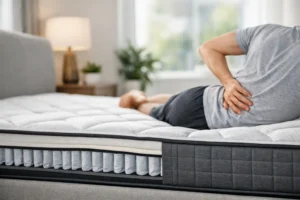
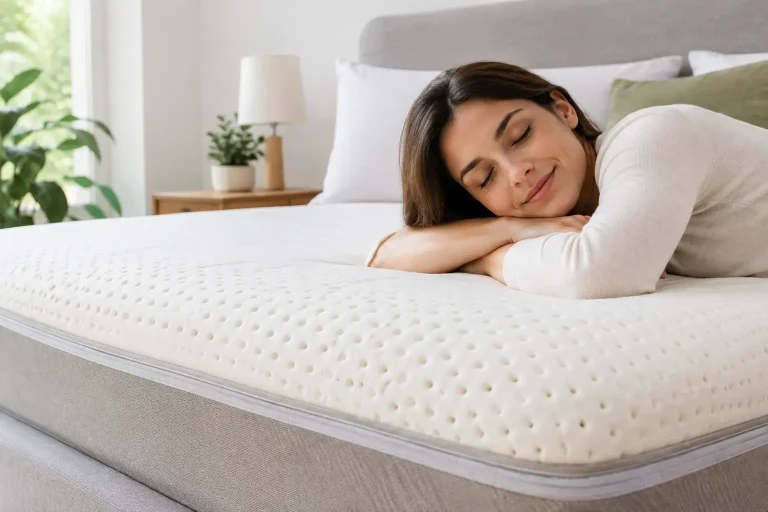
If you sleep on your side and wake up with a sore shoulder, tight hips, or a lower back that feels slightly off, firmness is usually the first thing to check. What firmness is best for side sleepers is not just a comfort question – it directly affects pressure relief, spinal alignment, and how recovered your body feels in the morning.
Side sleeping puts the most weight on narrower contact points, mainly the shoulders and hips. That means a mattress has to do two things at once. It needs enough cushioning to reduce pressure in those areas, and enough support underneath to keep the spine from dipping out of alignment. When one of those is missing, pain tends to show up fast.
What firmness is best for side sleepers in most cases?
For most side sleepers, medium-soft to medium firmness works best, usually around a 4 to 6.5 on the typical 10-point firmness scale. That range gives the shoulders and hips room to sink in slightly while still supporting the waist and lower back.
If a mattress is too firm, the body stays more on top of the surface instead of settling into it. That often creates sharp pressure at the shoulder and hip, along with numbness, tossing, and frequent position changes. If it is too soft, the hips can sink too deeply and pull the spine out of a neutral line. Side sleepers usually feel best when the mattress gives a little at the surface, then becomes more supportive underneath.
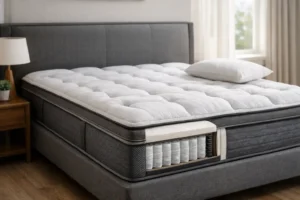
That is why construction matters as much as the firmness label. A medium hybrid with pressure-relieving comfort layers over a structured pocket coil system can feel very different from an all-foam mattress with the same rating. The best side-sleeper setup is not simply soft. It is responsive, pressure-aware, and stable through the center of the body.
Why side sleepers need pressure relief and support
Side sleeping is often recommended because it can reduce snoring and support healthy spinal posture better than stomach sleeping. But it also creates concentrated force. The shoulder presses down first, then the hip. If the mattress does not absorb that pressure, your joints do the work.
A good side-sleeper mattress should cushion those impact zones without collapsing under them. This is where layered designs tend to perform better than basic spring beds. Comfort foams, latex, and cooling gel layers can contour around the shoulder and hip, while individually pocketed coils keep the heavier parts of the body lifted and supported.
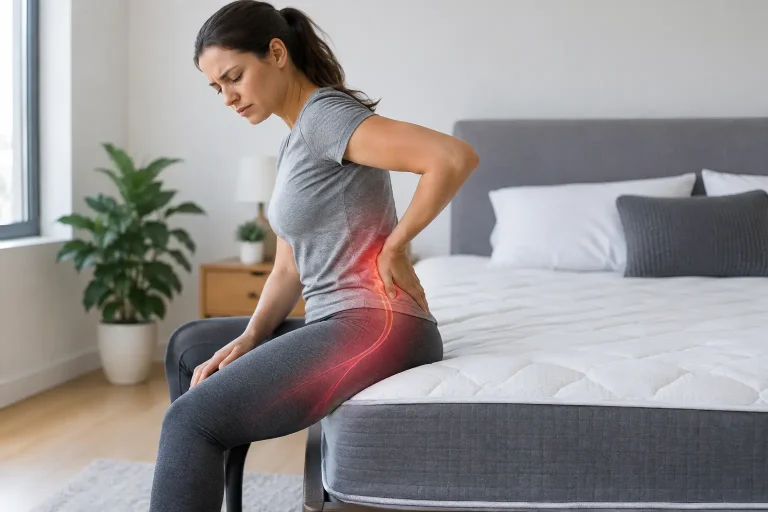
This balance matters even more for people already dealing with stiffness, lower back pain, or joint discomfort. When the mattress is too hard, the body compensates by twisting. When it is too soft, the midsection can sag and create strain through the lumbar area. The right firmness helps the body stay aligned with less effort.
Pressure points tell you a lot
If you are not sure whether your current mattress is too firm or too soft, your body usually gives clear signals. Shoulder pain, tingling arms, and aching hips often point to a surface that is too firm. Lower back soreness, a hammock-like feeling, or trouble turning can suggest a mattress that is too soft or lacks support in the core.
Many side sleepers assume they need the softest option available. In reality, extra softness can feel good for the first few minutes and then become a problem after several hours. Lasting comfort comes from controlled contouring, not deep sinking.
Body weight changes the right firmness
There is no single firmness that suits every side sleeper because body weight changes how deeply you compress the mattress.
Lighter side sleepers, usually under 130 pounds, often do better on soft to medium-soft mattresses. They do not press as deeply into the layers, so they need a bit more surface plushness to get proper pressure relief at the shoulder and hip.
Average-weight side sleepers, roughly 130 to 230 pounds, tend to feel most comfortable on medium-soft to medium. This group usually benefits from a balanced feel – enough cushioning up top, with stable support underneath.
Heavier side sleepers, over 230 pounds, often need medium to medium-firm. That may sound firmer than expected, but the goal is still pressure relief with better deep-body support. A mattress that is too plush can let the hips drop too far, especially over time. For this group, stronger coil support and resilient comfort materials make a major difference.
This is one reason hybrid mattresses are so often a strong match for side sleepers. They can deliver a softer, pressure-relieving surface without losing structural support deeper down.
What firmness is best for side sleepers with back pain?
If you are a side sleeper with back pain, the best firmness is usually medium or medium-firm with strong pressure relief in the comfort layers. The key is not making the bed harder. It is making sure the mattress supports spinal alignment while still allowing the shoulder and hip to settle naturally.
A mattress that is uniformly firm can actually make back pain worse for side sleepers because it forces the spine to curve unnaturally around elevated pressure points. On the other hand, a mattress that is overly soft can bend the lumbar area downward. Neither extreme is ideal.
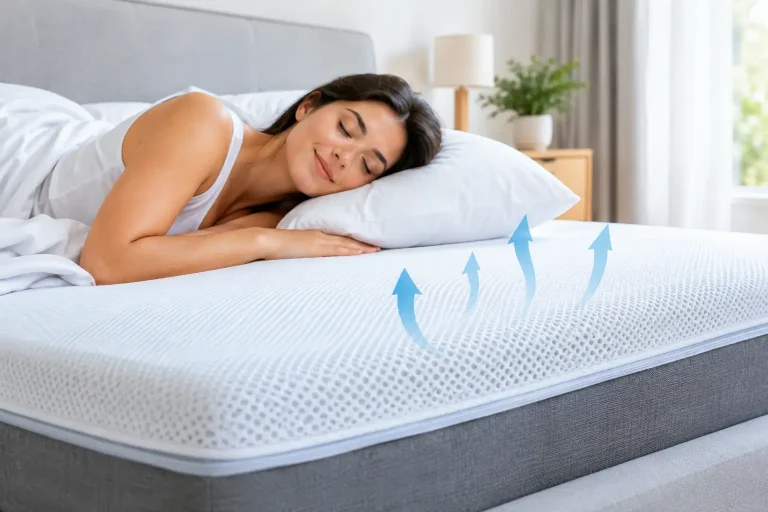
Look for a design that combines contouring materials with targeted support. Latex can be especially useful because it relieves pressure while staying buoyant. Pocketed coils add lift and help keep the spine from bowing. Cooling gel foams can also help side sleepers who need more cushioning but tend to overheat on dense foam beds.
For pain-sensitive sleepers, responsiveness matters too. If the mattress is slow to respond, turning over can feel difficult and the body may stay in strained positions longer. A more balanced hybrid feel can ease that problem.
Couples need a different kind of balance
If one partner sleeps on their side and the other sleeps on their back or stomach, firmness becomes more complicated. In these cases, medium is usually the safest shared range because it accommodates side-sleeper pressure relief without becoming too plush for the other person.
Motion isolation also matters. Side sleepers often wake more easily when they are already shifting to relieve pressure. A mattress with individually pocketed springs and absorbing comfort layers can reduce transfer from a partner getting in and out of bed or changing positions at night.
This is where a well-built hybrid earns its place. You get contouring and support, but also better airflow and easier movement than many traditional all-foam options. For couples, that combination can improve comfort for both people without forcing a compromise that feels too firm or too soft.
Firmness labels can be misleading
One challenge when shopping is that firmness is not perfectly standardized. One brand’s medium may feel like another brand’s medium-firm. Materials also change the experience. A latex hybrid with a medium rating may feel more lifted and responsive, while a memory foam mattress with the same number may feel deeper and slower.
That is why it helps to read past the label and look at how the mattress is built. If you are a side sleeper, ask whether the top layers are designed for pressure relief, whether the support core helps maintain alignment, and whether the materials sleep cool enough for all-night comfort.
At Azure Mattress, that is exactly how the mattress is engineered – not around a vague softness claim, but around the science of comfort, spine support, and overheating control. For side sleepers, that combination is often what separates a mattress that feels nice in theory from one that actually helps you sleep through the night.
How to tell if your firmness is right
The right firmness should feel comfortable within minutes and supportive after hours. When you lie on your side, your shoulder and hip should settle in slightly, your waist should feel supported, and your spine should stay relatively level from neck to tailbone.
You should not feel sharp pressure building under one shoulder. You should not feel your hips dropping lower than the rest of your body. And you should not wake up repeatedly to change sides just to get comfortable again.
If you are deciding between two options, side sleepers are usually better off avoiding the firmer choice unless they are heavier or specifically need more deep support. A little more pressure relief is often beneficial. Too much firmness is one of the most common reasons side sleepers struggle with numbness and joint pain.
The best mattress for a side sleeper is rarely the firmest one in the room. It is the one that cushions the joints, supports the spine, and stays comfortable long enough for real recovery. If your mattress can do those three things, your body will usually tell you by sleeping more deeply and waking up with less resistance.