A mattress can feel soft for five minutes in a showroom and still leave you shifting, stiff, or sore at 3 a.m. Real pressure relief outcomes are not about a plush first impression. They are about how well the sleep surface distributes your body weight, keeps your spine supported, and lets your muscles settle through the night.
For people who wake with lower-back tightness, shoulder pain, hip discomfort, or the feeling that they barely moved all night, this distinction matters. The right mattress should not simply cushion you. It should help reduce concentrated pressure without letting heavier areas sink so far that alignment is lost.
What Pressure Relief Outcomes Actually Mean
Pressure points develop where the body carries more weight against the mattress. For most side sleepers, that is usually the shoulders and hips. Back sleepers often feel it through the lower back, pelvis, and upper shoulders. If the surface is too firm, those areas take on too much force. If it is too soft, the body can sag, creating strain in a different place.
The goal is balanced support: enough contouring to ease pressure around joints, with enough resistance underneath to keep the spine in a more neutral position. That balance can influence how often you change position, how easily you fall back asleep after moving, and how your body feels when the alarm goes off.
Pressure relief is not a promise to cure chronic pain or replace professional medical care. It is a meaningful part of creating a sleep environment that does not add unnecessary stress to already sensitive areas.
Relief and support must work together
A common mattress mistake is treating softness as the same thing as relief. They are connected, but they are not identical. A deeply soft surface may initially feel comfortable around the shoulders and hips, yet allow the midsection to dip too low. Over several hours, that can leave the lower back working harder to compensate.
Conversely, a very firm, flat surface can hold the spine up while creating excessive pressure at the shoulders, hips, and knees. This is why a well-designed hybrid mattress uses different materials for different jobs. Comfort layers cushion contact points, while a structured support core carries body weight more evenly.
How Mattress Materials Shape Pressure Relief Outcomes
The materials directly beneath your body are the first line of defense against pressure buildup. Their responsiveness, density, and airflow all affect the way the mattress feels as your body settles in.
Latex responds without a stuck feeling
Latex is valued for its buoyant, responsive feel. It compresses under weight but pushes back quickly as you change position. For combination sleepers, this can be especially useful because it offers cushioning around joints without creating the deep, slow-moving sensation some people dislike.
A quality latex comfort layer can help spread weight across a wider surface area. That reduces the sharp loading that often develops at the hips and shoulders. It also has a naturally open structure that supports airflow, which matters because overheating can make discomfort feel more intense and interrupt restorative sleep.
Cooling gel foam adds targeted contouring
Foam is effective because it conforms more closely to the body’s shape. When used in the right layer and density, cooling gel foam can cradle curves around the shoulders, lower back, and hips while reducing the immediate pressure of a firmer support system beneath it.
The trade-off is that foam alone may not provide the responsive lift some sleepers need. It can also retain warmth when the material is not designed to dissipate heat. Cooling gel formulations and breathable mattress construction help address that concern, though hot sleepers should still consider the full sleep system, including bedding and room temperature.
Pocket springs provide the support beneath the comfort
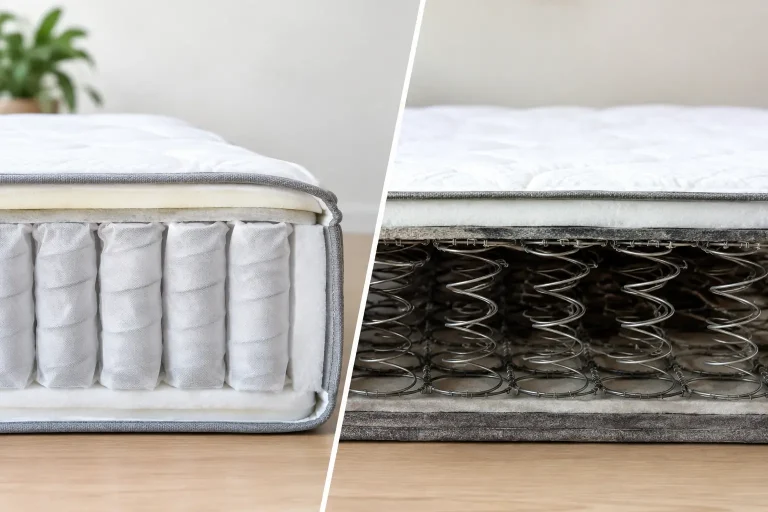
Individually pocketed springs move more independently than traditional connected spring systems. Rather than creating one broad, rigid response across the bed, they can react to the areas that need support most.
For pressure relief outcomes, this matters because the shoulders and hips can settle into the comfort layers while the springs help support the waist and lower back. That creates a more balanced sleeping posture. Pocket springs also help limit motion transfer, so a partner changing position is less likely to send movement across the entire mattress.
Your Sleep Position Changes What Good Relief Feels Like
There is no single firmness level that works for every person. Body weight, sleep position, joint sensitivity, and personal preference all influence what feels supportive. Still, a few patterns are reliable.
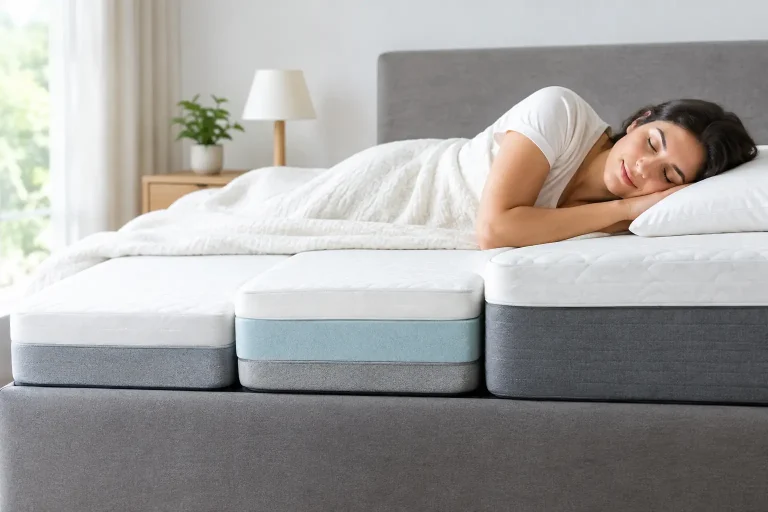
Side sleepers generally need more cushioning at the shoulders and hips. A mattress that is too firm can create numbness, tingling, or the urge to roll over repeatedly. Yet side sleepers still need stable support under the waist so the spine does not curve downward.
Back sleepers often benefit from a medium to medium-firm feel that supports the lower back while allowing the pelvis and shoulders to settle naturally. The ideal surface fills the gap at the lumbar area without forcing the hips upward.
Stomach sleepers usually need a firmer, flatter feel to reduce excessive hip sink. Too much contouring can pull the lower back into an uncomfortable arch. For these sleepers, pressure relief should come from gentle surface cushioning rather than deep compression.
Couples may need to compromise, especially when one person is lighter and side sleeps while the other is heavier or prefers sleeping on their back. A responsive hybrid design is often a practical middle ground because it can contour at the surface while maintaining stronger support deeper down.
Signs Your Mattress Is Not Relieving Pressure Well
Your body gives useful feedback when the sleep surface is working against it. Morning stiffness that improves after you have been moving for a while can be one clue. So can recurring shoulder soreness on the side you sleep on, hip tenderness, lower-back discomfort, or frequent tossing and turning.
Pay attention to whether discomfort is position-specific. If you feel fine on your back but your shoulder aches whenever you sleep on your side, the comfort layer may not be cushioning that joint adequately. If you wake with a strained lower back after sinking into the center of the bed, the issue may be deeper support rather than surface comfort.
Age also matters. Foam can soften, springs can lose consistency, and the support pattern can change over time. A mattress that once felt comfortable may no longer provide the alignment and cushioning your body needs.
Better Pressure Relief Should Not Mean Sleeping Hot
Warmth and discomfort can feed into each other. When you sleep hot, you are more likely to wake, move, and struggle to settle again. That makes a mattress feel less comfortable even when its pressure-relieving materials are sound.
Look for a construction that manages both cushioning and temperature. Breathable latex, cooling gel foam, and airflow through a pocketed coil system can help heat move away from the body more effectively than a dense, all-foam surface. This does not mean every hybrid mattress will feel cool to every sleeper. It means the design has more tools to address heat while still delivering contouring comfort.
At Azure Mattress, this balance is central to the hybrid approach: pressure-relieving comfort layers work with individually pocketed springs to support the spine, reduce partner disturbance, and encourage cooler, more peaceful sleep.
How to Judge a Mattress Beyond the First Night
Your body may need time to adjust when you move from a worn-out mattress to a supportive new one. Give yourself a reasonable adjustment period, particularly if your previous bed had visible sagging or was much firmer or softer than your new surface.
During that time, assess more than initial softness. Notice how quickly you fall asleep, how often you wake to reposition, whether your shoulders and hips feel less tender, and whether morning stiffness changes. Also consider whether your partner’s movement is disturbing your rest. Pressure relief is part of a larger performance picture that includes alignment, motion isolation, and temperature regulation.
The best mattress does not need to feel dramatically different every minute of the night. Its value shows up in the quiet details: fewer pressure-driven wakeups, easier movement, a more relaxed body, and mornings that start with more energy than discomfort.