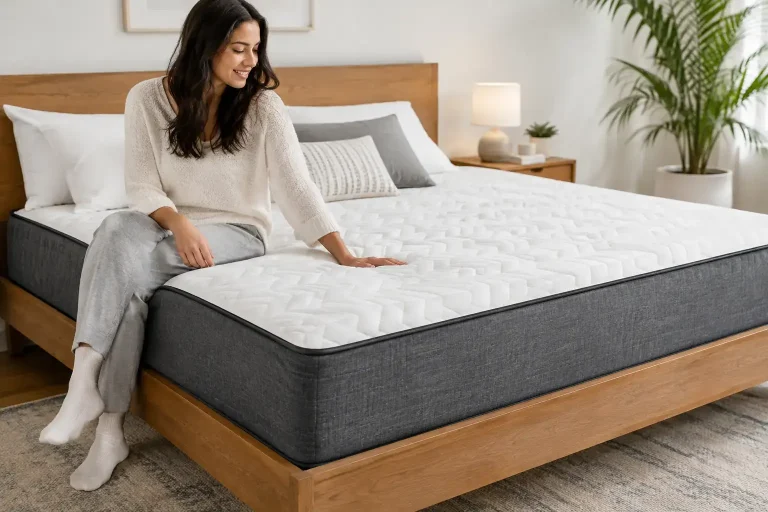
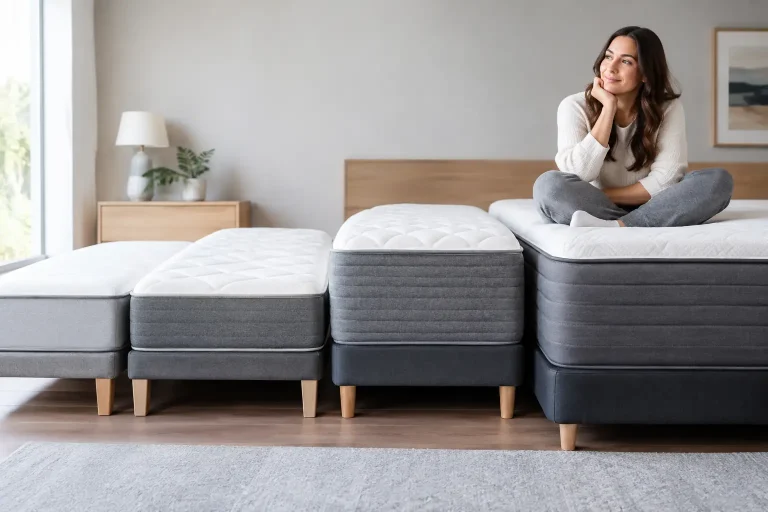
A mattress that looks tall and luxurious can be tempting, especially when you wake up with stiffness or feel every movement from your partner. But is a thicker mattress better for the sleep problems you actually want to solve? Not automatically. Thickness can create more room for comfort and support materials, yet the quality and arrangement of those layers matter far more than the number on the label.
For better sleep, look beyond height alone. The right mattress should keep your spine comfortably aligned, cushion pressure-sensitive areas, limit partner disturbance, and help you stay at a comfortable temperature through the night.
Is a Thicker Mattress Better? It Depends on What Is Inside
Mattress thickness refers to the full height of the bed, including its comfort layers, transition materials, and support core. Most adult mattresses fall between 8 and 14 inches thick. A thicker profile often has additional layers, which can improve pressure relief and create a more substantial feel. Still, extra inches only help when each layer has a clear purpose.
A 12-inch hybrid mattress with responsive latex, cooling gel foam, and individually pocketed coils can offer targeted comfort and stable support. By comparison, a 14-inch mattress made with soft, low-density foam may feel inviting at first but allow the hips to sink too deeply over time. That can pull the spine out of alignment and leave you feeling sore in the morning.
The goal is not to buy the tallest mattress available. It is to choose a construction that supports your body without creating pressure points or excess sink.
Thickness Can Improve Pressure Relief and Support
A well-designed thicker mattress has more space to separate comfort from support. The upper layers can gently contour around your shoulders, hips, knees, and lower back, while deeper layers prevent your body from dropping too far into the bed. This balance is particularly valuable for people who experience joint discomfort, lower-back tension, or numbness in their shoulders after sleeping.
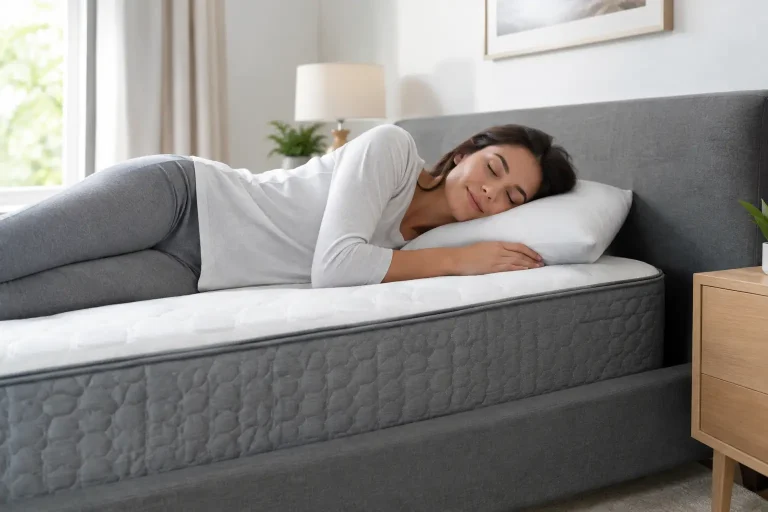
For side sleepers, more cushioning depth can be helpful because the shoulders and hips need room to settle in. If the surface is too thin or firm, those areas carry too much pressure. A mattress with a supportive core beneath its comfort layers helps the body relax while keeping the waist from collapsing downward.
Back sleepers usually need a flatter, more stable feel. They may benefit from a medium-firm hybrid with enough surface comfort to ease tension at the lower back, paired with a resilient spring system that supports the hips. Stomach sleepers often need an even more supportive surface, since excessive softness can strain the lower back.
In other words, thickness can be an advantage, but only when it delivers controlled comfort instead of a deep, unsupported cradle.
The support core matters most
The deepest section of a mattress does the heavy lifting. In a hybrid design, individually pocketed springs provide a responsive base that can support spinal alignment while adapting to different parts of the body. Because each coil responds independently, the mattress can offer more precise support than a basic connected spring system.
Pocketed coils also help with motion isolation. When your partner changes position or gets out of bed, movement is less likely to travel across the entire surface. More thickness does not automatically mean less motion transfer. A well-built coil system and effective comfort layers are what make a real difference for couples.
When a Thicker Mattress May Be the Better Choice
A mattress in the 10- to 14-inch range can be a strong option for adults who want more than a simple spring bed. It may be especially useful if you are a side sleeper, have a larger body type, share a bed, or wake with pressure-related aches.
Thicker hybrid mattresses can accommodate multiple performance layers: a breathable top surface, pressure-relieving foam or latex, a transitional layer for stability, and a pocket spring core for durable support. Each component can address a different sleep concern rather than asking one material to do everything.
Latex is often valued for its buoyant pressure relief. It cushions the body without the slow, stuck-in-the-bed feel some sleepers experience with softer foam. Cooling gel foam can help manage surface heat, while breathable construction and airflow around the coil system can release warmth more effectively than dense, solid foam layers.
For hot sleepers, this is where mattress design becomes more meaningful than height. A thick mattress made entirely of heat-trapping foam can sleep warmer than a thinner hybrid with breathable latex and open coil airflow. If overheating disrupts your rest, prioritize temperature regulation from the cover through the support core.
When More Thickness Is Not Better
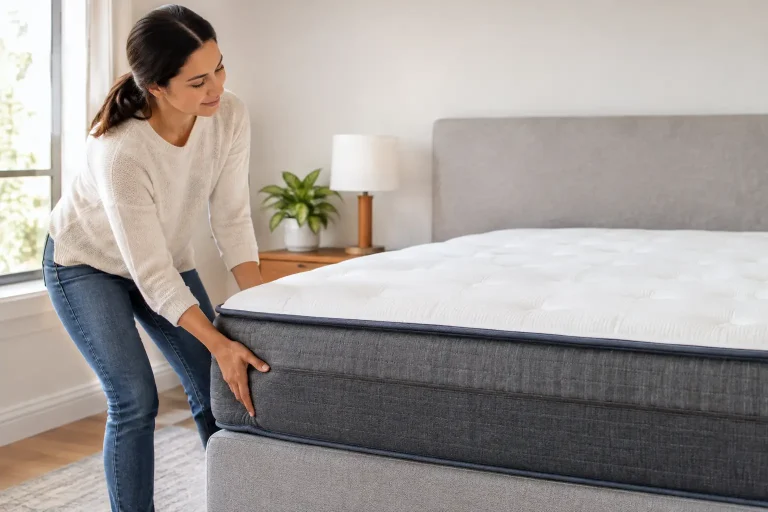
A very thick mattress can create problems if it is too soft for your body or difficult to get in and out of. This is worth considering for older adults, people with knee or hip discomfort, or anyone using a tall bed frame. Mattress height, foundation height, and bed frame height work together. You should be able to sit on the edge and stand up without feeling like you are climbing down from a platform.
Thickness can also hide poor construction. A mattress loaded with plush layers may feel impressive during a quick test, but its comfort will not last if the materials lack density, resilience, or proper support beneath them. Look for clear information about the layers and the support system rather than relying on a “pillow-top” label alone.
There is also a practical point: deep mattresses may require deep-pocket sheets, and some bed frames or headboards are designed around a lower profile. These details should not decide your mattress choice, but they are worth checking before delivery.
Choose Thickness Based on Your Sleep Needs
For many adults, an 8- to 10-inch mattress can work well if it uses high-quality, supportive materials and the sleeper prefers a firmer, lower-profile feel. A 10- to 12-inch mattress is often a versatile range for people seeking balanced comfort, cooling, and spinal support. A 12- to 14-inch hybrid may suit sleepers who want deeper pressure relief, more substantial support layers, and a premium feel without sacrificing stability.
Your body weight also plays a role. Heavier sleepers may place more pressure on the comfort layers and often benefit from a mattress with a stronger support system and enough depth to prevent bottoming out. Lighter sleepers may not need as much thickness and can find overly firm or overly tall mattresses less comfortable if the top layers do not respond gently enough.
Instead of asking only how thick the mattress is, ask these better questions: Does it keep my hips level with my shoulders? Does it relieve pressure at my shoulders and hips? Does it stay comfortable when I change positions? Does it reduce movement from the other side of the bed? And does it sleep cool enough for uninterrupted rest?
What to Look for in a High-Performance Hybrid
A strong hybrid mattress uses its thickness with intention. Look for a construction that combines pressure-relieving comfort layers with a stable, individually pocketed coil base. The comfort materials should feel substantial enough to cushion joints, while the deeper layers should resist sagging and support the natural curve of your spine.
Certifications can offer added reassurance about foam materials and textile safety. CertiPUR-US certified foams are made without certain harmful chemicals, while Oeko-Tex certified textiles are tested for substances that may be of concern. These markers do not replace comfort or support, but they can help you make a more informed decision about what you bring into your bedroom.
At Azure Mattress, the focus is not simply on adding height. A multi-layer hybrid approach is designed around three sleep outcomes: pressure-relieving comfort, orthopedic support for the spine and joints, and temperature control for a cooler night. That is what turns a thicker profile into meaningful sleep performance.
Give Your Body Time to Assess the Fit
A new mattress can feel different from your old one for the first few nights, especially if your previous bed was sagging or lacked support. Give your body a reasonable adjustment period, but pay attention to consistent signals. Persistent lower-back pain, shoulder pressure, overheating, or a feeling that you are rolling toward the center can indicate that the firmness, construction, or thickness is not right for you.
The best mattress should make it easier to settle in, stay asleep, and wake up ready to move. Choose the depth that gives your body enough room for comfort layers and dependable support, then let the quality of the materials make the difference.