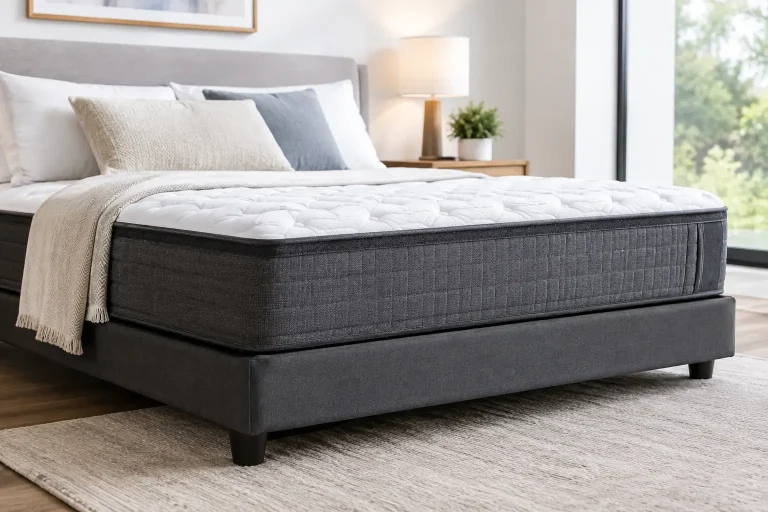
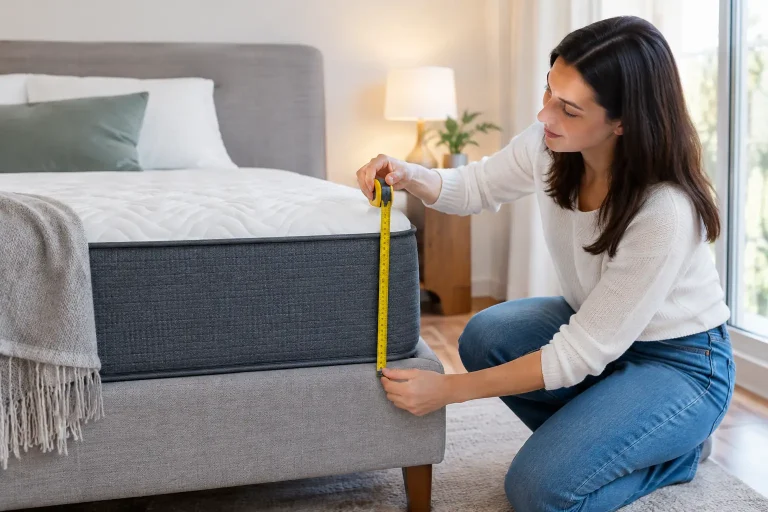
A mattress can feel comfortable in a showroom and still leave you waking up with lower-back stiffness months later. Often, the issue is not firmness alone. Mattress weight limits affect how evenly the sleep surface supports your body, how well its comfort layers recover, and how long the mattress can maintain proper alignment.
For couples, this is even more practical. The relevant number is the combined weight of everyone sleeping on the mattress, not one person’s weight in isolation. Add a partner, a child who climbs in during the night, and the pressure placed on the edge when getting dressed, and the mattress and its foundation have a real job to do.
What mattress weight limits actually mean
A mattress weight limit is the maximum load a mattress is designed to support while still delivering its intended comfort, stability, and durability. It is not simply a question of whether the bed will physically hold someone. A mattress may not collapse when overloaded, but it can lose its ability to distribute pressure, keep the spine neutral, and rebound after movement.
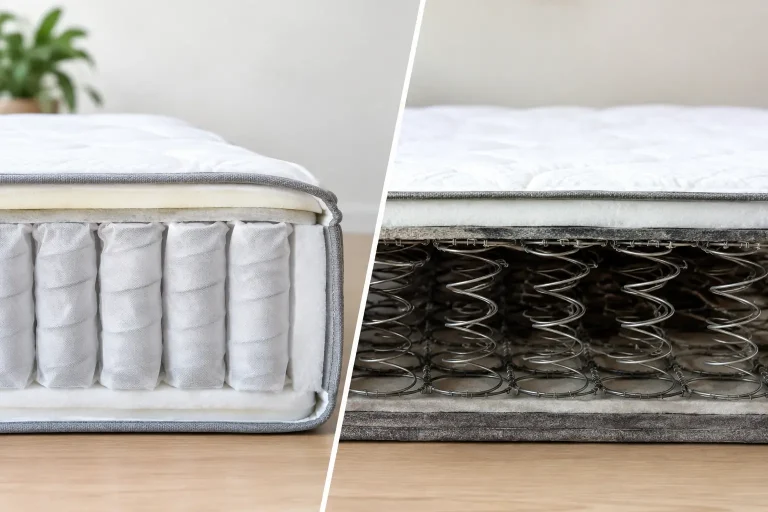
There is no single capacity that applies to every mattress. Construction matters. A thin all-foam mattress, a traditional interconnected spring mattress, and a premium hybrid with individually pocketed coils can respond very differently under the same load. Size matters as well: a larger mattress has more surface area, but the support system and base must still be designed for the people using it.
When reviewing a product, look for a manufacturer’s stated weight capacity or suitability guidance. If a brand does not publish a specific limit, ask customer support before buying, particularly if you need stronger support or are purchasing for two adults. This is far more reliable than assuming a thicker mattress automatically handles more weight.
The mattress is only one part of the support system
A stated mattress capacity can be misleading if the bed frame, slats, center support, or adjustable base has a lower limit. Your sleep system is only as strong as its least supportive component.
For example, a high-quality hybrid mattress may use pocket springs to support the body independently across the surface. But if it sits on widely spaced, bowed, or broken slats, the mattress can sag prematurely. Inadequate center support is especially common with queen, king, and California king beds, where the middle of the frame carries substantial shared load.
Check the weight rating for the mattress, foundation or base, frame, and any adjustable mechanism. The frame rating should account for the mattress itself, sleepers, bedding, and normal movement. A reinforced center rail with stable support legs and closely spaced slats gives a hybrid mattress the stable platform it needs to perform as designed.
Why weight capacity affects comfort and pain relief
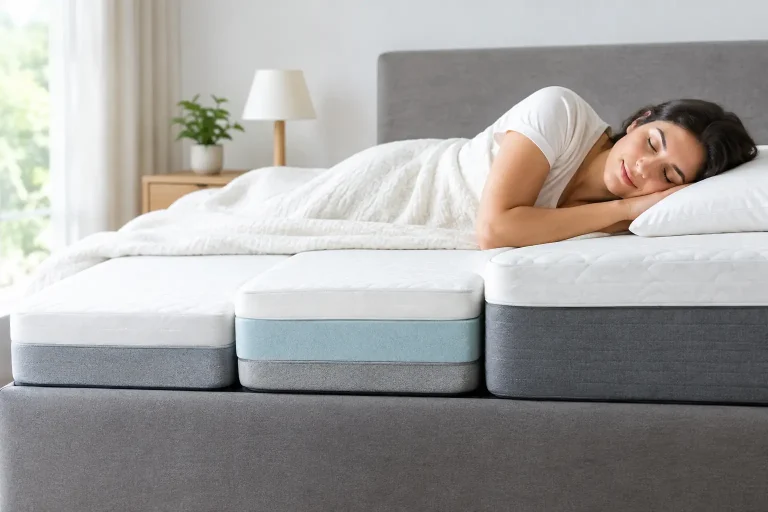
The right sleep surface should allow the shoulders and hips to settle gently while preventing the lower back from dropping too far. That balance is harder to maintain when a mattress is pushed beyond the load it was engineered to support.
On an under-supported bed, heavier pressure points may sink too deeply. This can rotate the pelvis, strain the lower back, and create the familiar feeling of waking up stiff despite spending enough hours in bed. Side sleepers may also notice increased pressure around the shoulder and hip when comfort layers compress too quickly.
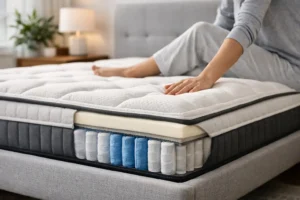
Support is not about creating a hard surface. It is about controlled response. Individually pocketed coils are useful because they can compress where pressure is applied while supporting the surrounding area. Latex can add responsive cushioning that resists the deep, stuck-in-the-bed feel some sleepers experience with softer foams. High-density comfort foams can help distribute pressure, provided the mattress has a durable core beneath them.
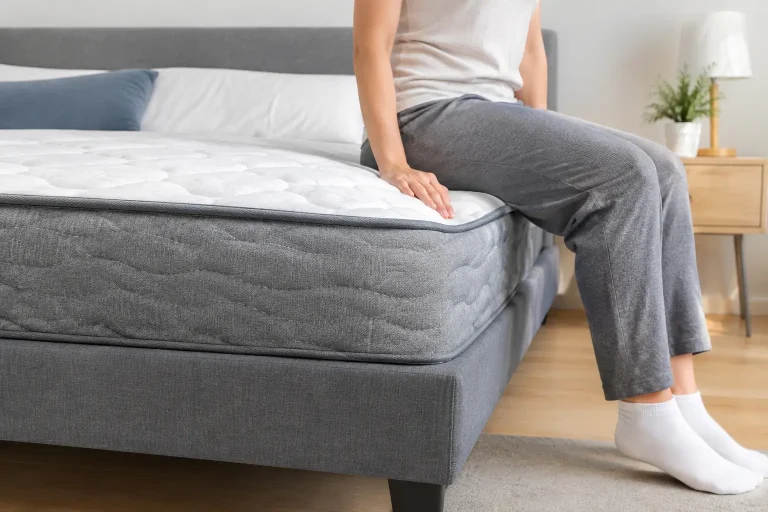
A mattress that is well matched to the sleeper’s needs should feel supportive from the center to the perimeter. You should not feel as though you are rolling toward the middle, fighting a deep body impression, or avoiding the edges because they collapse when you sit down.
Signs your bed may be carrying more than it should
A visible dip does not always mean a mattress has exceeded its weight capacity. Wear, a weak foundation, poor-quality materials, and an uneven floor can all contribute. Still, a few patterns are worth taking seriously.
If you notice deep impressions that do not recover after the bed is unmade, support may be breaking down. If you and your partner roll toward each other, the core may no longer be holding the surface level. More frequent back or hip discomfort, noisy springs, and an unstable edge are also signs that the mattress or foundation needs closer attention.
Heat can be another clue. When comfort layers remain heavily compressed around the body, airflow may be reduced and heat can build up. Breathable materials, ventilated construction, cooling gel foam, and a coil system with open space beneath the surface can improve temperature regulation. They cannot compensate for a mattress whose support layers have already worn out, but they can help the bed sleep cooler throughout its usable life.
How to choose a mattress with enough support
Start with the combined sleeping weight, then consider how the bed is actually used. A couple who occasionally shares the bed with a child or pet needs a different margin of support than a single sleeper. The goal is not to buy the firmest mattress possible. It is to choose a construction that can deliver consistent support without sacrificing pressure relief.
For many adults, a hybrid design offers a practical balance. A structured pocketed spring system provides deep support and better airflow, while responsive latex and quality foam layers cushion joints. Because the coils move independently, they can also reduce the disturbance caused when a partner changes position during the night.
Pay attention to the details behind the comfort claim. Ask whether the mattress uses individually pocketed coils or a connected spring unit, whether its foams are certified for material safety, and what the warranty covers. A long warranty is reassuring, but it does not replace a clear understanding of the product’s intended use, required foundation, and care instructions.
For couples with different body types or sleep styles, medium-firm is often a useful starting point, not a universal answer. A back sleeper may need more lift through the lumbar area, while a side sleeper may need more give at the shoulder. The best choice keeps the spine in a relaxed, neutral line in your usual sleeping position.
Protect the mattress you invest in
A supportive mattress lasts longer when its base is properly matched and maintained. Use the foundation recommended by the manufacturer, make sure the frame is level, and inspect slats and center legs periodically. Rotate the mattress when permitted by its care instructions to promote more even wear. Most modern hybrid mattresses are designed to be rotated, not flipped, because their comfort layers are built for one-sided use.
A breathable mattress protector can help defend against spills, sweat, and allergens without trapping excessive heat. Avoid repeatedly sitting in the same spot at the edge of the bed, especially if the mattress has softer perimeter support. This is normal use, not a reason to treat your bed like museum furniture, but small habits can preserve the structure that protects your comfort.
If a mattress feels unsupportive well before its expected lifespan, inspect the full system before replacing it. A damaged frame or inadequate slat spacing may be the actual cause. Taking photos of visible sagging and reviewing the warranty terms can also help you determine whether the issue is normal wear or a product defect.
Your mattress should make restful sleep feel easier, not require your body to compensate for a sagging surface. Choose enough capacity for the real weight on the bed, pair it with a stable foundation, and give your spine the steady support it needs night after night.