A hybrid mattress can only perform as well as the surface beneath it. Even premium layers of pressure-relieving latex, cooling foam, and pocketed coils can feel uneven or less supportive on the wrong base. The best bed foundations for hybrids keep the mattress level, allow its comfort layers to respond properly, and protect the structure designed to support your back night after night.
That matters most if you wake with lower-back stiffness, sleep warm, or share a bed with a partner who moves frequently. A foundation is not just furniture. It is part of your sleep system.
What a Hybrid Mattress Needs From a Foundation
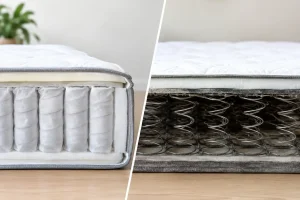
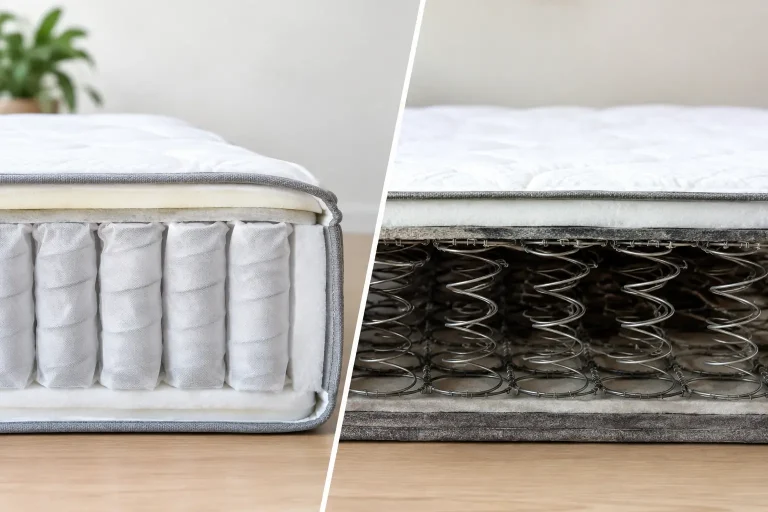
Hybrid mattresses combine responsive foam or latex with individually pocketed springs. This construction is designed to contour around pressure points while maintaining more stable support through the center of the body. Unlike a traditional innerspring mattress, however, a hybrid often needs consistent support across its entire underside.
A sagging base, widely spaced slats, or a frame without center reinforcement can allow the mattress to flex where it should remain stable. Over time, that can affect spinal alignment, reduce the useful life of the mattress, and create the false impression that the mattress itself is failing.
The right foundation should provide three things: a flat, sturdy surface; adequate airflow; and enough structural strength for the mattress plus the people sleeping on it. If you are shopping for pain relief, do not overlook this step. A well-built foundation helps the mattress hold your hips, shoulders, and lumbar area in a more balanced position.
Best Bed Foundations for Hybrids by Sleep Need
A solid platform bed for stable, all-around support
For most hybrid mattresses, a solid platform bed is the simplest and most dependable choice. Its flat, rigid surface supports the full mattress base, helping pocketed coils and comfort layers work as intended. It is especially useful for sleepers who want a firm, stable feel and minimal movement from the frame itself.
A platform bed also keeps the mattress elevated from the floor, which improves airflow around the bed and makes it easier to clean underneath. Choose one with a center support beam and additional center legs for larger sizes. A queen, king, or California king carries more weight across a wider span, so center reinforcement is not optional.
The trade-off is feel. A solid platform can make a hybrid feel slightly firmer than it would on a more flexible slatted surface. For people who prefer a plush, deeply cushioned sensation, the mattress comfort layers should supply that pressure relief rather than relying on foundation flex.
A closely slatted foundation for airflow and responsive comfort
A slatted foundation is another excellent choice when the slats are strong, evenly spaced, and properly supported. This style allows more air to circulate beneath the mattress than a fully solid deck, which can help heat and humidity dissipate. That is a meaningful advantage for hot sleepers, particularly with a hybrid designed around cooling gel foam, breathable latex, or an airflow-focused coil system.
Spacing is the detail that separates a supportive slatted foundation from a risky one. Many hybrid mattress brands require slats to be no more than 3 to 4 inches apart, though the mattress warranty should always set the final rule. Wider gaps can leave unsupported areas beneath the mattress, contributing to uneven wear and reduced comfort.
Look for thick wood or metal slats, a center rail, and center legs on queen and larger frames. Thin, bowed, or widely spaced slats may cost less upfront, but they can compromise a mattress built to deliver years of consistent support.
An adjustable base for targeted comfort and recovery
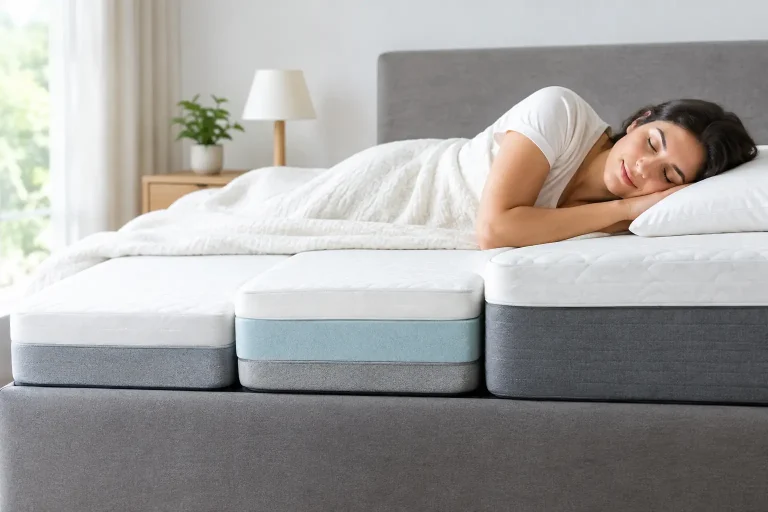
An adjustable base can be one of the best foundations for hybrids when the mattress is specifically compatible with it. Raising the head can support comfortable reading or relaxation, while elevating the legs may feel relieving after long workdays or periods of lower-body fatigue. For some sleepers, a slight head-and-foot elevation also reduces the pressure associated with lying completely flat.
Most modern hybrids with flexible foam or latex comfort layers and pocketed coil systems can work on an adjustable base. Still, compatibility should never be assumed. Check the mattress specifications before buying, especially if the mattress has thicker coils, a reinforced perimeter, or a design intended only for flat foundations.
An adjustable base costs more than a platform frame, and it introduces moving parts that some shoppers simply do not need. But for people who prioritize customized positioning, recovery comfort, or easier transitions in and out of bed, it can be a worthwhile part of a more supportive sleep setup.
A low-profile foundation for a traditional bed frame
If you already own a decorative bed frame that needs a foundation inside it, a low-profile rigid foundation can be a practical option. It provides a flat base while preserving a lower overall bed height. This is helpful for shorter sleepers, people with knee discomfort, or anyone who does not want their mattress sitting excessively high.
Choose a modern rigid foundation designed for foam or hybrid mattresses, not an old-fashioned flexible box spring. Traditional box springs were made to work with older innerspring mattresses and may have springs that create uneven support for a hybrid. A hybrid needs stability, not bounce from below.
What to Avoid Under a Hybrid Mattress
The cheapest solution is often the one that creates the most expensive problem later. Avoid placing a hybrid directly on weak wire grids, damaged slats, or a frame with no center support. These setups may look acceptable at first, but they can bend under concentrated weight and leave the mattress unsupported where your body needs stability most.
A mattress on the floor may feel firm and stable temporarily, but it limits airflow underneath. In humid rooms or homes with limited ventilation, that can encourage moisture buildup. It also makes cleaning harder and can increase exposure to dust and allergens. If floor sleeping is necessary for a short period, use a clean, dry surface and move to a ventilated, supportive base as soon as possible.
Do not assume an existing box spring is suitable just because it fits the bed frame. Inspect it for broken components, soft spots, uneven areas, and flex. If it is not rigid and level, it is not a reliable foundation for a hybrid.
How to Check Whether Your Foundation Is Strong Enough
Start with the combined weight capacity. Add the mattress weight, the weight of everyone who will sleep on it, and a reasonable margin for sitting, moving, or a pet joining the bed. The stated capacity should comfortably exceed that total.
Next, inspect support from the center outward. Queen and larger beds should have a center beam that runs head to foot, with legs touching the floor beneath it. Without these contact points, the frame can sag in the middle even if the outer rails appear solid.
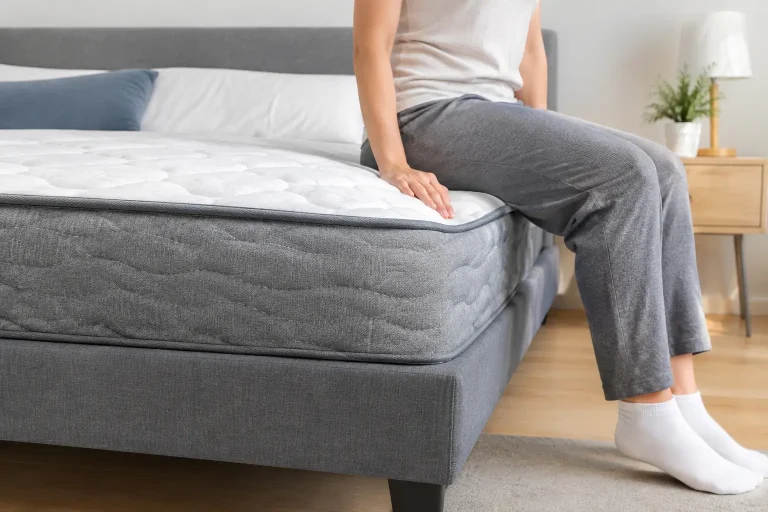
Finally, check the surface with your hand and eye. Slats should sit securely in place without shifting. The frame should not wobble, creak excessively, or dip when weight is applied. A foundation cannot eliminate every sound or motion in a bedroom, but a stable one helps a pocketed-coil hybrid isolate partner movement instead of amplifying it through a loose frame.
Match the Foundation to Your Mattress Warranty
Before ordering a base, read the mattress warranty requirements. Manufacturers may specify maximum slat spacing, minimum numbers of support legs, acceptable foundation types, or weight limits. Following these guidelines protects more than warranty eligibility. It protects the performance you paid for: consistent pressure relief, reliable edge support, and a level surface for proper spinal alignment.
At Azure Mattress, hybrid designs are built around the relationship between comfort layers and structured pocketed coils. A supportive foundation helps that engineering do its job, whether your priority is a cooler sleep surface, less partner disturbance, or relief from the stiffness that follows a poorly supported night.
Your foundation does not need to be complicated or expensive. It needs to be level, well-reinforced, and compatible with your mattress. Choose that base with the same care you use to choose the mattress, then give your body a stable place to recover every night.