If you wake up with a tight lower back, feel your partner roll over at 2 a.m., or kick off the covers because the bed traps heat, the hybrid mattress vs spring mattress question is not just about preference. It is about whether your mattress is actively helping your body recover or quietly working against it every night.
A lot of people start with a traditional spring mattress because it is familiar. It feels straightforward, often costs less upfront, and has been the default choice for years. But once pain, stiffness, poor temperature control, or motion disturbance show up, the differences in construction start to matter fast.
Hybrid mattress vs spring mattress: what actually changes?
A spring mattress is built primarily around coils, with thinner comfort layers on top. In many older or basic models, those top layers are minimal, which means you feel more of the coil system and get a firmer, more reactive sleep surface.
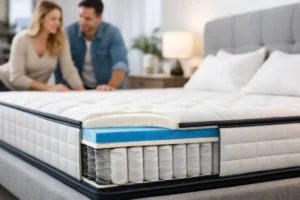
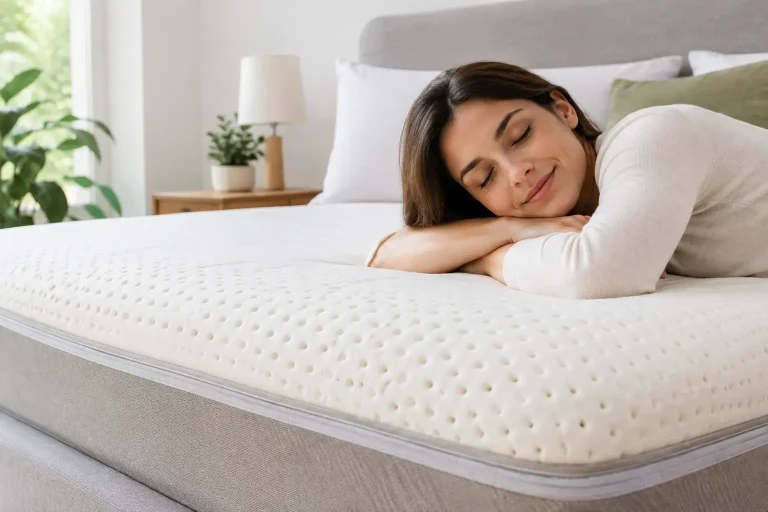
A hybrid mattress combines a coil support core with thicker comfort layers such as latex, memory foam, or cooling gel foam. That layered build is the key difference. You still get the support and airflow benefits of springs, but you also get more pressure relief, better body contouring, and a more refined feel.
This is why hybrids tend to appeal to adults who are not just shopping for a mattress, but for a better physical outcome. If your goal is reduced pressure on the shoulders and hips, steadier spinal alignment, and less partner disturbance, the extra materials in a hybrid are doing real work.
Support and spinal alignment
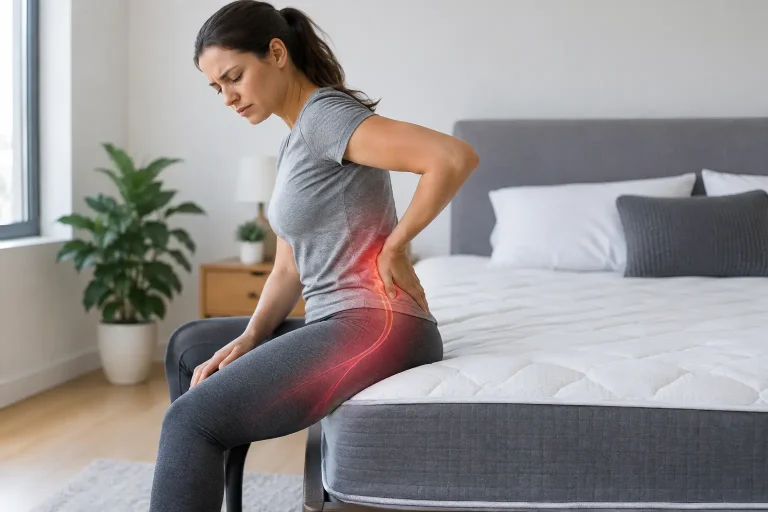
Support is where people often assume spring mattresses win by default. Coils do provide pushback, and that can feel supportive at first. But support is not only about firmness. It is about keeping your spine in a healthier position while still allowing heavier areas like the hips and shoulders to settle correctly.
A basic spring mattress can struggle here because the surface comfort layers may be too thin to cushion pressure points. That can create a feeling of sleeping on top of the bed rather than being supported by it. For some back and stomach sleepers, that may feel acceptable. For side sleepers or anyone with joint sensitivity, it can lead to pressure buildup and morning stiffness.
A well-designed hybrid usually performs better because it balances two jobs at once. The coil system supports the body from below, while the upper comfort layers help distribute weight more evenly. That means less concentrated force on the shoulders, hips, and lower back. For people dealing with aches or looking for more orthopedic-style support, that combination is often the stronger choice.
Not every hybrid is automatically better, of course. The quality of the foams, latex, and pocketed coils matters. But when the build is engineered properly, a hybrid gives more precise support than a standard spring mattress.
Pressure relief is the real separator
This is where the gap becomes obvious.
Traditional spring mattresses tend to have a more lifted, bouncy feel with less contouring. Some sleepers like that because it is easy to move around and does not feel restrictive. The trade-off is that your body may not get enough cushioning where it needs it most.
Hybrid mattresses are designed to solve that. Latex and premium foams absorb pressure before it reaches the joints, which can make a noticeable difference if you sleep on your side, switch positions often, or carry tension in your back and shoulders. Instead of one firm response across the whole mattress, a hybrid offers more targeted comfort.
For adults who wake up sore and assume they just slept wrong, pressure relief is often the missing piece. A mattress can feel firm and still be unsupportive if it does not relieve stress on the body. That is one reason many people upgrade from a spring mattress after years of discomfort.
Motion isolation for couples
If you share a bed, this part matters more than most shoppers expect.
A traditional spring mattress, especially one built with interconnected coils, tends to transfer movement across the surface. When one person turns, gets up, or climbs into bed late, the other person feels it. Over time, those small disturbances add up.
A hybrid mattress with individually pocketed coils is built differently. Each coil responds more independently, and the comfort layers on top help absorb movement before it spreads. The result is a calmer sleep surface with less bounce traveling from one side to the other.
That does not mean all hybrids have zero motion transfer in a literal sense, but compared with a basic spring mattress, they are usually far better at reducing disturbance. For couples, that can be the difference between interrupted sleep and staying asleep through the night.
Cooling and airflow
People often think foam sleeps hot and springs sleep cool. That is partly true, but it is also outdated if you are comparing modern hybrid designs with basic assumptions.
A traditional spring mattress usually allows decent airflow because there is open space around the coils. But if the comfort materials on top are low quality or the bed compresses unevenly over time, that cooling benefit may not feel as strong in practice.
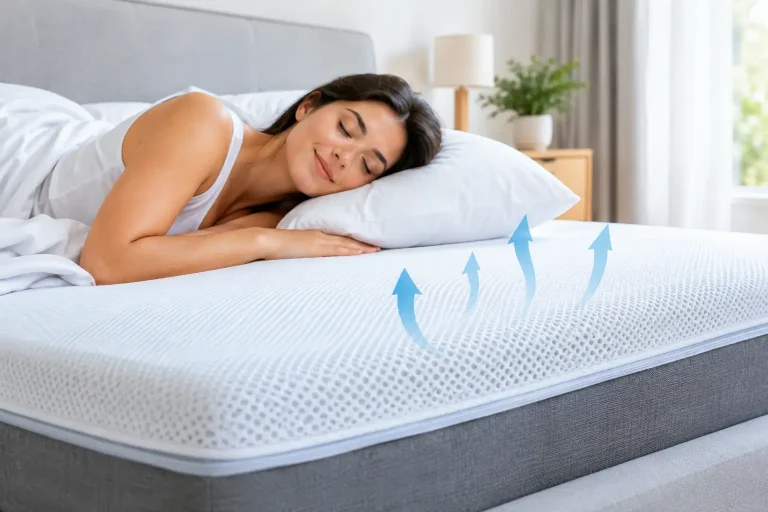
A hybrid mattress can offer better temperature regulation when it uses breathable materials like latex, cooling gel foam, and a coil support core that encourages airflow. The coil layer prevents the dense, heat-trapping feel that some all-foam mattresses have, while the upper layers can be designed specifically to pull heat away from the body.
So in the hybrid mattress vs spring mattress debate, cooling is not automatically a win for traditional springs. It depends on the materials. A modern hybrid built for heat dissipation will often sleep cooler and more consistently comfortable than a budget spring mattress.
Durability and long-term value
At first glance, spring mattresses can look like the better deal because the sticker price is often lower. But price and value are not the same thing.
A lower-end spring mattress may lose comfort faster, especially if the top layers flatten out or the support becomes uneven. Once that happens, you are not just losing comfort. You may also start noticing more back strain, deeper sagging, and reduced stability across the surface.
A quality hybrid tends to hold up better because the construction is more layered and better equipped to handle repeated compression. Pocketed coils, resilient latex, and higher-grade foams generally create a more durable sleep system. The upfront investment is higher, but the performance tends to stay more consistent over time.
For shoppers focused on pain relief and restorative sleep, long-term value matters more than the lowest initial price. Replacing a cheaper mattress sooner or tolerating years of poor sleep is not really a savings.
Who should choose a spring mattress?
A spring mattress can still be the right fit in some cases. If you want a simpler mattress with a firmer, more traditional feel, sleep mostly on your back or stomach, and are not especially sensitive to pressure points or motion transfer, a good spring model may work well enough.
It can also make sense for guest rooms or short-term use, where the goal is practicality rather than highly tailored comfort. The main thing is to be realistic about the trade-offs. You may save money upfront, but you are usually giving up some contouring, motion control, and advanced pressure relief.
Who should choose a hybrid mattress?
A hybrid is usually the better fit if you are looking for measurable sleep benefits rather than just a mattress that feels acceptable in the store for five minutes.
If you deal with back pain, joint pressure, or morning stiffness, the extra comfort layers matter. If you sleep hot, the right hybrid materials can help regulate temperature better. If you share a bed, individually pocketed coils and motion-absorbing layers can reduce disruptions. And if you want a mattress that feels supportive without feeling hard, hybrid construction gives you more room for balance.
This is why many performance-focused sleep brands, including Azure Mattress, center their lineup around hybrids. The design simply gives more tools to solve real sleep problems.
The better question is not which is best
The better question is which mattress is better for the way your body sleeps now.
If you are younger, pain-free, sleep alone, and prefer a very traditional mattress feel, a spring mattress may be enough. But if your current bed leaves you sore, overheated, or wide awake every time your partner moves, enough is probably not what you need.
A mattress should not force your body to adapt to poor support night after night. It should help you recover, stay aligned, and sleep with fewer interruptions. When that is the goal, hybrid mattresses usually offer the more complete solution.
The right mattress should make sleep feel less like something you endure and more like part of how you heal.