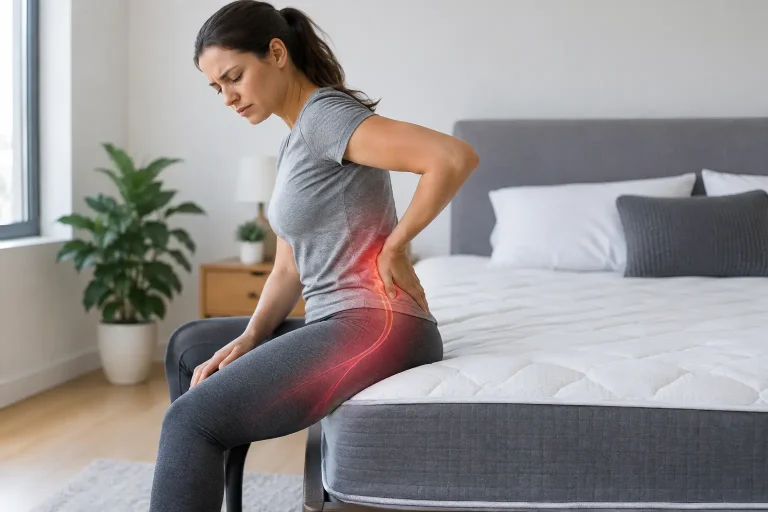
That dip under your hips may look minor, but it can change how your entire body rests. When people ask why mattresses sag, the real concern is usually not appearance. It is waking with lower-back stiffness, sore shoulders, restless sleep, or the feeling that you are rolling toward the middle of the bed.
A mattress is supposed to hold your body in a neutral, supported position for hours at a time. Once its comfort layers or support system begin to weaken, your spine can settle out of alignment. The result is less pressure relief, less recovery, and a bed that no longer feels like the place you go to recharge.
Why Mattresses Sag: The Real Causes
Mattress sagging happens when the materials that distribute body weight lose their ability to rebound. Every night, the same areas absorb pressure from your hips, shoulders, and lower back. Over months and years, that repeated compression can leave permanent impressions, especially in mattresses made with lower-density foams or interconnected spring systems.
Body weight is part of the equation, but it is not the whole story. A well-designed mattress should be engineered to manage everyday pressure without quickly developing a valley. Material quality, layer design, mattress foundation, sleep habits, and age all affect how long it maintains its shape.
Comfort layers can lose resilience
Foam is often the first material to show wear. Softer, lower-density foam may initially feel plush, but it can compress faster under repeated load. Once it no longer springs back fully, you may notice a body impression that remains visible after the bed has been unoccupied for several hours.
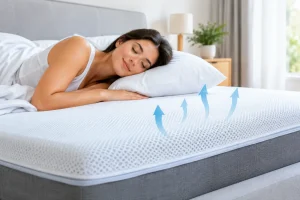
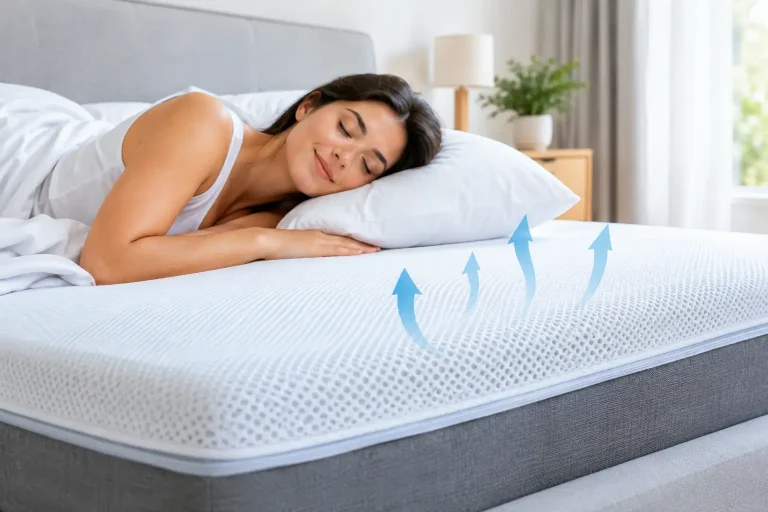
Heat can accelerate this process. Foam naturally softens as it warms, which is why an aging mattress can feel especially unsupportive for hot sleepers. If its cooling and airflow design is limited, the materials may retain more heat and moisture over time, adding stress to the comfort layers.
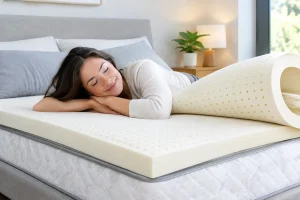
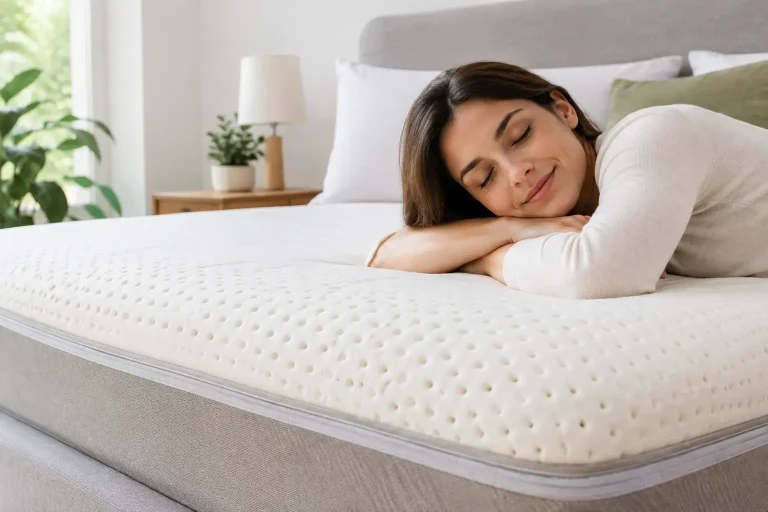
Latex generally offers stronger resilience than many conventional foams. Its responsive structure helps it recover after pressure is removed, which can be valuable for sleepers who need both cushioning and dependable support around the hips and shoulders. Still, latex quality and the construction beneath it matter. No comfort layer can compensate indefinitely for a failing support core.
Springs can weaken or move out of alignment
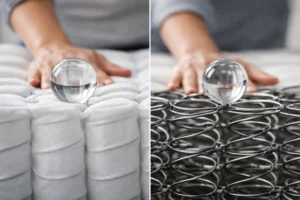
Traditional connected coils are designed to work as one unit. When pressure is placed on one area, the surrounding coils react too. Over time, this can contribute to uneven wear, weaker support in high-pressure zones, and more motion transfer across the mattress.
Individually pocketed springs work differently. Each coil responds more independently to the body above it, helping distribute weight with greater precision. That can support spinal alignment and reduce the chance that one sleeper’s movements disturb the other side of the bed. A pocketed spring system is not immune to wear, but a structured, high-quality coil design is typically better equipped for long-term support than a basic interconnected spring base.
An inadequate base creates uneven stress
Sometimes the mattress is not the only issue. A weak, warped, or widely spaced slatted foundation can allow the mattress to bend where it should remain level. That places extra strain on foam and springs, often creating sagging that appears sooner than expected.
Check that your bed frame has proper center support and that slats are secure, evenly spaced, and not cracked. The correct foundation depends on the mattress design, so follow the manufacturer’s guidance. Using the wrong base may also affect warranty coverage.
The same sleep zone gets used every night
Most couples naturally sleep in roughly the same positions. This means the center of each side of the bed gets the greatest concentration of pressure. Edge sitting can also wear down perimeter support over time, particularly when the mattress was not built with reinforced edges.
Rotating a mattress can help distribute that pressure more evenly when the design allows it. Modern one-sided mattresses should generally be rotated head to foot, not flipped. Flipping can put the support core and comfort layers in the wrong position, making the bed less comfortable and potentially damaging its intended performance.
How to Tell Whether a Mattress Is Truly Sagging
A mattress can feel softer with age without having a true structural sag. The difference matters because temporary softness may be influenced by temperature, a topper, or a worn-out pillow. A true sag is a visible or measurable indentation that remains when no one is lying on the mattress.
Remove bedding and place a straight object, such as a ruler or broom handle, across the suspected area. Measure the distance from the straightedge to the deepest point of the dip. Refer to your warranty terms for the specific measurement considered a covered indentation. In many cases, manufacturers require an impression to reach a stated depth before it qualifies for a claim.
Pay attention to what your body is telling you as well. These signs often point to worn support:
- You wake with new or worsening back, hip, shoulder, or joint discomfort.
- You feel pulled toward the center or find it harder to change positions.
- You sleep more comfortably in a guest bed, hotel bed, or another area of your home.
- Your partner’s movement feels more noticeable than it did when the mattress was new.
None of these symptoms proves that the mattress is the only cause. Pain can come from posture, activity, pillows, or an underlying health condition. But when discomfort consistently improves away from your bed, your sleep surface deserves a closer look.
Can You Fix a Sagging Mattress?
A topper can improve surface comfort when a mattress feels slightly firm or lacks pressure relief. It cannot restore a collapsed foam layer or damaged spring system. Adding more softness over a deep dip often makes alignment worse because your hips and shoulders sink even farther.
Rotating the mattress may help if wear is still mild and evenly distributed, especially if one side has been used more heavily. Before rotating, inspect the foundation and make sure the mattress is clean, dry, and free from stains or damage that could complicate a warranty review.
If the sag is significant, persistent, and affecting how you feel each morning, replacement is usually the more practical solution. Sleeping on a compromised mattress night after night can turn a preventable comfort issue into an ongoing recovery problem. The goal is not simply a flatter-looking bed. It is stable support that keeps your body from sinking out of its natural alignment.
How to Choose a Mattress Less Likely to Sag
Durability is not about choosing the firmest mattress in the showroom. An overly firm surface can create pressure points at the shoulders and hips, while an overly soft surface may allow the midsection to drop too far. The right feel depends on your body type, preferred sleeping position, and whether you share the bed.
Look beyond the top layer and consider the full construction. A durable hybrid mattress combines pressure-relieving comfort materials with a supportive, individually pocketed coil system. Latex can add responsive cushioning, cooling gel foams can help manage heat, and pocket springs can provide targeted support while limiting partner disturbance.
For side sleepers, the priority is enough contouring at the shoulder and hip without losing support through the waist. Back sleepers generally benefit from steady lumbar support that prevents the pelvis from dipping. Combination sleepers need a responsive surface that makes movement easier, rather than a deep, slow-moving cradle that can feel restrictive.
Warranty length is also worth reviewing, but treat it as one part of the picture. A warranty protects against qualifying manufacturing defects, not the normal softening that occurs with use. Read the indentation threshold, foundation requirements, and care instructions before buying. A longer warranty can signal confidence, yet construction quality remains the strongest predictor of everyday performance.
At Azure Mattress, the hybrid approach is designed around the three outcomes that matter most after a long day: pressure-relieving comfort, stable spine and joint support, and cooler sleep. Those features work together because a mattress should not force you to choose between a soft feel and dependable structure.
Protect Your Mattress Before Wear Becomes a Dip
Use a supportive foundation from day one, rotate the mattress as recommended, and protect it from spills and excess moisture with a breathable protector. Avoid routinely sitting on the exact same edge for extended periods, and do not place heavy objects on the bed for storage. These simple habits reduce concentrated stress on the materials doing the hardest work.
Most importantly, do not ignore the first signs of lost support. A mattress should leave you feeling restored, not compressed, overheated, or sore before the day has even begun. When your bed holds its shape and supports your body correctly, peaceful sleep becomes less of a hope and more of a dependable nightly result.