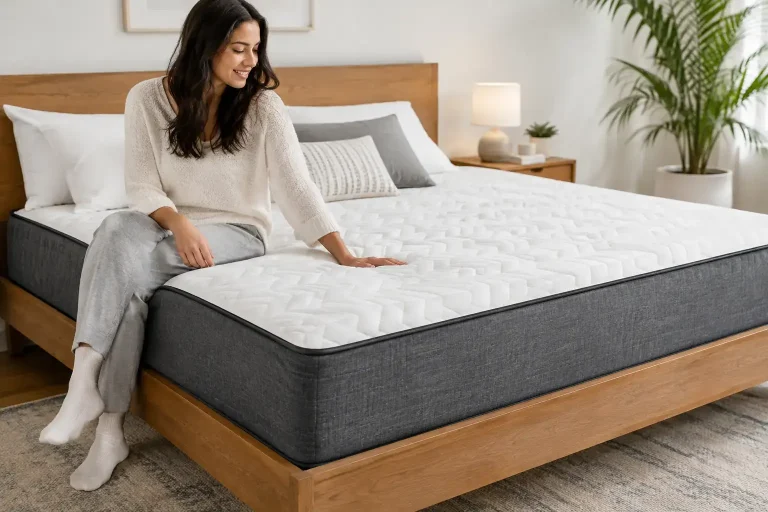
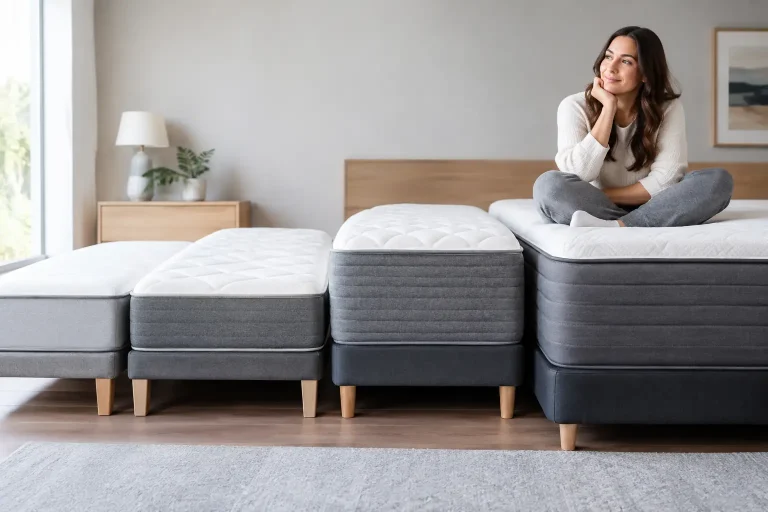
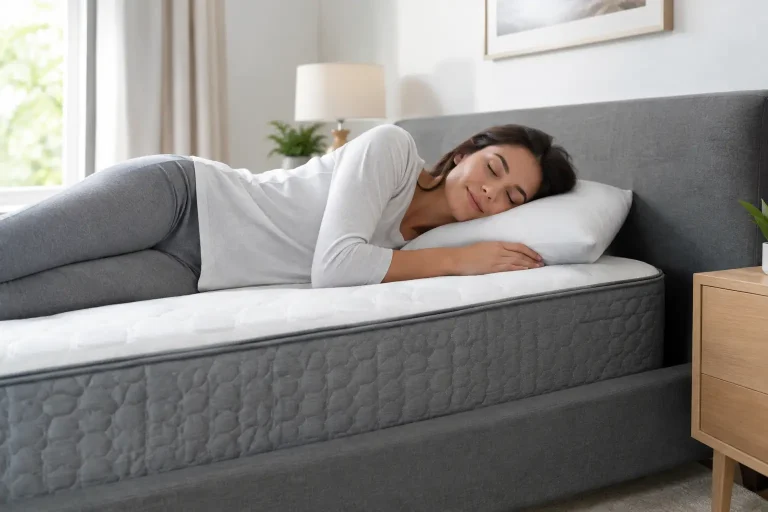
A mattress comfort review should answer more than one question: “Is it soft?” Real comfort is what happens when your hips stay supported, your shoulders are not pressured, your partner can turn over without waking you, and you do not spend the night pushing off the covers to cool down. A mattress may feel pleasant for five minutes in a showroom, yet still leave you stiff, overheated, or restless by morning.
For adults dealing with back pain, joint pressure, or broken sleep, comfort is not a luxury feature. It is the foundation of recovery. The right mattress should help your body settle into a neutral position while giving sensitive areas enough cushioning to relax.
What Mattress Comfort Really Means
Comfort is personal, but it is not random. Your preferred sleep position, body weight, temperature sensitivity, and whether you share a bed all influence what feels right. Still, the best mattresses tend to balance four measurable outcomes: pressure relief, spinal alignment, temperature regulation, and motion isolation.
A plush surface can feel inviting, especially for side sleepers with pressure at the shoulders and hips. But plushness alone is not enough. If the comfort layers allow your midsection to sink too far, your lower back may lose the support it needs. On the other hand, a very firm mattress may hold the body up well but create painful pressure points that cause frequent tossing and turning.
This is why hybrid construction is often a strong option. It combines contouring comfort materials, such as latex or cooling gel foam, with individually pocketed coils that provide targeted support underneath. The result should feel cushioned at the surface without becoming unstable through the night.
Mattress Comfort Review: The Four Tests That Matter
1. Pressure relief at the shoulders, hips, and knees
Pressure relief is often the first thing people notice. When you lie on your side, your shoulders and hips carry a significant amount of weight. A mattress with insufficient cushioning can compress these areas, leading to numb arms, sore hips, or the urge to change positions repeatedly.
Latex and quality foam comfort layers can spread weight more evenly, reducing concentrated pressure without creating the deep, stuck-in-the-bed feel some sleepers dislike. Latex also has a naturally responsive feel, which makes it easier to move and change positions. That matters for combination sleepers who switch from their side to their back during the night.
For back sleepers, pressure relief should support the curve of the lower back rather than leave a gap beneath it. Stomach sleepers generally need less surface softness and more reinforcement around the hips, since excessive sink can strain the lumbar region.
The trade-off is straightforward: more cushioning can relieve pressure, but too much softness may compromise alignment. A well-designed mattress uses its upper layers to cushion the body while relying on a stable support core to prevent sagging.
2. Spinal alignment that lasts until morning
A comfortable mattress should support your body in a relatively straight, neutral line from your shoulders through your hips. This is especially important if you wake with lower back stiffness, neck tension, or a feeling that your body has been working all night instead of resting.
Pocketed springs are valuable because each coil responds more independently to weight and movement. Rather than acting like one connected spring unit, the coil system can support heavier areas, such as the hips, while allowing lighter areas to settle comfortably. That targeted response helps maintain alignment across a wider range of body shapes and sleeping positions.
Do not confuse firm with supportive. A hard sleeping surface may resist compression, but if it does not adapt to your body, it can place stress on joints and leave the lower back unsupported. Support means your body is held in a healthy position. Firmness is simply how resistant the mattress feels when you first lie down.
For many adults, a medium-firm hybrid provides the most versatile balance. It has enough give for side sleeping and enough structure for back sleeping. However, a lighter person may prefer a slightly softer feel, while a heavier sleeper or dedicated stomach sleeper may need a firmer surface to prevent hip sink.
3. Cooling that does not fade after the first hour
Overheating is one of the most underestimated comfort problems. You may fall asleep easily, then wake up warm and restless as heat builds around your body. Traditional dense foam can retain heat, particularly for sleepers who naturally run warm or live in warmer climates.
Cooling comfort depends on more than a cool-to-the-touch cover. The mattress needs materials and construction that allow heat to move away from the body. Gel-infused foam can help regulate surface temperature, while breathable latex and airflow around a pocket spring system promote better ventilation through the mattress.
A hybrid mattress usually has an advantage here because the open space between coils allows more air circulation than a solid foam base. That does not mean every hybrid will feel equally cool. Thick, dense comfort layers can still trap warmth, so look at the full construction rather than relying on a single cooling claim.
Your bedding also affects the result. A breathable mattress can only do so much if it is covered with a heavy waterproof protector, thick synthetic sheets, or an oversized duvet. For a truly cooler sleep environment, the mattress and bedding should work together.
4. Motion isolation for shared beds
If a partner gets up early, changes positions often, or sleeps lightly, motion isolation can be the difference between sleeping through the night and waking several times. This is where individually pocketed coils and absorbing comfort layers earn their place.
In a connected spring mattress, movement can travel across the whole surface. One person rolling over may create a noticeable bounce on the other side. Pocketed coils reduce that transfer because each spring moves more independently. Foam and latex layers above the coils can further dampen small movements.
No mattress eliminates all awareness of a partner. If someone sits down heavily on the edge of the bed, you will likely feel something. But a well-built hybrid should minimize the everyday movement that disrupts sleep, such as turning over, getting in and out of bed, or shifting from side to back.
How to Judge Comfort Beyond the First Night
Your body needs an adjustment period when you switch from an old, sagging mattress to a properly supportive one. The first few nights may feel different simply because your muscles and joints are no longer settling into familiar dips and uneven support. Give a new mattress several weeks of consistent use before deciding whether it is right for you.
During that time, pay attention to patterns rather than isolated nights. Are you waking less often? Is morning stiffness improving? Do you feel pressure at your hips or shoulders? Are you sleeping cooler? Can your partner move without disturbing you? These observations are more useful than asking whether the mattress felt soft or firm when you first lay down.
Also check the practical details that protect your purchase. A quality mattress should use materials with credible safety certifications, have a clear warranty, and come with a return or trial policy that gives you enough time to evaluate comfort at home. Convenience matters because the best comfort test happens in your own bedroom, with your own sleep habits.
Who Benefits Most From a Hybrid Comfort Design?
Hybrid mattresses are particularly well suited to people who want cushioning without losing support. They can be a strong fit for couples with different sleep needs, side-and-back combination sleepers, and adults looking for relief from everyday back or joint discomfort.
They are also practical for sleepers who dislike the deep sink of all-foam mattresses or the bounce of traditional spring beds. The combination of responsive layers and pocketed coils creates a more balanced feel: easier movement, steadier support, and less partner disturbance.
Azure Mattress approaches comfort through this full-system view. Latex, cooling gel foam, and individually pocketed springs are not simply material names. Each layer has a job: ease pressure, support spinal alignment, reduce heat buildup, and help both sleepers rest with fewer interruptions.
The mattress that feels right is the one that lets your body stop compensating. When you wake with fewer aches, stay cooler, and barely notice your partner moving beside you, comfort has done its real work.