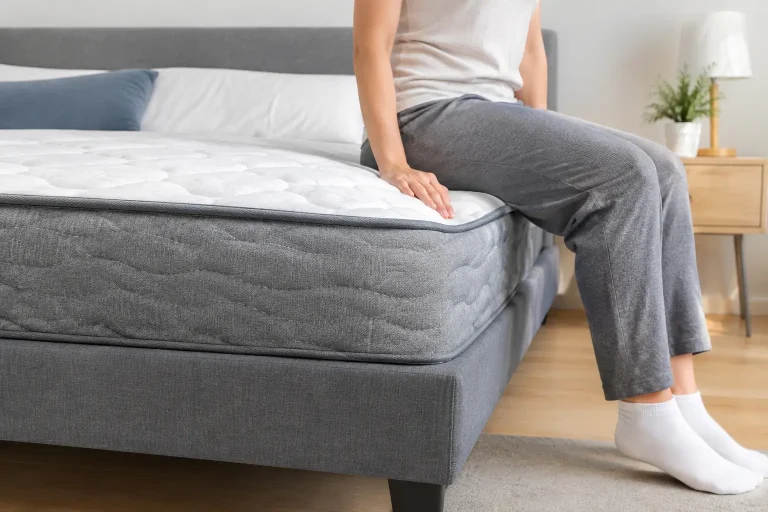
Waking up stiff is rarely just about getting older or sleeping the wrong way once. More often, it is a sign that your mattress is not keeping your spine, shoulders, hips, and joints in a stable, pressure-balanced position for hours at a time. That is exactly why people ask how hybrid mattresses relieve stiffness – because the right construction can change how your body recovers overnight.
Why stiffness builds up during sleep
Stiffness usually starts with two problems happening at the same time. First, the body is not getting enough support where it needs to stay aligned. Second, it is getting too much pressure in the areas that carry more weight, especially the shoulders, lower back, and hips.
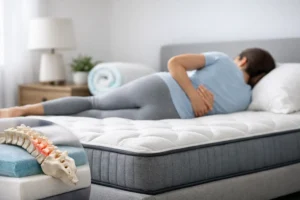
On a mattress that is too firm, those pressure points can get compressed for hours. On a mattress that is too soft, the heavier parts of the body can sink too far and pull the spine out of neutral alignment. Either way, muscles tend to stay slightly tense instead of relaxing. That tension can be subtle during the night and very obvious in the morning.
Heat can make the problem worse. If you sleep hot, toss and turn, or wake every time your partner moves, your body does not stay in the deeper stages of sleep long enough to fully recover. What feels like “morning stiffness” is often a mix of pressure buildup, poor posture, and interrupted rest.
How hybrid mattresses relieve stiffness in real terms
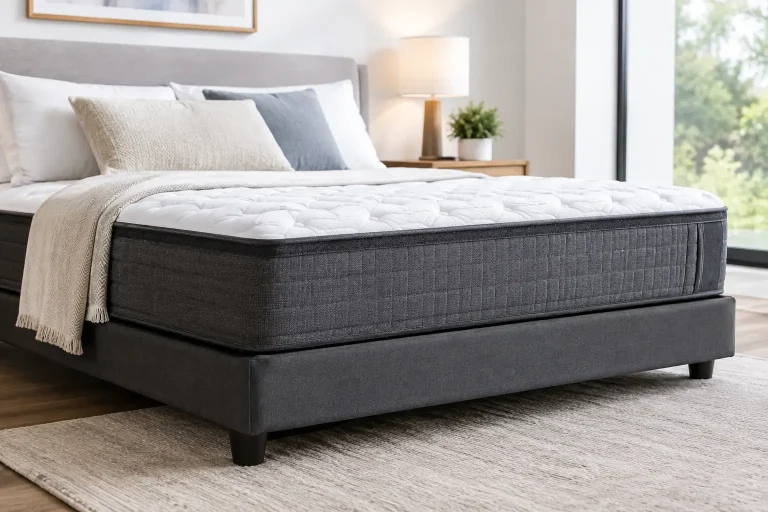
A quality hybrid mattress is designed to solve more than one sleep problem at once. It combines cushioning comfort layers with a structured coil support system, so you are not forced to choose between softness and support.
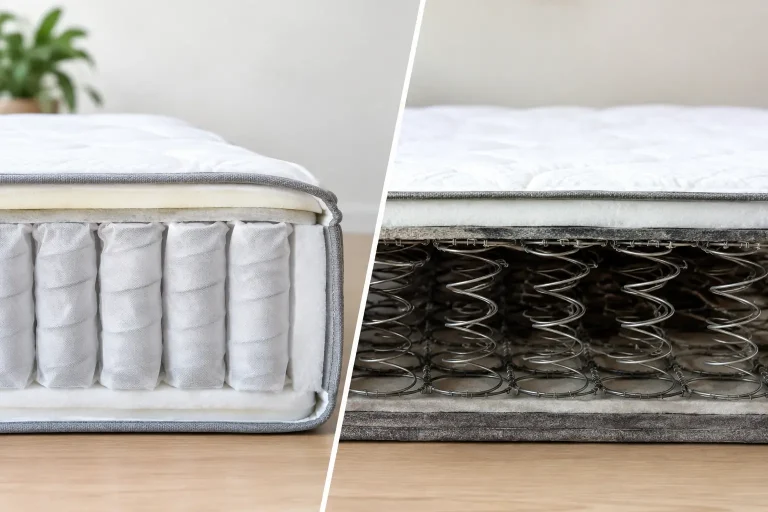
That balance matters. Foam-only beds can feel comfortable at first but sometimes allow too much sink, especially for back and stomach sleepers or anyone with lower back tension. Traditional innerspring beds can feel supportive, but many create sharper pressure points and more motion transfer. A hybrid sits in the middle with more precision.
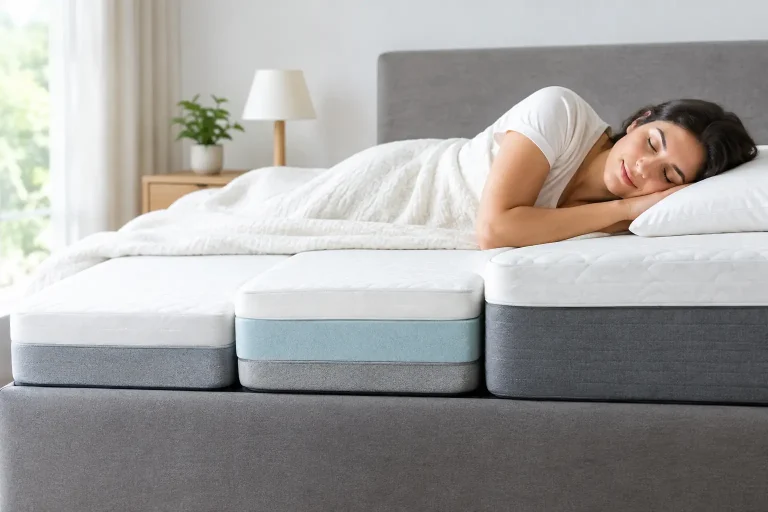
The comfort layers are there to cushion the body and reduce pressure. The coil base is there to support alignment and keep the body from collapsing into awkward positions. When both are working together, your joints can settle, your muscles can relax, and you are less likely to wake up feeling tight.
Pressure relief is the first part of the equation
If your shoulders or hips ache when you wake up, pressure relief is usually the first thing to look at. Hybrid mattresses often use latex, gel-infused foam, or other responsive comfort materials that contour enough to reduce force on sensitive joints without swallowing the body.
This is especially helpful for side sleepers, who place more concentrated pressure on the shoulder and hip. A responsive top layer helps spread body weight more evenly across the surface. That means fewer sharp pressure points and less strain on the surrounding muscles.
Latex can be particularly effective here because it cushions without the heavy, slow sink of some traditional foams. It adapts quickly when you move and helps maintain a more lifted feel. For sleepers who want relief from stiffness but do not want to feel stuck in bed, that responsiveness can be a major advantage.
Spinal alignment is what keeps stiffness from coming back
Pressure relief feels good right away, but spinal alignment is what makes the difference night after night. If the mattress does not support your natural posture, your back muscles often spend the night compensating.
That is where the pocketed spring system in a hybrid becomes important. Individually wrapped coils respond more precisely to body weight than older connected spring systems. Instead of one rigid surface pushing back the same way everywhere, the coils compress in a more targeted manner. Heavier areas like the hips can sink just enough, while lighter areas remain supported.
For many adults dealing with lower back stiffness, this is the key benefit. A strong support core helps keep the pelvis from dipping too low and the midsection from sagging. That promotes a more neutral spinal position, which can reduce the stress that builds up during sleep.
The exact feel still matters. If a hybrid is too plush, some sleepers may still dip too far. If it is too firm, pressure can return. That is why body weight, sleep position, and pain location all influence what “supportive” actually feels like.
Cooling layers help your body stay relaxed
People do not always connect heat with stiffness, but they should. When you overheat, you move more, wake more often, and spend less time in restorative sleep. Poor recovery can show up as soreness, fatigue, and that familiar tight feeling in the morning.
Hybrid mattresses usually sleep cooler than dense all-foam beds because the coil layer allows more airflow through the mattress. Add cooling gel foams or breathable latex, and the surface becomes better at releasing trapped heat instead of holding it around the body.
For sleepers who wake sweaty and stiff, this can be a meaningful improvement. A cooler sleep environment supports deeper, less interrupted rest. Better rest gives muscles and joints more time to recover.
Motion isolation matters more than most couples realize
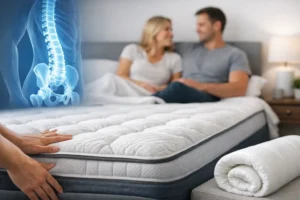
If you share a bed, stiffness is not always caused by the mattress feel alone. Sometimes the problem is repeated micro-wakeups from a partner rolling over, getting in and out of bed, or changing position during the night.
A well-built hybrid with individually pocketed coils and stabilizing comfort layers can reduce movement transfer far better than a traditional spring mattress. That means fewer disturbances and more consistent sleep cycles.
When your sleep is more continuous, your body has a better chance to release tension instead of carrying it into the next day. For couples, this is one of the most practical reasons a hybrid can help with stiffness even if the pain seems physical rather than sleep-related.
Not every hybrid mattress relieves stiffness equally
The term “hybrid” can cover a wide range of builds, and that is where buyers need to be careful. A mattress can technically be a hybrid and still fall short if the materials are low quality, the comfort layers are too thin, or the support system is not engineered well.
Look at the actual construction. High-quality latex offers responsive pressure relief. Cooling gel foams help with heat control. Individually pocketed springs provide more targeted support and less motion transfer than old-style coil units. Certifications such as Oeko-Tex and CertiPUR-US can also add confidence that the materials meet recognized safety standards.
Durability matters too. If the top layers soften too quickly or the support core loses integrity, the mattress may feel comfortable at first and then start contributing to stiffness again. Long-term support is part of the value, not just the first few weeks of comfort.
Who benefits most from a hybrid mattress
Hybrid mattresses are often a strong fit for adults who want real support without the hard, rigid feel of a basic spring bed. They can work especially well for people with back tension, joint discomfort, combination sleeping habits, and couples who need both cushioning and stability.
They are also a practical option for shoppers upgrading from older mattresses that sag, trap heat, or bounce too much. If your current bed leaves you with morning tightness, numb shoulders, or a sore lower back, a hybrid is worth serious consideration because it addresses all three major drivers at once – pressure, alignment, and temperature.
That said, the best model depends on your sleep profile. A lighter side sleeper may want more contouring at the surface. A heavier back sleeper may need a firmer support feel and stronger coil reinforcement. There is no single perfect feel for everyone, only a better match for your body.
What to pay attention to before you buy
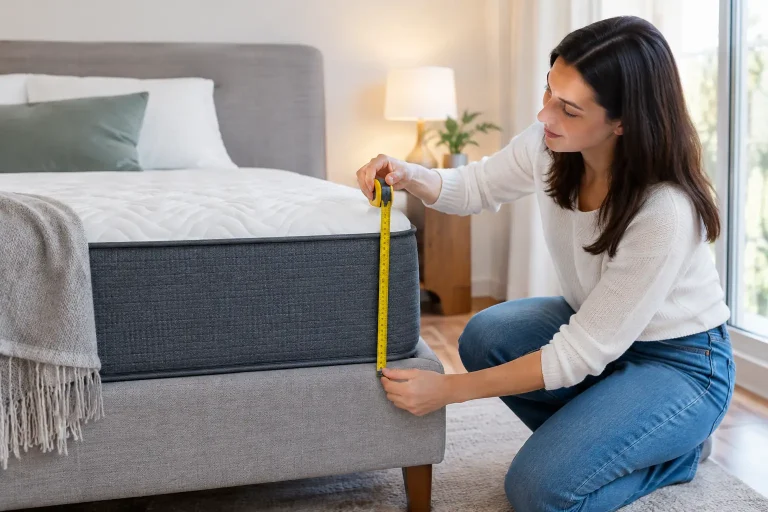
When comparing options, focus less on buzzwords and more on how the layers work together. Ask whether the mattress gives you enough cushioning at the shoulders and hips, enough pushback to keep your spine aligned, and enough airflow to prevent overheating.
This is where a performance-driven brand like Azure Mattress makes sense for shoppers who care about outcomes rather than vague comfort claims. A hybrid design built around latex, cooling materials, and structured pocket springs is not just about feeling plush in a showroom. It is about reducing the conditions that cause stiffness in the first place.
If you regularly wake up needing to stretch out your back before you can stand comfortably, your mattress is giving you useful information. The goal is not a softer bed or a firmer bed in the abstract. It is a mattress that keeps your body supported, pressure-balanced, and undisturbed long enough to actually recover.
The right hybrid does not promise magic. It gives your body a better surface to rest, reset, and wake up with less resistance than the day before.