Waking up stiff is not always a sign that you overdid it at the gym. In this back stiffness sleep case study, the problem showed up most clearly before the day had even begun: tightness across the lower back, a slow first walk to the bathroom, and a feeling that mobility did not return until well after breakfast.
The case below is an illustrative composite based on common sleep-comfort patterns, not a clinical trial or a diagnosis. Its value is practical. It shows how mattress support, pressure relief, sleep temperature, and position can work together to either help the body recover or leave it fighting for comfort through the morning.
The Starting Point: Stiff Every Morning, Better by Midday
The sleeper was a 42-year-old working professional with no recent injury, but with recurring lower-back stiffness most mornings. She spent long hours seated during the day, exercised two or three times weekly, and usually slept on her side before rolling onto her back later in the night.
Her discomfort followed a familiar pattern. Mornings were the hardest. Bending to put on shoes felt restricted, getting out of bed required a pause, and turning over at night sometimes woke her up. By late morning, after a shower and light movement, the stiffness usually eased.
That pattern matters. Pain or stiffness that persists, worsens, follows an accident, causes weakness or numbness, or affects bladder or bowel control needs prompt medical evaluation. But when stiffness is most noticeable after sleep and gradually improves with movement, the sleep surface and sleep setup are reasonable places to investigate.
Her existing mattress was an aging basic spring model with visible body impressions. It felt comfortable for the first few minutes of lying down, but her hips settled lower than her shoulders. The result was subtle but meaningful: her lower back was left in a position that felt unsupported for hours at a time.
Why Morning Back Stiffness Can Be a Sleep-Surface Problem
A mattress cannot diagnose or cure back pain. It can, however, influence the positions your body holds repeatedly through the night. That makes its construction more consequential than a quick test in a showroom might suggest.
For side sleepers, the shoulder and hip need enough pressure relief to settle without forcing the spine to bend sideways. For back sleepers, the hips need support that prevents excessive sinking while the lumbar area remains comfortably supported. The goal is not a board-hard bed. It is stable, even support with enough cushioning to reduce pressure points.
In this case, the worn spring surface created two conflicting problems. The upper comfort layer no longer relieved pressure effectively, so she shifted positions more often. At the same time, the center of the bed had softened, allowing the pelvis to dip. More tossing did not solve the alignment problem. It simply interrupted restorative sleep.
Heat added another layer. She regularly woke warm around 3 a.m. and moved to find a cooler patch of the mattress. Overheating does not directly create a spinal issue, but frequent wake-ups can increase movement and make it harder to maintain a relaxed, supported position. Poor sleep also tends to lower the body’s tolerance for everyday aches.
Support Is Different From Firmness
Many people respond to back stiffness by buying the firmest mattress available. That can help in some situations, especially if a current bed is deeply sagging. But firmness alone is not the answer.
A very firm surface may hold the hips up, yet create pressure at the shoulder and outer hip for a side sleeper. That pressure can lead to arm numbness, shoulder discomfort, and more nighttime turning. A surface that is too soft can feel plush initially but may allow the hips and lower back to sink without enough structure beneath them.
The better question is whether the mattress keeps your body supported in your preferred sleeping positions. A well-designed hybrid mattress uses comfort materials for pressure relief and a structured coil system for deeper support. Individually pocketed coils are especially useful because they can respond more precisely across the body rather than acting like one connected spring unit.
The Changes Made During the Case Study
The sleeper did not change everything at once. That would have made it difficult to tell what helped. Instead, she made a series of practical adjustments over several weeks.
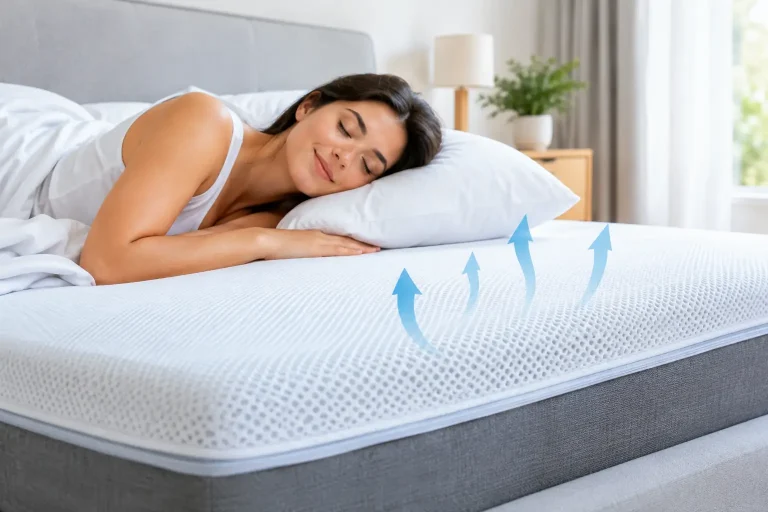
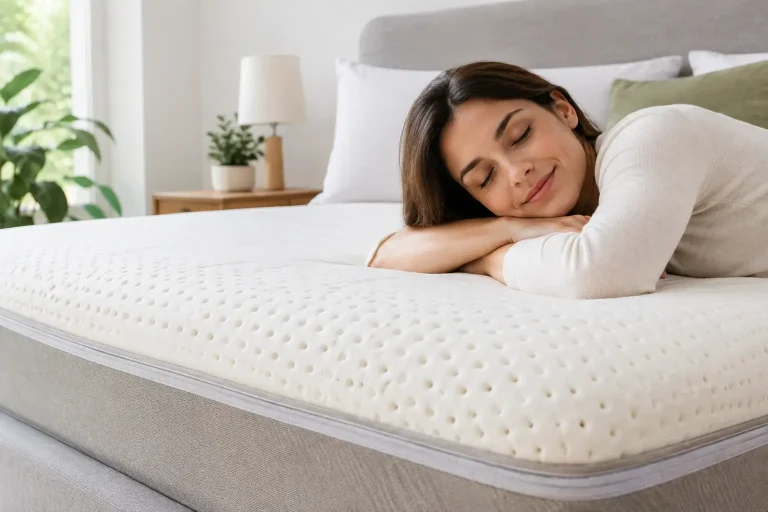
First, she replaced the sagging mattress with a medium-feel hybrid designed around pocketed coils, responsive latex, and cooling gel foam. The aim was straightforward: reduce pressure at the shoulder and hip, while giving the midsection a more stable base. She also chose a sleep surface with better airflow because nighttime heat had been a consistent source of waking.
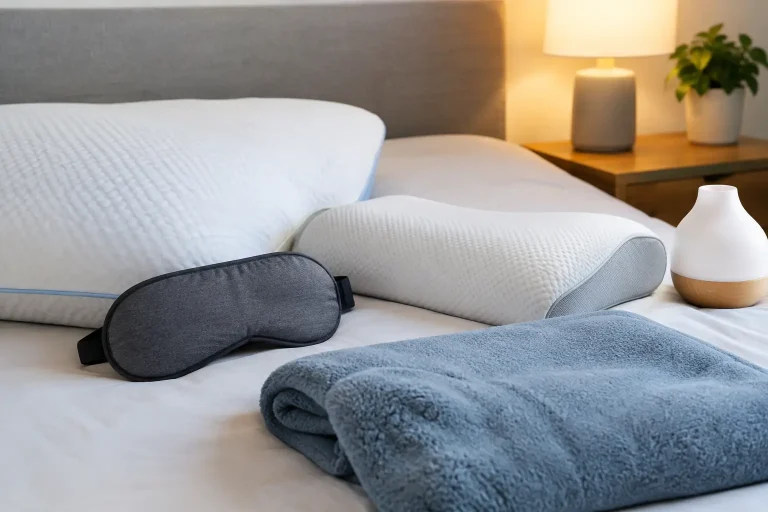
Second, she adjusted her pillow setup. As a side sleeper, she used a pillow between her knees to reduce twisting through the hips. On nights when she slept on her back, she placed a small pillow beneath her knees. Neither strategy is complicated, but both can reduce the pull that an unsupported leg position places on the lower back.
Third, she committed to a short wind-down routine. This was not an intense stretching session. It was five minutes of gentle hip and back mobility, followed by less screen time before bed. The purpose was to stop arriving at the mattress already tense from a long day of sitting.
Finally, she kept the room cooler and used breathable bedding. A cooling mattress does not replace climate control, but temperature regulation starts with the entire sleep environment. When a person wakes overheated several times a night, even a supportive mattress has less opportunity to do its job.
What Changed Over Four Weeks
During the first week, there was no dramatic overnight transformation. Her body was adjusting to a different surface, and she still woke stiff on some mornings. What changed first was the feeling of pressure. She reported less soreness at the shoulder and fewer wake-ups to reposition.
By the second week, getting out of bed felt easier. The stiffness was not completely gone, but its intensity was lower and it resolved sooner after she began moving. She also noticed that she was no longer avoiding a full turn from side to side because the mattress responded more evenly under her body.
By weeks three and four, the most meaningful result was consistency. Instead of alternating between relatively good mornings and very stiff ones, her mornings became more predictable. She still had stiffness after unusually long desk days or demanding workouts, which is an honest reminder that a mattress is only one part of recovery. But her sleep no longer seemed to amplify those everyday stressors.
Her partner noticed a benefit too. On the previous connected-coil mattress, getting in or out of bed transferred movement across the surface. The pocketed coil system reduced that disturbance. Less partner movement meant fewer partial wake-ups, and fewer partial wake-ups meant fewer opportunities for restless repositioning.
What This Back Stiffness Sleep Case Study Does – and Does Not – Prove
This back stiffness sleep case study does not prove that one mattress construction works for every body. Weight, body shape, dominant sleep position, existing conditions, and personal comfort preferences all matter. A lighter side sleeper may need more contouring than a heavier back sleeper. Someone with acute pain, sciatica symptoms, or a diagnosed spinal condition should involve a qualified healthcare professional rather than rely on mattress changes alone.
It does show why an old, uneven, or poorly matched mattress deserves attention when symptoms are strongest in the morning. If you wake feeling better than you did on the old mattress, that is useful information. If you wake stiffer, hot, and frequently disturbed, it may be time to examine the whole sleep system instead of blaming your body alone.
A Practical Test Before You Commit
Pay attention for seven to fourteen nights. Notice how long morning stiffness lasts, whether you wake to turn over, whether your shoulder or hip feels pressured, and whether heat is breaking up your sleep. Keep the notes simple. Patterns are more useful than one unusually good or bad night.
Also inspect the mattress itself. Visible sagging, hammock-like impressions, noisy springs, and a surface that feels noticeably different in the center are all signs that support may be compromised. If the mattress is still structurally sound but feels too firm, a quality topper may improve pressure relief. If the underlying support is worn out, however, a topper may only mask the issue temporarily.
Azure Mattress approaches this problem with a hybrid sleep system built to address the three discomforts that often overlap: pressure-related aches, heat buildup, and disturbance from a partner’s movement. Materials matter, but the real measure is how they support calmer, more comfortable nights and easier mornings.
A better morning does not have to start with a heroic stretch or a second cup of coffee. Start by noticing what your body is telling you when you wake. If your mattress leaves your hips sinking, your shoulders aching, or your sleep running hot, changing the surface beneath you may be one of the most practical recovery decisions you can make.