A mattress can feel plush at first touch and still leave you stiff by morning. The difference often comes down to support: these spinal alignment examples show what your body should look and feel like when your mattress and pillow are doing their job.
Healthy alignment is not about forcing your spine perfectly flat. Your spine has natural curves at the neck, upper back, and lower back. During sleep, the goal is to support those curves without allowing your hips, shoulders, or head to sink or tilt too far. When that happens night after night, muscles work overtime to stabilize your body instead of recovering.
What Good Spinal Alignment Looks Like in Bed
Think of alignment as a relatively straight, neutral path from your head through your tailbone when viewed from the right angle. The exact position depends on how you sleep, your body shape, and areas where you feel pressure or pain.
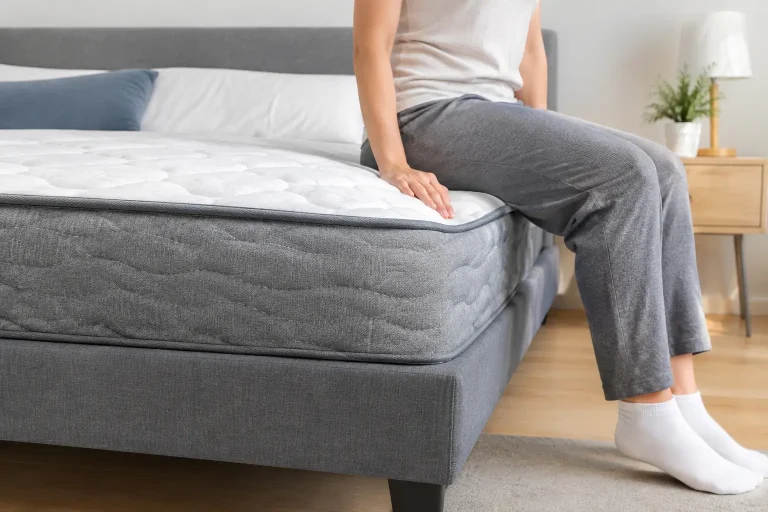
A supportive sleep surface distributes weight while holding heavier areas, especially the shoulders and hips, at an appropriate depth. Too soft, and the midsection can drop below the rest of the body. Too firm, and pressure can build at the shoulder or hip, encouraging you to twist, tense up, or constantly change positions.
Your pillow matters just as much. A high mattress-quality support system cannot fully compensate for a pillow that pushes the neck forward, lets it bend sideways, or leaves a gap under the head.
Spinal Alignment Examples by Sleep Position
Back sleeping: supported curves, not a hollow lower back
For back sleepers, good alignment starts with the head centered rather than tipped toward the chest. The neck should rest in line with the upper spine, supported by a pillow with moderate loft that fills the space behind the neck without stacking the head too high.
From the side, the shoulders, rib cage, hips, and knees should create an easy, balanced line. A small natural space beneath the lower back is normal. What you do not want is a deep gap that signals the pelvis has tipped forward, or hips that sink so deeply that the lower back rounds.
A practical example: if you wake with tightness across your lower back, lie on your back with a small pillow beneath your knees. If this immediately feels relieving, your mattress may not be adequately supporting your lower body, or your sleeping posture may benefit from reduced tension at the hip flexors. The pillow is a useful short-term adjustment, but a supportive mattress is the foundation.
Side sleeping: a straight line from ear to hip
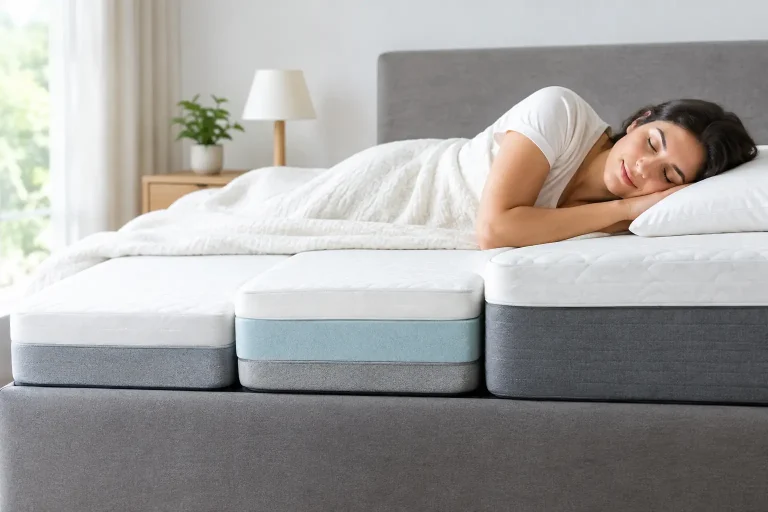
Side sleeping places more demand on pressure relief because one shoulder and one hip carry much of your body weight. In a well-aligned position, the ear, shoulder, rib cage, hip, and ankle generally form a straight, level line when viewed from behind. Your head should not dip down toward the mattress or angle up toward the ceiling.
This is where the right pillow height becomes highly personal. Broad-shouldered sleepers often need more loft because there is more distance between the mattress and the head. Smaller-framed sleepers may need less. The pillow should fill the space between the shoulder and head, not force the neck sideways.
A second useful example is the position of the knees. A pillow between the knees can help keep the top hip from rolling forward and twisting the lower back. It is especially helpful for people who wake with hip soreness, pelvic discomfort, or one-sided lower-back stiffness.
The mattress should allow the shoulder enough cushioning to avoid numbness while stopping the hips from collapsing. This balance is one reason hybrid construction works well for many side sleepers: responsive comfort layers can relieve pressure, while individually pocketed springs provide targeted support beneath the body.
Stomach sleeping: reducing the pull on the lower back
Stomach sleeping can be comfortable for some people, but it is usually the most challenging position for spinal alignment. Turning the head to one side for hours can strain the neck. At the same time, the abdomen and pelvis may sink into a soft mattress, increasing the arch in the lower back.
The best spinal alignment example for a stomach sleeper is a body that remains as level as possible through the torso, with minimal neck rotation. A very thin pillow or no head pillow may reduce forward neck bend for some sleepers. Placing a thin pillow under the pelvis can also limit lower-back sway.
If stomach sleeping is your only comfortable option, avoid an overly soft mattress. You need a surface with enough pushback to prevent your midsection from sinking. Moving gradually toward a side or back position may help some people, but the right choice is the one that lets you rest without persistent pain or numbness.
Combination sleeping: stable support through every turn
Many people shift positions several times overnight. For combination sleepers, alignment depends on both support and ease of movement. A mattress that lets you sink too deeply can make turning harder and may leave the body out of position after each movement. A surface that is excessively firm may create pressure points and disrupt sleep.
Look for responsive materials that contour under pressure and recover quickly when you move. Pocketed coils are particularly useful here because they support the body in zones while responding independently, helping reduce the feeling that you are trapped in one position.
Signs Your Sleep Setup Is Out of Alignment
Morning stiffness is not always caused by your mattress, but patterns can offer a clear clue. Pay attention to what changes after you get up and move around. If discomfort fades quickly with movement but returns after another night of sleep, your position or sleep surface deserves a closer look.
Common signs include:
- Neck pain that is worse on one side or begins at the base of the skull
- Lower-back tightness that feels strongest immediately after waking
- Shoulder numbness, tingling, or aching when sleeping on your side
- Hip pain or pressure that makes you switch positions repeatedly
- A feeling that your body is sagging, rolling inward, or fighting the mattress
These signs do not automatically mean you need the firmest mattress available. Excessive firmness can create its own pressure-related discomfort. The better question is whether your mattress keeps your spine supported while allowing shoulders and hips enough cushioning to relax.
How a Hybrid Mattress Supports Better Alignment
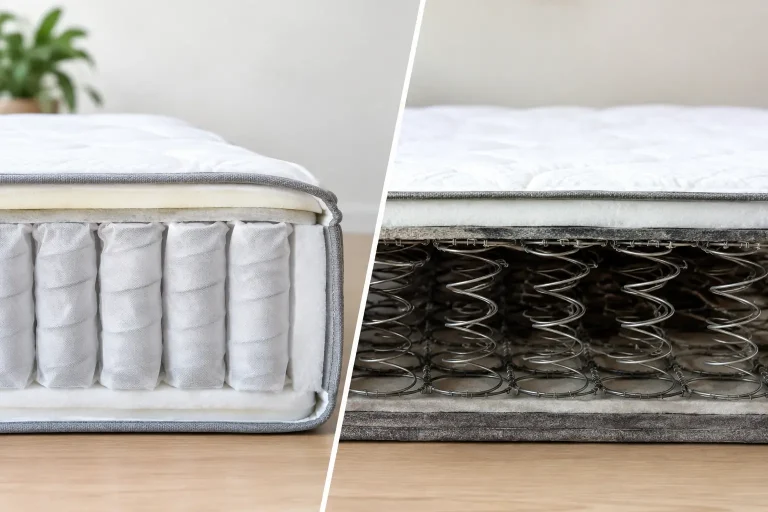
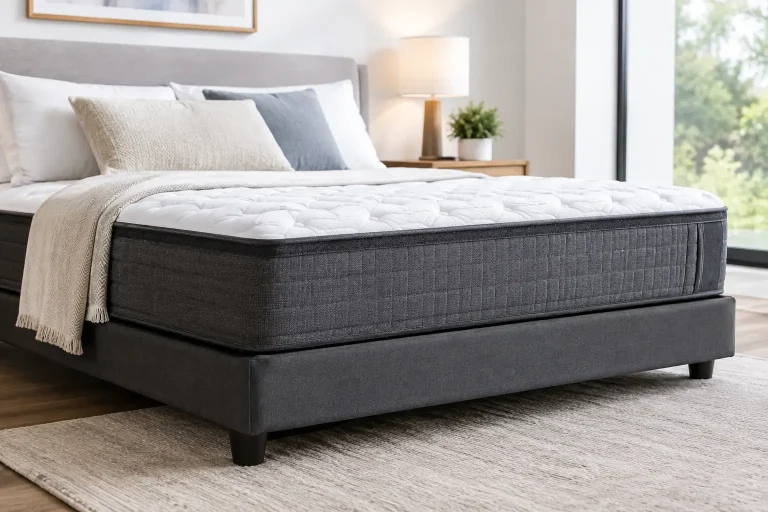
A well-designed hybrid mattress addresses the two needs that alignment requires: contouring and resistance. Comfort layers, such as latex and cooling gel foam, cushion high-pressure areas and help the body settle without sharp pressure. Beneath them, a structured pocket spring system supports the body more deeply, helping prevent excessive sinkage at the hips and midsection.
Latex can be particularly helpful for sleepers who want buoyant pressure relief rather than a slow, deeply sinking feel. It responds quickly as you change positions. Cooling gel foams can add contouring comfort while helping manage heat, which matters because overheating can lead to restless movement and disrupted posture throughout the night.
For couples, individually pocketed springs add another advantage: motion isolation. When one partner turns, gets up, or shifts positions, the movement is less likely to travel across the bed. That means fewer disturbances and a better chance of staying comfortably aligned through a full sleep cycle.
At Azure Mattress, the focus is not simply softness or firmness. It is the combination of pressure relief, spine and joint support, and cooling comfort. That combination helps create a sleep surface that feels restorative rather than merely cushioned.
A Simple At-Home Alignment Check
You do not need a lab to assess your sleep posture. Ask a partner to take a photo of you in your usual position, ideally from behind for side sleeping or from the side for back sleeping. Use a neutral position before you fully relax, then check whether your head, torso, and hips appear level.
For side sleeping, look for a head that tilts noticeably up or down, a shoulder that is compressed too sharply, or hips that drop lower than the chest. For back sleeping, check whether the chin is pushed toward the chest or the pelvis appears to sink well below the rib cage. These are not diagnostic tests, but they can reveal an obvious mismatch between your body and your setup.
Also consider the age of the mattress. Visible sagging, body impressions that do not recover, creaking springs, and a steady decline in comfort are practical signs that the support system may be worn. Even a good pillow cannot correct a mattress that has lost its structure.
When Pain Needs Professional Advice
Sleep support can make a meaningful difference, but it is not a substitute for medical care. Seek guidance from a qualified healthcare professional if back or neck pain is severe, follows an injury, causes weakness or numbness, wakes you consistently, or continues despite changes to your sleep setup.
For everyday stiffness and pressure discomfort, start with the basics: match pillow height to your position, reduce twisting with a knee pillow if needed, and choose a mattress that cushions pressure points without letting the body sag. The most reassuring spinal alignment examples are not just visible in a photo. You feel them when you wake rested, move more easily, and stop planning your day around aches from the night before.