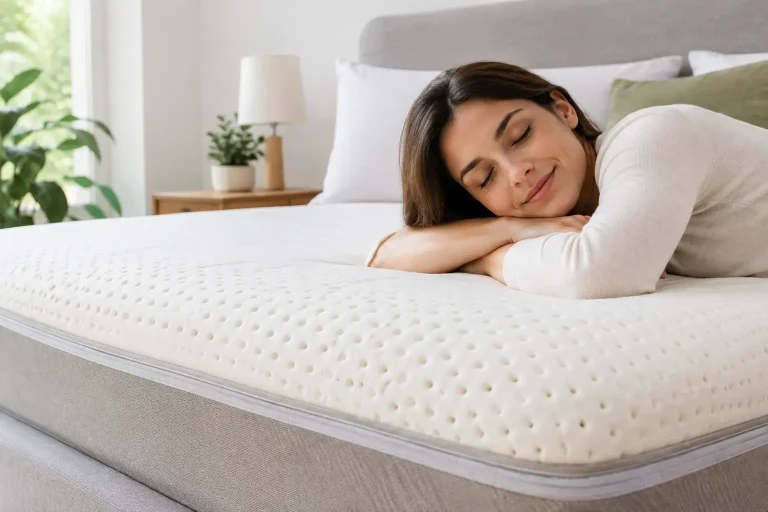
A mattress rarely fails all at once. What most people notice first is a slow shift – a little more lower back tension in the morning, a little more heat trapped through the night, a little more movement from a partner that suddenly feels impossible to ignore. That is why the durability of latex hybrid mattress lifespan matters so much. You are not just buying years on paper. You are buying how long the mattress can keep delivering pressure relief, spinal support, and stable comfort night after night.
What the durability of latex hybrid mattress lifespan really means
When people ask how long a latex hybrid mattress lasts, they are usually asking two different questions. The first is how long the mattress stays usable before it needs replacement. The second, and more important one, is how long it keeps performing like it should.
That distinction matters. A mattress can technically remain intact for years after it has stopped supporting your spine properly. If the comfort layers are softening too quickly, if the coil unit is losing responsiveness, or if body impressions start interfering with alignment, the mattress may still look fine while sleep quality steadily drops.
A well-built latex hybrid often outlasts many all-foam beds and many basic innerspring models because it combines two strong components. Latex is naturally resilient and resists premature sagging better than many conventional foams. Pocketed coils add structural support, airflow, and weight distribution. Together, they create a sleep surface that is better equipped to hold its shape under regular use.
How long should a latex hybrid mattress last?
In most cases, a quality latex hybrid mattress can last around 10 to 15 years. That range depends heavily on materials, construction quality, body weight, sleep position, and how well the mattress is maintained.
Lower-end hybrids may fall short of that range if they use thinner latex layers, lower coil counts, weaker edge support, or foam components that soften early. Better-built models tend to stay comfortable longer because the materials are chosen not just for feel on day one, but for performance over time.
This is where many shoppers make a costly mistake. They compare mattresses by initial softness, price, or marketing claims without asking what happens after year three, five, or eight. A mattress that feels excellent in the showroom or on the first month at home is not automatically a durable mattress.
Why latex changes the lifespan equation
Latex has a strong reputation for longevity for a reason. Compared with standard polyurethane foams, latex is more elastic, more responsive, and better at recovering its shape after compression. That resilience helps reduce the deep, lasting impressions that often shorten the useful life of a mattress.
For sleepers dealing with back pain or joint discomfort, this matters beyond durability alone. A surface that rebounds well can continue supporting the shoulders, hips, and lower back with more consistency over time. In practical terms, that means less risk of sleeping in a surface that gradually starts pulling the spine out of neutral alignment.
Natural latex and high-quality latex blends generally perform better than lower-grade synthetic foams when it comes to compression resistance. But even here, quality varies. A mattress with a thin latex layer placed over weaker support materials may not deliver the lifespan people expect from the word latex alone.
The coil system matters just as much
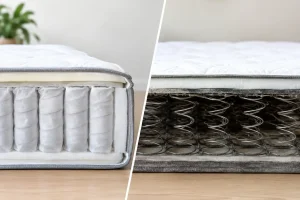
The hybrid part of a latex hybrid does heavy lifting. Individually pocketed coils are not only there for bounce. They support the body more precisely, improve airflow, and reduce motion transfer between sleep partners. They also play a major role in how long the mattress keeps its structure.
A stronger coil unit helps the comfort layers work properly instead of carrying too much of the load on their own. If the springs are poorly made, too thin, or lacking in zoning and edge reinforcement, the mattress may begin to feel uneven sooner than expected. That can show up as roll-off near the edges, soft spots in the center, or a less stable feel during movement.
For couples, this is especially important. Two sleepers create more cumulative pressure over time, and if one partner is heavier, the mattress has to absorb uneven force night after night. A structured pocket spring system usually handles that better than simple open coils or weak foam cores.
What shortens a latex hybrid mattress lifespan
Not every mattress that wears out early is poorly made, but certain factors accelerate wear. Body weight is one of the biggest. Heavier sleepers compress materials more deeply, which can cause comfort layers and springs to fatigue sooner. That does not mean a latex hybrid is a bad choice for higher-weight individuals. In fact, it is often a stronger choice than all-foam. It just means support specs matter more.
Sleep position also affects longevity. Side sleepers place concentrated pressure on the shoulder and hip zones, while stomach sleepers can stress the midsection of the mattress if the support core is not firm enough. Over years, those repeated pressure patterns influence how evenly the mattress ages.
Foundation support is another overlooked factor. A high-quality mattress placed on an unsupportive base can wear faster and perform below its design standard. Even premium materials struggle if they are not evenly supported underneath.
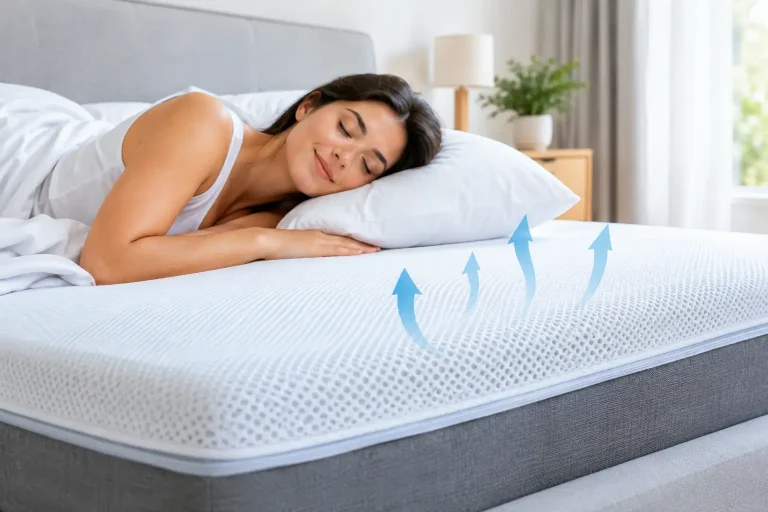
Heat and moisture can also affect longevity, though usually less dramatically than support issues. One advantage of latex hybrids is that they generally sleep cooler than dense memory foam beds because latex is more breathable and coils create internal airflow. That airflow can help maintain a fresher sleep environment over time.
Signs your mattress is losing performance
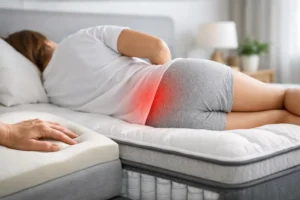
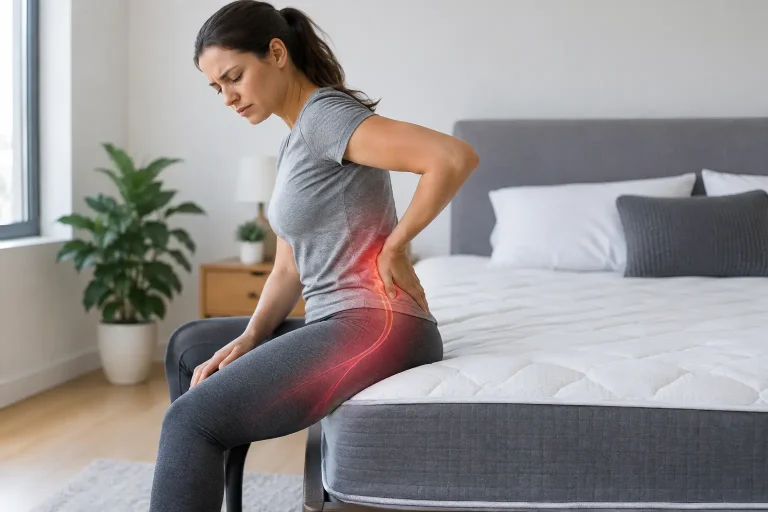
Durability is not only about visible sagging. Sometimes the clearest signs are physical. If you wake up with more stiffness, numbness, shoulder pressure, or lower back soreness than usual, the mattress may be losing its ability to keep your body aligned.
You may also notice that movement feels less controlled than it used to, especially if you share the bed. Or the surface may start feeling inconsistent – firmer in some spots, softer in others, less supportive where your body needs pushback most.
Visible body impressions can be a sign, but they are not the whole story. A mattress can lose comfort and support before the dip becomes obvious to the eye. That is why performance-based signs often matter more than appearance alone.
How to get the longest life from a latex hybrid
A durable mattress still needs reasonable care. Rotating it every few months can help distribute wear more evenly, especially during the first couple of years. Using a proper foundation or platform gives the support system the stable base it was designed for. A breathable mattress protector can help guard against moisture, spills, and debris without trapping too much heat.
It is also worth matching mattress design to actual sleep needs rather than buying only by price. If you have chronic back pain, sleep hot, or share the bed with a restless partner, construction details matter more because the wrong design can feel worn out faster for your body, even if the mattress is technically still serviceable.
This is where a performance-focused hybrid stands apart. A mattress built around pressure relief, spine support, and airflow is not just trying to feel comfortable on the first night. It is built to keep solving the same sleep problems over the long term.
Is a latex hybrid worth it for long-term value?
For many shoppers, yes. Latex hybrids often cost more upfront than basic spring mattresses or entry-level foam beds, but the better question is cost per year of real comfort. If a mattress keeps its support, temperature control, and motion isolation longer, it can be the more economical choice over time.
That said, not every sleeper needs the same build. Some lighter-weight sleepers may do well on a simpler mattress for longer than expected. Some heavier sleepers may need a more substantial hybrid with firmer support and stronger edge construction. It depends on who is sleeping on it and what the mattress is being asked to do every night.
For adults shopping with back pain, joint sensitivity, or partner disturbance in mind, the value of a durable latex hybrid is usually easier to feel than to explain. Consistent support is not a luxury feature. It is the difference between a bed that helps the body recover and one that quietly starts working against it.
A brand like Azure Mattress positions this well because durability only matters when it protects real sleep outcomes – cooler nights, steadier support, and less strain on the body over time.
The smartest mattress purchase is not the one that sounds impressive in a product description. It is the one that still supports restful, pain-free sleep years after the new-mattress excitement wears off.