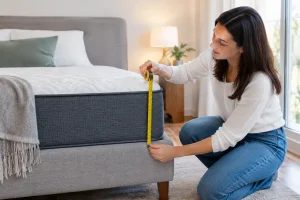
A mattress can feel comfortable for five minutes in a showroom and still leave you stiff by morning. That is why pocket springs versus bonnell springs is more than a technical comparison. The spring system influences how well your spine is supported, whether a partner’s movement reaches your side of the bed, and how long the mattress maintains its shape.
For people waking with lower-back tension, sore hips, or interrupted sleep, the difference is usually noticeable. Bonnell springs are the familiar, budget-friendly system found in many traditional mattresses. Pocket springs are a more precise design, built to respond to your body section by section. Neither is automatically right for every sleeper, but their performance is not equal in every area.
Pocket Springs Versus Bonnell Springs: The Core Difference
Bonnell springs are hourglass-shaped coils joined together with metal wires. When pressure is applied to one area, the connected coil network responds as a unit. This creates a firm, buoyant feel, but it also means the mattress has less ability to adapt around shoulders, hips, and the natural curve of the lower back.
Pocket springs are individual coils wrapped in their own fabric pockets. Each coil compresses independently rather than pulling nearby coils into motion. The result is more targeted support: your hips can sink slightly for pressure relief while your waist remains supported instead of being left to dip.
Think of it as the difference between one large support surface and thousands of small support points. A traditional connected spring unit can hold weight effectively. An individually pocketed coil system can hold it with more precision.
Why Pocket Springs Often Feel Better for Back and Joint Relief
Your body does not apply pressure evenly across a mattress. Side sleepers place more load on the shoulder and hip. Back sleepers need steady lumbar support. Combination sleepers need a surface that adjusts quickly when they move. A spring system that reacts as one piece can create pressure at the prominent areas of the body while allowing lighter areas to receive less support.
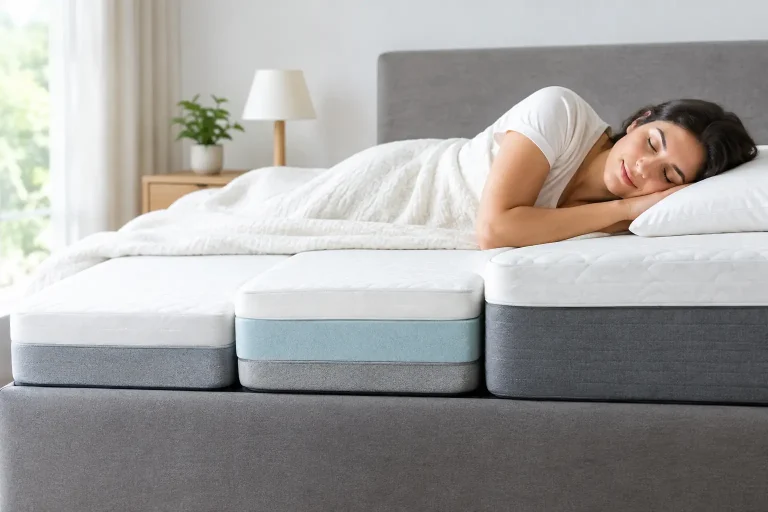
Pocket springs help reduce that mismatch. Because the coils work separately, they contour more closely to the body without creating the deep, stuck feeling some all-foam beds can produce. This balanced response can help maintain a more neutral spinal position, especially when the springs are paired with comfort layers such as responsive latex or pressure-relieving foam.
That does not mean every pocket spring mattress will feel soft. Coil gauge, coil count, zoning, and the materials above the springs all influence firmness. A well-designed pocket spring mattress can feel plush, medium, or firm. What remains consistent is its ability to offer more localized support than a connected Bonnell unit.
For sleepers with recurring stiffness, this distinction matters. Firmness alone is not the same as support. A mattress may feel very firm but still fail to support the body evenly if it cannot accommodate the shoulders and hips.
Motion Transfer: A Major Difference for Couples
If your partner gets up early, turns frequently, or shares the bed with a child or pet, spring movement matters. With Bonnell springs, the coils are physically connected. When one person shifts position, that force can travel across the wire framework. You may feel a ripple or bounce even when you have not moved.
Pocket springs isolate motion far more effectively. Since the coils act independently, movement is contained closer to its source. This is one reason hybrid mattresses with individually pocketed coils are often a stronger choice for couples. They preserve the responsive support of springs while helping each person sleep with fewer disruptions.
Motion isolation is not only about convenience. Repeated micro-awakenings can make a full night in bed feel less restorative. If you are already managing stress, pain, or a demanding work schedule, fewer disturbances can make a meaningful difference to how recovered you feel in the morning.
Cooling and Airflow: Springs Are Not All the Same
Both Bonnell and pocket spring systems allow more airflow than a solid foam core. Open spaces between coils can help heat move away from the body rather than becoming trapped beneath you. This gives spring mattresses an advantage for many warm sleepers.
However, the full mattress construction determines cooling performance. A pocket spring mattress with breathable fabric, ventilated latex, or cooling gel foam can promote a more comfortable sleep temperature while also delivering contouring support. A Bonnell spring mattress may have good airflow but still feel hot if its comfort layers retain heat.
Pocket springs can also improve airflow in a hybrid design because the coils create channels throughout the support layer. For hot sleepers, this can be especially useful when paired with materials selected for heat dissipation rather than thick, dense foam alone.
Durability Depends on Construction, Not Just the Name
Bonnell spring mattresses have remained popular partly because their connected coil construction is simple and durable at an entry-level price. A properly made Bonnell unit can provide years of basic support. They are often a sensible option for guest rooms, short-term use, children’s rooms, or buyers working within a strict budget.
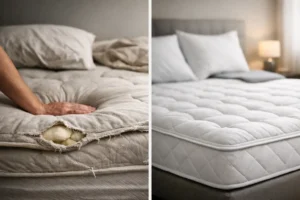
The trade-off is that connected coils may gradually lose their ability to respond evenly. Since the system works together, wear in a high-pressure area can affect the feel of a broader section of the mattress. Over time, this may contribute to sagging, uneven support, or increased noise.
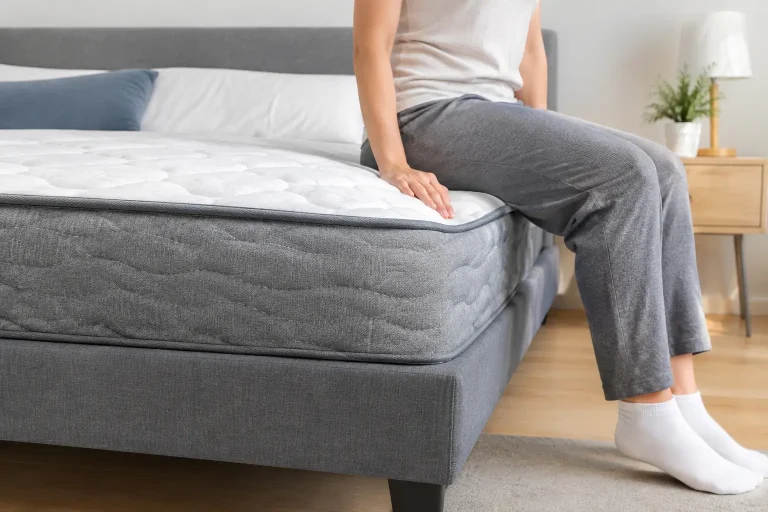
Quality pocket springs are designed for long-term, repeated compression. Because each coil operates independently, the system can better distribute daily wear across the mattress. Edge support also tends to be stronger in well-engineered pocket spring designs, particularly when reinforced perimeter coils are used. That means more usable sleep space and greater stability when sitting on the edge.
Still, do not choose based on coil type alone. A low-quality pocket spring mattress with thin comfort layers will not outperform a carefully made mattress simply because it has pocketed coils. Look at the complete build: the coil system, the support zoning, foam density, breathable materials, cover quality, and warranty all matter.
Who Should Choose Bonnell Springs?
Bonnell springs can be a practical choice when cost is the main priority and the mattress is not intended for everyday recovery-focused sleep. Their naturally bouncy, firmer feel may appeal to sleepers who dislike contouring and prefer a more traditional mattress sensation.
They can also work well for a single sleeper who is not highly sensitive to motion transfer. For a guest room, a temporary setup, or a child who will outgrow the bed quickly, the straightforward construction may provide appropriate value.
The limitations become clearer for couples, side sleepers, people with back or joint discomfort, and anyone who wakes easily from movement. In these cases, a basic Bonnell spring system can feel less accommodating than it did at first.
Who Benefits Most From Pocket Springs?
Pocket springs are built for people who want support that responds to their body rather than forcing their body to adapt to the mattress. They are particularly well suited to couples, combination sleepers, and those who experience pressure around the shoulders, hips, or lower back.
They are also a strong foundation for modern hybrid mattresses. At Azure Mattress, individually pocketed coils are paired with carefully selected comfort materials to address three everyday sleep concerns: pressure relief for aches, stable support for spinal alignment, and airflow for cooler rest. The goal is not simply a softer surface. It is a mattress that helps you wake up with less disruption and more recovery.
If you share a bed, consider how often one person’s movement affects the other. If you sleep warm, assess the entire construction rather than assuming any spring mattress will be cool. And if pain or stiffness is part of your mornings, prioritize adaptive support over a mattress that is merely firm.
The Better Spring System for Everyday Sleep
For most adults buying a primary mattress, pocket springs are the stronger long-term choice. They offer more individualized support, better motion isolation, and greater potential for pressure relief without sacrificing the breathable, responsive feel that makes spring mattresses appealing.
Bonnell springs still have a place when simplicity and lower upfront cost are the deciding factors. But for a mattress expected to support daily sleep, shared beds, and ongoing recovery, their connected design comes with compromises that many sleepers eventually notice.
The best test is not whether a mattress feels soft or firm at first touch. Ask whether it keeps your spine supported, cushions your pressure points, stays comfortable through the night, and lets your partner move without waking you. Those are the details that turn a mattress from a place to lie down into a place where your body can genuinely recharge.