You usually feel pressure points before you fully understand them. It starts as a sore shoulder when you wake up on your side, a stiff hip after a full night in bed, or numbness in your arm that sends you shifting positions over and over. If you are wondering how to reduce pressure points while sleeping, the real answer is not just “get a softer bed.” It is about balancing cushioning, spinal support, and temperature control so your body can settle without strain.
Pressure points happen when too much body weight concentrates in one area for too long. For most adults, that means the shoulders, hips, lower back, and sometimes the knees or heels. The problem gets worse when a mattress is too firm to contour, too soft to hold alignment, or too hot to let your muscles relax. That is why pressure relief is never just about plushness. It is about how the full sleep system works together.
Why pressure points show up at night
When you lie down, your body stops using muscles to actively stabilize your posture the way it does during the day. Your mattress and pillow take over that job. If they do not support your curves evenly, certain joints and bony areas absorb more load than they should.
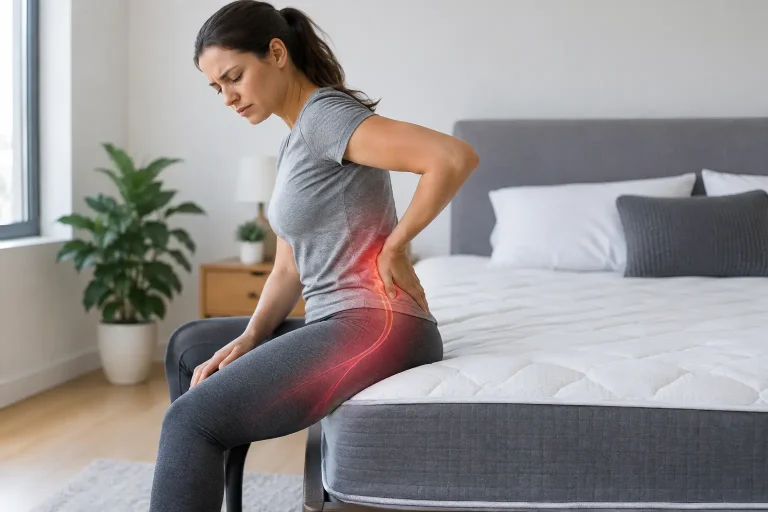
Side sleepers usually feel it first in the shoulders and hips because those areas press deepest into the surface. Back sleepers often notice discomfort around the tailbone, shoulder blades, or lower back if the mattress leaves a gap under the lumbar area or pushes too hard at the pelvis. Stomach sleeping can create pressure in the chest, hips, and neck, especially if the pillow lifts the head too high.
Body weight also changes the equation. A lighter sleeper may not sink enough into a firm bed to get pressure relief. A heavier sleeper may sink too far into a soft one and lose spinal alignment. Neither situation feels restorative for long.
How to reduce pressure points while sleeping without losing support
The best pressure relief comes from even weight distribution. That means your mattress should cushion the body’s sharper contact points while still keeping the spine in a neutral position. If one of those jobs fails, the other usually fails too.
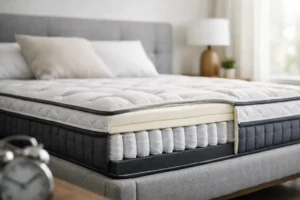
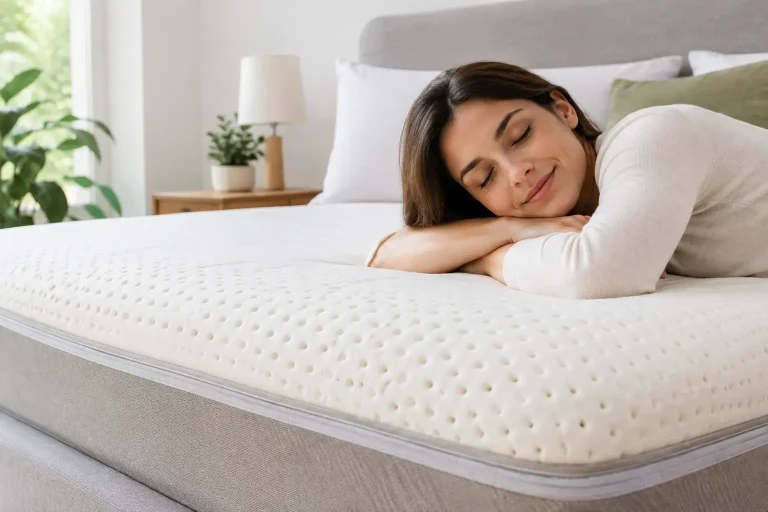
This is where material choice matters. Responsive latex, pressure-relieving foams, and individually pocketed coils tend to work better together than a basic spring mattress with minimal comfort layers. The comfort layers help absorb force around the shoulders and hips. The coil system underneath helps prevent the body from sagging out of alignment. That combination is especially useful for adults dealing with back pain, stiffness, or joint sensitivity because it addresses both immediate comfort and overnight posture.
A common mistake is chasing softness alone. A very plush surface can feel comfortable for ten minutes, then create more pain by allowing the hips or midsection to dip too low. On the other hand, a mattress that feels extra firm in the showroom may create pressure buildup over six or seven hours. The goal is not the softest bed. It is the most supportive pressure relief.
Match your sleep position to the right feel
Your sleep position has a major effect on how much pressure builds up overnight. If you sleep on your side, you generally need more contouring at the shoulders and hips. A medium to medium-plush feel often works well because it allows those joints to sink enough without collapsing the waist and lower back.
Back sleepers usually do best with a medium to medium-firm feel. There should be enough cushioning to reduce pressure at the tailbone and upper back, but not so much that the hips sink lower than the chest. If you feel tightness in the lower back every morning, your mattress may be too soft, too firm, or simply lacking proper zoned support.
Stomach sleeping is usually the hardest position on the body. It can increase strain on the neck and lower back, and it often intensifies pressure around the midsection. If this is your default position, a slightly firmer, flatter sleep surface and a lower-profile pillow can help. Still, many stomach sleepers feel better after gradually shifting toward side or back sleeping.
The pillow matters more than most people think
A mattress gets most of the attention, but pillows can either reduce pressure or create more of it. If your pillow is too high, the neck bends upward and puts extra load on the shoulders and upper spine. If it is too low, the head drops and leaves the neck unsupported.
Side sleepers usually need a taller, more supportive pillow to fill the space between the head and shoulder. Back sleepers often need a medium-loft pillow that supports the neck without forcing the chin toward the chest. Stomach sleepers typically need a very low loft, if any pillow at all under the head.
There is also a simple pressure-relief upgrade many people overlook: strategic pillow placement. A pillow between the knees can reduce hip and lower back pressure for side sleepers. A pillow under the knees can ease lumbar strain for back sleepers. Even hugging a pillow can reduce shoulder compression if you sleep on your side.
Heat can make pressure points feel worse
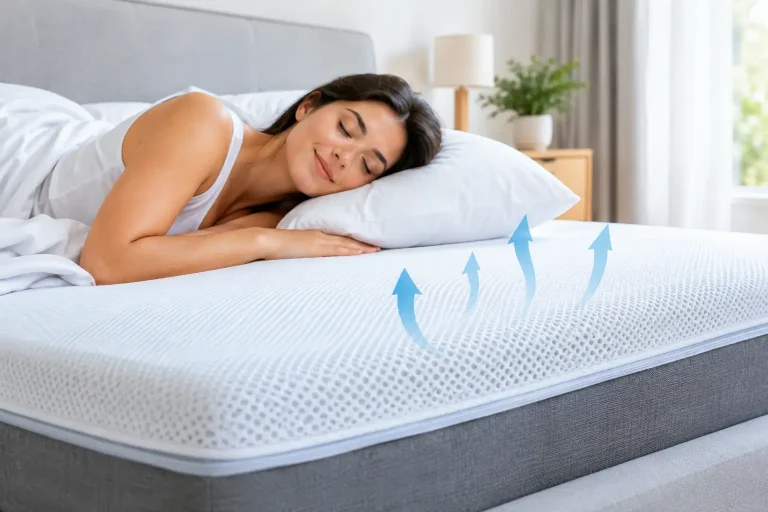
People often describe pressure-point pain as purely mechanical, but temperature plays a role too. When you sleep hot, you toss and turn more, muscles stay tenser, and sensitive areas become more noticeable. A mattress that traps heat can make an otherwise decent comfort setup feel irritating by the middle of the night.
Cooling matters because relaxed muscles and more stable sleep posture help reduce repeated micro-movements. Breathable materials such as latex, cooling gel foam, and airflow-promoting coil systems can help the body stay settled for longer. That does not mean every hot sleeper needs an ultra-firm bed. It means comfort layers should relieve pressure without turning the bed into a heat trap.
For couples, this becomes even more important. If one partner shifts often from heat discomfort, the other partner experiences more sleep disruption. A mattress with strong motion isolation and temperature regulation solves two problems at once: less pressure-driven repositioning and less disturbance across the bed.
When a topper helps and when it does not
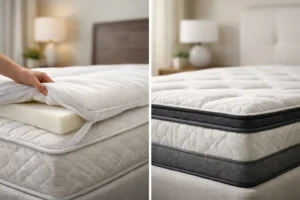
If your mattress is still structurally sound but feels too firm at the surface, a topper can be a smart fix. It can add contouring and soften impact around the shoulders, hips, and lower back without requiring a full mattress replacement. This is often useful for guest rooms, newer mattresses that feel too hard, or people easing into a firmer orthopedic-supportive setup.
But a topper will not correct deep sagging, poor edge support, or major alignment issues. If the base mattress is worn out, adding more softness on top may actually make pressure-point pain worse. Think of a topper as a comfort adjustment, not a cure for a mattress that no longer supports your body.
Signs your mattress is creating pressure points
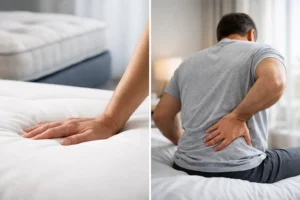
Sometimes the issue is your posture. Sometimes it is your bedding. But often the mattress is the real bottleneck. If you regularly wake up with sore shoulders, numb arms, tender hips, or stiffness that improves after you get moving, your mattress may not be distributing weight correctly.
Other signs include feeling better in a hotel bed, waking more often during the night to switch positions, or noticing visible body impressions where you sleep. If your partner’s movements also wake you up, that points to another performance gap. A sleep surface that transfers motion easily makes it harder to stay in one comfortable, pressure-free position.
A well-designed hybrid mattress can address several of these issues at the same time by combining contouring comfort layers with a stable, responsive support core. That is why many pain-focused shoppers move away from traditional spring beds and toward better-engineered hybrids. At Azure Mattress, that full-system approach is central: pressure relief works best when support, cooling, and motion control are built together rather than treated as separate features.
Small adjustments that can help tonight
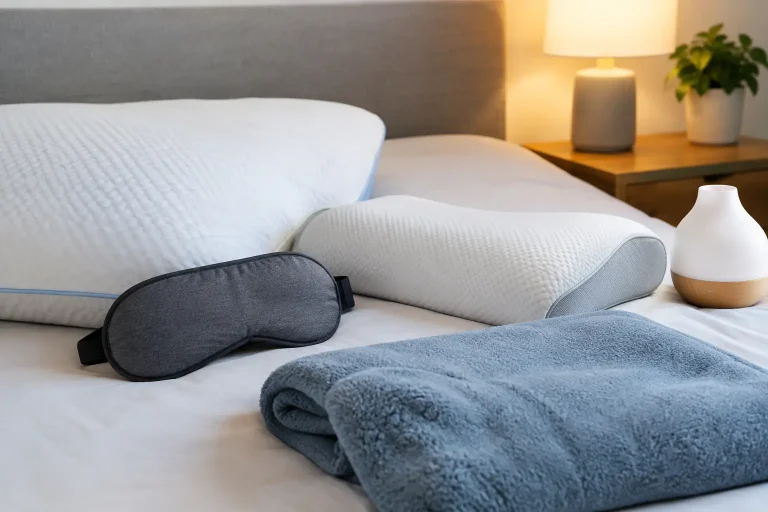
If you need immediate relief, start with your sleep position and pillow setup before you assume you need a new mattress. Place a pillow between or under the knees, lower your pillow loft if your neck feels strained, and avoid sleeping in a twisted posture. If you sleep hot, lighten your bedding and lower the room temperature so you are not constantly shifting.
Also pay attention to patterns. If one shoulder always hurts, your side-sleep setup may be the issue. If your hips ache most, your mattress may be too firm at the surface or too soft underneath. The details matter because pressure points are rarely random. They usually reflect a mismatch between your body and your sleep system.
Better sleep should not mean choosing between softness and support. When your mattress cushions the right areas, keeps your spine aligned, and stays cool enough for uninterrupted rest, pressure points start to ease and your body gets a real chance to recover. That is the kind of comfort you feel the next morning, not just when you first lie down.