You can tell a lot about a mattress brand by what it talks about first. If the first thing you see is a cloud graphic and a vague promise of better sleep, be careful. When it comes to choosing a mattress online, the smarter approach is to look past surface-level comfort language and focus on what actually changes your night: spinal support, pressure relief, temperature control, and how much motion you feel when someone else moves.
That matters even more if you wake up with lower back tension, shoulder stiffness, or the kind of restless sleep that leaves you tired by noon. Buying online can absolutely work in your favor, but only if you know how to read the details behind the mattress. A beautiful product page means very little if the construction underneath cannot support your body properly.
Choosing a mattress online starts with your sleep problem
Most people shop by feel words like plush, medium-firm, or luxury. Those labels help, but they are not enough on their own. The better starting point is your main sleep complaint.
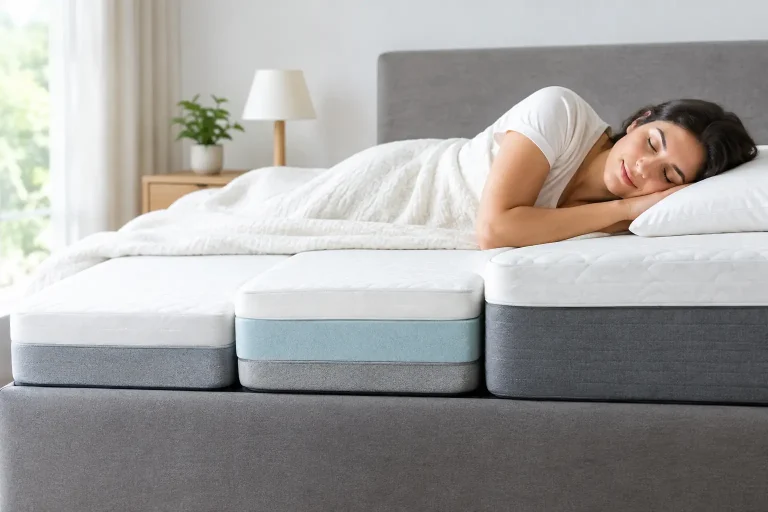
If you deal with back pain, your first priority is support. You want a mattress that helps keep your spine in a more neutral position instead of letting your hips sink too far or your shoulders collapse inward. If your pressure points ache, then cushioning matters too, but it has to work with support rather than replace it. A mattress can feel soft for the first ten minutes and still leave you sore by morning if the support layers are weak.
If you sleep hot, look closely at the comfort materials. Dense traditional foams often trap heat. Breathable latex, cooling gel foams, and coil-based airflow systems usually perform better because they allow more heat dissipation through the mattress instead of holding it against your body.
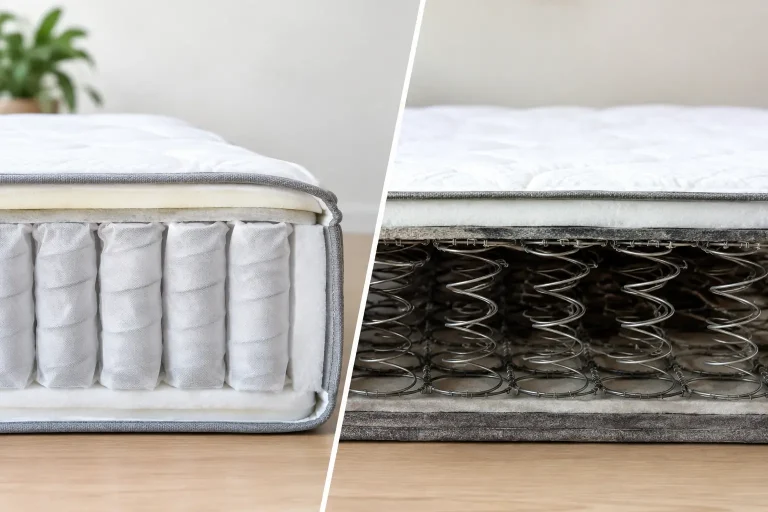
If you share a bed, motion isolation is not a luxury feature. It is the difference between sleeping through your partner turning over and waking up every time they move. Individually pocketed coils tend to do a much better job here than connected spring systems because each coil responds more independently.
What to look for in a hybrid mattress
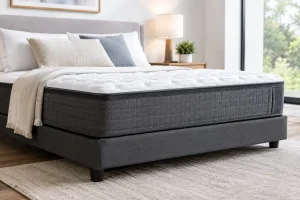
For many online shoppers, hybrid construction is the sweet spot because it combines contouring comfort with more stable support. But not all hybrids are built the same, and this is where reading specifications matters.
A well-designed hybrid usually layers comfort materials like latex or cooling foams over a pocket spring support core. That top section affects pressure relief, temperature feel, and the first impression when you lie down. The coil system underneath affects alignment, responsiveness, durability, and motion control.
The biggest mistake is assuming any hybrid mattress is automatically orthopedic-supportive. It depends on the quality of the coil structure, how the layers are balanced, and whether the mattress is designed to support the heavier parts of the body without creating pressure on lighter areas.
A strong pocket spring system can help maintain more even spinal alignment because it supports weight dynamically instead of creating a sagging hammock effect. Latex can add responsive pressure relief, which is especially useful if you shift positions through the night. Cooling gel foams can help reduce heat buildup, although their performance depends on how much breathable structure surrounds them.
In other words, a hybrid can solve several sleep problems at once, but only if the materials are doing distinct jobs rather than serving as marketing filler.
How firm should your mattress be?
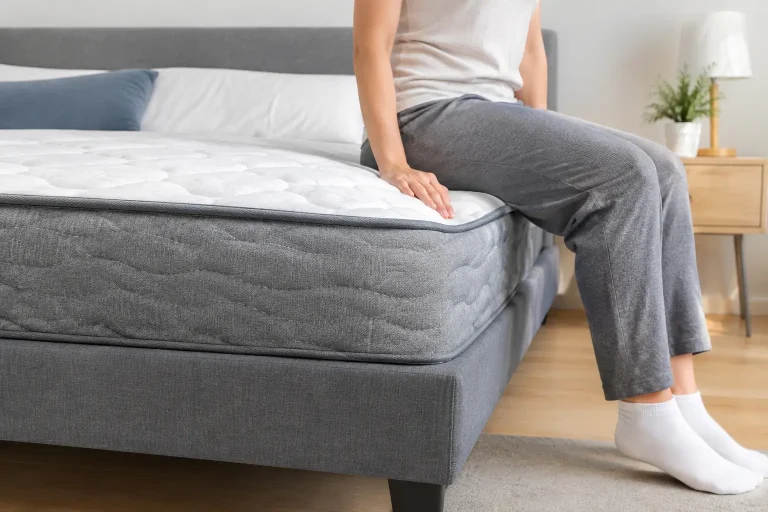
This is the question most people ask first, and it is also the one that causes the most confusion. Firmness is personal, but support is not. A mattress should support you regardless of whether it feels slightly softer or firmer on top.
Side sleepers often need more pressure relief around the shoulders and hips, so a medium to medium-soft surface can feel more comfortable. Back sleepers usually do best with a medium to medium-firm feel that keeps the lower back from dipping too much. Stomach sleepers often need a firmer feel to prevent the pelvis from sinking and stressing the spine.
Body weight changes the experience too. A lighter sleeper may find a medium-firm mattress quite firm, while a heavier sleeper may experience that same mattress as softer because they engage more deeply with the layers.
That is why generic firmness labels should never be your only buying criteria. When choosing a mattress online, pay attention to who the mattress is built for, how thick the comfort layers are, and what support system sits below them. A medium-firm mattress with quality pocket springs and responsive latex can feel very different from a medium-firm mattress made with basic foam over weak springs.
How to read mattress specs without getting lost
Online mattress pages can be useful or deliberately vague. The difference usually comes down to whether the brand explains how construction affects sleep performance.
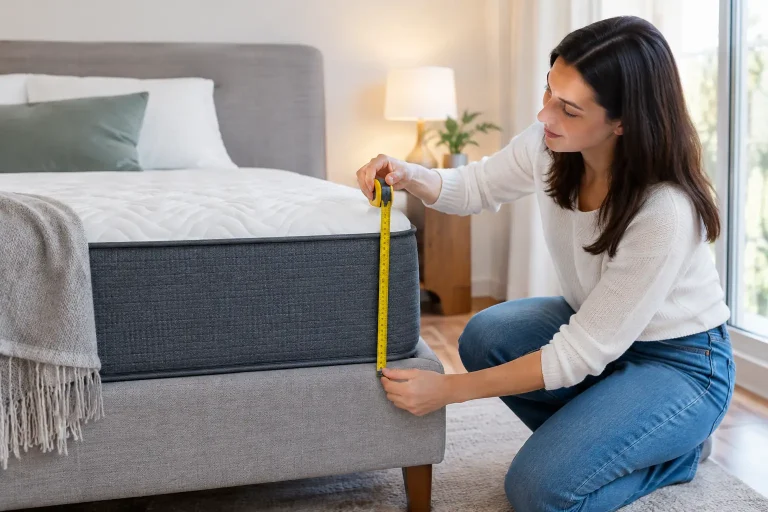
Thickness matters, but only in context. A 12-inch mattress is not automatically better than a 10-inch mattress if those extra inches are low-grade filler. What matters more is layer purpose. You want to see clear information about the comfort layer, transition layer if there is one, and support core.
Material certifications are another strong signal. Standards like Oeko-Tex and CertiPUR-US can help reassure buyers that the foams and textiles meet recognized safety criteria. These do not guarantee comfort, but they do add credibility and reduce uncertainty around what is inside the mattress.
Warranty and trial policies matter because they reflect brand confidence. Free shipping, returns, and a meaningful warranty lower the risk of buying online. They do not replace product quality, but they give you room to test whether the mattress actually performs as promised in your home, with your body, your room temperature, and your sleep habits.
Payment flexibility also matters more than people admit. A mattress is a long-term health purchase, not an impulse buy. Installment options can make a better-quality mattress more realistic without forcing you into the cheapest model on the page.
Choosing a mattress online for back pain, hot sleep, and partner movement
If your goal is fewer aches, less overheating, and better sleep continuity, do not shop those problems separately. The best mattress for your bedroom has to solve them together.
Back pain requires support and pressure relief in balance. Too firm, and you can create tension at the shoulders and hips. Too soft, and your spine can drift out of alignment. Hot sleep requires breathable materials and internal airflow, which is one reason spring-supported hybrids often outperform all-foam builds. Partner disturbance requires independent response, which is where pocketed coils and stable comfort layers become valuable.
This combination is exactly why many shoppers move away from old-fashioned spring mattresses. Traditional open coil systems can feel bouncy, transfer motion, and wear unevenly over time. A more advanced hybrid design is typically better equipped to deliver targeted support, cooler sleep, and lower motion transfer in the same build.
For buyers who want practical performance instead of fluffy claims, that is the standard worth holding. Azure Mattress, for example, builds its hybrid approach around those three core outcomes because they are the issues that most directly affect sleep quality night after night.
Red flags when buying a mattress online
If a mattress page talks endlessly about comfort but says very little about support structure, take that seriously. If there is no meaningful detail on coil type, foam composition, or cooling features, the mattress may be relying on image more than engineering.
Be cautious with claims that sound absolute. No mattress eliminates every pain issue for every sleeper. Bodies are different. Sleep positions vary. The honest answer is often that a mattress can help significantly when its design matches your needs, but the fit still depends on your body type and preferences.
You should also be skeptical of deep discounts that are not backed by useful product information, clear policies, and visible proof points like certifications or warranty coverage. A low price feels good at checkout. It feels much worse after six months of sagging, heat retention, or morning stiffness.
The smartest way to decide
Think less like a bargain hunter and more like someone hiring a product to do a job every night. Your mattress needs to keep your spine supported, cushion pressure points, limit partner disturbance, and avoid trapping body heat. Once you judge each option against those outcomes, the shopping process gets much clearer.
The best online mattress is rarely the one with the loudest headline. It is the one that explains its construction clearly, matches your sleep profile, and reduces your risk with policies that make the purchase feel manageable.
A mattress should not leave you guessing after it arrives. If the details make sense before you buy, your sleep has a much better chance of feeling right after the first week, and even better six months later.