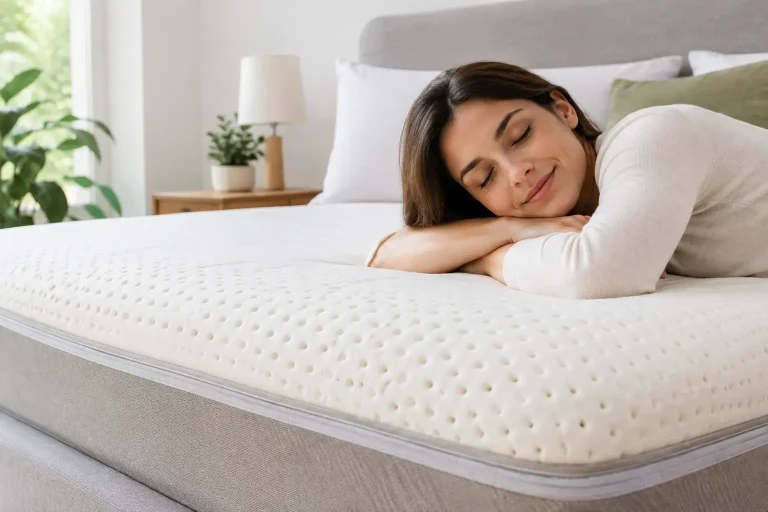
You know the feeling: you fall asleep fine, then wake up at 2:17 a.m. on a patch of heat that feels trapped under your back. You flip the pillow to the “cool side,” kick a leg out, and hope it passes – but it keeps happening. If you’re a hot sleeper, the right mattress is not a luxury upgrade. It’s the difference between fragmented sleep and the kind of deep, steady rest your body actually recovers from.
Cooling is often marketed like a surface feature, but for most people it’s a systems problem. Heat builds when your mattress holds onto energy, restricts airflow, or lets you sink so deeply that your body is wrapped in foam. The best cooling mattress for hot sleepers is the one that moves heat away from you, keeps air moving through the core, and holds your spine in a neutral position so you’re not constantly shifting (which also raises body temperature).
What “cooling” really means in a mattress
A mattress can feel cool at first touch and still sleep hot by midnight. That’s because there are two different jobs happening.
Surface cooling is the instant sensation you feel when you first lie down. It can come from a knit cover, a phase-change finish, or fibers designed to disperse heat. It’s nice, but it’s not the main event.
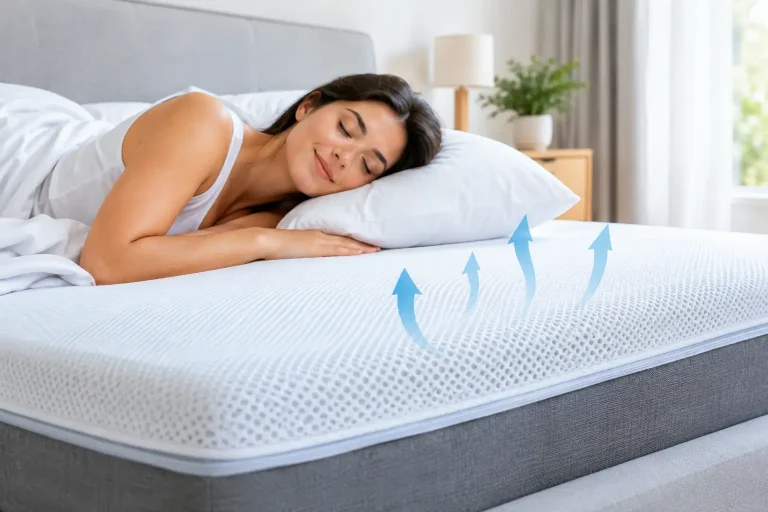
Thermal regulation is the sustained ability to manage heat for hours. That depends on airflow through the mattress, how much heat the materials store, and whether your body is held “on” the mattress instead of swallowed by it.
If you routinely wake up hot, focus less on the buzzwords and more on the construction. Cooling is engineered.
The materials that keep hot sleepers cooler (and why)
Not all foams and layers behave the same way. If you’re trying to choose the best cooling mattress for hot sleepers, the fastest path is understanding how each material handles heat and humidity.
Latex: naturally breathable, naturally buoyant
Latex is one of the most dependable materials for hot sleepers because it’s inherently more breathable than traditional memory foam and it doesn’t rely on deep sink to feel pressure-relieving. It has a springy “pushback” that keeps you more on top of the bed, which reduces the trapped-heat effect.
Trade-off: latex can feel more responsive and less “huggy” than classic memory foam. If you love the slow-melt feel, you may need a hybrid design that blends contouring foam with latex-like buoyancy.
Cooling gel foams: helpful, but not magic
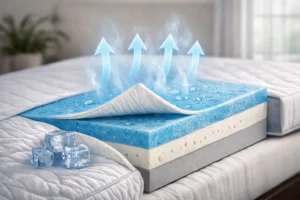
Gel-infused foams are designed to absorb and move heat away from the body. In practice, they can reduce temperature spikes, especially when paired with a breathable cover and a coil system that actually vents heat out of the mattress.
Trade-off: gel can delay heat buildup, but if the mattress underneath is dense and non-breathable, that heat still has nowhere to go. Gel works best as part of a layered airflow strategy, not as a single “cooling” label.
Pocketed coils: airflow plus support
If you sleep hot, coils matter. Individually pocketed springs create open channels inside the mattress that allow warm air to escape and cooler air to circulate. They also provide upward support, which helps prevent that deep, heat-trapping sink.
Trade-off: coil systems vary widely. A strong, well-zoned pocket spring unit can improve spinal alignment and motion isolation at the same time, while a weaker unit can feel bouncy or uneven over time.
Memory foam: pressure relief that can run warm
Memory foam can be excellent for pressure relief, especially for side sleepers with sensitive shoulders or hips. The downside is that traditional memory foam tends to hold heat and reduces airflow by design.
Trade-off: you don’t have to avoid it entirely. Look for a hybrid that uses thinner comfort foams, includes cooling additives, and relies on coils or latex for the underlying lift.
Why hybrids are usually the safest bet for hot sleepers
All-foam mattresses can work for some hot sleepers, but the margin for error is smaller. Hybrids – especially those built with a breathable comfort layer (like latex or ventilated foam) over pocketed coils – tend to regulate temperature more consistently.
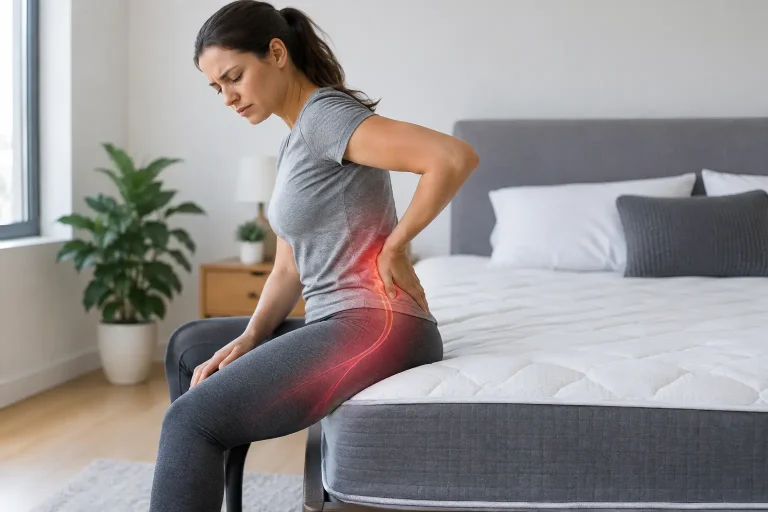
Here’s the practical reason: cooling is easier when heat has an exit path. Coils create that path. And for many adults, especially anyone with back stiffness or joint discomfort, the same structure that improves airflow often improves spinal support.
If you want the comfort of foam without the “sleeping in a warm crater” feeling, hybrid construction is usually the performance choice.
Firmness, sink, and why “plush” can sleep hotter
Hot sleepers often get steered toward “cooling” covers, but firmness can be just as important. The deeper you sink, the more of your body is surrounded by material, which reduces convective airflow and increases heat retention.
This doesn’t mean you should automatically buy a firm mattress. It means you should avoid excessive sink.
Side sleepers typically need enough cushioning for the shoulder and hip, but they still benefit from a buoyant layer that prevents the torso from dropping too far. Back sleepers usually do best with a medium to medium-firm feel that keeps the lumbar area supported. Stomach sleepers tend to overheat when the pelvis sinks, so they often need a firmer, more supportive build.
The best cooling mattress for hot sleepers is usually “supportive first, plush second.” Comfort should come from pressure distribution, not from bottomless softness.
What to look for when you shop (without getting fooled)
Cooling claims are easy to print on a hangtag. Real cooling performance shows up in the build.
Start with airflow through the core
A pocketed coil system is one of the clearest signals that the mattress can ventilate heat. If you’re comparing two options and one is a true hybrid while the other is dense foam, the hybrid has a natural advantage for temperature control.
Look for breathable, responsive comfort layers
Latex, ventilated foams, and thoughtfully layered gel foams tend to perform better than thick slabs of slow-response memory foam. You want a surface that releases heat and a structure that lets it escape.
Pay attention to motion isolation if you sleep with a partner
Hot sleepers often wake up more easily in general. If your partner’s movement adds interruptions, your nervous system never fully settles, and your body can run warmer throughout the night. Pocketed coils can reduce motion transfer when they’re individually wrapped and paired with stabilizing foams.
Certifications are not “cooling,” but they do matter
If you’re sensitive to smells or off-gassing, look for foam certifications like CertiPUR-US, and for fabric safety standards like Oeko-Tex. These don’t make a mattress colder, but they do support a cleaner sleep environment – which matters when you’re already waking up uncomfortable.
Make sure the policy matches the promise
Cooling is personal. Your room temperature, bedding, and sleep position all affect how warm you feel. A real trial period and a straightforward return policy reduce the risk of guessing wrong.
Match the mattress to the reason you sleep hot
Not every hot sleeper runs hot for the same reason, and that’s where most shopping advice gets too generic.
If you’re overheating because you sink too much, prioritize buoyancy and support: latex comfort, responsive foam, and a strong coil core. If you’re overheating because you wake up every time your partner moves, prioritize motion isolation and stable support so your body stays calm and you cycle through sleep stages without constant arousals. If you’re overheating because of pressure points, you may need a plusher top layer – but it should be engineered to relieve pressure without trapping heat, which is where hybrid layering matters.
This is also why “cooling toppers” sometimes help and sometimes fail. A topper can change surface feel, but it can’t fix a mattress that has poor airflow or weak support underneath.
A performance checklist that actually predicts cooler sleep
When you test or compare mattresses, focus on outcomes you can feel within minutes.
You should feel lifted and supported, not suspended in a deep cradle. Your shoulders and hips should settle comfortably without your midsection collapsing. When you change positions, the mattress should respond quickly instead of slowly reshaping around you. And after 10-15 minutes, you should still feel breathable comfort rather than a warming pocket forming under your core.
If you’re shopping online, read the construction details like you would read an ingredients label. Look for pocketed coils, breathable comfort layers, and a cover designed to dissipate heat – in that order.
Where Azure fits if you want cooling plus orthopedic-style support
If your goal is cooler sleep without sacrificing spinal alignment, look for a hybrid design that pairs temperature regulation with targeted support and motion control. Azure Mattress builds its hybrids around those outcomes – comfort, spine and joint support, and overheating control – using layered foams and latex over an individually pocketed spring system, with certifications like Oeko-Tex and CertiPUR-US and convenience features like free shipping, returns, and a warranty through https://azuremattress.com.my/.
The part most hot sleepers miss: your bedding can sabotage any mattress
Even the best cooling mattress for hot sleepers can be undermined by bedding that traps heat. Thick synthetic comforters, non-breathable mattress protectors, and high-polyester sheets can hold humidity and warmth right against your skin.
If you’re investing in a cooling-focused mattress, pair it with breathable sheets and a protector designed to allow airflow. Keep your bedroom temperature consistent, and give your mattress a few nights to stabilize after unboxing, especially if it shipped compressed.
A cooler mattress is a foundation, not a magic trick. When the layers, support, and airflow are engineered correctly, you stop chasing the cool spot at 2:17 a.m. and start waking up the way you’re supposed to – steady, clear-headed, and actually restored.