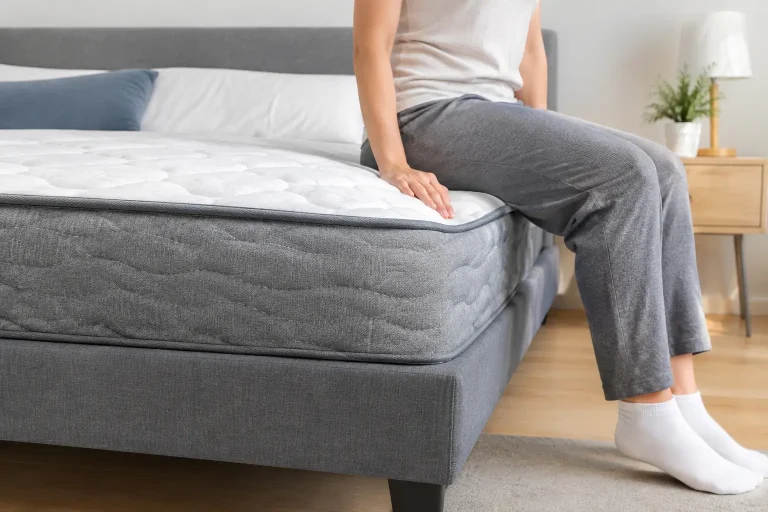
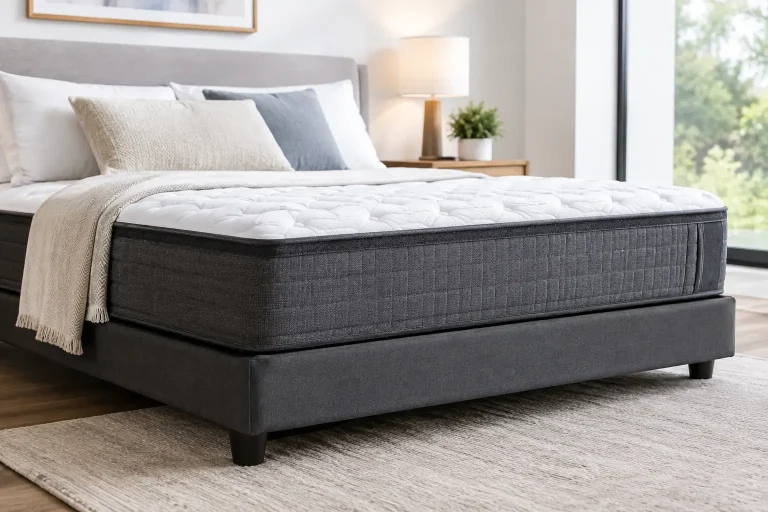
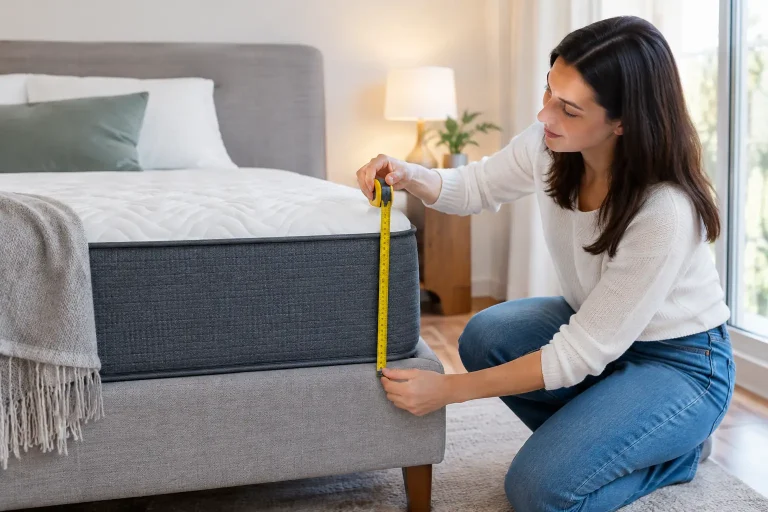
A mattress can feel soft in the showroom and still leave you waking with a sore shoulder, tight hips, or a lower back that needs time to loosen up. That is why a latex foam pressure relief review should look beyond surface plushness. Real pressure relief is about how the sleep surface distributes body weight while keeping your spine supported in a natural position.
Latex is often associated with a buoyant, responsive feel. Unlike foams that let you sink deeply before pushing back, latex gently contours around high-pressure areas and quickly responds when you move. For many sleepers, that balance can mean less strain at the shoulders and hips, easier position changes, and a cooler, more supported night of rest.
What Latex Pressure Relief Actually Feels Like
Pressure points develop where the body bears the most weight against the mattress. For side sleepers, that is usually the shoulders and hips. For back sleepers, the lower back, hips, and upper back need a surface that fills gaps without allowing the pelvis to sink too far. A mattress that is too firm can concentrate force in those areas. One that is too soft can let the body fall out of alignment.
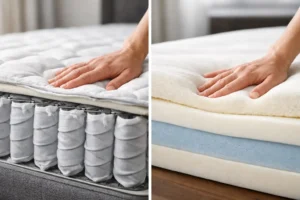
Latex works differently from traditional spring padding and slow-moving memory foam. Its open, resilient structure compresses under heavier areas, then rebounds as you shift. The sensation is more lifted than hugged. You still get cushioning at the joints, but you are less likely to feel stuck in the mattress when turning over.
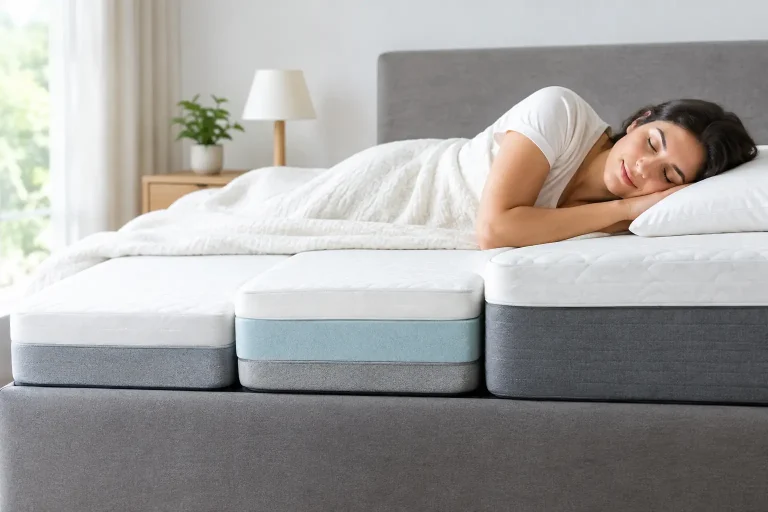
This is especially valuable for people who wake frequently to adjust their position. A responsive comfort layer reduces the effort needed to move, which can make sleep feel less interrupted. It also helps couples who have different sleep habits, because each person can reposition without creating the deep body impressions associated with softer, less resilient materials.
Latex Foam Pressure Relief Review: The Benefits
The biggest strength of latex is its ability to combine contouring with support. It cushions the sharp contact points of the body while maintaining a stable, springy surface underneath. That combination suits sleepers who want relief from everyday stiffness but do not enjoy the deep, slow sink of conventional memory foam.
Better cushioning for shoulders and hips
When you lie on your side, your shoulder and hip need enough give to avoid feeling compressed. Latex can compress where needed while keeping the waist and torso from sagging. The result is a more even weight distribution across the mattress, which may help reduce the morning tenderness caused by sleeping on a surface that is too firm.
The effect depends on the firmness of the entire mattress, not latex alone. Softer latex generally offers more immediate contouring, while firmer latex creates a flatter, more supportive feel. Side sleepers with pronounced shoulders or hips often prefer a medium to medium-soft comfort layer paired with dependable support below.
More stable spinal alignment
Pressure relief only works well when it is paired with alignment. If your hips drop too deeply, the lower back can remain under strain even if the mattress feels plush. Latex has a naturally supportive pushback that helps prevent excessive sinkage, particularly when it sits above a structured pocket spring system.
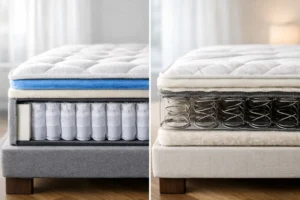
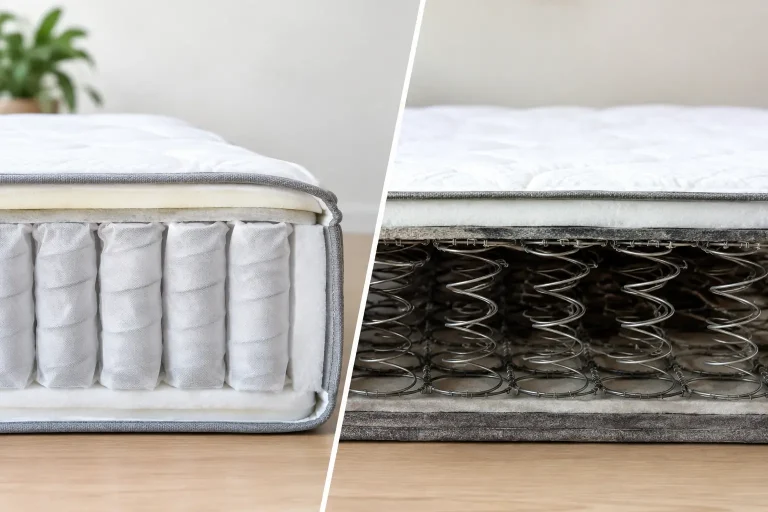
In a hybrid mattress, the latex layer handles initial comfort while individually pocketed coils support the body at a deeper level. This design can allow the shoulders to settle comfortably while helping hold the midsection and hips in a more balanced position. For people managing recurring back discomfort, that distinction matters more than simply choosing the softest bed available.
Cooler sleep with less sink
Heat can turn minor discomfort into a restless night. Dense, slow-response foams often retain more warmth around the body, particularly for sleepers who sink deeply into the surface. Latex is typically more breathable, and its responsive feel keeps you closer to the top of the mattress rather than enveloped by it.
A well-designed hybrid adds airflow through the coil layer, while cooling foam components can further help manage surface temperature. Latex is not a guarantee that every sleeper will feel cool, especially in a warm room or under heavy bedding. Still, it is often a stronger choice for those who want pressure relief without the warmer, deeper-cradle sensation of traditional memory foam.
Who Benefits Most From Latex Comfort Layers?
Latex can be an excellent fit for combination sleepers, side sleepers, and back sleepers who want joint cushioning without sacrificing a supportive feel. Its fast response makes it particularly appealing if you change positions during the night or dislike the sensation of being held in place by a mattress.
Couples may also appreciate latex in a hybrid build. The comfort layer absorbs some surface movement, while individually pocketed coils help isolate motion at the support level. No mattress removes every trace of movement, but a thoughtful hybrid construction can make a partner getting in, out, or changing positions far less disruptive.
People with mild to moderate morning stiffness often benefit from this balanced feel. A supportive latex hybrid can reduce the pressure that builds at the hips, shoulders, and lower back while providing enough structure to keep the body from collapsing into the bed. It is a practical option for adults upgrading from basic interconnected spring mattresses, which can transfer motion and create uneven support over time.
When Latex May Not Be the Best Match
Latex has clear advantages, but it is not the right feel for everyone. Sleep is personal, and comfort preferences matter. If you love an especially deep, slow-molding hug, memory foam may better match what you expect from a mattress. Latex responds quickly, so some sleepers may find it more buoyant or firmer at first contact.
Very lightweight side sleepers can also need extra attention to firmness. On a mattress that is too firm, they may not compress a latex layer enough to receive meaningful shoulder and hip relief. Conversely, higher-weight sleepers may need a stronger coil system and firmer support layers to prevent the hips from dipping too low.
There is also a difference between natural latex, synthetic latex, and latex blends. Material composition, layer thickness, density, and the support system beneath it all affect performance. A label alone cannot tell you how a mattress will feel. Look at the complete construction and consider how your body type, primary sleep position, and temperature needs fit that design.
Why a Hybrid Build Changes the Result
Latex performs best as part of a sleep system, not as an isolated selling point. The top comfort layer should relieve immediate pressure, but the layers below it determine whether that comfort lasts through the night. Cooling gel foam can add surface cushioning and temperature support, while pocket springs create targeted resistance across the body.
That is the purpose behind a precision-built hybrid mattress: comfort at the surface, structured support through the core, and airflow throughout the design. At Azure Mattress, latex is paired with performance-focused comfort materials and individually pocketed springs to address three common sleep disruptions – aches, overheating, and partner movement – in one coordinated construction.
Certifications can offer additional peace of mind when comparing materials. Certifications such as Oeko-Tex and CertiPUR-US speak to material standards, though they do not replace the need to choose a firmness and construction that suit your body. A long warranty is also helpful for evaluating durability, but your day-to-day comfort should remain the deciding factor.
How to Judge Pressure Relief Before You Commit
Start with your waking symptoms. If your shoulder feels numb or your hip aches after side sleeping, you may need more contouring near the surface. If your lower back feels tense, you may need more consistent support through the center of the mattress. The goal is not to eliminate all sensation of support. It is to feel comfortably supported without sharp pressure or excessive sagging.
Pay attention to how easily you can turn over, too. A mattress should let you move naturally, not make every position change feel like work. If you share the bed, consider motion control alongside pressure relief, because a peaceful night depends on both.
The best latex mattress is not necessarily the softest one. It is the one that cushions your joints, supports your spine, and helps you stay comfortably asleep long enough to wake feeling restored. Choose the construction that gives your body that steady, balanced feeling night after night.