A mattress that is too thin can leave your hips and shoulders feeling unsupported. One that is too tall can make getting into bed feel like a climb. Knowing how to choose mattress height helps you create a bed that supports easier movement, better spinal alignment, and more restorative sleep – not just a more impressive-looking bedroom.
Mattress height is often treated as a cosmetic choice. It is not. The thickness of the mattress affects how deeply you sink, how well the comfort layers relieve pressure, and whether the support system has enough depth to keep your body level through the night. Your complete bed height – mattress, foundation, and frame combined – also affects how your knees, hips, and back feel every time you sit down or stand up.
Start With the Two Heights That Matter
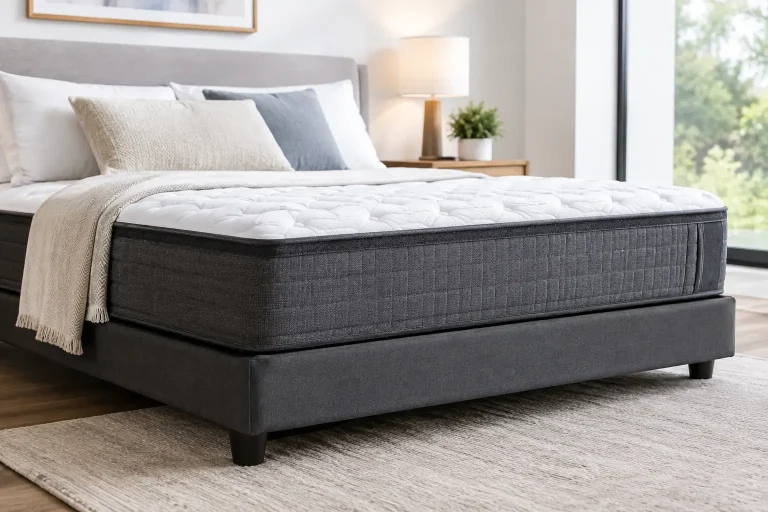
When people talk about mattress height, they may mean two different things. First is mattress thickness, measured from its base to its sleep surface. Second is overall bed height, measured from the floor to the top of the mattress.
These measurements solve different problems. Mattress thickness is mainly about comfort engineering and support. Overall bed height is about access, safety, and daily usability. A 12-inch mattress can feel right on a low platform frame but uncomfortably high on a tall box spring. Before choosing either, measure your current setup from floor to sleep surface and notice how your body responds when you get in and out of bed.
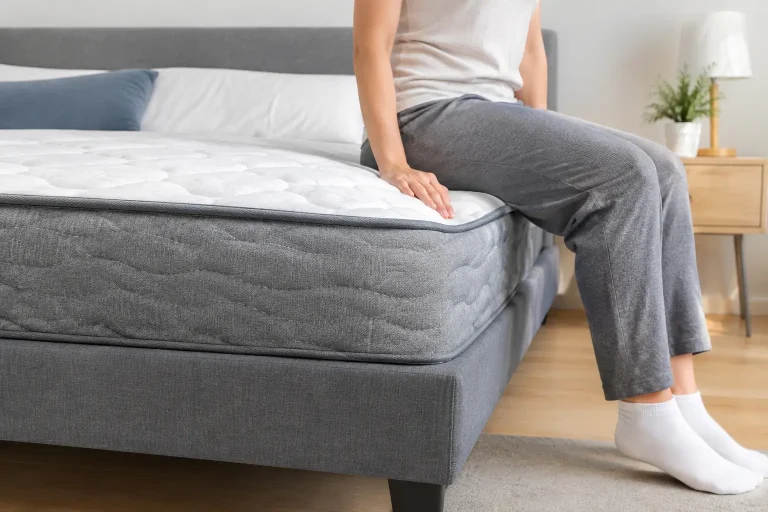
For many adults, a finished bed height around 24 to 28 inches feels natural because it allows the feet to rest flat on the floor while sitting at the edge. This is a useful starting point, not a rule. A shorter person, someone recovering from an injury, or a household with young children may need a lower setup. Taller sleepers may prefer a slightly higher surface as long as they can sit and stand without straining.
How to Choose Mattress Height Based on Support Needs
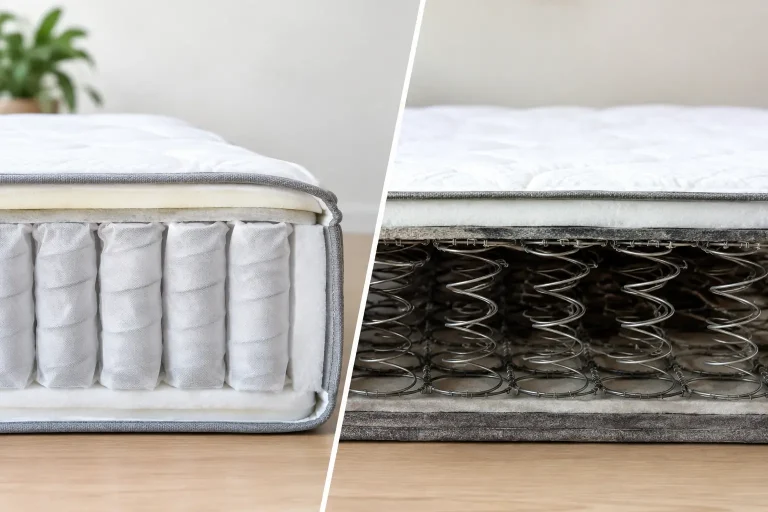
A mattress does not become more supportive simply because it is thicker. What matters is how its layers work together. Still, thickness can create more room for a meaningful comfort layer and a stable support core – particularly in a hybrid mattress with foam, latex, and pocketed coils.
Thin mattresses: usually 6 to 9 inches
A thinner mattress may work for a guest room, trundle bed, bunk bed, child’s bed, or a lightweight sleeper who prefers a firmer feel. It can also be practical when your bed frame is already high.
The trade-off is limited material depth. A thin mattress may not provide enough cushioning for side sleepers, people with sensitive joints, or anyone who wakes with pressure around the shoulders and hips. It may also have a shallower support system, which can be less effective for larger body types or sleepers who need more resistance through the lumbar area.
Medium-profile mattresses: usually 10 to 12 inches
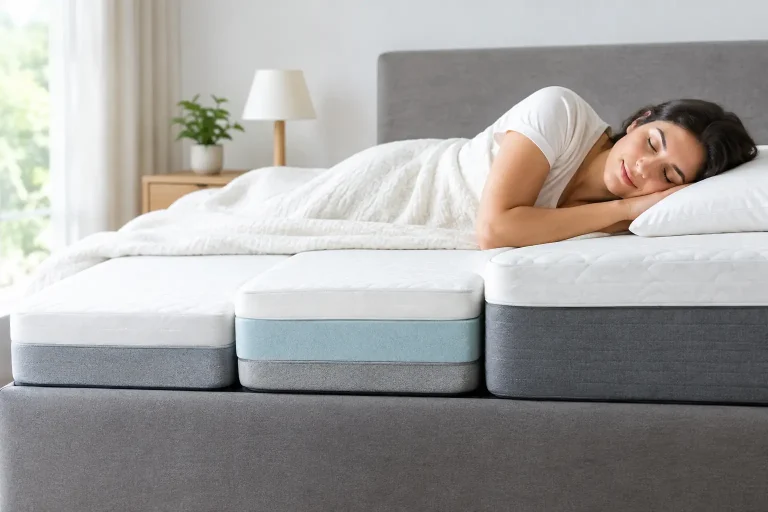
For most adults, a mattress in this range delivers the best balance of pressure relief, support, and practical bed height. It is thick enough to include a comfort layer that cushions the body and a support layer that helps hold the spine in a neutral position.
This profile is often a strong choice for couples. A well-designed hybrid can use individually pocketed springs to support each sleeper independently, while foam or latex layers soften pressure points and help reduce motion transfer. You get enough depth for comfort without automatically creating an overly tall bed.
Thick mattresses: usually 13 to 16 inches or more
A taller mattress can feel especially luxurious for sleepers who want deeper cushioning. It may have additional comfort layers, a taller coil unit, or a plush pillow-top design. This extra depth can be useful for heavier sleepers and side sleepers who need more room for the shoulder and hip to sink in while the waist remains supported.
But more layers are not always better. A very plush, thick design may allow too much sinking if the support beneath it is weak or poorly matched to your body. It can also make the finished bed too high, especially when placed on a traditional foundation. Focus on the quality and purpose of each layer, not thickness alone.
Match Mattress Thickness to Your Sleep Position
Your usual sleep position is one of the clearest ways to narrow the range.
Side sleepers generally benefit from a 10- to 14-inch mattress with enough pressure-relieving material at the surface. The shoulder and hip need to settle in slightly, but the midsection should not collapse downward. Latex and responsive foam can help relieve joint pressure without the stuck-in-the-bed feeling that some overly soft foams create.
Back sleepers often do well with a 10- to 12-inch hybrid mattress that balances cushioning with a stable coil system. The goal is gentle contouring at the lower back while keeping the pelvis from dipping too far. If you frequently wake with lower-back stiffness, prioritize supportive construction over a thicker pillow top.
Stomach sleepers usually need a firmer, flatter sleep surface. A 10- to 12-inch mattress can work well when it has a firm comfort layer and durable underlying support. Excessive softness is the bigger concern here because it can pull the hips out of alignment and strain the lower back.
Combination sleepers need a responsive mattress that makes changing positions easy. Medium-profile hybrids are often effective because pocketed coils and latex can provide buoyant support rather than deep, slow-moving sink.
Consider Body Weight and Pressure Relief
Body weight changes how far you compress a mattress. A lighter sleeper may find a 10-inch mattress comfortable because they do not press as deeply into the materials. A heavier sleeper may prefer 12 to 14 inches, provided the mattress includes a substantial support core rather than only extra soft foam.
This is where construction matters more than a number on a product page. A thick mattress with low-density foam may soften quickly and lose its ability to maintain alignment. A well-built hybrid with durable foams, resilient latex, and individually pocketed springs can offer consistent support across the surface.
If joint discomfort is part of your nightly routine, look for enough comfort-layer depth to distribute pressure at the shoulders, hips, and knees. If back pain is the greater concern, make sure that pressure relief is paired with support underneath. Softness without structure can feel pleasant for the first few minutes and less comfortable by morning.
Calculate the Right Overall Bed Height
Once you know the mattress thickness you need, calculate where the top of the mattress will sit. Add the height of your bed frame, platform, or foundation to the mattress profile. Do not guess – measure it.
Sit on the edge of the bed as you would when putting on socks or getting ready for sleep. Ideally, your feet should reach the floor comfortably and your knees should be close to a right angle. If you have to slide off the edge, the bed is likely too high. If your knees rise well above your hips and standing feels like pushing up from a deep seat, it may be too low.
This becomes especially significant for older adults, people with arthritis, anyone managing hip or knee pain, and sleepers recovering from surgery. The right bed height should reduce effort at the beginning and end of every day. For these sleepers, a supportive 10- to 12-inch mattress on a low-profile foundation is often easier to manage than a thick mattress on a tall frame.
Do Not Let Bedding Decide the Mattress
Deep-pocket sheets are convenient, but they should not drive the decision. If a mattress offers the right support and pressure relief, finding sheets with the correct pocket depth is simple. Check the mattress height before buying bedding, then allow a little extra room for a mattress protector or topper.
A topper can add comfort, but it also adds height and changes how the bed feels. If your mattress is already 14 inches thick, adding a 3-inch topper may make the bed harder to access and can soften the surface beyond what your spine needs. Use a topper to fine-tune a sound mattress, not to compensate for one that lacks support.
Look Beyond Height to Cooling and Motion Control
A thicker mattress has the potential to include more airflow features, but it is not automatically cooler. Heat control depends on the materials and construction. Breathable latex, cooling gel foam, and airflow around pocketed coils can help move heat away from the body more effectively than dense, solid foam layers.
Couples should also consider how the mattress handles movement. A taller mattress with individual pocket springs and motion-absorbing comfort layers can offer better isolation than a basic interconnected spring mattress. That means one partner can change position without turning the other person’s sleep into a disturbance.
Azure Mattress designs hybrid constructions around this balance: pressure relief near the surface, structured support below, and breathable materials that help prevent overheating. The best profile is not the tallest one. It is the one whose layers have a clear job to do for your body.
Test the Decision in Your Actual Bedroom
Before ordering, use painter’s tape, stacked books, or a firm cushion to visualize the finished height of the bed. It sounds simple, but it can prevent an expensive mismatch between a new mattress and an existing frame. Consider nightstands too. A mattress that sits far above them can make reaching for a phone, lamp, or glass of water less convenient.
Also account for who uses the bed. Pets, children, and a partner with different mobility needs can change what “comfortable height” means in a real household. The most practical choice is one that makes bedtime feel easy for everyone without compromising the support you need.
A mattress should meet you at the right level, then keep your body supported long after you fall asleep. Choose enough thickness for pressure relief and durable alignment, set it on a base that lets you move naturally, and let comfort be something you can feel every morning.