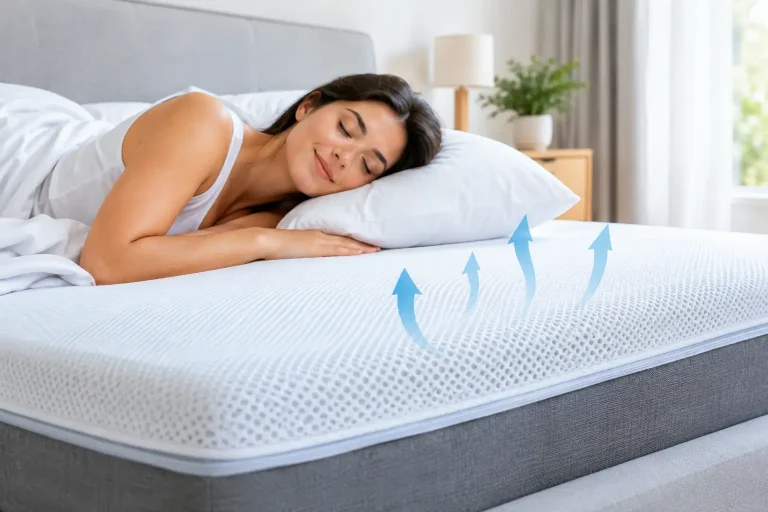
A pillow can feel wonderfully soft and still be the reason you wake up with a stiff neck, tingling shoulder, or tension behind your eyes. The missing detail is often height. When you choose pillow loft that matches your sleep position, body shape, and mattress, your head and neck can rest in a more natural line with the rest of your spine.
Loft is not about choosing the biggest, fluffiest pillow on the shelf. It is about filling the space between your mattress and your head without pushing your neck too far up or letting it drop too far down. That small adjustment can make a meaningful difference in how supported, refreshed, and comfortable you feel each morning.
What Pillow Loft Actually Means
Pillow loft is the height of a pillow when it is resting on the bed. A low-loft pillow is usually under 3 inches, a medium-loft pillow is commonly around 3 to 5 inches, and a high-loft pillow is often 5 inches or more. Those measurements are a useful starting point, but they do not tell the whole story.
Materials compress differently under weight. A 5-inch down-alternative pillow may flatten significantly once you lie on it, while a 5-inch latex or memory foam pillow may hold its shape more firmly. This is why the best pillow is not simply the tallest or most expensive option. It needs to maintain the right height for you while you sleep.
The goal is neutral alignment. Looking from the front or back, your head should not tilt noticeably toward the mattress or away from it. Looking from the side, your neck should not bend sharply upward or downward. When your pillow maintains this position, the muscles around your neck and shoulders do not have to work through the night to compensate.
Choose Pillow Loft by Sleep Position
Your usual sleep position is the strongest guide to pillow loft. Most people shift during the night, but the position where you spend the most time should lead the decision.
Side sleepers usually need more height
Side sleeping creates the largest gap between the mattress and your head because your shoulder sits beneath your neck. A medium-to-high loft pillow is typically the right starting point, especially for people with broader shoulders.
The pillow should support the space above your shoulder, not force your head upward. If your chin angles toward your chest, the pillow is likely too high. If your head sinks toward the mattress and you feel pressure at the top shoulder, it is likely too low.
Side sleepers also benefit from materials that resist flattening. Responsive latex, contoured foam, or a supportive adjustable-fill pillow can keep the neck supported through the night. This matters even more if you regularly wake with shoulder soreness or numbness in your arm.
Back sleepers need balanced support
Back sleepers generally do best with a low-to-medium loft pillow. The pillow should gently support the natural curve of the neck while allowing the back of the head to rest without being pushed forward.
A pillow that is too high can bend the neck forward, contributing to morning stiffness and a tight upper back. One that is too flat can let the head fall backward, leaving the neck unsupported. Many back sleepers find that a pillow with a slightly raised neck area and a shallow center creates a more stable position.
If you snore or experience mild airway restriction while sleeping on your back, pillow height can feel especially noticeable. The answer is not automatically a higher pillow. Excessive loft can narrow your comfort zone by placing the chin too close to the chest. Aim for supported alignment rather than elevation alone.
Stomach sleepers need the lowest loft
Stomach sleeping already places the neck in a rotated position. A high pillow adds another layer of strain by lifting the head while it is turned to one side. For this reason, stomach sleepers generally need a very low-loft pillow, or sometimes no pillow under the head at all.
A soft, thin pillow can reduce the angle at the neck. Placing a small pillow beneath the pelvis may also help some stomach sleepers reduce pressure in the lower back. If you consistently wake with neck pain, however, gradually shifting toward side or back sleeping may provide better long-term support.
Combination sleepers need flexibility
If you move from your side to your back throughout the night, a medium-loft pillow is often the most practical choice. Adjustable-fill designs are particularly useful because you can remove or add material until the pillow supports both positions without feeling bulky.
Do not judge an adjustable pillow by its fill quantity alone. Test it after several nights. The right amount is the amount that keeps your neck relaxed in the positions you actually use.
Your Mattress Changes the Loft You Need
Pillow loft and mattress comfort work as a system. A softer mattress allows your shoulders and hips to sink deeper, which reduces the distance between your head and the sleep surface. On a plush mattress, a side sleeper may need less pillow height than they would on a firm mattress.
A firmer mattress creates less sink, especially under the shoulders. That usually means side sleepers need a higher pillow to fill the remaining gap. This is one reason a pillow that worked on an old bed may suddenly feel wrong after upgrading your mattress.
Hybrid mattresses can be especially helpful for this equation because they combine pressure relief with structured support. When the comfort layers cushion the shoulder without allowing the body to sag, it becomes easier to find a pillow loft that keeps the spine level. Azure Mattress approaches sleep this way: comfort, spinal support, and temperature control should work together, not compete.
Body Frame and Shoulder Width Matter
Sleep position gives you the foundation, but your build refines the choice. A person with broad shoulders typically needs more loft for side sleeping than someone with narrow shoulders. A petite back sleeper may need a thinner pillow than a taller person with a larger frame.
Do not rely on body weight alone. Shoulder width, head size, posture, and the way your mattress compresses all affect the height you need. This is why a medium-loft pillow can be perfect for one person and completely wrong for another person who sleeps in the same position.
For couples, separate pillows are usually the better solution. Sharing the same mattress does not mean you need the same loft. One partner may need a high, supportive side-sleeper pillow while the other sleeps best on a lower pillow for back sleeping. Personalized support is worth more than matching bedding.
Loft and Firmness Are Different Decisions
A common mistake is confusing pillow firmness with pillow loft. Loft is height. Firmness is how easily the material compresses and how quickly it rebounds. You need to consider both.
A high-loft pillow with a soft fill may collapse too much to support a side sleeper. A low-loft pillow made from very firm foam may still feel too tall because it does not compress. The right combination should hold your head at a comfortable height without creating pressure around the ear, jaw, or shoulder.
Memory foam can contour closely but may retain more heat depending on its design. Latex usually feels more responsive and breathable, with a buoyant surface that holds its shape. Down and down alternatives feel plush and adjustable but can require regular fluffing. Shredded foam or latex fills offer more customization, although they may not feel as smooth as a single-piece foam pillow.
If you sleep warm, consider the temperature profile along with the support profile. Breathable covers, ventilated foam, latex, and moisture-managing materials can help your pillow feel less stuffy without sacrificing the loft your neck needs.
Signs Your Pillow Loft Is Wrong
Your body often gives clear feedback before you ever measure a pillow. Morning neck stiffness, shoulder pain, headaches, and a persistent need to fold or stack pillows can all point to an alignment problem.
A pillow may be too high if you wake with a forward-tilted chin, pressure at the base of your skull, or soreness between the shoulders. It may be too low if your neck feels compressed, your shoulder bears excessive pressure while side sleeping, or you regularly tuck a hand beneath the pillow for more height.
Pay attention to what happens while you are falling asleep as well. If you keep repositioning the pillow, bunching it up, or moving it away, its height or firmness may not suit your body. Comfort should feel settled, not like a nightly adjustment project.
Test a Pillow Before You Commit
A quick test can help, but a pillow deserves more than five minutes of evaluation. Lie down in your regular sleep position and ask someone to check whether your head appears level with your spine. If no one is available, use your phone camera on a timer and review the angle from the front for back sleeping or from behind for side sleeping.
Then give the pillow several nights. Your body may need a short adjustment period, particularly if you are replacing a pillow that has flattened over time. But pain that increases or persists is not an adjustment phase to push through. Reassess the loft.
For adjustable pillows, make one small change at a time. Remove a modest amount of fill, sleep on it for two or three nights, and observe how your neck and shoulders feel in the morning. Large changes make it harder to identify what actually improved your comfort.
The right pillow loft should quietly do its job. You should not wake thinking about your neck, your shoulder, or the pillow you spent the night fighting. You should wake with your head supported, your spine at ease, and more energy left for the day ahead.