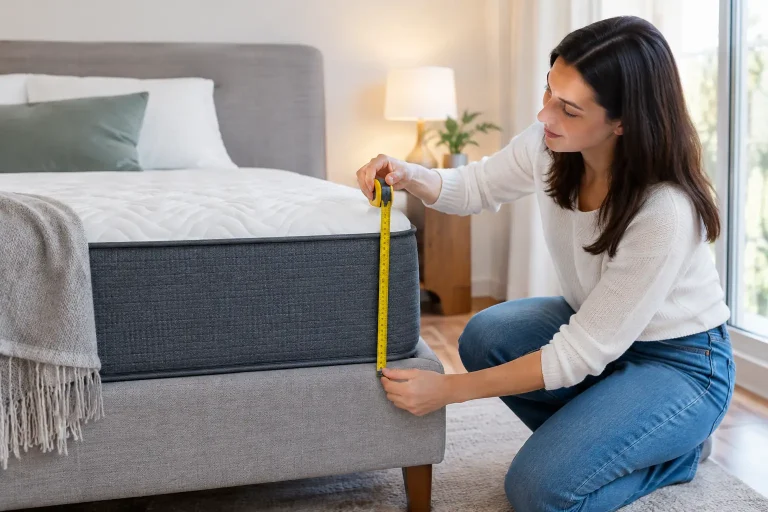
A full night in bed can still leave you with a stiff lower back, numb shoulder, or tight neck if your body is working to hold itself in position. Sleep ergonomics is the practical science of arranging your mattress, pillow, and sleeping posture so your spine and joints can rest in a neutral, supported position instead of compensating through the night.
This is not about finding a single “perfect” mattress firmness. It is about giving your body the right combination of pressure relief, stable support, and temperature control for the way you actually sleep. When those elements work together, you are less likely to wake up shifting, overheating, or feeling like you need a recovery period before your day even starts.
What Sleep Ergonomics Means for Your Body
Ergonomics is often discussed at a desk, where chair height and monitor placement affect posture. The same principle applies in bed, except you spend hours relatively still. A small mismatch between your body and your sleep surface can create sustained pressure on the hips and shoulders or allow the waist to sag out of alignment.
Healthy sleep posture does not mean your spine must be perfectly flat. Your spine has natural curves. The goal is to support those curves without forcing them into an exaggerated bend. Your head should not tilt sharply upward or downward, your shoulders should not collapse under pressure, and your hips should not sink so deeply that your lower back twists.
A supportive setup also matters for recovery. Muscles that stay tense to stabilize an unsupported area do not get the same opportunity to relax. That is why a mattress can feel soft and inviting at first, yet still leave you sore in the morning. Initial comfort and all-night support are related, but they are not the same thing.
The Mattress Is the Foundation of Sleep Ergonomics
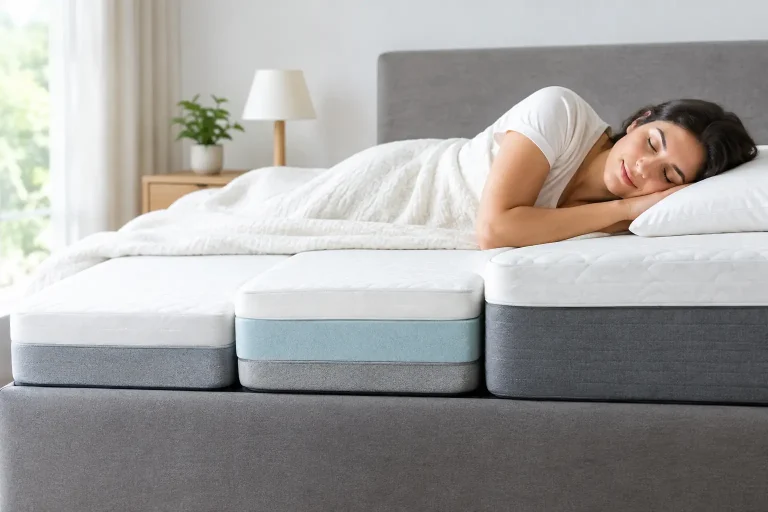
Your mattress carries the largest share of the work. It needs to cushion prominent joints while maintaining enough resistance underneath your heavier body areas, especially the hips and torso. If it is too firm, the shoulders and hips can experience excessive pressure. If it is too soft, the pelvis can sink and pull the spine out of a neutral line.
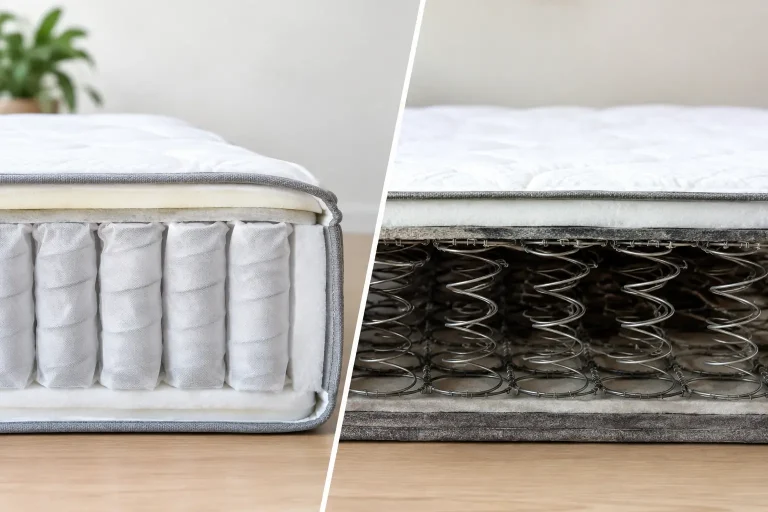
For many adults, a hybrid construction creates a useful balance. Individually pocketed coils provide targeted support and help limit the movement you feel when a partner changes position. Comfort layers, such as latex or pressure-relieving foam, adapt around the shoulders, hips, and knees. The result should feel supported rather than hard, and cushioned rather than unstable.
Your body size, preferred position, and pain points determine what “right” feels like. A lighter side sleeper may need more surface contouring than a heavier back sleeper. A stomach sleeper usually needs a flatter, more supportive surface to prevent the hips from dropping. Couples may also need a compromise that supports two different body types without turning the middle of the bed into a dip.
Signs Your Mattress May Be Working Against You
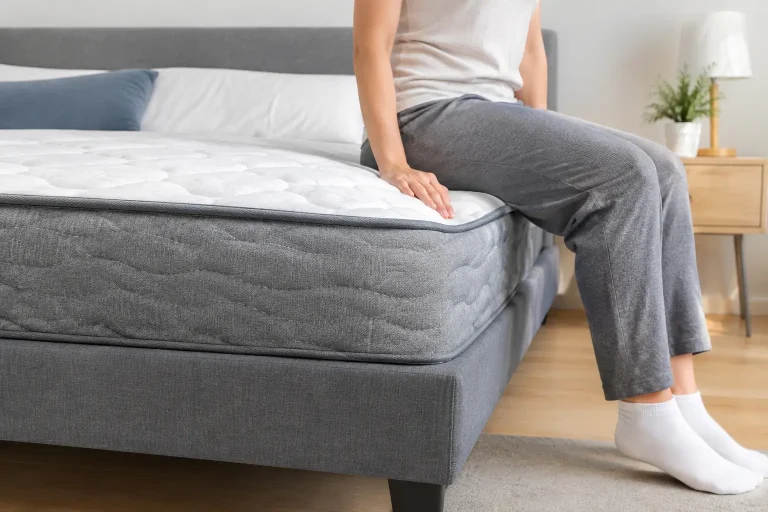
Persistent pain can have many causes, but your sleep surface deserves attention when discomfort is most noticeable upon waking and eases as you move through the day. You may also notice that you sleep better in another bed, wake frequently to change position, or feel yourself rolling toward a worn area.
Look for these practical signals:
- Your lower back feels compressed or strained when you first get up.
- Your shoulder or hip becomes sore when sleeping on your side.
- You wake with tingling or numbness in an arm or hand.
- Your mattress visibly sags, develops a body impression, or feels uneven.
- A partner’s movement repeatedly wakes you during the night.
None of these signs automatically means you need the firmest mattress available. Often, the problem is poor pressure relief, weak support beneath the comfort layer, or a mattress that has lost its structure over time.
Match Your Pillow to Your Sleep Position
A pillow is not an accessory in an ergonomic sleep system. It is the support structure for your neck. Even a well-designed mattress cannot compensate for a pillow that leaves your head tilted at an uncomfortable angle.
Side sleepers generally need enough loft to fill the space between the shoulder and head. The goal is for the neck to stay aligned with the rest of the spine, not bend down toward the mattress. Back sleepers typically need a medium-loft pillow that supports the natural curve of the neck without pushing the chin toward the chest. Stomach sleepers often benefit from a very thin pillow, or occasionally no head pillow at all, because extra height can overextend the neck.
Pillow height also changes with mattress firmness. On a firmer mattress, your shoulder does not sink as much, so a side sleeper may need a slightly higher pillow. On a more contouring mattress, the shoulder settles deeper, so less loft may be required. This is why a pillow that felt excellent on one bed can feel wrong after a mattress upgrade.
If you wake with neck stiffness, do not only focus on the pillow’s softness. Check its height, shape, and ability to hold support through the night. A pillow that compresses flat within an hour is not maintaining ergonomic alignment, even if it feels plush when you first lie down.
Position-Specific Adjustments That Reduce Strain
Your favorite sleep position matters, but small adjustments can make it more supportive. You do not have to force yourself into a position that feels unnatural. Instead, use simple placement changes to reduce the stress points built into that position.
Side Sleeping
Side sleeping can be comfortable for the lower back, but it concentrates pressure on the shoulder and hip. A mattress with responsive pressure relief helps those areas settle without letting the waist sag. Place a pillow between your knees to reduce rotation through the hips and lower back. If there is a visible gap at your waist, a supportive mattress should help fill it naturally rather than leaving your torso unsupported.
Back Sleeping
Back sleeping distributes body weight more evenly, but it can allow the lower back to arch if the mattress is too firm or the hips are not properly supported. A small pillow under the knees can reduce tension through the lumbar area. Your head pillow should be modest in height, allowing your face to point upward rather than forward.
Stomach Sleeping
Stomach sleeping is often the most demanding position from an ergonomic perspective because it can rotate the neck and allow the hips to sink. If it is your only comfortable position, use a low pillow and choose a surface with dependable support through the center of the body. A thin pillow under the pelvis may also help reduce lower-back extension for some sleepers.
Cooler Sleep Supports Better Positioning
Heat is not separate from sleep ergonomics. When you overheat, you tend to toss, turn, and push blankets away. Those repeated movements can interrupt deeper sleep and make it harder to maintain a comfortable position.
A breathable sleep system helps regulate this cycle. Latex is naturally responsive and can allow more airflow than dense, slow-moving foams. Cooling gel foam can help manage surface heat, while a pocketed coil core encourages air circulation through the mattress. Breathable sheets and a room that is not overly warm complete the setup.
Temperature preferences vary. Some people need a noticeably cooler surface, while others simply need to avoid heat buildup around the hips and back. What matters is whether your mattress helps you stay settled instead of waking you because the bed feels trapped with heat.
Build the System, Then Give It Time
The strongest results come from evaluating your mattress, pillow, posture, and temperature as one system. Replacing only one piece can help, but it may reveal another mismatch. For example, a new hybrid mattress may improve pressure relief, then make an old, overstuffed pillow feel too high.
Give a new setup time to adjust, especially if you are replacing a sagging or overly firm mattress. Your body may need several nights to get used to healthier support. However, ongoing sharp pain, numbness, or symptoms that do not improve with movement should be discussed with a qualified healthcare professional.
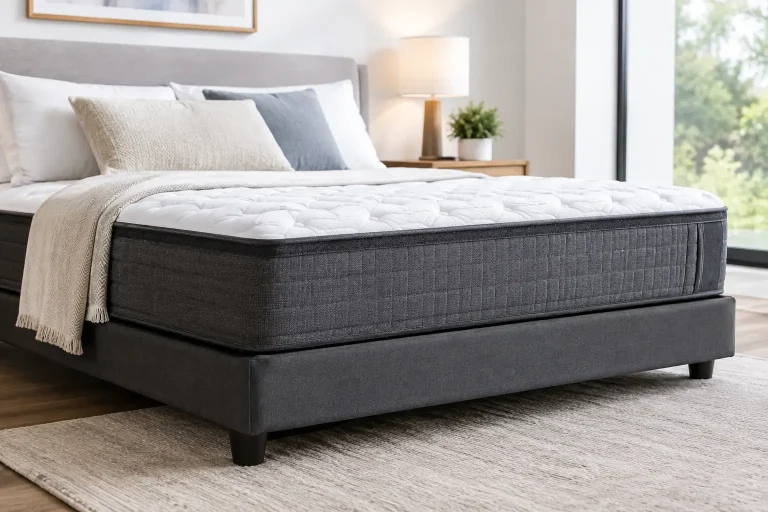
A carefully engineered hybrid mattress, such as one designed around pressure relief, structured coil support, and cooling materials, can make this process far easier. But the best choice is the one that keeps your spine supported in your preferred position and lets you wake up feeling rested rather than braced for discomfort.
Tonight, pay attention to the moment you settle into bed. If your shoulders relax, your hips feel supported, your neck stays neutral, and you are not fighting the heat or your partner’s movement, your sleep environment is doing what it should: giving your body room to recover.