That first night on a new bed can be surprisingly confusing. You expected instant comfort, but instead the surface feels firmer than the showroom model or different from what you imagined. If you are wondering how to break in a new hybrid mattress, the good news is that this is normal – and in most cases, temporary.
A hybrid mattress is built to balance pressure relief with structured support. That means you are not just settling into foam. You are also adjusting to responsive comfort layers, transition materials, and a pocketed coil system designed to hold your spine in better alignment. Early firmness does not usually mean something is wrong. It often means the mattress materials, and your body, still need a little time to adapt.
How to break in a new hybrid mattress without damaging it
The safest way to speed up the break-in period is to use the mattress consistently and let the materials relax naturally. Most new hybrid mattresses need anywhere from a few days to about a month to feel more settled. Some sleepers adjust faster, while others notice the biggest improvement after two to four weeks.
Foams can feel tighter when they are brand new because they have just expanded from packaging and have not yet gone through repeated compression. Latex can also feel buoyant and supportive rather than soft right away. Pocketed coils need a short period of regular use to respond more fluidly across the sleep surface. This is especially true with mattresses designed for orthopedic support, where the goal is not to let your body sink too deeply, but to keep your spine, hips, and shoulders in a healthier position.
If your mattress feels too firm on day one, start by sleeping on it every night. Regular body weight is one of the most effective and safest ways to help the comfort layers loosen up. Try to give it at least 30 nights before deciding the feel is not right. Many people are coming from an older mattress that was already worn in, sagging, or softer than it should have been. A properly supportive hybrid can feel firmer at first simply because your body is adjusting to better alignment.
What actually helps break in a hybrid mattress faster
Walking carefully on the mattress can help a little, but it should be done gently and only if the manufacturer allows it. The goal is light, even pressure – not jumping, concentrated force, or repeated bending. Too much pressure in one spot can stress the comfort layers and the coil structure instead of helping them settle evenly.
A more reliable method is to rotate the mattress 180 degrees after the first couple of weeks, then continue rotating it every few months if the design allows it. Rotation encourages more even wear, especially for couples or sleepers who tend to favor one side of the bed. It will not dramatically soften the mattress overnight, but it does help the surface break in more evenly over time.
Room temperature also plays a role. Foam tends to feel firmer in cooler rooms and a bit more flexible in warmer conditions. That does not mean you should overheat the room. It simply means a mattress in a cold bedroom may feel stiffer during the first few nights. Keeping your bedroom in a comfortable sleep range can help the materials respond more naturally.
Your foundation matters too. A hybrid mattress placed on the wrong base can feel firmer, uneven, or less supportive than it should. If the foundation has wide gaps, weak slats, or sagging spots, the mattress may not contour properly. A stable platform, supportive slatted base, or approved adjustable base helps the mattress perform the way it was engineered to perform.
Why your new mattress may feel firmer than expected
A lot of people think breaking in a mattress means making it softer. That is only partly true. The real goal is helping the top comfort layers become more responsive while keeping the support core intact. A quality hybrid should still feel supportive after the break-in period. If it becomes too soft too quickly, that is not a benefit – it can reduce spinal support and increase pressure on the lower back and hips.
This matters most for sleepers dealing with back pain, stiffness, or joint discomfort. At first, better support can feel unfamiliar. If your old mattress allowed your midsection to dip or your shoulders to collapse too deeply, your body may have adapted to poor alignment. Switching to a more supportive hybrid can create a short adjustment phase where muscles and joints are relearning a healthier sleep posture.
That adjustment is often mistaken for the mattress being too hard. In reality, the support may be exactly what your body needs. The difference is whether discomfort improves over the first few weeks or gets worse. If you start sleeping more deeply, wake with less stiffness, or notice better support under your hips and lower back, the mattress is likely doing its job.
How long does it take to break in a new hybrid mattress?
For most people, the break-in period lands somewhere between 30 and 60 days. That includes both the mattress softening slightly and your body adapting to the new support profile. Some premium hybrids with denser comfort layers or stronger coil support can take a little longer to feel fully settled.
This is why trial periods matter. Judging a mattress after two or three nights usually does not give an accurate picture. Early impressions are shaped by packaging recovery, room temperature, your sleep position, and what you were sleeping on before. A mattress designed for pressure relief, motion isolation, and cooling may still need time before those benefits feel fully balanced.
If you are a side sleeper, you may notice the shoulder and hip areas soften first. Back sleepers often pay more attention to lumbar support, while stomach sleepers tend to notice whether the midsection stays lifted enough. Couples may also need time to assess motion isolation once both partners have spent several nights moving naturally across the surface.
What not to do when breaking in a new hybrid mattress
Trying to force the process usually backfires. Avoid soaking the mattress in heat, folding it, stacking heavy objects on small areas, or using unapproved methods to crush the layers faster. Those shortcuts can damage foams, affect the coil response, and shorten the life of the mattress.
It is also smart to avoid adding a thick topper right away unless the mattress is truly unmanageable. A topper can mask the actual feel of the bed and make it harder to tell whether your body is adjusting normally. If after several weeks the mattress still feels firmer than you need, then a breathable topper may be worth considering. But in the first few nights, patience is usually the better move.
Another mistake is ignoring setup time. After unboxing, give the mattress enough time to fully expand before sleeping on it if the instructions recommend it. Hybrid mattresses often recover quickly, but full expansion and off-gassing of new-material odors can still take some time. A fully expanded mattress gives you a more accurate sense of comfort and support.
Signs your hybrid mattress is breaking in the right way
The surface should start to feel a little less tight and a little more responsive, not unstable. Pressure points at the shoulders, hips, and knees should ease. You should also feel more balanced support across the bed rather than obvious firmness spikes in certain areas.
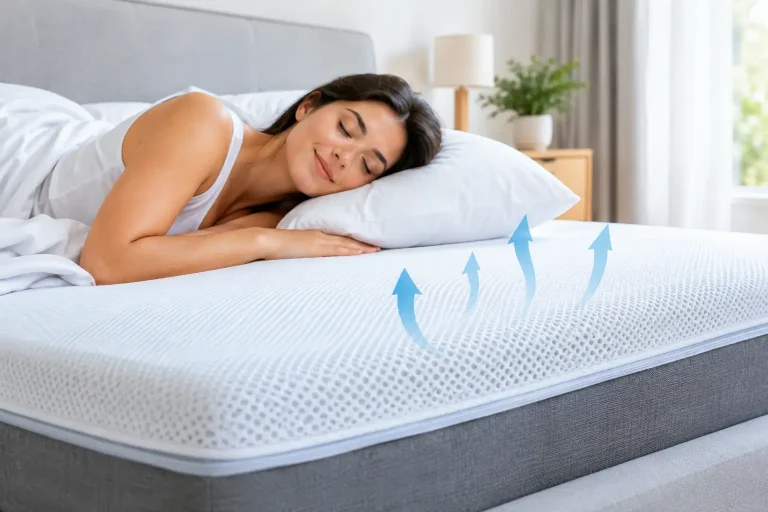
If the mattress has quality temperature-regulating materials, the break-in process should not make it sleep hotter. In fact, once the comfort layers settle slightly and your body is positioned more evenly, airflow and pressure distribution often feel better. For couples, motion transfer may also become less noticeable as the materials adapt to regular use.
A well-designed hybrid should still feel lifted, supportive, and controlled. That is the difference between genuine comfort engineering and a mattress that only feels plush for a short period. Brands focused on spine support and pressure relief, including Azure Mattress, build hybrids to help reduce aches without sacrificing stability.
If you are still unsure how to judge the feel, pay attention to your mornings. The best sign that a mattress is breaking in properly is not whether it feels softer with your hand. It is whether your body feels calmer, less tense, and more recovered when you get out of bed.
Give the mattress enough time to meet you halfway. The right hybrid is not supposed to collapse under you – it is supposed to support you well enough that restful sleep starts feeling consistent again.