A mattress can look premium, feel supportive, and still leave an important question unanswered: what are you breathing in for eight hours a night? This guide to safer mattress certifications explains which labels matter, what each one actually tests, and how to look beyond vague claims such as “natural,” “eco-friendly,” or “non-toxic.”
For people managing back pain, overheating, or restless sleep, comfort comes first. But material safety belongs in the same conversation. A well-designed hybrid mattress should support spinal alignment, relieve pressure, manage heat, and use materials selected with care. Certifications help turn those promises into something you can verify.
What Safer Mattress Certifications Can Tell You
A certification is not a blanket guarantee that an entire mattress is free from every possible chemical or concern. It is evidence that a specific material, component, or finished product has met a defined standard. The details matter.
For example, one certification may evaluate the foam inside a mattress, while another tests the fabric cover against a list of harmful substances. A third may measure chemical emissions from a finished product. That is why the strongest mattress claims are specific: they identify the certification, the tested component, and the reason it matters to your sleep environment.
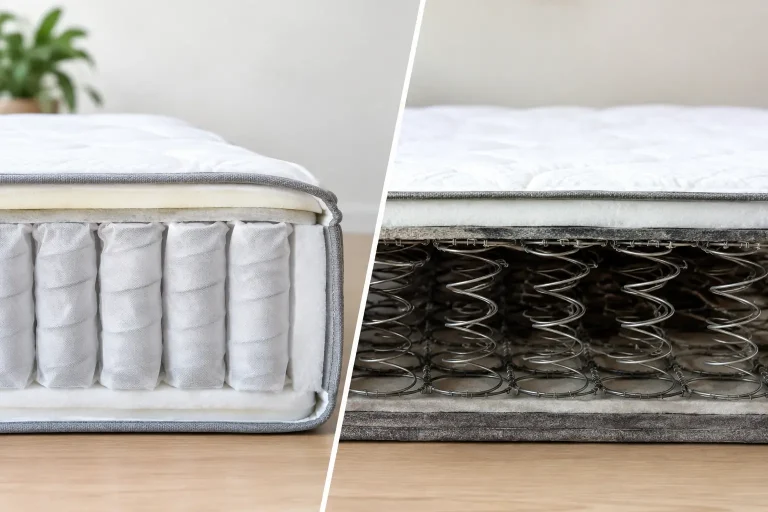
This distinction is especially useful with hybrid mattresses. They can contain multiple layers of foam, latex, adhesives, textiles, fibers, and pocketed coils. A certification on one layer is meaningful, but it should not be presented as proof for every other layer unless the brand can support that claim.
The Certifications Worth Looking For
OEKO-TEX STANDARD 100: A Closer Look at Fabrics
OEKO-TEX STANDARD 100 is commonly used for mattress covers, quilting, and textile components. It tests textiles for a wide range of substances that may be harmful to human health, including certain chemicals, dyes, and residues.
For a mattress buyer, this certification is especially relevant because the cover is close to your skin. If you sleep warm, move frequently at night, or prefer sleeping directly on the mattress without heavy layers of bedding, the materials at the surface deserve extra attention.
Still, OEKO-TEX certification for a cover does not automatically certify the foam, latex, glue, or spring system underneath it. Treat it as meaningful proof about the textile component, not a shortcut for judging the entire construction.
CertiPUR-US: What It Means for Foam Layers
CertiPUR-US is one of the most recognized certifications for flexible polyurethane foam. It evaluates foam for content and emissions criteria, including limits related to formaldehyde, certain flame retardants, ozone depleters, heavy metals, and phthalates regulated by the standard. It also includes indoor air quality testing for low volatile organic compound emissions.
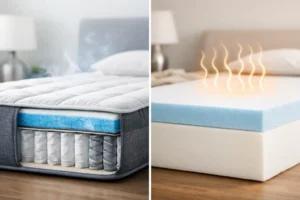
This matters in mattresses that use memory foam, cooling gel foam, transition foam, or comfort foam. These layers can bring contouring pressure relief and motion isolation, two major benefits for couples and people who wake with shoulder, hip, or lower-back discomfort.
The trade-off is simple: CertiPUR-US applies to the foam itself, not necessarily to the complete mattress. It does not certify every fabric, adhesive, fire barrier, or packaging material. A brand that says its mattress is CertiPUR-US certified should be able to clarify whether it means all polyurethane foam layers or only one component.
GREENGUARD Gold: A Focus on Indoor Emissions
GREENGUARD Gold certification addresses chemical emissions from products used indoors. It is particularly useful for shoppers who want more confidence around the air quality in bedrooms, nurseries, and shared family spaces.
Unlike certifications that focus mainly on ingredient restrictions, GREENGUARD Gold is centered on emissions. That makes it a helpful complement to material-specific standards. If a mattress or a major finished component has this certification, it can provide additional reassurance for people who are sensitive to odors or who simply want to minimize unnecessary indoor pollutants.
As always, check what is certified. Some brands certify a finished mattress, while others certify only particular materials. Both can be valuable, but they are not the same claim.
GOLS and GOTS: When Organic Materials Matter to You
If you are shopping for a mattress with organic latex or organic textiles, GOLS and GOTS are labels worth understanding. The Global Organic Latex Standard, or GOLS, applies to organic latex materials. The Global Organic Textile Standard, or GOTS, applies to textiles such as cotton and wool.
These standards can offer more visibility into the organic content and processing requirements behind a material. They are most relevant when organic sourcing is a deciding factor for you, rather than a broad marketing preference.
There is a practical trade-off here. Organic certifications can add cost, and an organic material alone does not determine whether a mattress will feel cool, supportive, or motion-isolating. Construction still matters. A mattress with breathable latex, responsive pocketed coils, and a thoughtfully engineered comfort system may better serve a hot sleeper with back pain than one chosen on an organic label alone.
How to Read Mattress Claims Without Guesswork
Start by separating marketing language from certification language. “Clean,” “green,” “pure,” and “chemical-free” are broad descriptions, not testing standards. Every mattress is made of chemicals in the scientific sense, including natural materials. The more useful question is whether its materials have been tested or screened according to a credible, clearly named standard.
Ask three direct questions before you buy: What exact certification is being claimed? Which mattress component does it cover? Can the brand explain the claim without vague language?
A trustworthy product page should make this easy to understand. You should not have to assume that a certified cover means certified foam, or that certified foam means a certified finished mattress. Precision builds confidence.
Also pay attention to the wording around fire safety. Mattresses sold in the United States must meet flammability requirements, but meeting a legal requirement is not the same as earning a material-safety certification. If fire barriers are a concern for you, look for transparent information about the type of barrier used and the materials in the sleep surface.
A Better Way to Choose a Safer Mattress
The best mattress is not simply the one with the longest list of badges. It is the one that combines credible material standards with the performance your body needs every night.
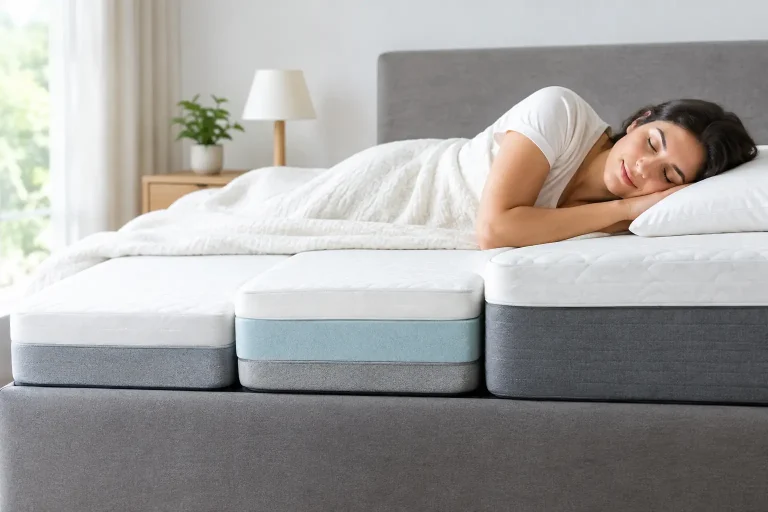
For pressure relief, look at how the comfort layers cushion shoulders and hips without allowing the midsection to sink too deeply. For spinal support, assess whether the coil system and transition layers keep your body in a more neutral position. For overheating, consider breathable latex, cooling foams, airflow through pocketed springs, and a cover designed to help heat dissipate.
Then use certifications to evaluate the materials supporting those benefits. OEKO-TEX STANDARD 100 can add reassurance around textiles. CertiPUR-US can help you assess polyurethane foam layers. GREENGUARD Gold can be useful when lower indoor emissions are a priority. GOLS and GOTS may matter most when certified organic latex or textiles are part of your personal criteria.
At Azure Mattress, this material-first approach fits the purpose of a modern hybrid: comfort should never ask you to compromise on support, cooler sleep, or confidence in what is close to your body.
Don’t Let a Certification Replace a Sleep Trial
Certifications speak to material standards. They cannot tell you whether a mattress will keep your partner’s movements from waking you, ease morning stiffness, or feel comfortable in your preferred sleep position. Those outcomes depend on design, firmness, body weight, sleeping style, and the interaction of every layer.
This is why a clear trial and return policy remains valuable. A mattress may meet the standards you care about and still be too firm for side sleeping, too soft for your lower back, or too warm for your room. Give your body time to adjust, but do not ignore persistent discomfort.
A safer sleep surface is built through informed choices, not fear-based marketing. Choose certifications that are specific, understand their scope, and pair them with the support, pressure relief, and temperature control that help you wake up feeling restored.