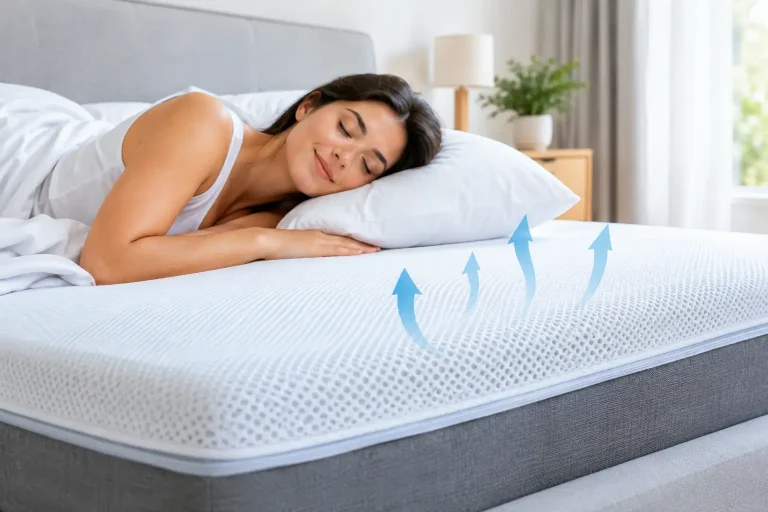
Waking up with a tight lower back, numb shoulders, or that stiff, compressed feeling in your hips usually is not just about the mattress itself. More often, it is about the full setup. If you want to know how to set up mattress for spinal alignment, the goal is simple: keep your head, shoulders, hips, and lower back supported in a neutral line so your body can recover instead of compensating all night.
A good mattress can absolutely help with back pain, joint pressure, and restless sleep. But even a high-quality hybrid can underperform if it is sitting on the wrong base, paired with the wrong pillow, or used in a sleep position that throws the spine out of alignment. The fix is usually practical, not complicated.
What spinal alignment actually means in bed
Spinal alignment during sleep means your spine stays as close as possible to its natural curve. Not ramrod straight, and not sagging into a hammock shape either. Your mattress should support the heavier parts of the body, especially the shoulders and hips, while also filling the gaps around the neck and lower back.
That balance matters because pressure relief without support can let the body sink too far, while support without pressure relief can create tension points that make muscles work all night. The best setup does both. It cushions joints and keeps the spine from twisting, dipping, or overextending.
For most adults, poor alignment shows up as morning stiffness, mid-back tension, lower back soreness, or side sleeping shoulder pain. If you sleep next to a partner, motion transfer can make things worse by constantly disrupting your posture and recovery cycle.
Start with the right foundation under the mattress
Before you adjust pillows, toppers, or sleeping position, check what the mattress is sitting on. A mattress can only perform as designed if the base underneath it is stable and supportive.
A weak foundation can create sagging through the center or uneven support under the hips and shoulders. That changes spinal positioning immediately, even if the mattress itself is still in good condition. Slats that are too far apart, a bowed platform, or an aging box spring can all sabotage alignment.
If you are setting up a hybrid mattress, a firm platform base or closely spaced slatted foundation is usually the safest option. The surface should be flat, consistent, and able to support the weight of both the mattress and sleepers without flexing. If the middle of the bed dips when you lie down, your spine is already starting the night at a disadvantage.
Signs your base is hurting alignment
You may need to replace or reinforce the base if your mattress feels softer in one area than another, if the center sinks more than the edges, or if you hear creaking and shifting every time you roll over. Those are not small annoyances. They are signs the sleep surface is no longer evenly supporting the body.
How to set up mattress for spinal alignment by sleep position
The best mattress setup depends partly on how you actually sleep. Side sleepers, back sleepers, and stomach sleepers place pressure on different parts of the body, so alignment needs are not identical.
Side sleepers
Side sleeping is one of the most common and spine-friendly positions, but only when the mattress lets the shoulders and hips sink just enough. If the surface is too firm, pressure builds at the shoulder and hip, often causing the spine to curve sideways. If it is too soft, the waist and pelvis drop too far.
For side sleepers, use a pillow with enough loft to keep the head level with the spine. Then check whether the mattress supports the waist without pushing the shoulder up. If there is a large gap between your waist and the mattress, or if your shoulder feels jammed upward, the setup is off.
Placing a pillow between the knees can also reduce pelvic rotation and ease lower back stress. This is especially helpful if one leg tends to slide forward during sleep.
Back sleepers
Back sleeping can be excellent for alignment if the mattress supports the lower back without letting the hips sink too deeply. A medium to medium-firm feel often works well because it keeps the torso stable while still allowing some contouring under the lumbar curve.
Your pillow should not push the head too far forward. If your chin tilts toward your chest, the neck is out of alignment before you fall asleep. Many back sleepers benefit from a lower-loft pillow and, in some cases, a small pillow under the knees to reduce pull on the lower spine.
Stomach sleepers
Stomach sleeping is the hardest position for spinal alignment because it tends to overarch the lower back and rotate the neck to one side for hours. If you sleep this way occasionally, the setup should limit excessive sinking through the pelvis.
A firmer feel and a very low pillow, or no pillow under the head at all, can help reduce strain. Some stomach sleepers also get relief from placing a thin pillow under the hips. That said, if you regularly wake with lower back or neck pain, retraining toward side or back sleeping is usually a better long-term solution.
Your pillow is part of the mattress setup
People often ask whether they need a new mattress when the real problem is the pillow. The mattress supports the body from the shoulders down, but the pillow determines whether the cervical spine stays neutral. If your head is tipped too high or too low, the rest of the spine compensates.
Think of the mattress and pillow as one support system. A softer mattress usually allows the shoulders to sink more, which may reduce the pillow height you need. A firmer mattress may require a higher pillow, especially for side sleepers. There is no perfect pillow in isolation. It has to match both your body and your mattress feel.
If you wake with neck stiffness but the rest of your body feels reasonably supported, start by adjusting the pillow before replacing the mattress.
Should you add a topper or remove one?
A topper can improve alignment, but it can also ruin it. It depends on what problem you are trying to fix.
If your mattress feels too firm and creates pressure at the shoulders or hips, a responsive topper can add contouring and help the spine settle into a more neutral position. This is especially useful for side sleepers dealing with shoulder numbness or hip soreness.
But if your mattress already feels soft or saggy, adding a plush topper usually makes alignment worse. It may feel comfortable for the first few minutes, then allow the pelvis or torso to sink too far overnight. In that case, the better move is to replace the worn support layer or the mattress itself, not stack softness on top of it.
A setup focused on pain relief should always prioritize support first, then pressure relief.
Check the mattress itself for wear and soft spots
Even strong support systems break down over time. Foams can lose resilience. Coils can soften unevenly. The surface may still look fine while no longer keeping the spine level.
Lie in your usual sleeping position for 10 to 15 minutes and pay attention to what your body feels. If your hips sink lower than your chest, if one side feels less supportive, or if rolling feels harder because of body impressions, the mattress may no longer be doing its job.
This is where well-built hybrid construction tends to perform better than basic all-foam or traditional spring designs. A structured coil system can provide more stable support through the center of the mattress, while comfort layers like latex or cooling gel foam help relieve pressure without excessive collapse. That combination matters when your goal is both spinal support and deeper, less interrupted sleep.
Small setup changes that make a big difference
Temperature, partner movement, and body weight all affect alignment more than most people expect. If you sleep hot, constant tossing and repositioning can keep the spine from staying supported for long. If your partner’s movement ripples across the bed, your body may tense or twist repeatedly through the night.
That is why a performance-focused mattress setup should not only feel supportive when you first lie down. It should stay supportive after hours of heat buildup, movement, and pressure. Materials that regulate temperature and reduce motion transfer can help you maintain a stable sleep posture longer.
If you share a bed, watch for edge crowding too. When one partner drifts toward the center and the other is forced toward the side, alignment often suffers because neither sleeper is using the mattress evenly.
When the best fix is a better mattress, not more adjustments
If you have corrected the base, matched the pillow to your sleeping position, and tested simple changes without relief, the mattress may simply be the wrong fit. That is common with older innersprings, ultra-soft memory foam beds, or budget models that feel comfortable at first but lack sustained support.
A mattress built for spinal alignment should distribute weight evenly, support the lower back and hips, minimize motion transfer, and manage heat well enough that you are not constantly shifting. For many sleepers, that points toward a well-designed hybrid. It combines contouring comfort with orthopedic-style support in a way that feels more stable, more breathable, and more durable over time.
Azure Mattress approaches this through a full sleep-system mindset, not just a surface feel. The right mix of pocket springs, pressure-relieving comfort layers, and cooling materials can make the difference between temporary comfort and real overnight recovery.
If your body keeps sending the same signal every morning, believe it. The right setup should help you wake up feeling neutral, not crooked, compressed, or braced for the day ahead.